
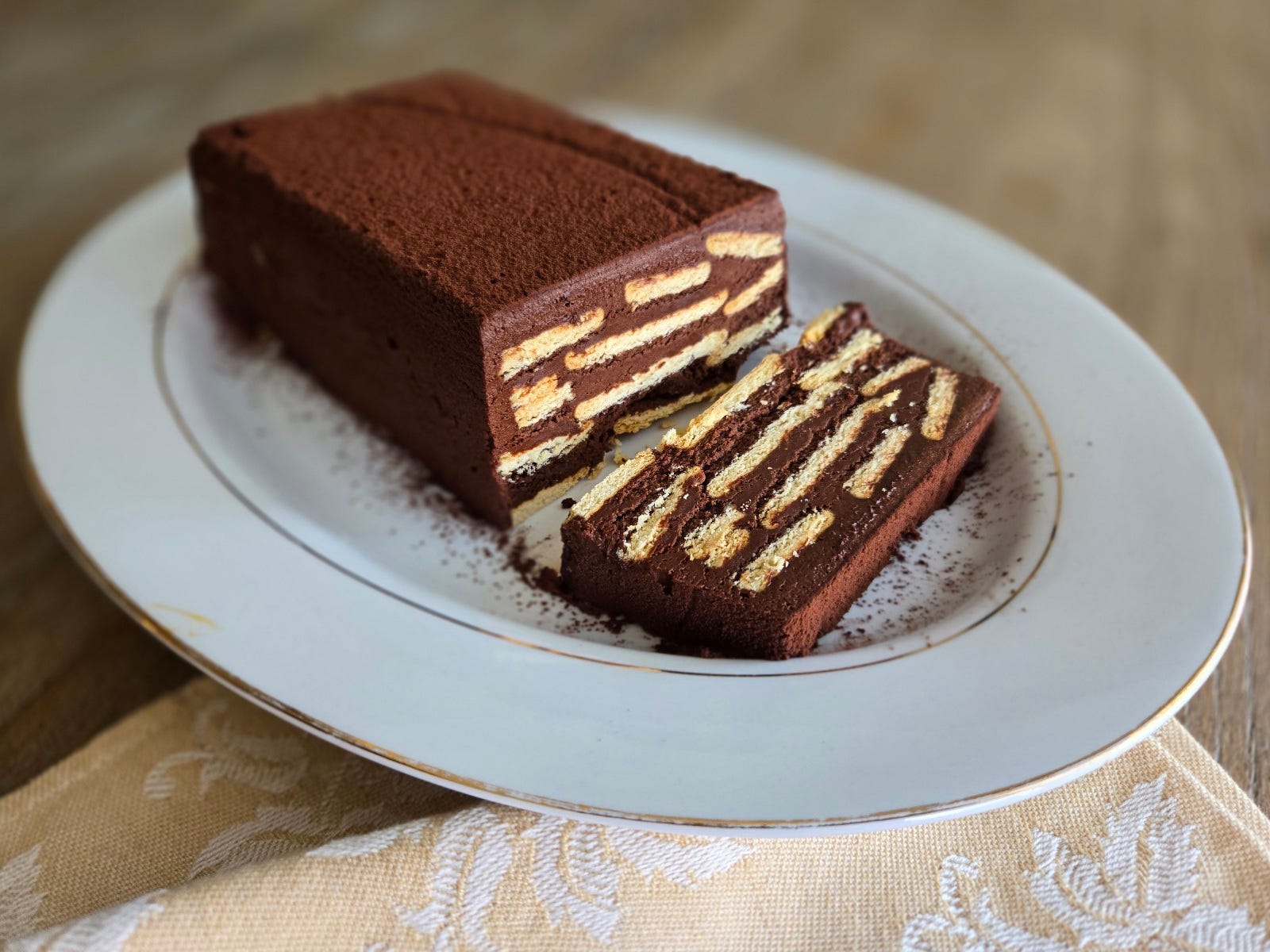
My father, born in the early 1920s, used to tell me that he remembered the ice man since his family’s “icebox” was exactly that – a box that held a big square of ice (with drainage) to keep things cool. By the late 1920s, the refrigerator was born and then icebox desserts were really off to the races. (He also used expressions such as, “The best thing since sliced bread,” and “Now we’re cooking with gas!” At the time, I found these sayings unfathomable but, in later years, the historical context made them a bit more charming.)
Nabisco Famous Chocolate Wafers, introduced in 1924, also played a part, since a refrigerator roll recipe was printed directly on the packaging. A chocolate biscuit refrigerator cake was also a favorite of the late Queen Elizabeth, so it is a good example of commoner’s dessert making it into a royal household.
Starting with the filling, some recipes use a form of buttercream, while others employ chocolate mousse with whipped yolks and whites, neither of them cooked. My first thought was to start with a cooked chocolate pudding, but that takes a long time to cool. Instead I preferred making a mousse with a sabayon base folded into whipped cream instead of egg whites for a richer, creamier end result.
The first step was to melt the chocolate and butter together in a large mixing bowl over simmering water. I usually take the bowl off heat while there are still a few bits of chocolate unmelted since they will melt as the mixture cools. Next, using the bowl of my stand mixer, I whisked together the yolks, sugar, coffee liqueur or espresso, or bottled cold brew. It’s whisked as it heats and begins aerating, then cools as it’s whipped in the mixer, gaining volume. Cream is then whipped in the same bowl, no washing needed.
Marie biscuits are crunchy and lightly sweet. All the recipes I saw call for dipping them in milk before layering, but that makes them drippy when they go on top of the mousse. I tried layering without dipping, thinking the mousse would soften them overnight, and they did soften and were easily sliced, but were still too dry in the mouth. I went back to dipping but then blotted on paper toweling, which conveniently allows for setting up a layers’ worth of biscuits on the towel before adding them to the pan, instead of dipping and dripping one at a time. Instead of milk, I mixed cream with whatever coffee element is used in the sabayon, also adding some flavor to the biscuits. For the chocolate, semisweet was better than bittersweet, since there is not a lot of sugar in the recipe.
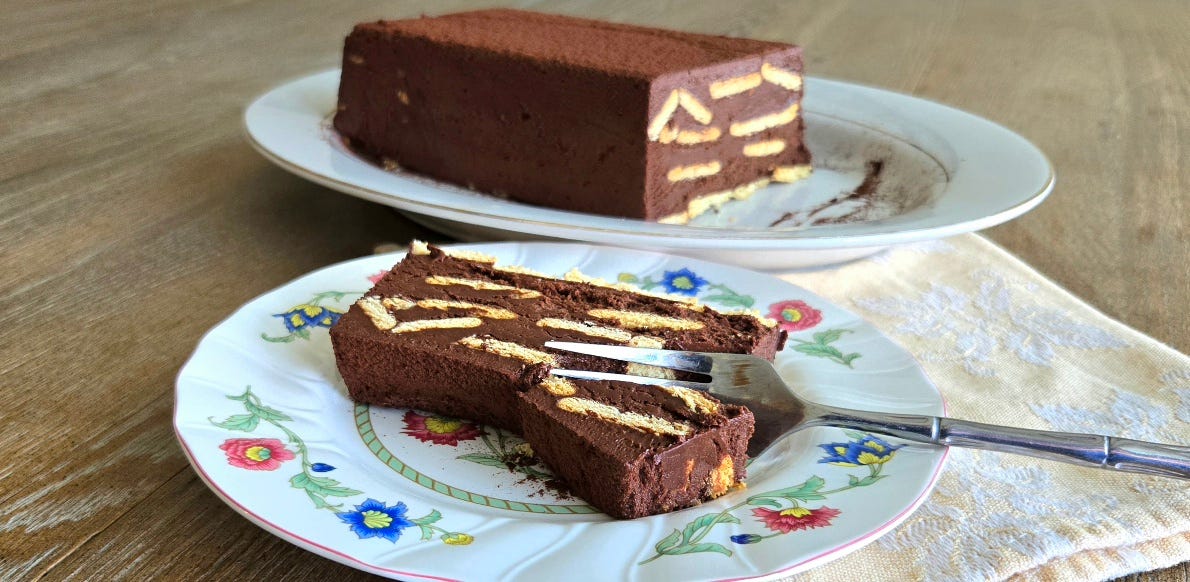
Queen Elizabeth was a fan of this recipe, although I hope that this version is better than the one made at the palace. Instead of a pudding or a buttercream, I use a chocolate mousse based on a sabayon for a richer filling without raw eggs.
Comments
Nothing yet. Say the first thing.
Sign in to join the conversation.