
The sun is just beginning to lower over the hills when you reach the outskirts of the village. The day has been long — merchants bargaining, children running through narrow streets, animals bleating from nearby pens. Yet the moment you step into the open field where Yeshua is teaching, it is as if the air itself changes.
People sit scattered on the grass, some leaning against stones, some standing silently at the edges. There is a softness in their faces—a kind of ache. A hunger not of the body, but of the soul.
Yeshua is speaking quietly to an older man kneeling before him.
You approach just close enough to hear:
“…your faith has made you whole.”
The man presses a trembling hand to his heart as tears spill down his cheeks. No one jeers. No one mocks. In this circle, such vulnerability is honored, as though witnessing someone’s healing is witnessing the sunrise.
Yeshua continues walking through the crowd, touching shoulders, looking into eyes. When he notices a young mother clutching her child with anxiety etched across her face, he kneels.
“What do you seek?” he asks.
“My child,” she whispers. “He is sick.”
Yeshua places a hand gently on the boy’s head. His voice is soft, but strong.
“Be made alive in the fullness of God’s love.”
The crowd is silent, watching.
You do not know if the child’s fever breaks in that moment or later that night, but you feel something unmistakable: a presence of love so palpable it seems to vibrate in the air.
And in this moment you begin to understand:
when Yeshua spoke of salvation, this is what he meant.
Not escape. Not transaction.
Awakening. Restoration. Aliveness.
A returning to the Source of all that is.
Salvation as Yeshua Taught It: Not a Pardon — But Healing, Awakening
The people listening to Yeshua did not hear “salvation” the way many modern ears would.
They did not imagine courtroom scenes.
They did not picture divine wrath quenched by sacrifice.
They did not envision escape from torment.
When Yeshua—whose very name meant salvation—spoke of this deep and wonderful process of grace, it was seen as a group experience, communal in nature, one of healing, deliverance, a rescue from oppression into a state of freedom, of being “born again from above.” They heard something tender, expansive, alive.
In Aramaic, the word Yeshua often used in connection with salvation was ḥayye, which means:
vitality
aliveness
freshness of spirit
life of the ages
life that begins now and continues unfolding
Salvation was not primarily about later.
It was about now.
A new way of breathing.
A new way of seeing.
A new way of living.
It was the awakening of the soul to the Presence that had always been there.
In the next post: We will enter further into Chapter Three.
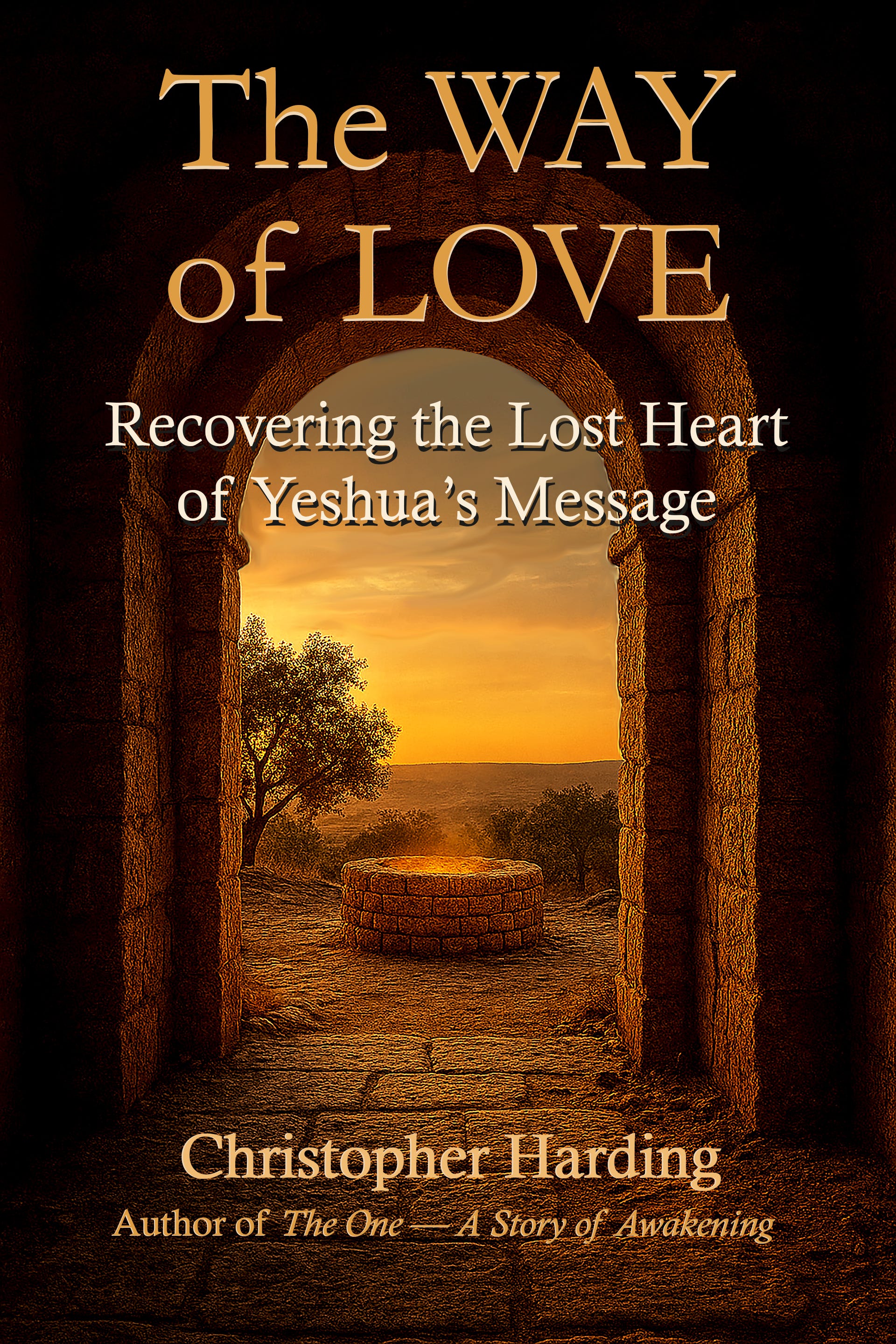
In the days and weeks that follow, I’ll continue to post sections from the new book as I craft them, or as they craft me. Your thoughts and comments, as always, will be greatly appreciated.
~ Christopher Harding
No posts
Comments
Nothing yet. Say the first thing.
Sign in to join the conversation.