
The morning sun climbs slowly over the hills as you approach the small cluster of homes where Yeshua’s followers often gather.
A soft breeze moves through the trees, carrying the scent of bread baking in clay ovens. Roosters crow in the distance. Children dart between doorways with wild laughter.
But it is something deeper than these ordinary sights and sounds that draws you in.
It is the unmistakable feeling of love in motion.
A woman stands outside her home, braiding the hair of a neighbor’s child with careful tenderness. An old man with arthritic hands is being helped to his feet by two younger men, who greet him with the affection usually reserved for family.
A widow is embraced by three women who have come to help her prepare her morning meal.
No one is in a hurry.
No one is calculating what they will get in return.
Love moves here like water—quiet, steady, unforced.
You notice Yeshua sitting near the doorway of a modest stone house, speaking quietly with a fisherman whose eyes are wet. You can’t hear the words, but from the man’s trembling shoulders and the softness in Yeshua’s gaze, you know something sacred is happening.
This is the Way being lived.
Not as ideas.
Not as doctrine.
But as embodied compassion.
What Love Looked Like in Practice
In the teachings of Yeshua, love was never a concept.
It was always an action.
A posture of heart that flowed outward into the world.
When his followers asked him how people would recognize them, he did not mention belief, ritual, purity, or status.
He said:
“By your love for one another.”
This love was not sentiment;
it was racham — love expressed through care.
It looked like:
feeding the hungry
tending the sick
washing each other’s feet
sharing resources freely
grieving with the sorrowful
protecting the vulnerable
welcoming the stranger
forgiving the offender
restoring the outcast
Love became the rhythm of their days.
The Good Samaritan — A Scandalous Reimagining of Neighbor
One day, a scholar of the law asked Yeshua:
“And who is my neighbor?”
He wanted to justify himself—
to know the minimum he was required to do.
But Yeshua answered with a story that upended everything.
A man is beaten and left for dead. A priest and a Levite pass by without helping.
Then—scandalously—a Samaritan, despised by Jews as unclean and heretical, stops.
He binds the man’s wounds.
He lifts him onto his own animal.
He pays for his lodging and care.
Then Yeshua asks the only question that matters:
“Which of these became a neighbor?”
Not who deserved love,
but who chose love.
Not who was acceptable,
but who became compassionate.
It wasn’t the religious elite.
It wasn’t the socially respected.
It wasn’t the morally polished.
It was the one considered an enemy.
Yeshua’s meaning is unmistakable:
Your neighbor is not defined by boundaries, bloodlines, or beliefs.
Your neighbor is the one in front of you.
And you become a neighbor through love.
His followers took this to heart.
This story became a blueprint for their life together —
a life where compassion overturned prejudice,
and love redefined belonging.
Thanks for reading! This post is public so feel free to share it.
Next, as we conclude Chapter Seven, will look at the ideas of Serving Without Pride, and Leading Without Power — ideas often lost in our fast-paced competitive world.
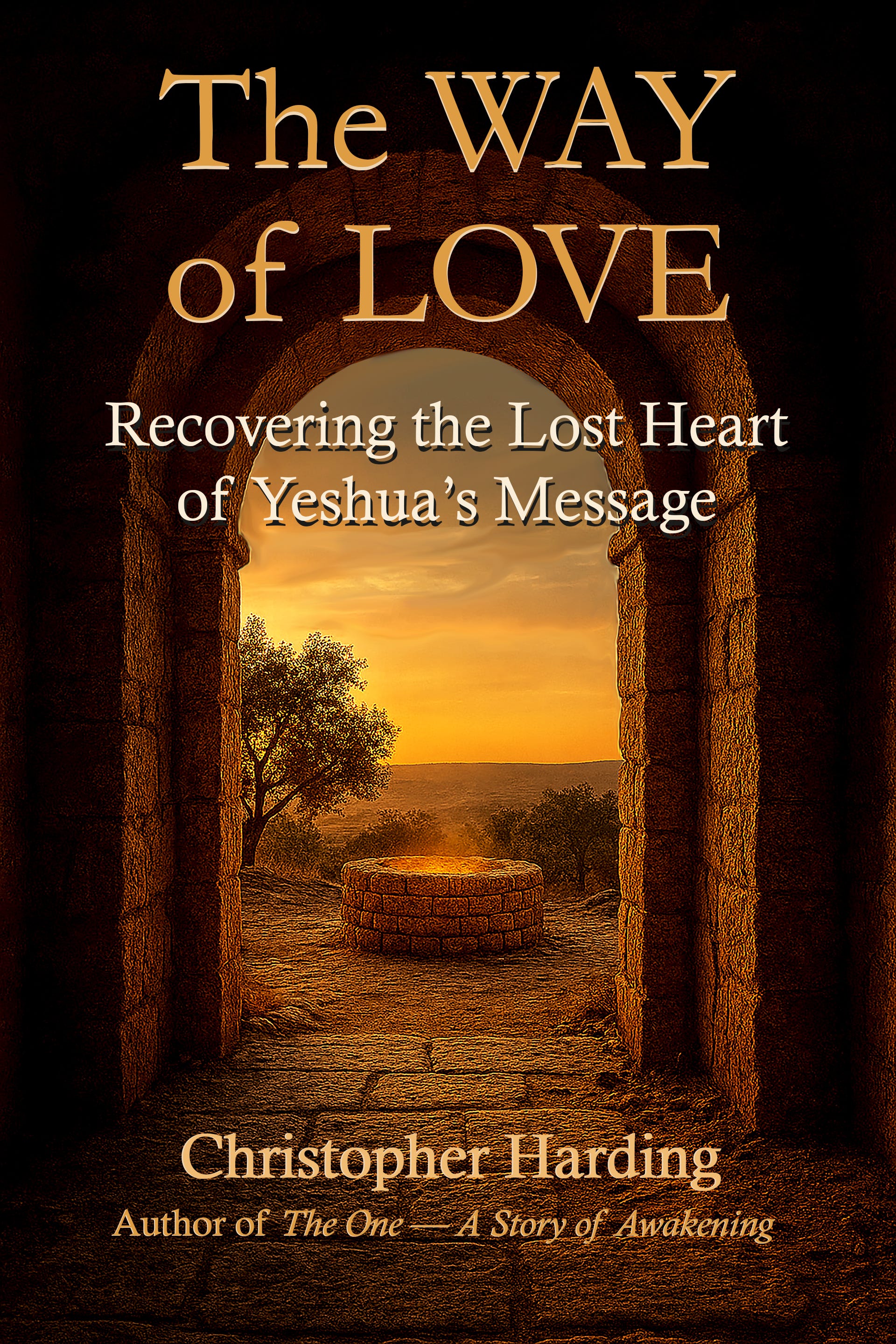
In the days and weeks that follow, I’ll continue to post sections from the new book as I craft them, or as they craft me. Your thoughts and comments, as always, will be greatly appreciated.
~ Christopher Harding
No posts
Comments
Nothing yet. Say the first thing.
Sign in to join the conversation.