
Summary: Building a startup is like triggering a nuclear chain reaction: both require immense initial energy, precise conditions, and sustained effort to reach a self-sustaining tipping point. Early-stage founders must continuously input time, capital, and hard work to keep their business alive, just as nuclear reactions require constant input before becoming autonomous. Once a startup achieves product market fit and builds a growth engine, it hits a tipping point where growth becomes exponential. Like fusion vs. fission, some ventures are harder to ignite but yield greater rewards. With the right design and persistence, startups can transform from fragile ideas into unstoppable forces.
In this article, I want to present to you an analogy that can help you understand the requisites for building a successful startup: company-building and nuclear chain reactions. Just like a nuclear reaction, launching and scaling a business requires immense energy and perseverance until it reaches a tipping point where growth becomes self-sustaining.
Both nuclear reactions and startups require an immense amount of initial energy to get going. Just as a nuclear reaction demands precise conditions and a significant energy input to reach a critical point, launching a business demands the sweat, capital, and relentless effort of the founder. It’s a delicate process where every decision matters, and the energy you invest determines whether the reaction will sustain or fizzle out.
But the effort doesn’t stop there.
In the early stages, the founder must continually inject more energy into the business, making the right decisions, refining the product, and resisting the urge to quit, even when faced with overwhelming challenges. This phase is grueling, much like the constant pressure needed to keep a nuclear reaction alive before it reaches the tipping point.
The tipping point is a turning point.
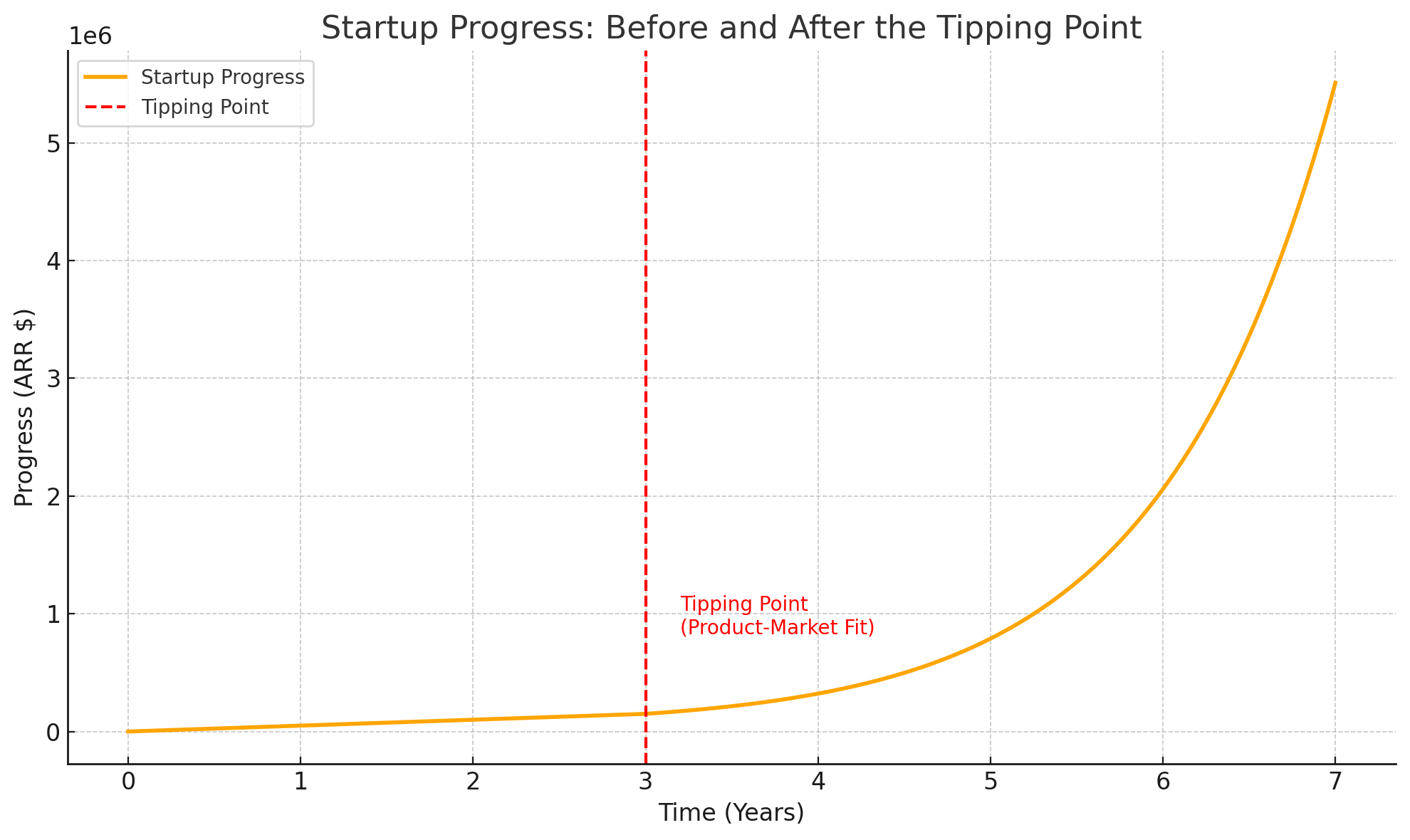
For a nuclear reaction, it’s the moment when the chain reaction becomes self-sustaining, releasing massive amounts of energy. In business, this is when the company finds true product-market fit, establishes a growth engine, and secures critical funding—transforming the startup from a fragile idea into an unstoppable force.
And this is where the magic happens.
Once the company reaches this self-sustaining phase, the growth becomes exponential, unleashing the full potential of the business. It’s the stage where hypergrowth occurs, turning startups like Airbnb and SpaceX into industry giants.
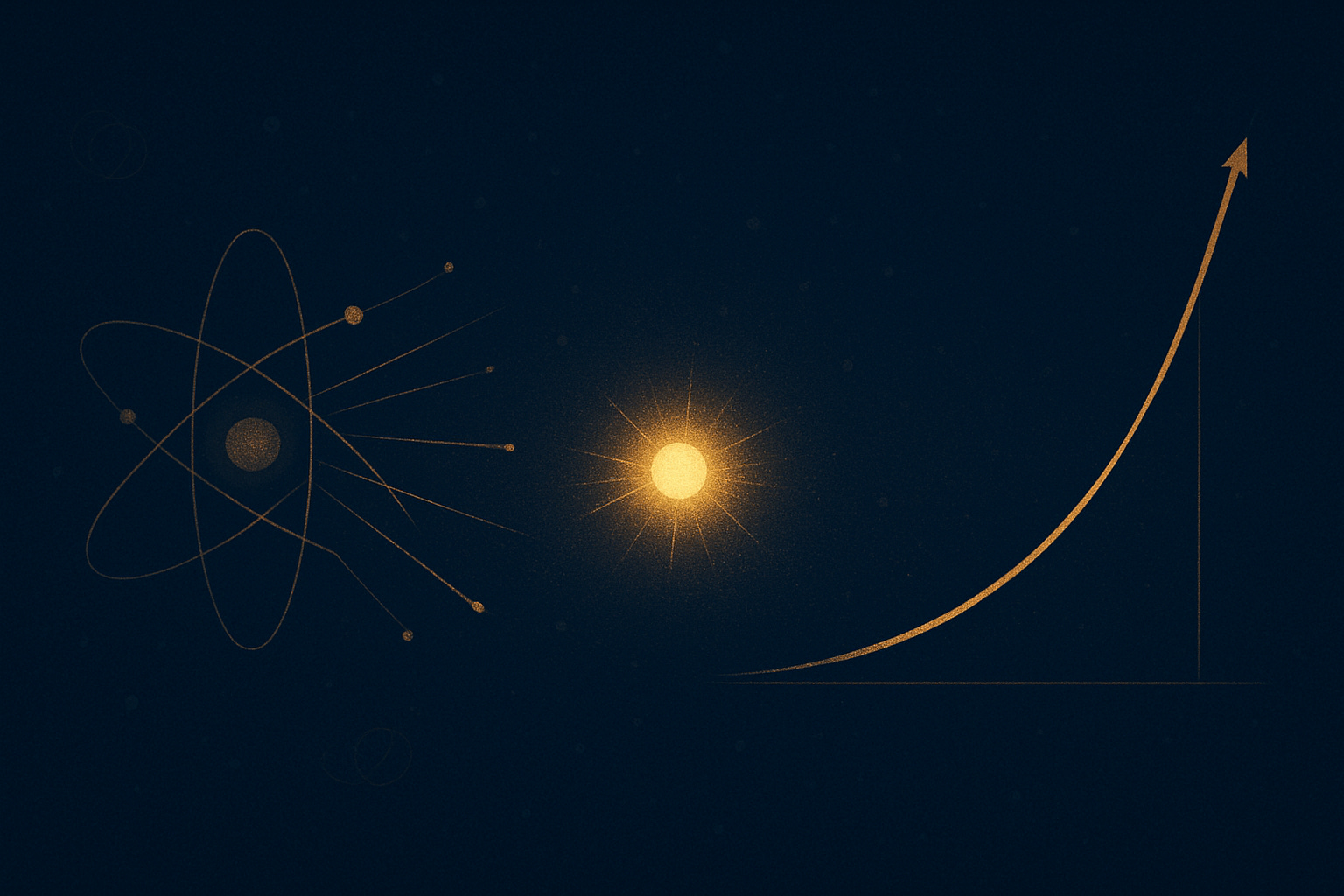
In the following sections, I’ll explore this parallel between nuclear physics and business, illustrating how starting a company mirrors the process of a nuclear reaction and what it takes to reach that critical, self-sustaining point.
Nuclear reactions, like startups, require a significant amount of initial energy to kickstart, but once they reach a critical point, they unleash a chain reaction that sustains itself.
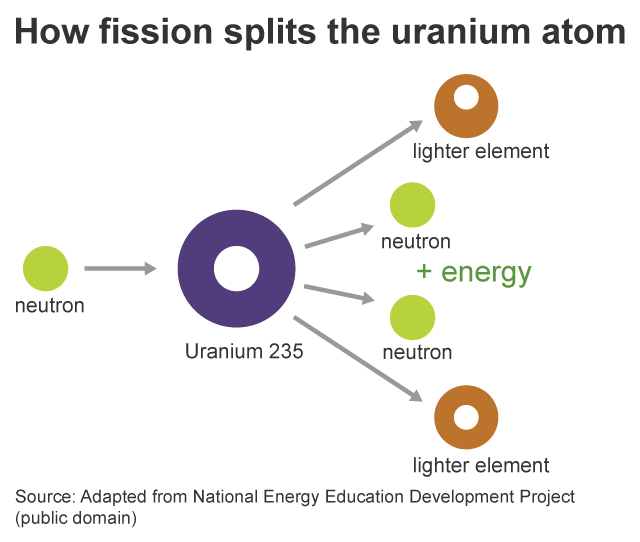
There are two types: nuclear fission, where a heavy nucleus splits into smaller parts, releasing energy and triggering a self-sustaining chain of further reactions; and nuclear fusion, where lighter nuclei combine to form a heavier nucleus, releasing even more energy but requiring extreme conditions to initiate.
While fission is easier to start and control, fusion holds greater energy potential but is harder to achieve, offering an analogy for the varying difficulty and reward in business ventures.
The tipping point is a critical concept in both physics and business.
In physics, a tipping point refers to the moment when a system undergoes a significant change that becomes self-sustaining. This idea is particularly relevant in the context of nuclear reactions, where a certain amount of energy input is required to start the reaction. Initially, energy must be constantly supplied to overcome various barriers, such as the electrostatic repulsion between nuclei in nuclear fusion or the need to introduce neutrons in nuclear fission.
However, once the reaction reaches a certain critical point, it begins to generate enough energy on its own to continue without further external input. This is when the reaction becomes self-sustaining, creating a cascade of events that amplifies the process and releases massive amounts of energy. In nuclear fusion, for example, once the nuclei start fusing at a sufficient rate, the energy released from each fusion event helps sustain the conditions needed for further fusion, leading to a chain reaction that powers stars and potentially future fusion reactors.
But the tipping point isn’t just about energy. It’s about balance.
At the tipping point, systems shift from relying on external input to self-sustaining growth. In nuclear fission, this happens when each reaction releases enough energy to trigger others, creating a chain reaction. Similarly, nuclear fusion reaches its tipping point when the energy generated sustains the conditions for further fusion.
In business, reaching the tipping point means achieving a self-perpetuating growth engine—whether it’s product-market fit, customer acquisition, or revenue scaling—where less external effort is needed to maintain progress and growth becomes exponential. The goal is to push through the initial phase of heavy lifting to reach this stage.
Understanding the tipping point is essential.
It explains how systems transition from a state of vulnerability, where they rely heavily on external input, to a state of stability and growth, where they become self-sustaining. Whether in physics or business, recognizing and achieving the tipping point is key to unleashing powerful, unstoppable forces.
Starting a company is like initiating a nuclear reaction.
Both processes require an enormous amount of initial energy to get off the ground. In nuclear physics, this energy comes from external sources that push the reaction to a critical point. Similarly, in the early stages of a startup, the founder must inject significant resources—capital, time, and relentless effort—into the business.
Every decision made in this phase can be critical, just like the precise conditions needed to initiate a nuclear reaction. The founder’s role is not just to start the business but to keep fueling it, even when faced with setbacks and challenges that threaten to derail the process.
But the energy input doesn’t stop after the launch.
In the initial stages, much like in a nuclear reaction before reaching the tipping point, a startup needs continuous energy to maintain momentum. The founder is at the heart of this effort, constantly making decisions, pivoting strategies, and overcoming obstacles to ensure the business survives and grows.
This relentless drive is what keeps the company moving forward until it reaches a self-sustaining stage. Without this ongoing effort, the business risks stalling, much like a nuclear reaction that hasn’t yet reached the critical point and fizzles out without sustaining itself.
Finally, design and strategy play a crucial role in both nuclear reactions and building a successful startup.
Just as a nuclear reaction requires the precise alignment of temperature, pressure, and stability to sustain energy, a startup demands a well-thought-out strategy to achieve lasting growth. In nuclear physics, without the right conditions, a reaction can either stall or spiral out of control.
Similarly, in business, the right model, industry, niche and timing (MINT framework) must converge for a startup to reach its tipping point. Thoughtful design ensures that both nuclear reactions and startups have the foundation they need to succeed and sustain momentum.
In summary, building a successful company is strikingly similar to triggering a nuclear chain reaction, and drawing this analogy can help you be prepared to embark on your entrepreneurial journey.
Both processes require immense initial energy, precise conditions, and relentless effort to reach a critical tipping point. Just as nuclear reactions need the right alignment of temperature, pressure, and stability to become self-sustaining, startups require careful strategy, execution, and perseverance to achieve exponential growth.
Whether it's navigating the early challenges or keeping momentum through critical phases, the parallels are clear: reaching that tipping point unleashes powerful, self-sustaining growth.
The journey may be daunting, but much like in physics, the rewards are extraordinary once you break through. The tipping point is where the magic happens, transforming what was once a fragile idea into a force that fuels itself.
To all entrepreneurs: keep pushing forward through the setbacks and uncertainty.
With the right strategy, persistence, and energy, your efforts will pay off, setting off a chain reaction of success that will drive your business to new heights. Stay consistent, stay committed, and watch the momentum build.
No posts
Comments
Nothing yet. Say the first thing.
Sign in to join the conversation.