
Over the past two years, I have been working on a series of articles that synthesize my views on climate change.
I have a firm conviction that combatting climate change will bring about a series of technological innovations that will not only help reduce the level of greenhouse gases in the atmosphere, but that will increase efficiency and lower costs in virtually every industry. Thus, the climate crisis presents the fertile ground for the innovations of the future, which creative entrepreneurs and willing investors should capitalize on.
You can think about climate solutions as a bounty spillover of wealth-creation. While capitalism and industrialisation have contributed to climate change, capitalism and the invisible hand will also be its solution.
To this end, reducing energy emissions will create billions of jobs in the renewable energy sector, reducing agricultural emissions will catalyze the production of lab-grown products and incentivise regenerative agriculture practices, plus fuel a new generation of organic fertilizer technology. Sequestering atmospheric carbon demands innovative engineering solutions that turn atmospheric carbon into useful products. Restoring oceanic chemical balance will create a boom in the fishing industry. Our earthly ecosystem is interconnected in such a way that finding a solution in one of the problems we created is likely to have positive ripple effects throughout.
Climate solutions breed innovation. Innovation breeds profits.
I have written three articles to develop my views.
This article lays out the overarching strategy: using capitalism—not in spite of the climate crisis, but because of it—to drive the innovations we need. The key idea is that we can reverse climate change by 2065 through investments totaling ~2% of global GDP annually.
Main takeaways:
We can reach pre-industrial CO₂ levels (270ppm) by 2065 using existing and emerging technologies.
A total of $157 trillion investment would be enough—less than what the world currently spends on military budgets.
The most impactful sectors to disrupt are energy, agriculture, and transportation, each ripe for exponential improvement and economic upside.
Entrepreneurial and venture-backed innovation is the only path to scalable, durable progress—philanthropy and regulation alone won’t cut it.
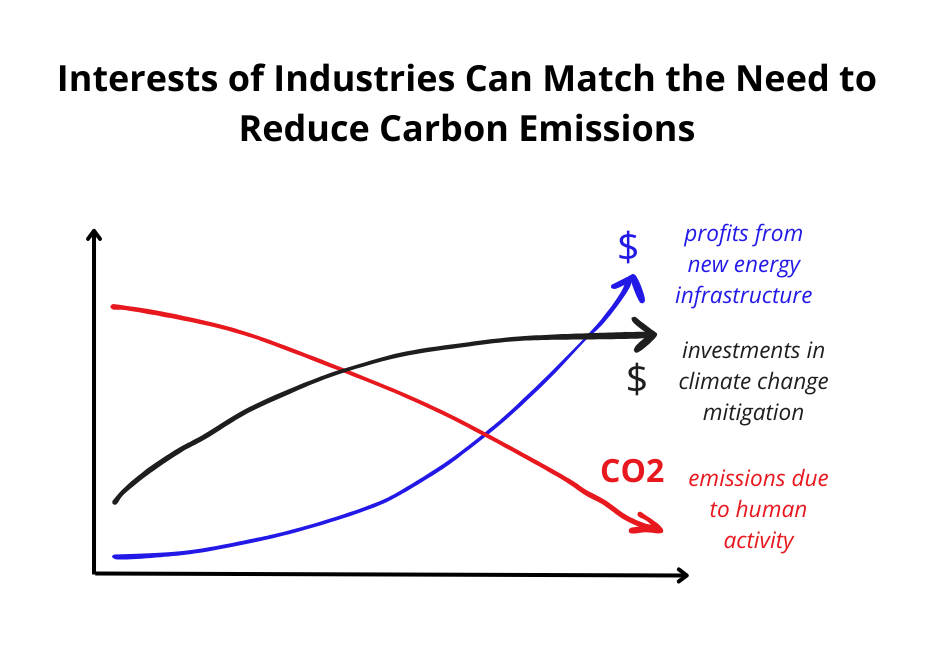
Why read on: If you're curious how capitalism could be our best weapon against climate change—and want to understand the exact playbook for making that happen—this is the article for you. It’s a hopeful, data-driven roadmap for builders and backers of the climate revolution.
Emission reduction is critical—but it’s not enough. This article dives deep into sequestration: the removal of existing atmospheric CO₂. I survey all major methods and identify five standout strategies that are low-cost, scalable, and grounded in natural processes.
Top 5 Sequestration Solutions we believe offer the best investment-to-impact ratio:
Enhanced Weathering – Using mineral-rich rocks to accelerate CO₂ absorption in soil.
Regenerative Agriculture – Improving soil health to store carbon while increasing yields and resilience.
Ocean Alkalinization – Rebalancing ocean pH to increase carbon absorption and counteract acidification.
Ocean Iron Fertilization – Boosting phytoplankton growth to stimulate the ocean’s natural carbon pump.
Methane Oxidation – Converting methane (120x more potent than CO₂) into less harmful carbon dioxide.
Bonus takeaway: These strategies don’t just remove carbon—they can also restore ecosystems, improve food systems, and boost economic productivity in parallel.
Why read on: If you're an investor or founder looking for the next frontier in climate innovation, this article gives you the ultimate map. Discover where science meets scalability, and how nature-inspired tech can unlock massive environmental and financial returns.
This article flips the narrative. I take the climate skeptic’s arguments at face value—and still show that climate action is the rational, profitable move.
Key points:
Even if there’s just a 1% chance of climate catastrophe, the cost-benefit ratio of action is higher than almost any government program.
The maximum viable investment in climate mitigation is $600 trillion—an enormous margin for profitable action.
My “Utopia Model” (a $157T investment) breaks even at just 25% likelihood climate change is real—and delivers 4x ROI at full certainty.
The argument that “climate change is natural” doesn’t justify inaction. We don’t ignore asteroids just because they aren’t man-made.
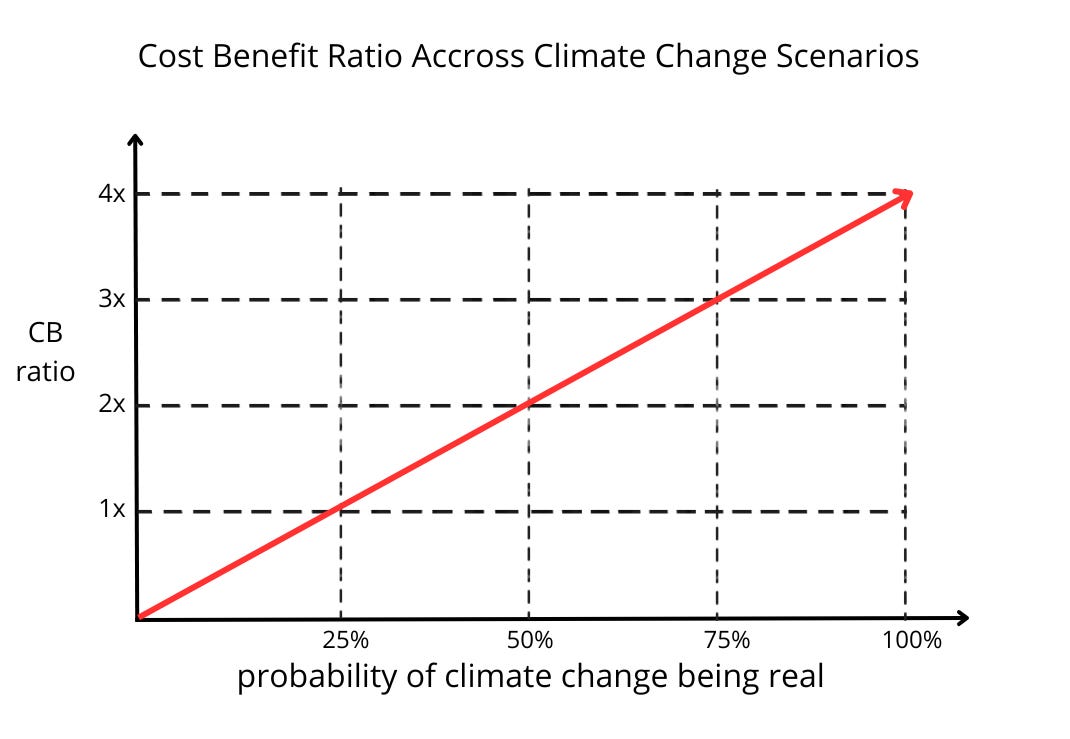
This article is a weaponized logic tool for climate advocates—especially when dealing with skeptics in boardrooms, political debates, or dinner tables.
Why read on: If you’ve ever faced a climate skeptic—or doubted the financial case for climate action yourself—this article gives you airtight reasoning, grounded in economics. It’s a powerful tool for advocates, investors, and policy leaders alike.
I encourage you to read these on my Medium page, and I would appreciate any feedback you have. If you are interested in working with me to build a clean and more affordable future for all, don’t hesitate to contact me. You can check out what we have been working on at Utopia Capital on our website.
Let’s restore the planet—and build lasting value while we do it.
No posts
Comments
Nothing yet. Say the first thing.
Sign in to join the conversation.