
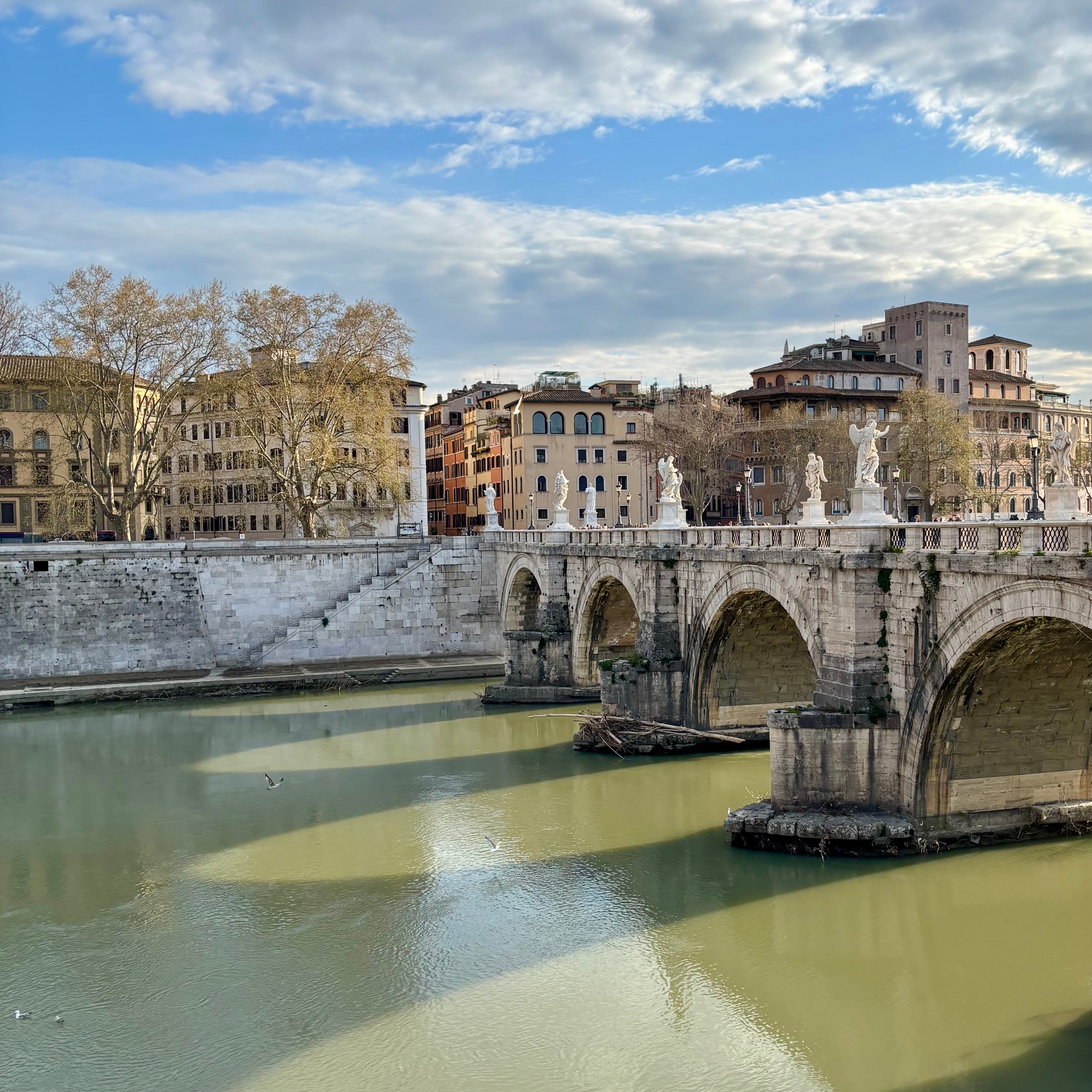
When my twins were in elementary school, Alex asked, “Daddy, are you a famous writer?” We were on our way home from the Greenwich Village public school where the other dads included Philip Seymour Hoffman and Daniel Day Lewis, and the moms Jill Hennessy and Holly Hunter. Fame was all around us. But not in our apartment.
“No,” I answered. “I’m not.”
I resisted adding that there’s no such thing. Another school parent was Zadie Smith, and she’s a famous writer, sort of. But also because fame was a valuable currency to my kids, and I didn’t want them to think I was denigrating my own career. That was the year when Sam’s hobby was “writing letters to celebrities” (his words). Derek Jeter didn't reply to the birthday-party invite; the White House dispatched a kids’ packet, with a signed photo of President Obama; and Michael Bloomberg answered with a lovely letter, regretfully declining Sam’s offer to join us at Camden Yards, where we had an extra seat to see the Yankees play the Orioles. The mayor’s personal reply arrived the very same week that Sam sent his letter, a remarkable feat of executive-branch competence, responsiveness, and politeness.
My kids had been with me when a stranger on the street asked, “Excuse me, are you Chris Pavone?” My headshot was in the paper that day; my first book had just been published. In the fourteen years since, this sort of thing has happened only twice more.
I was not then, and I am not now, a famous writer.
As established previously, I attend lot of festivals. They don’t generate all that much in the way of book sales, and practically never any media. I go because I enjoy the experience, especially when the festival is in an appealing place. Saying yes to the Rome invitation was a no-brainer.
I expected the festival to be like others, but in Rome. So I did what I always do. I chose a book to read by a festival author whom I’d never heard of, the fantastic war-correspondent novel Vulture by Phoebe Greenwood. I packed gym clothes, I picked some restaurants to try, I wore a blue sports jacket, I took the Long Island Rail Road to JFK. I expected that most of my time in Rome would be free, and that I’d spend it mostly with other authors, and being a tourist.
I was wrong.
My Italian publisher Feltrinelli had been working very hard to do a very hard thing: convince the media, bookshops, and readers to pay attention to The Doorman (aka L’ultimo turno—the final shift). They succeeded. But it took me a few beats to understand how.
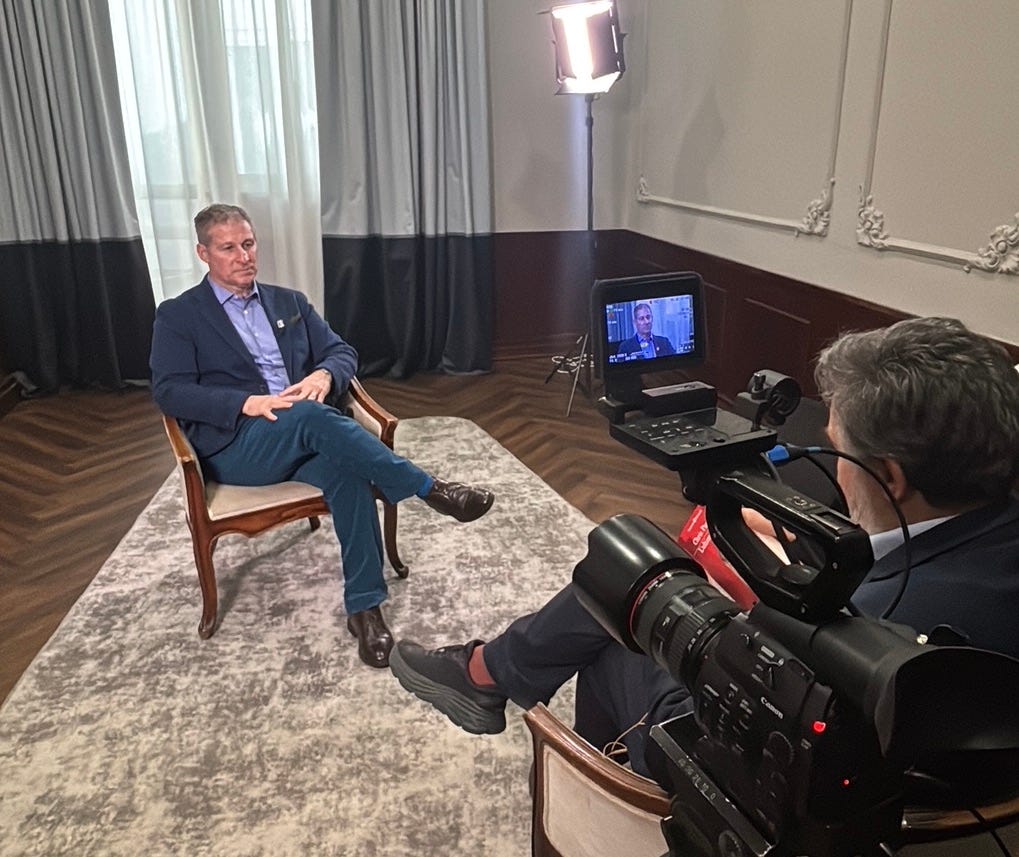
My first event was a conversation with my editor at a sales conference-type evening in front of a few dozen booksellers; Severino and I spoke mostly about how broken America is at this moment. The next day, I had back-to-back-to-back on-camera interviews with serious journalists, including a prime-time-talk-show host and a war correspondent taking a break from Ukraine (!). The following days were an onslaught of live and taped radio interviews, and print interviews, and photo shoots, and bookstore visits, and eventually the festival event itself—in all, 20 different things, some totally in English, some with a simultaneous interpreter. It was like a movie junket, for a novel.
But it was in the middle of the first TV interview when I realized I wasn’t really in Rome to talk about a novel.
This is the pitch to which the Italian media responded so enthusiastically:

A Ferocious Portrait of Contemporary America.
A luxury high-rise in the heart of New York. A murder that conceals the secrets and contradictions of an entire nation. A mystery that transcends the boundaries of the genre to tell the story of the divided America of the Trump era. Named one of the best mysteries of the year by The New York Times.
Every compelling publicity campaign tells a story. This story can be many different things—the story of some part of the author’s life, the story of the author’s ancestry or community, the story of a real-life historical event, or the inspiration story for a character or plot . . . any sort of factual bulwark of the fiction.
The story that Feltrinelli is telling about L’ultimo turno is: this book is about America in crisis. That was the story the media had been pitched, that was the story they wanted to tell, that was the subject they wanted to discuss with me.
During my time in Rome, a half-dozen people said roughly the same thing to me: for generations, we in Italy—and all throughout Europe—looked at America as something to aspire to. Now we are worried. If your midterm elections don’t change things, we think the world would be better off without the United States.
Sometimes it seems as if the rest of the world is paying closer attention to America than Americans are.
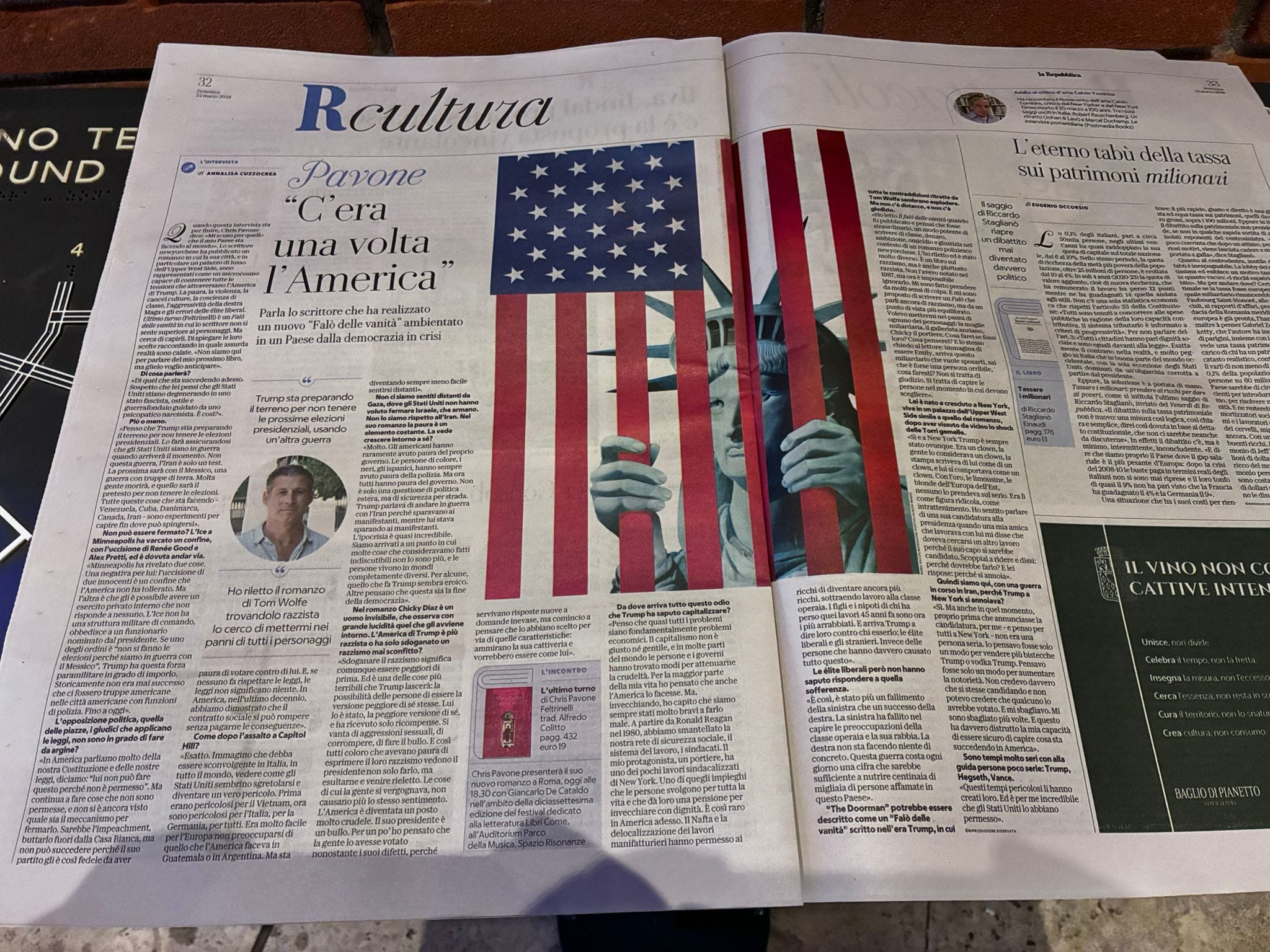
When I started working in publishing in the early 1990s, this sort of publicity stop was common. Authors were treated like famous people, even when they weren’t. As I’ve written about before, back then the bookstore appearance was just one component of a book-tour stop, the specific event that anchored the visit, and provided the excuse for everything else around it.
But in America, the everything else doesn’t really exist anymore. We no longer have much of a culture of talking about books, we no longer invite novelists to appear on television to discuss ideas, we no longer have book coverage in local newspapers and magazines. Our media focuses on people who are already famous, even if the only thing they’re famous for is simply being famous. So it should not be a surprise that one of those people is now President of the United States, starting wars on whims.
I’m not trying here to over-intellectualize myself. Although I believe I’m good at writing thrillers, I don’t think of myself an artist, and I don’t pretend to be an intellectual, and I know I’m not famous. I was not the ideal American to appear on Italy’s version of CNN or in their Wall Street Journal, trying to explain the tensions that have put the entire world in the perilous path of a psychopath. I was just the American who happened to be in Rome at a moment when the Italians really want to understand what the hell is happening to us. The Doorman is about many other things, but it’s also about that.
I spent a surprisingly brief amount of time with other authors, but that time included dinner across the table from Edward St. Aubyn, whose novels I love. Mostly I was with people from the publishing house, and journalists. Everyone was extraordinarily kind, and generous, and great company.
I was also able to get a peak at the place where Sam spent a semester last year, up on the Aventine Hill, overlooking the Circus Maximus and the Forum. I ate 3 of the 4 classic Roman pastas (I opted to have Amatriciana twice instead of completing the circuit with a Gricia). Every meal was great, every person was great, every part of the experience was great. It felt great to have a TV camera turned on me, and asked to talk about Trump.
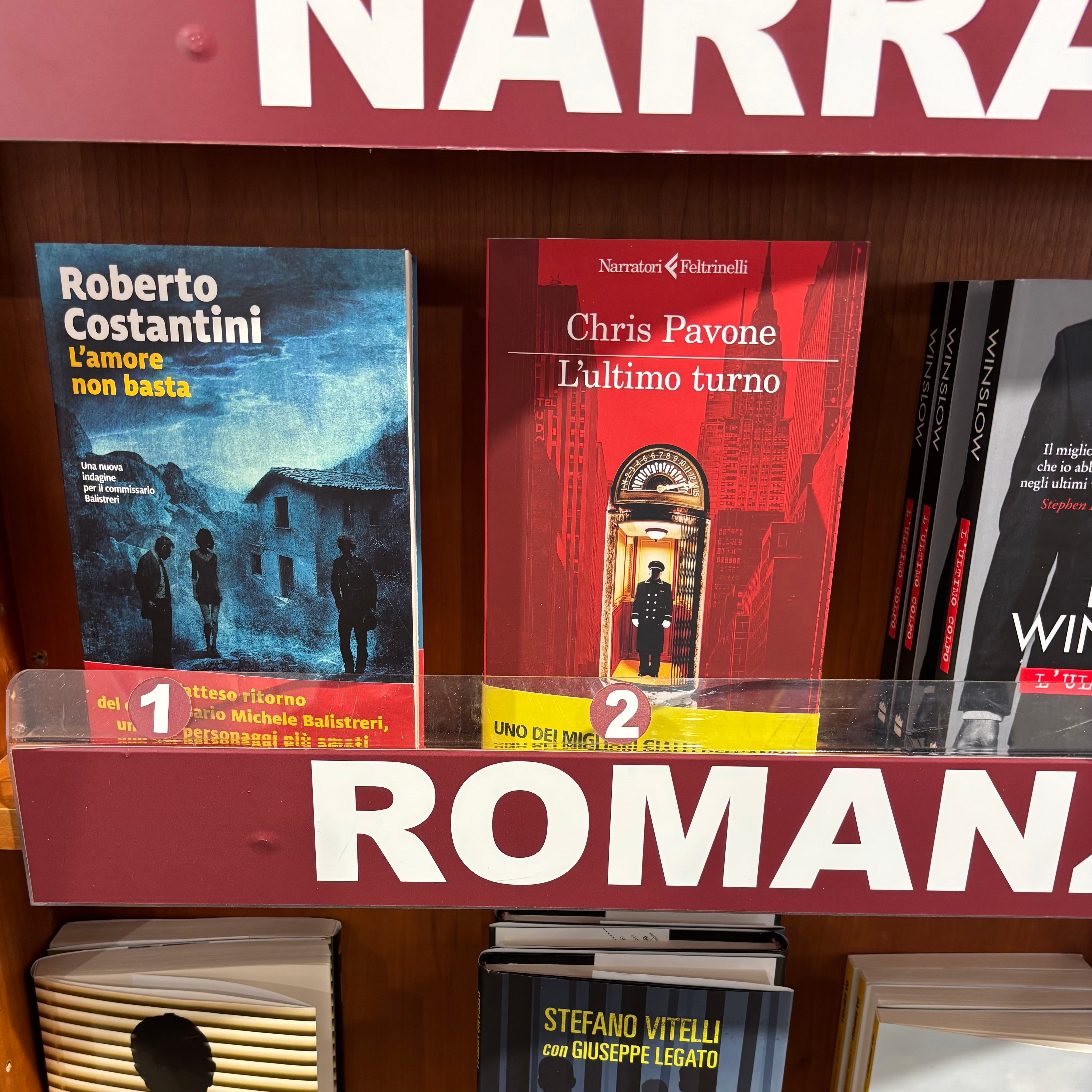
When I left Rome, L’ultimo turno was a national bestseller.
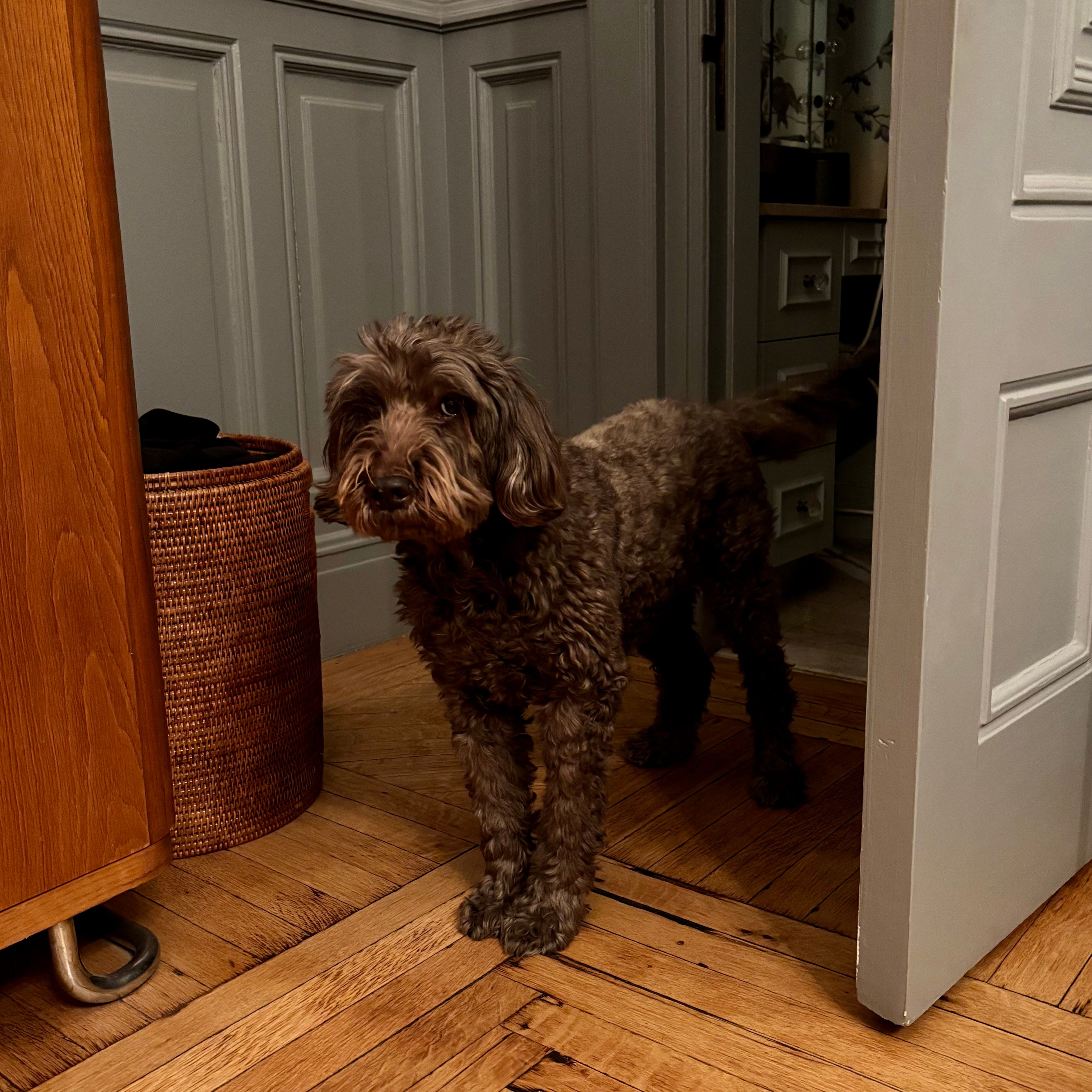
When I got home, Wally was, as ever, waiting.
Comments
Nothing yet. Say the first thing.
Sign in to join the conversation.