
It’s a little strange for me to start the week with a Substack article, but I’ve realized that I write when I feel full of things to say, not because of a routine or deadline.
This marks my first entry in July, and the past three weeks have been full of change and rife with emotion. I tried to escape to the beach for a few days, then made my way up to the mountains before spending time on the lake with our baseball family of friends. If I had to summarize my recent earthly experience in a single word, it would probably be restless.
Sometimes restlessness comes from uncertainty. Sometimes it comes from anticipation. And sometimes it comes from the feeling that the world is changing faster than we can process it.
Today’s article explores three things that have been weighing heavily on my mind: the earthquake in Venezuela, the 21st Century ROAD to Housing Act, and Executive Order 14414, Advancing Regenerative Agriculture and Strengthening American Farm Resilience.
I’ve linked both the legislation and the Executive Order because they’re complex documents. They deserve more than headlines or hot takes. They require the kind of concentration and commitment that allows us to understand not only what they say, but what they may signal.
So, with that, let’s jump in on this 13th day of July, 2026.
Hope you make it a great day, and see you in the future.

Some of you may know that my first major in college was Geology/Earth Science. I loved studying tectonics and became fascinated by the enormous amounts of energy, both kinetic and potential, that the science revealed.
The event in Venezuela was a rare “doublet,” meaning two major earthquakes struck essentially the same area in immediate succession. The first was a magnitude 7.2 foreshock, followed just 39 seconds later by a magnitude 7.5 mainshock. The primary energy release peaked between roughly 20 and 80 seconds after the initial rupture began, meaning the region experienced between 90 and 120 seconds of continuous, violent shaking.
The first earthquake originated approximately 22 kilometers below the surface, while the second occurred at a much shallower depth of about 10 kilometers. That difference matters. As compressional (P) waves and shear (S) waves approach the Earth’s surface, a portion of their energy is converted into surface waves. These waves typically have much larger amplitudes and produce the rolling, ocean-like motion that causes some of the most destructive ground movement during an earthquake. Local geology can either amplify or dampen those effects, but in this case the region experienced a devastating one-two punch, with immense shearing forces generated by two powerful events at relatively shallow depths.
As of this writing, confirmed fatalities have reached 4,490 people, while United Nations estimates suggest that nearly 50,000 people remain unaccounted for. Nearly 17,000 people have been injured, and more than 18,000 have been displaced from their homes, forcing many families into emergency shelters and temporary camps.
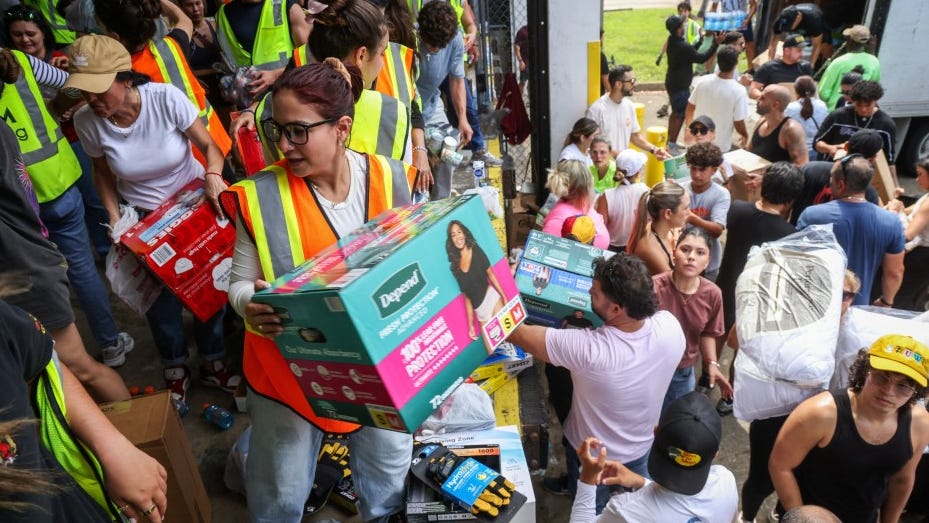
Heartbreaking loss of life. Decades-long setbacks for a country already in massive turmoil.
Just as any natural disaster does, the earthquake has a way of revealing the capacity of a society. Not just the strength of its buildings, but the strength of the systems that support everyday life. How much housing can be replaced? How quickly can food move? How resilient is the energy grid? How prepared are local institutions to respond?
Those questions have bugged me for years.
Because of my work with Pathway Communities, I spend a great deal of time paying attention to housing and public policy. I read legislation, agency reports, executive orders, and research papers because I’m always looking for signals. Sometimes they’re obvious. More often, they’re subtle. They reveal how our priorities are changing and where we may be headed as a country.
That’s what led me to the 21st Century ROAD to Housing Act.
One of the things that first caught my attention wasn’t the the substance of the legislation, but the way it became law. Rather than being signed by the President, it became law under one of the Constitution’s lesser-known provisions after the President neither signed nor vetoed the bill while Congress remained in session. Regardless of where you stand politically, that struck me as another signal that housing has become important enough to continue moving forward, even through an unconventional legislative process.

At first glance, there isn’t an obvious connection between an earthquake in Venezuela and a housing bill moving through Congress. One is a natural disaster. The other is public policy. Yet the more I thought about both, the more I realized they were asking the same question from two different directions.
The earthquake exposed what happens when housing inventory is suddenly lost. The ROAD to Housing Act asks how we increase our nation’s capacity to create more housing before the next disruption arrives. One is about recovery. The other is about preparedness. Both are ultimately about capacity.
Capacity, however, isn't simply measured in the number of homes we can build. It's also measured by how well those homes perform over time. Durability. Energy efficiency. Disaster resilience. Long-term operating costs. If we're going to build millions of homes over the coming decades, I think those qualities deserve to be part of the conversation alongside speed, cost, and quantity.
The goal, after all, shouldn’t be about more houses - it should be to build stronger households.
Those aren’t the same thing.
A home that can better withstand a hurricane, requires less energy to operate, costs less to maintain, and leaves a family with more financial capacity at the end of every month contributes something that extends well beyond the structure itself. It increases resilience.
For decades we’ve measured success by units produced, dollars invested, efficiencies gained, and projects completed. Those metrics matter, but they’re outputs. I’m increasingly interested in outcomes. Are households more financially resilient? Are communities better prepared for disruption? Have we simply increased inventory, or have we increased capacity?
Those questions may not all be answered by the 21st Century ROAD to Housing Act, nor should they be. Legislation has a specific purpose. But I do think they’re worth asking as we consider what kind of housing we want to build over the next fifty years.
The more I sit with it, the more I realize those same questions extend well beyond housing. They're really questions about whether we're creating systems that simply produce more, or systems that become stronger over time.
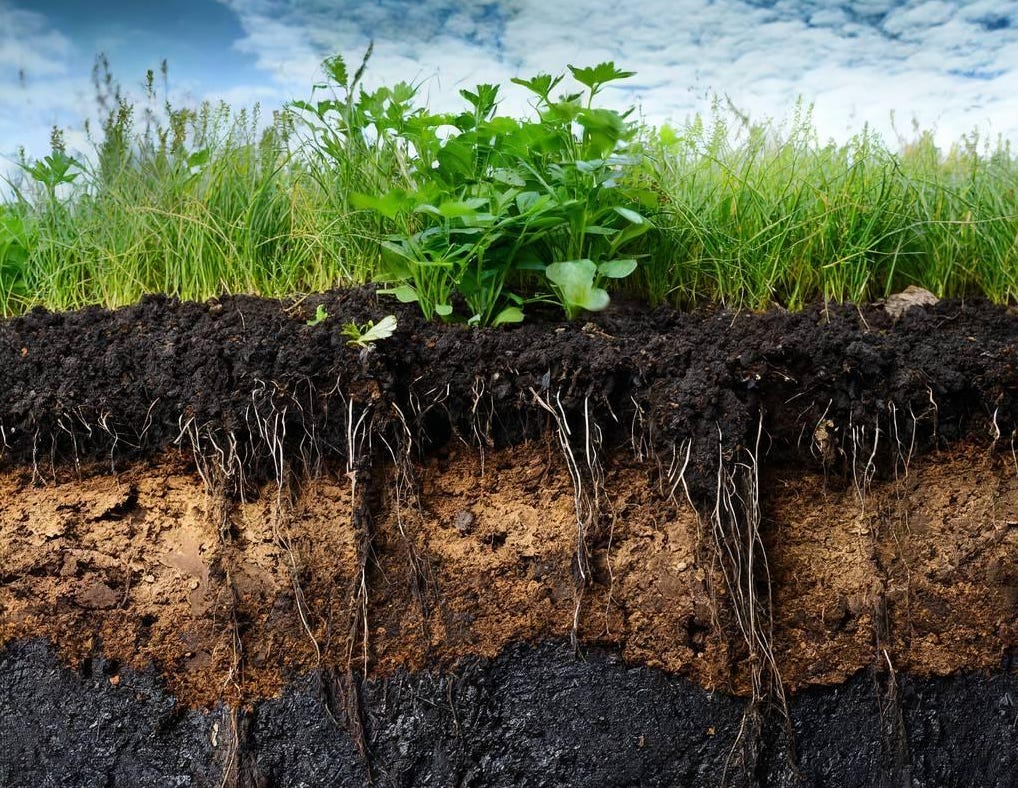
One of the things I’ve come to appreciate over the past several years is that regenerative agriculture isn’t simply a different way of farming.
It’s a different way of thinking.
Traditional agriculture often asks how to maximize production this season. Regenerative agriculture asks how to increase the productive capacity of the land over decades. It seeks to restore the natural biology of the soil, improve water infiltration and retention, reduce erosion, support biodiversity, reduce unnecessary dependence on synthetic fertilizers, pesticides, and herbicides, and create agricultural systems that become more resilient and more capable over time.
That’s a very different objective.
As I read Executive Order 14414, I found myself agreeing with much of its direction because it reframes agriculture as critical national infrastructure, embraces regenerative agriculture as a systems approach, encourages voluntary adoption and innovation over mandates, acknowledges the importance of reducing cumulative chemical exposure and unnecessary dependence on synthetic inputs, and connects soil health, farm profitability, food security, and human health through the long-term productive capacity of the landscape.
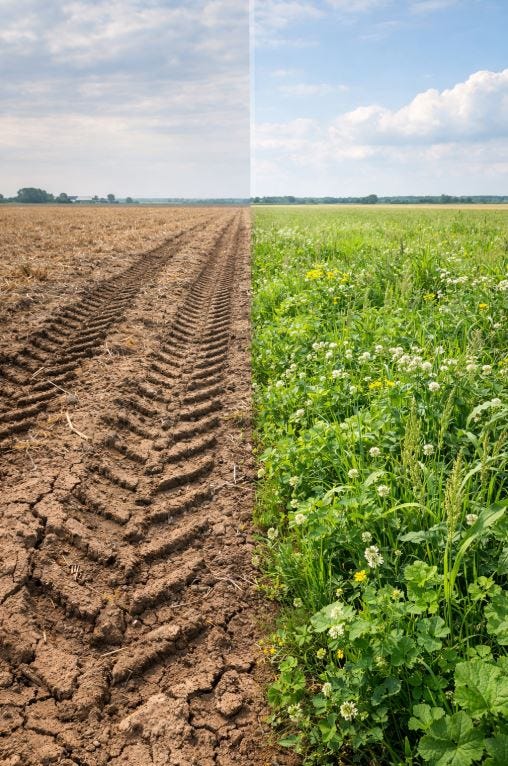
Where I think it falls short is in clearly defining regenerative agriculture, establishing measurable outcomes, taking a more integrated systems view beyond agriculture alone, distinguishing resilience from the underlying capacity that creates it, and addressing the role of regional food systems and food sovereignty in strengthening America’s long-term resilience.
It would be difficult to have an honest conversation about regenerative agriculture without also acknowledging the extraordinary influence of large agribusiness and food companies. Farmers don't operate in isolation. They make decisions within a system of seed suppliers, chemical manufacturers, processors, distributors, retailers, lenders, insurers, and commodity markets. If we're serious about building a more resilient food system, then we have to think beyond the farm and consider the incentives that shape the entire ecosystem. Shout out to groups like Savory, Center for Agricultural Resilience, Kiss the Ground, Rodale & others.
So over the past few weeks, I’ve been drawn to an earthquake, a housing bill, and an E.O. on regenerative agriculture.
On the surface, they have very little in common.
Geology, housing, and farming….
Yet to me, they all seem to be asking the same question:
How do we increase the capacity of the systems upon which society depends - and how do we increase the overall quality of the yield?
Housing
Water
Food
Energy
Technology
Finance
Maybe these were never meant to be separate conversations. They’re all foundational infrastructure. They all influence the stability of a household, the resilience of a community, and ultimately the strength of a nation.
Foundational infrastructure isn’t tested when we build it. It’s tested when we need it.
That feels like a worthwhile thought to carry into the second half of 2026.
Keep exploring, keep tinkering, keep thinking in circles.
See you in the future.
No posts
Comments
Nothing yet. Say the first thing.
Sign in to join the conversation.