
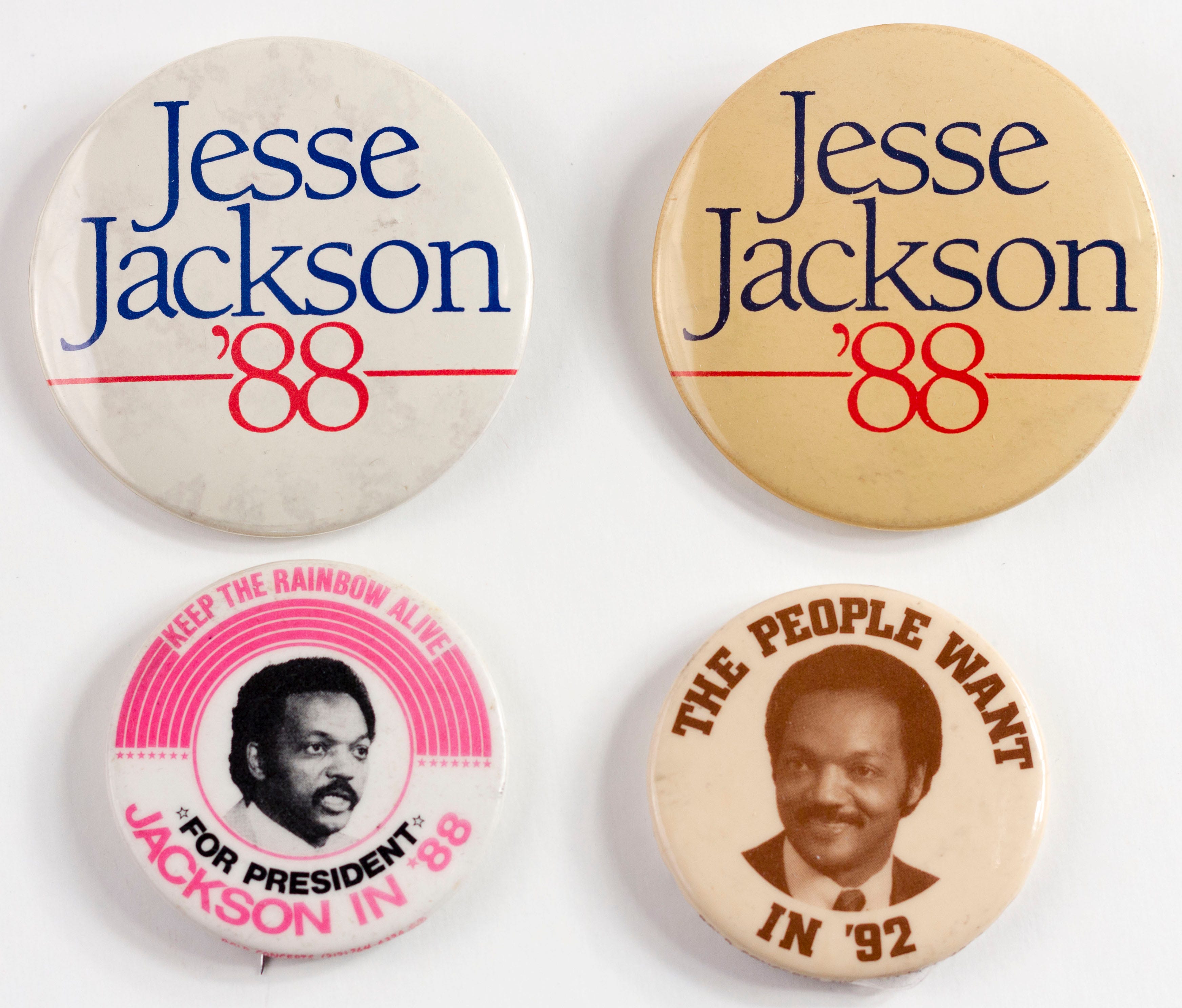
If my mind can conceive it and my heart can believe it I know I can achieve it.
One evening in early 1988 I crossed through the playground of the Arlington, Texas elementary school I had attended from first grade up into the familiar backdoor that lead into the glass-walled atrium of the library. I was still in high school and had cast my vote–my first ever–there earlier in the day in the primary.
I was surprised that there were around 15 or so adults—neighbors—sitting at tables built for children at the meeting with our chair, a kindly but strict silver-haired southern lady, my former music teacher.
Despite having an excellent civics teacher I had no idea what so ever what to expect from this meeting, our Democratic precinct caucus. I didn’t know even what the caucuses did besides electing people to the next level but I knew who I backed: the insurgent Jesse Jackson. Looking around the room there were only two other Jackson supporters in the room, a Black working class couple from the Martin Sprocket factory (the cross street for our house and the school being the imaginatively named Sprocket Lane).
Texas in those days had the infamous “Texas two-stop”, a dual system of running both a primary and byzantine caucuses in which state delegates were split up. Infamous because it was a system that ended up splitting the tidy horse race narratives people like. In 2008 the last real gasp of that system Hillary Clinton won the primary election but lost resoundingly in the caucuses to the far more fired up Obama supporters–of which I am proud that my mother was.
(Spoiler alert this is going to happen again in this story).
I was a total mixed bag politically but already standing somewhere vaguely on the far left. I had hated moving through adolescence under Reagan and the Iran-Contra scandal, still loomed fresh and alive. But Jackson’s mix of social democratic and left-populist ideas (something which would not come again and this time in a shockingly stronger political force in 2016) set against the sheer hope of a multiracial coalition fighting for a multiracial democracy filled me with the exact hope that Jackson pounded on from the lectern preacher-style in a TV debate where he won my vote.
Hold your head high, stick your chest out. You can make it. It gets dark sometimes, but morning comes. Keep hope alive.
Despite some confidence from punk rock and coming out of my shell in high school, I was still painfully shy. I spoke when it came my turn for saying why our caucus should support Jackson but it was a complete confused muddle delivered at least with the overheated conviction one can only do at 17. I think the group was more amused by my enthusiasm and I was elected not just a delegate but our delegation chair to the county convention in Fort Worth. There again the same dynamics held up and I had my first taste of how the sausage is made by having to battle the credentials committee to get the other Jackson delegate seated. Surprisingly I was elected to state.
I could write a whole story about the state convention, held in Houston’s oceanliner like convention hall with its exposed big white metal flourishes and round massive portholes. My first big encounter with a left elected was being in a small knot of laughing and clapping Jackson delegates listening on the floor to a short fiery man with a tall cowboy hat: Jim Hightower.
Jim finished up his pep talk with a line he used over and over and even wrote a book with it on the cover: “The Democratic Party is on the move to the left and there is nothing in the middle of the road but a double yellow line and a dead armadillo.” I laughed and chatted with him afterwards. This was still back in a day where a man like this could and did go on to be elected to statewide office as Texas’s Secretary of Agriculture.
(Funnily enough 30 years later I would work every day next to this remarkable man in his sunlit church converted to office space as the single Our Revolution staffer for Texas).
Texas state conventions at that time were more like the tedious but highly deliberative DSA conventions than the pure made for TV spectacles they are today. There were votes, there were interminable long speeches. I hated it at the time. It felt contrived and manipulated. I don’t know if this was an actual political observation or just my own boredom and disinterest (both?).
But of course the main act–for me–was Jackson himself. He spoke very very late from the podium long after the deadly dull Dukakis had come on as the clear intended climax of the night (balloons dropping from the ceiling no less). But he was fire. Electrifying. Buzzing from moral thunder around Apartheid in South Africa to rural poverty and racism in Texas to pulling back from the heated always at the edge of WWIII like atmosphere of Reagan’s foreign policy.
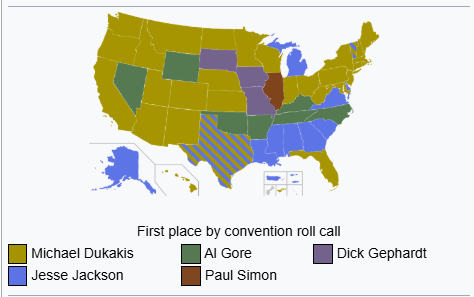
And during it we found we had won. Well won half of it. We had lost the primary but we had won to every one’s surprise the caucus count. Jackson would go on to win 11 contests in total with roughly seven million votes, finishing a respectable second.
I wish I could say I was inspired or learned some profound positive message. I think I was too much in my own personal transition to young adulthood (which was frankly rough due to my own confusion and lack of really being ready).
And worse was there was no vehicle afterwards. The flaw of Jesse was of course his own ego and lack of attention to longhaul organizing. The Rainbow Coalition felt like to me it had no on ramps for being involved. Unlike the long Bernie moment there felt like was no momentum. Just an abrupt falling off and then the deep disappointment of one of the least inspiring presidential races of my life later that year. It put me off from electoral politics for many years after.
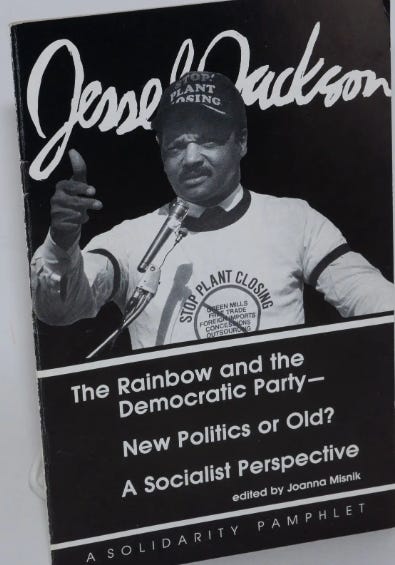
I did however encounter in late 1988, Solidarity’s excellent pamphlet sympathetically critiquing Jackson’s campaign. Written by the late and brilliant comrade of mine Joanna Misnik (her recent death accounts for much of this draft actually) it gave my disappointments form.
Some of those hold, some I felt like was a rejection that really didn’t help the US Left until it could reconcile the Democratic Party question in 2016 in a real mass way.
But for all his flaws Jesse Jackson pushed me into thinking–and best of all feeling–that another world was possible. That hope can yes be kept alive even over decades.
No posts
Comments
Nothing yet. Say the first thing.
Sign in to join the conversation.