
In the autumn of 1948, roughly 550,000 Nationalist troops were stationed in Manchuria. They held the cities Shenyang, Changchun and Jinzhou. They had American weapons and American-trained officers. They were some of the best divisions the KMT possessed. They had been there for three years.
By November 2, 1948, they were gone. Destroyed, captured, or defected. All of Manchuria was in Communist hands. The campaign that accomplished this had taken fifty-two days.
The Liaoshen Campaign, named for Liaoning province and Shenyang city, were the campaign’s two goals. This was the first of three decisive campaigns that would end the Chinese Civil War. It destroyed the KMT’s strategic reserve. It handed the People’s Liberation Army (PLA) a numerical advantage it would never surrender. And it was the product of something that had been building in Manchuria for three years. Lin Biao’s patient, methodical preparation for the moment when the conditions were finally right.
To understand the Liaoshen Campaign, you should understand what Manchuria looked like in 1948.
The Nationalist position was, on paper, formidable. But it had a structural flaw that Lin Biao had spent two years identifying and exploiting. The KMT’s strength was concentrated in three cities connected by railways. There was Shenyang in the centre, which we’ve encountered before. It was called Mukden at the time of the Japanese seizure in 1931. Then there was Changchun to the north, and Jinzhou to the southwest. Jinzhou linked Manchuria to the rest of China. Everything between those cities was PLA territory.
The KMT generals in Manchuria knew they were in trouble. Several of them, including General Wei Lihuang who commanded the Manchurian Nationalist forces, had been arguing for months that the only rational option was to withdraw from Manchuria entirely. They wanted to concentrate forces, shorten supply lines, and fight the civil war on terrain more favourable to the KMT. Their recommendation: pull the 550,000 men south through Jinzhou before Lin Biao sealed the corridor, regroup in north China, and fight from a stronger position.
Chiang Kai-shek refused. The cities were symbols. Manchuria was the industrial heartland. Abandoning it would be a devastating political admission that the war was going badly. And Chiang believed, or wanted to believe, that the cities could be held and that relief forces could eventually break through.
That disagreement between the generals on the ground and the generalissimo in Nanjing is one of the recurring features of the KMT’s defeat. The men who could see the situation clearly were overruled by the man who had political reasons to deny it.
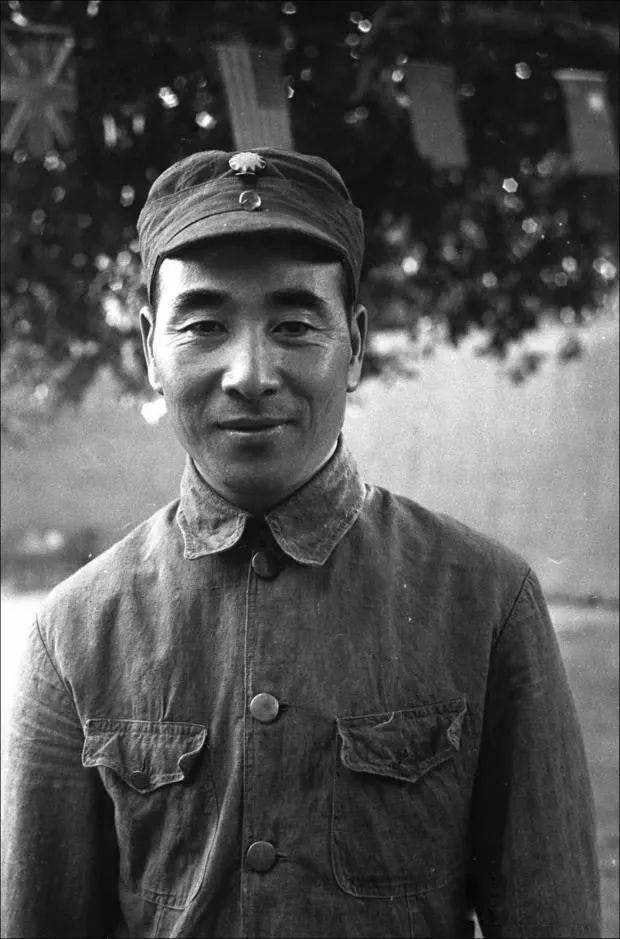
We’ve talked about Lin Biao several times. He commanded the Eighth Route Army forces at Pingxingguan in 1937, one of the few genuine Chinese tactical victories against the Japanese. He was the commander who received Stalin’s transferred Japanese weapons after the Soviet withdrawal from Manchuria in 1946. He was the architect of the patient guerrilla harassment that had, through 1946 and 1947, slowly strangled the KMT’s Manchurian position.
By 1948, his Northeast Field Army had grown to somewhere between 700,000 and 800,000 troops. These were not the same men who had moved into Manchuria two years earlier. Now his army had been fed by captured KMT weapons, as well as leftover Japanese ones. His army now had artillery, armour, and the ability to conduct conventional operations against fortified cities. This was a huge step forward from its previous guerrilla harassment. They had been trained intensively. The political education that ran alongside the military training meant that soldiers understood what they were fighting for. That contrasted with their KMT targets, who were often press-ganged and unpaid.
Lin Biao also had something more intangible: momentum. The PLA had been winning. Defections from the KMT were continuous. Every KMT soldier who crossed over brought weapons and intelligence. Every KMT unit destroyed, reduced the force facing him. The psychology of a winning is not a small thing.
His campaign plan was elegant. Don’t attack Shenyang, where the KMT forces were strongest and most concentrated. Don’t attack Changchun, which was already effectively besieged and going nowhere. Attack Jinzhou, the gateway to the south. That was the city through which any reinforcement or evacuation of the Manchurian forces would have to pass. He would cut the corridor. Then let the Manchurian KMT choose between fighting their way out or dying in place.
Before Jinzhou, there was Changchun.
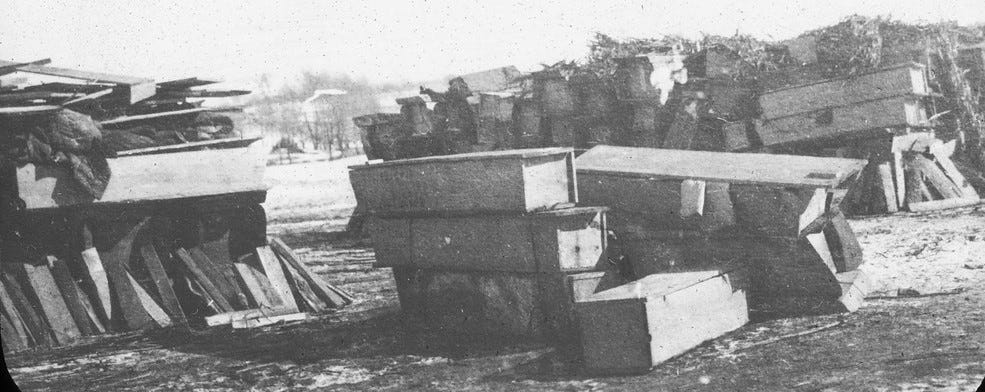
Changchun had been under effective Communist siege since May 1948. The city had a population of perhaps half a million civilians, plus a Nationalist garrison of around 100,000 soldiers. Lin Biao’s forces held a tight perimeter and blocked all supplies from entering.
The siege lasted five months. By the end, the city was starving. Civilians trying to pass through Communist lines to escape were, for much of the siege, turned back. The Communist Party did not want the city’s food problems solved by reducing the number of mouths inside. Reports from the time describe scenes of desperate hunger. Estimates of civilian deaths from starvation during the Changchun siege range from 120,000 to 330,000. It is one of the most lethal episodes of the civil war. It receives far less attention than it deserves. The Nationalist garrison commander eventually negotiated a surrender in October 1948, crossing to the Communist side with most of his men.
The siege of Changchun was not glorious. It was a calculation, that starving the city would produce a surrender without costly urban combat. That calculation was correct. But the cost was borne by civilians who had not chosen to be trapped there. In Changchun, the Communists won by starving the city’s people.
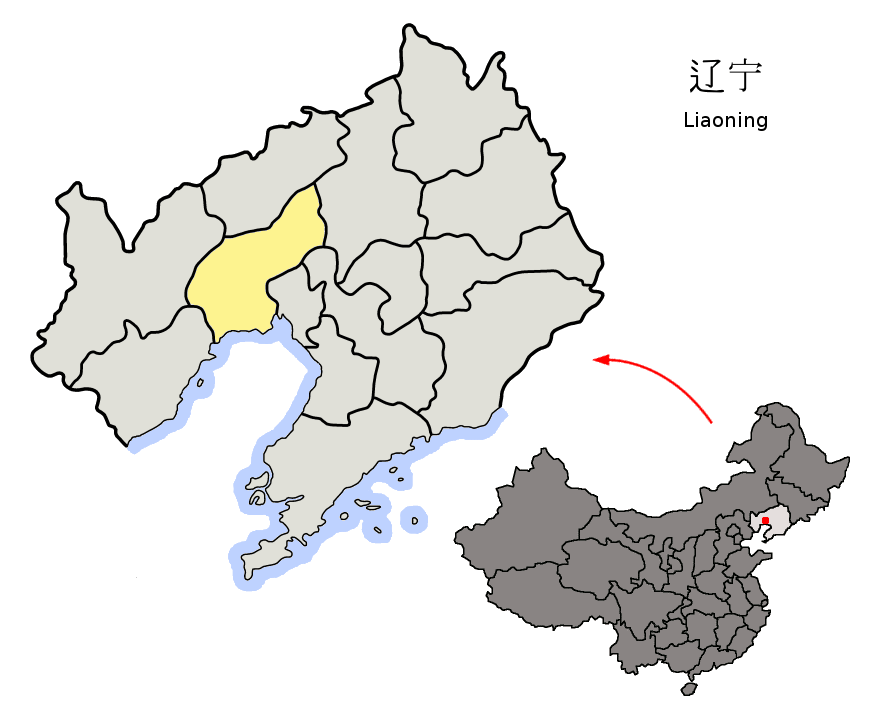
On October 9, 1948, Lin Biao’s forces began the assault on Jinzhou. That is now a district within the city of Dalian, which has featured many times so far. This time, Jinzhou fell in thirty-one hours.
The speed was shocking. Jinzhou had been expected to hold for weeks. Its rapid fall meant that before the KMT could react, before Chiang could decide what to do, before relief forces could be redirected, the corridor out of Manchuria was closed. The 550,000 Nationalist troops in Shenyang and the surrounding area were now cut off from the rest of China.
Chiang’s response was to order a massive relief operation. He assembled a force in the south, including some of his best American-trained units. He sent them north to retake Jinzhou and reopen the corridor. He also ordered the Shenyang forces to break out southward to link up with them.
The relief force advanced. The Shenyang forces prepared to break out. And Lin Biao destroyed them both.
The relief column, fighting its way north toward Jinzhou through difficult terrain, was caught in the open and systematically taken apart. The Shenyang breakout was attacked before it could develop momentum. Within two weeks of Jinzhou’s fall, both efforts had failed. The Nationalist commander at Shenyang, facing a hopeless situation, attempted to flee by air. His troops were either captured or defected en masse. By November 2, 1948, the campaign was over.
The scale of what happened in Manchuria in fifty-two days is shocking.
Of the roughly 550,000 Nationalist troops in Manchuria at the campaign’s start, approximately 470,000 became PLA casualties. They were killed, captured, or defected. The defectors were the largest category. Soldiers who crossed over were processed, politically educated, given the choice to join the PLA or return home, and many of them joined. The weapons they brought: American artillery, tanks, vehicles and communications equipment went directly into the PLA’s supplies.
The Nationalist forces, that had taken three years and enormous American aid to assemble in Manchuria, were gone in seven weeks. And the PLA that emerged from the campaign was larger and better equipped than ever.
Lin Biao’s Northeast Field Army was now free to move south. The strategic centre of gravity of the civil war was shifting. The next campaign had already been decided.
The fall of Manchuria was not just a military achievement. It was a public relations coup. It told everyone watching, on both sides, what the trajectory of the war was.
American officials in China, already pessimistic after the Gold Yuan collapse, concluded that military support for Chiang was being poured into a situation beyond rescue. The State Department’s China White Paper, published in August 1949, would later lay out in careful detail how American material had failed to save a government that could not save itself. But by November 1948, that conclusion was already being drawn privately.
Within the KMT, the loss of Manchuria accelerated the process of quiet calculation that the Gold Yuan collapse had begun. Officers who had been uncommitted started making different choices. Officials who had been loyal started hedging. The political will that holds an organisation together under pressure was leaking away.
And within the PLA, there was something harder to measure but equally important: the confidence of an army that had just done something they had been told could not be done. They had destroyed half a million enemy troops in fifty-two days. They had taken cities that were supposed to be impregnable. They knew now that the remaining battles were a matter of time, not of outcome.
Next time, I’ll talk about how that shook the KMT and how it impacted the last major election in mainland China.
Images:
Lin Biao, 1944 in KMT uniform, By unknown author - http://taihangsummit.com/9ba6f14d17/, Public Domain, https://commons.wikimedia.org/w/index.php?curid=99735582
"Stacks of coffins, Changchun 7385488" by ralphrepo is licensed under CC BY 2.0.
"Location of Jinzhou Prefecture within Liaoning (China)" by Croquant is licensed under CC BY 3.0.
Comments
Nothing yet. Say the first thing.
Sign in to join the conversation.