
This class was sessioned by @sherminvo. Shermin noted that in most cases, when people talk about Bitcoin they usually talk about the currency and forget the network. Without the network, there won't be the currency. Bitcoin is a publicly or collectively maintained payment network referred to as DAO kept running by Autonomous stakeholders.
It is worth noting that Bitcoin operates based on proof of work where trust is orchestrated by mathematical frames rather than legal contracts as seen in traditional organizations.
Proof-of-work is what guarantees trust in the absence of an intermediary as a new type of coordination over the Internet. By so doing individuals get network incentives with network currency because of their participation in maintaining/operating the network.
The Bitcoin Token Flow goes from holders who can send BTC over the network and pay a fee in BTC to miners who add the transactions via PoW in their block and mint new Bitcoins which they can hold or sell for fiat on exchanges and anyone can buy or sell Bitcoin on the same exchange & become a Btc holder. The loop continues.
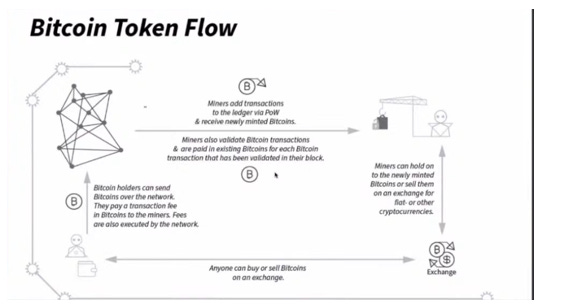
Fig . BTC Token Flow. Credit: Sherminvo at TE study session
It is important to look at BTC privately because it is a distributed internet tribe like a nation-state with various unique policies that are generally complex. These include their economic systems. social systems and for Bitcoin, cryptoeconomic systems.
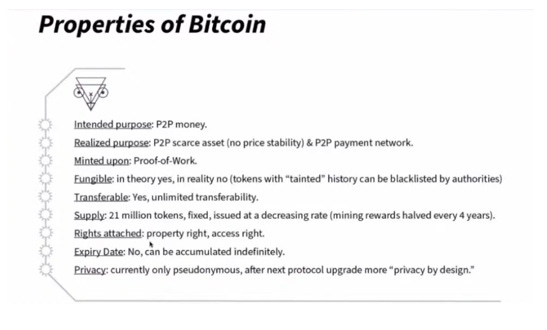
From Satoshi's whitepaper of 2008, the purpose is to “provide a P2P electronic cash system that resolved the double-spending problem over the Internet in the absence of traditional financial intermediaries and with lower settlement fees than the current financial system.
These principles are derived from speculation & trails in online platforms and sources where Satoshi was active. This is because the identity of Satoshi remains unknown till this writing.
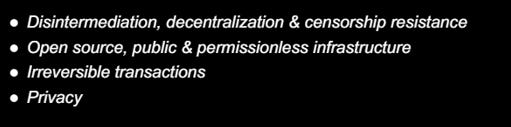
These principles include:
The big issue here is censorship resistance due to state authorities who can intimidate people through banking laws regulations, privacy laws, and monetary systems. Hence, the BTC p2p electronic systems to avoid censorship.
The codes were made public for making contributions. Anyone can become a mining node operator and write transactions to the ledger without needing to ask anyone else within the network for permission to do so.
This principle, over time, is now echoed as immutability even though it wasn't mentioned in the whitepaper. The initial priority was to create a robust distributed consensus mechanism in the absence of trusted intermediaries.
As an important political principle, there is a need for a feature that will circumvent the double spending problem but publicly broadcasting transactions lowers the privacy of the parties undertaking the transaction in the network.
The Double Spend Problem describes the difficulty of ensuring digital money is not easily duplicated. Trusted third parties such as banks prevent double spending by privately verifying each transaction. The Bitcoin Network prevents double-spending by allowing every member to verify every transaction.
The functional design of bitcoins is that money is an entry in a collectively maintained ledger. Satoshi proposed a solution where Bitcoins would be represented as “a chain of digital signatures” where “each owner transfers the coin to the next by digitally signing a hash of the previous transaction and the public key of the next owner and adding these to the end of the coin.”
Tokens can be held/identified using a blockchain/Bitcoin address with private keys as digital signatories.
● No system administrators doing password management.
● Bitcoin address is similar to that of bank account numbers (finance) or an email address (communication).
● In combination with a Bitcoin transaction, the private key creates a digital signature that proves ownership and therefore the right to spend – one’s tokens.
● Any other network node can authenticate rightful token holders who want to send Bitcoins from one Bitcoin address to another Bitcoin address if they run the same cryptographic algorithm with which the key pair was generated. Visit TOKEN KITCHEN Token Economy: DAOs & Purpose Driven Tokens, Shermin Voshmgir, 2024
This is the greatest challenge, "How to deal with malicious network nodes called Byzantine Geral Problem/nodes" where there is no central security system protecting the network. This is about agreement between different actors on which data is correct or incorrect.
This is where Proof-of-Work came in with its functionality distributing payment verification process in the absence of central coordination.
This mechanism PoW also ensures that transactions are executed in order so that the same unit of currency is not spent by the same person multiple times through a computational chronological order.
The mechanism consists of several steps to allow all nodes to achieve consensus:
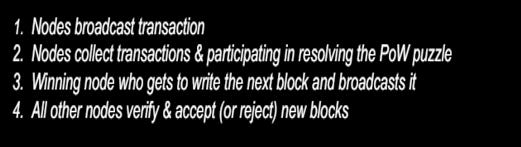
The design included a 10-minute block creation interval aka epoch. The implication is that the longer the block interval, the higher the guarantee of higher levels of security. More nodes will be involved in the mining process and increase the computational power of the network, In the case where the block interval is shorter, this favors only miners with efficient & powerful mining hardware. The negative effect is that it leads to the centralization of mining ability.
The reward is for:
i. Incentivizing node miners for their contribution to the network through their PoW
ii. Provides a mechanism for Decentralized Minting for issuing/distributing Bitcoins instead of the central authority.
This was instituted to deter network attacks designed in such a way that the system is assumed to be secured as long as honest nodes collectively control more CPU power than any cooperating group of attacker nodes. Also, the hashing and timestamping of transactions make them unchangeable. The only problem is that the Bitcoin network scalability is not going well due to its large consumption of energy. This consumption is because of the intense computational power required for PoW.
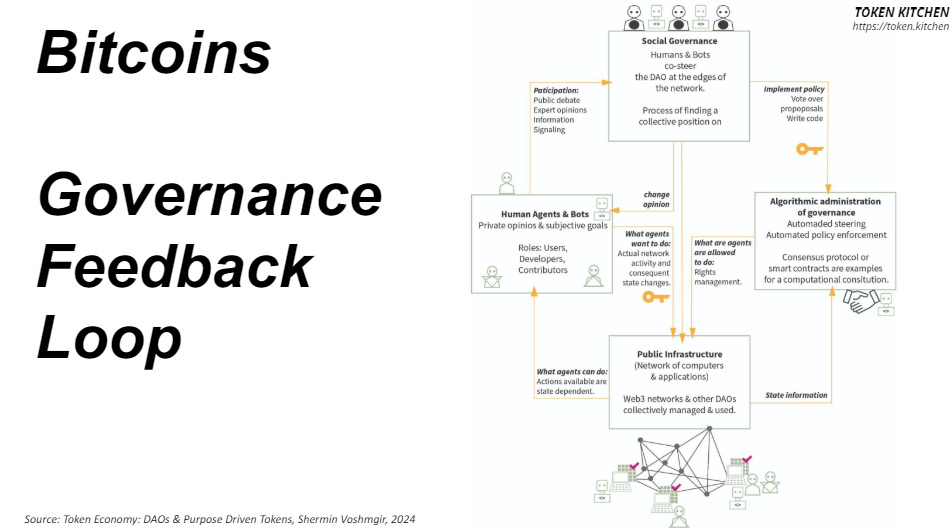
This resolves from Social Governance to Algorithmic Administration of Governance to Public Infrastructure to Human Agents & Bots and the loop continues.
These include full nodes, miners, users, protocol developers, hardware producers, and wallet developers.
These include external policymakers, exchanges, merchants & nation-states, non-human institutions, and other Web 3 protocols.
All of these have their roles, functions, permissions, rights, & power, rewards & obligations. You can get @sherminvo's book: Token Economy: DAOs & Purpose Driven Tokens, Shermin Voshmgir, 2024.
Unless many DAOs today with their tokens pre-mined or distributed to founders/investors, Bitcoins are distributed via PoW.
>Monetary Policy: There is a fixed token supply of slightly under 21 million and the last will be mined & minted in 2140.
> Network Taxes are received in the form of transaction fees. Fees are determined by:
○ Urgency of the transaction
○ Network congestion
○ Transaction size
○ General market conditions such as Bitcoin’s exchange rate.
> Monetary Policy Changes
Changes to the Bitcoin network are only possible in theory but the consensus to make it happen is highly unlikely. The probability of miners agreeing to increase the number of Bitcoin is unlike seeing that it will reduce the scarcity of the coin and water down its value.
> Treasury & Resource Allocation
There was never a treasury fund to fund ongoing activities in the network. Early participants contributed out of intrinsic motivation. The participants who provided marketing services were code developers and full-node operators. Incentivization is in the form of taxes favoring mining node operators through PoW.
The protocol achieved this singular purpose in the absence of centralized authority.
The intended P2P is only in theory because we still need to buy BTC from centralized exchanges.
Plus, it is not practicable for everyday payment because of its price fluctuations. Bitcoin is more relatable than digital gold due to its scarcity.
Against the intended purpose to reduce transactions, international btw, the average fees of a Bitcoin transaction are much higher than anticipated. Hugh Bitcoin adoption, & speculation are the root cause We believe this can change when 2nd layers are built on the network to enable remittances or micropayments with lower costs.
The pseudonymous features of Bitcoins have been lost through centralized onramping & offrampings making it less fungible/censorship resistant.
The initial stakeholders were mining and light nodes. The emergence of full nodes and mining pools changes the political and economic dynamics of the network.
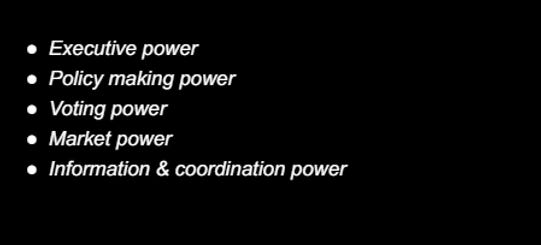
There is no executive day-to-day management of the network via a foundation or other
special-purpose incorporated entity as
There is no centralization around a foundation that coordinates day-to-day operations and strategies, hence Some argue that the Bitcoin network is the only DAO
Given the number of people using the network and correlating it with the few numbers of persons who know the know-how of adding or making Bitcoin Improvement Proposals. This questions the level of decentralization. Mining pools can easily pursue their interest through their huge economic power.
Bitcoin holders have no direct possibility to vote over protocol changes except when done collectively to indirectly compel mining node operators into accepting upgrades.
Mining node operators are those who directly vote on protocol changes based on hashing power.
Bitcoin holders, mining node operators, wallet developers, merchants & exchanges, external policymakers, hardware, and electricity producers influence the market power.
Knowledge and information are vital for inclusive policymaking, but better coordination among certain groups can create power imbalances. Currently, a "Wild West" culture exists, dominated by those with technical expertise, financial power, or loud voices. Additionally, reliance on third-party servers for transactions introduces information asymmetries and privacy issues.
Comments
Nothing yet. Say the first thing.
Sign in to join the conversation.