
Last time I write about trying to find phenomena where the physics might stay the same as you shrink down the dimensions. Another one of the themes of the independent science society is to figure out how to create complex phenomena worth experimenting with on tabletop.
Previously I demonstrated Rayleigh Bernard convection cells with Mica powder and oil, where I saw cell-like devisions in liquid when I applied a temperature gradient. This was an example of non-equilibrium , self organising phenomena due to the application of a temperature gradient. I've preciously tried and failed to do other things like the Briggs Rauscher reaction, which is a (safer) example of an oscillating chemical reaction.
With regards to complex phenomena, I am trying to figure out which variables actually matter through both math and physical experiments, which is hard. In the case of convection cells, we have variables like the thickness of the liquid layer, the temperature gradient, the size of the container, amongst other things. And these ideas are something I want to get around to understanding myself in this lab.
Another piece of complex phenomena that caught my eye is Liesegang rings. These are rings that form in a gel according to a spacing that goes like (1 + p)^n, which is a geometric series. You can get them through a bunch of different waysHere is what they look like, images taken from this really cool website on Liesegang ring models.
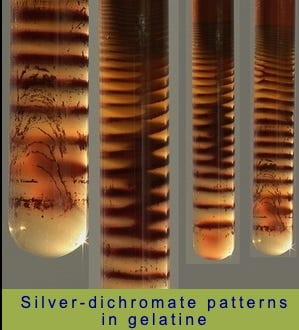
You can see quite clearly the spacing going in a geometric pattern in this one with magnesium hydroxide.
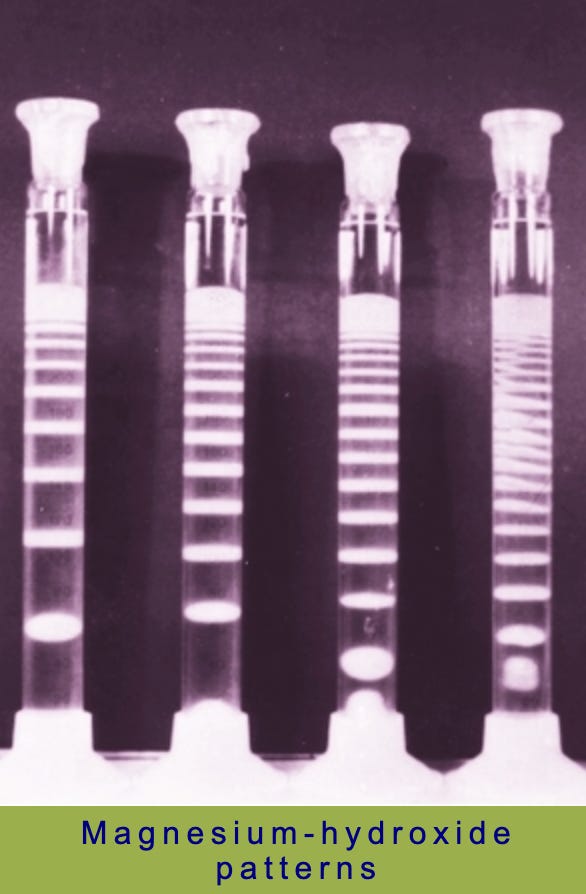
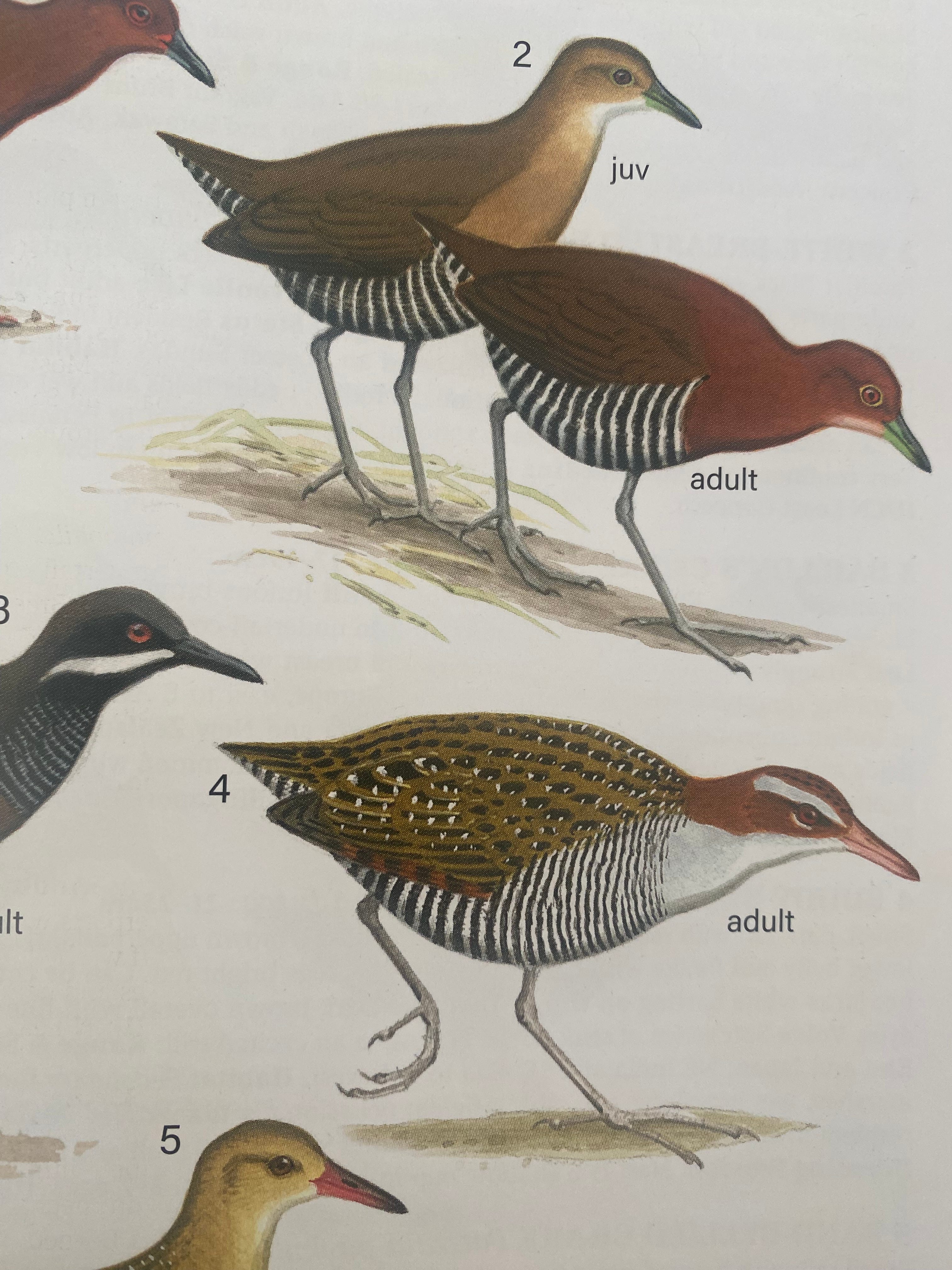
Why do I find this interesting? When reading books about embryology, like the Triumph of The Embryo, I got interested in how chemical reactions give rise to patterning in some animals. I also find that the theory of patterning in chemical reactions is mathematically rich as well, something which I'm trying to understand more through the lens on non-equilibrium statistical mechanics. The aesthetics of these things are just mesmerising. Even though liesegang rings aren't the mechanism behind animal patterning, you still can't help but marvel at what goes on behind the scenes.
Here's a page out of 'A Field Guide To the Birds of Malaysia'.
And to the best of my knowledge, the mechanisms behind Liesegang rings haven't really been fully resolved yet. Which puts this in prime territory to try and replicate some of this stuff at home.
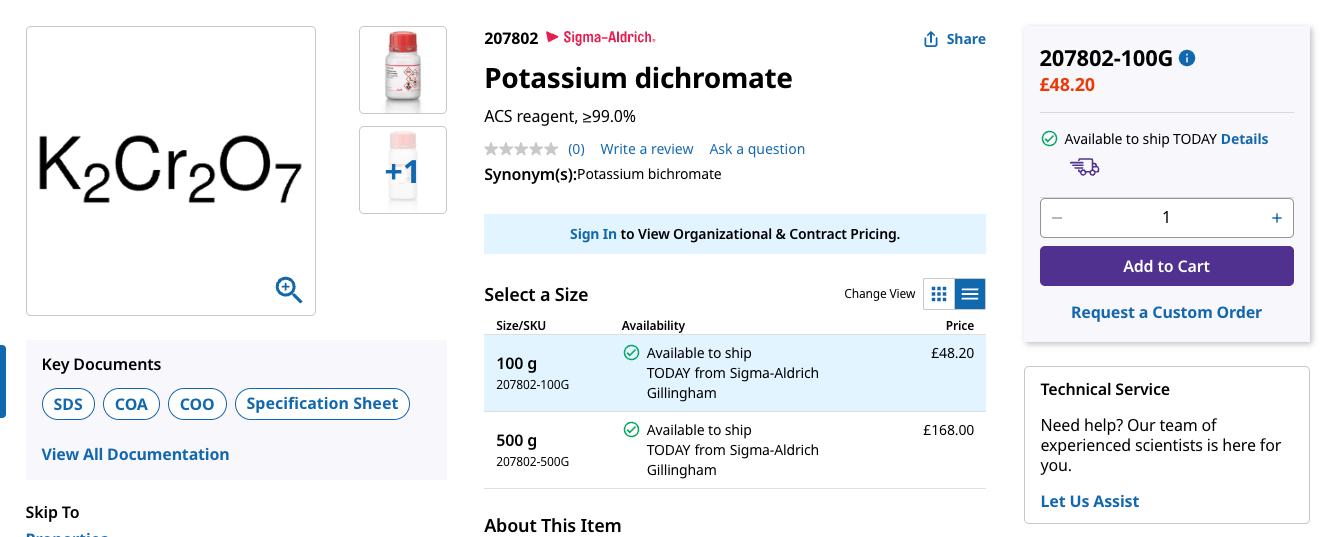
I had a think about trying to replicate Liesegang rings using Potassium dichromate and silver nitrate, which seems to yield the brightest rings. But when I was shopping for potassium dichromate on sigma aldrich and then realised that it was carcinogenic, with inhalation risk. So not really that appropriate for homelab style stuff...
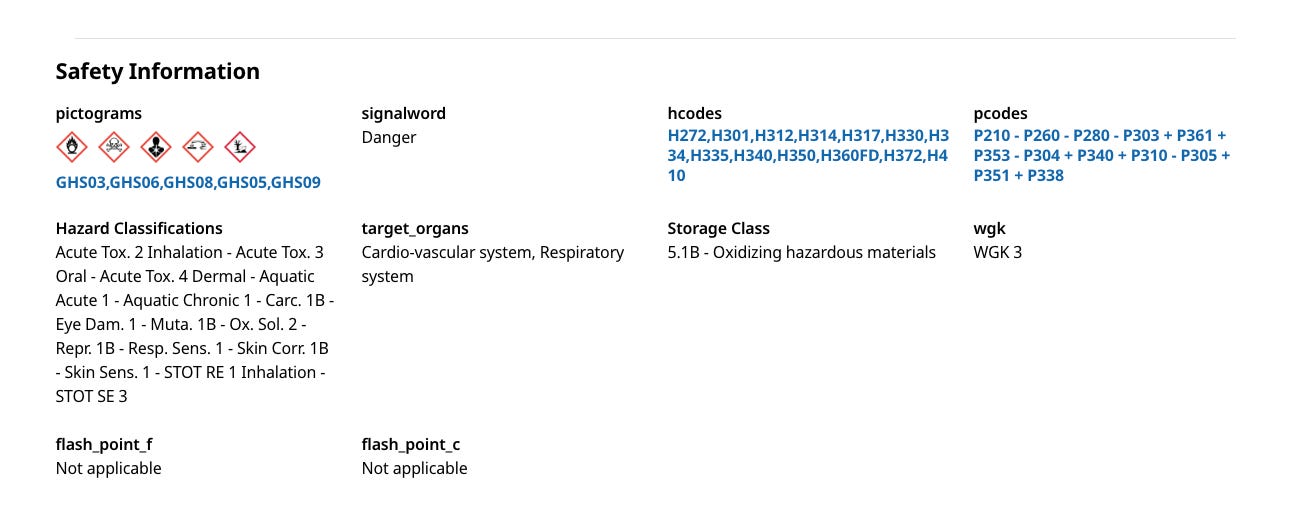
And then the other example on the Liesegang website was using a gel soak of magnesium hydrochloride with ammonia, but I also found the ammonia quite sketchy since the concentrations looked high.
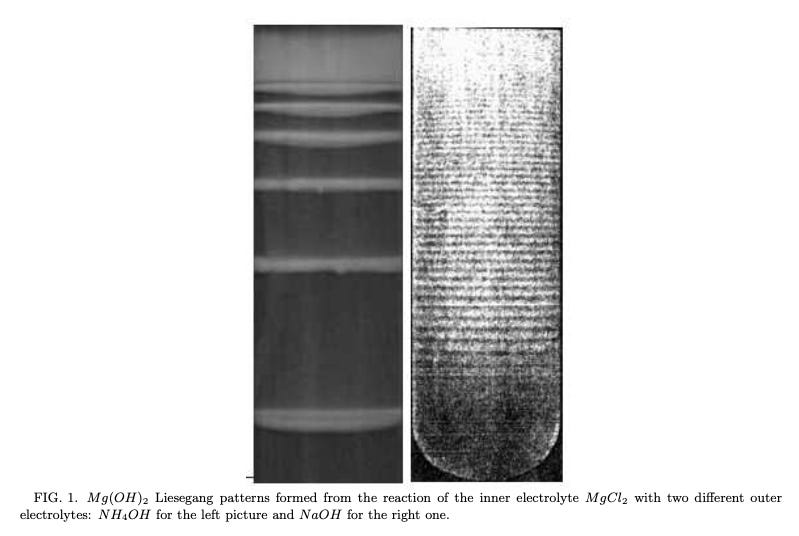
So then I was looking around with Gpt Sol to try and find some safer versions, along with reagants that were more available. So then I came across a paper by Chopard in 1999 which managed to create Liesgang rings out of agar jelly (safe), magnesium chloride (bath salts) and sodium hydroxide. Sodium hydroxide is called caustic soda and can be bought from stores. It's corrosive but doesn't have fumes and I previously used it trying to make quantum dots at home.
Here are photos of the Liesegang rings from the Chopard 1999 paper
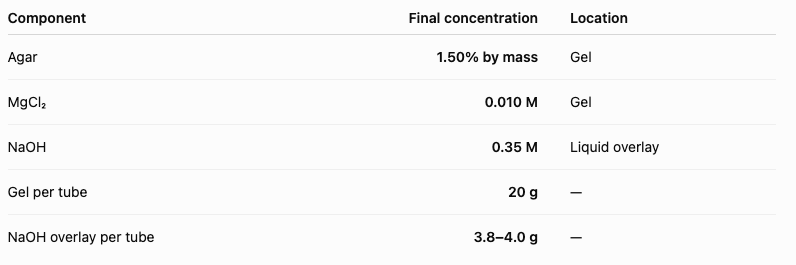
I tried the following recipe to make the rings with NaOH, shown in the image on the right.
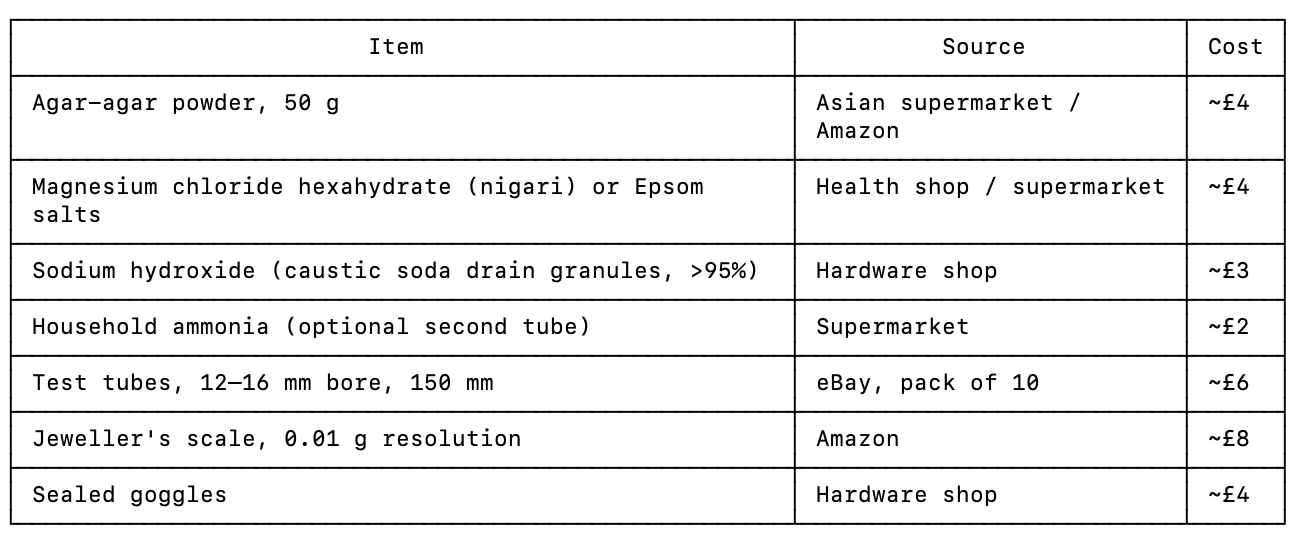
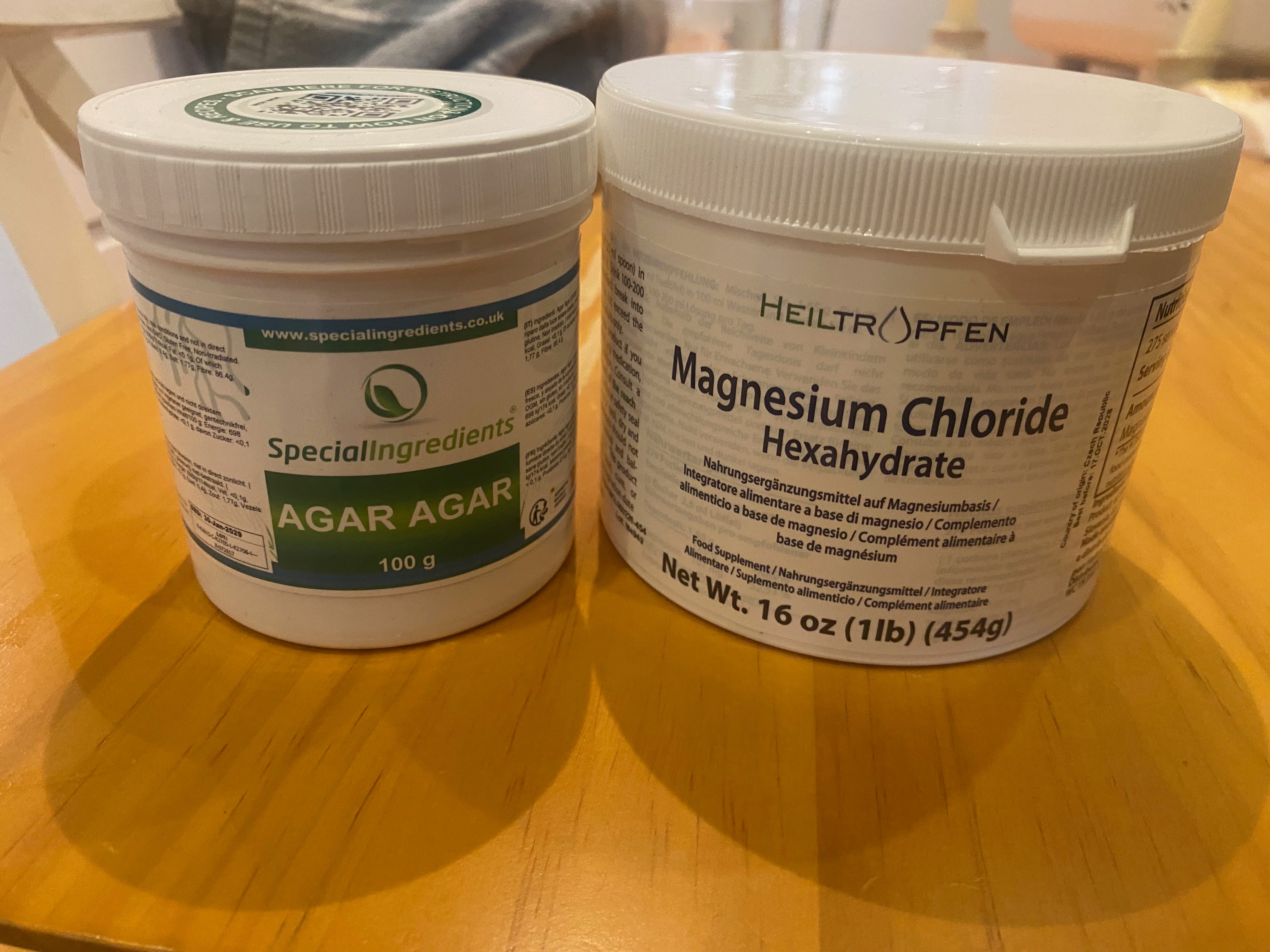
The reagents were pretty cheap as well, here is th e complete list with the estimated costs from Claude. Again to stress, most of these available pretty readily out there! I would really like to make chemical network research more accessible to home experimentation,
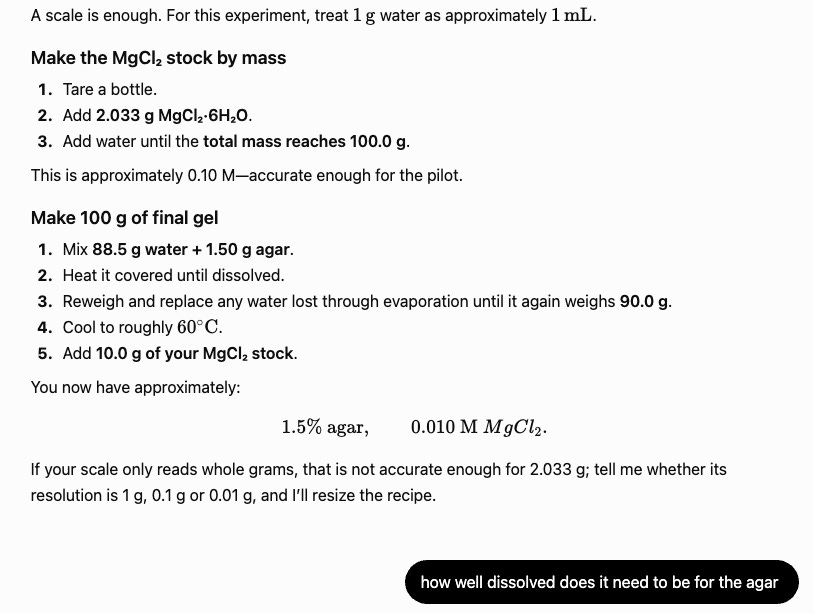
I got Sol to tell me the concentrations and procedure to replicate the paper.
Here is my first attempt. And spoiler alert, it's a fail and I couldn't get the bands to separate properly for some reason. But I think it's just as important to share failures along with successes in the spirit of being a transparent independent scientist so here goes...
Embarassingly the fiddliest part of all this was trying to get the agar jelly nice and smooth so that the gel wouldn't be cloudy, so that I could see the banding.
I first tried to mix 1.5g of agar powder with 90ml and then put it in my magnetic stirrer and heater, but I only managed to get the agar to a temperature of 60C, which isn't enough to fully dissolve the agar powder - you need to get it to near boiling for it to dissolve properly.
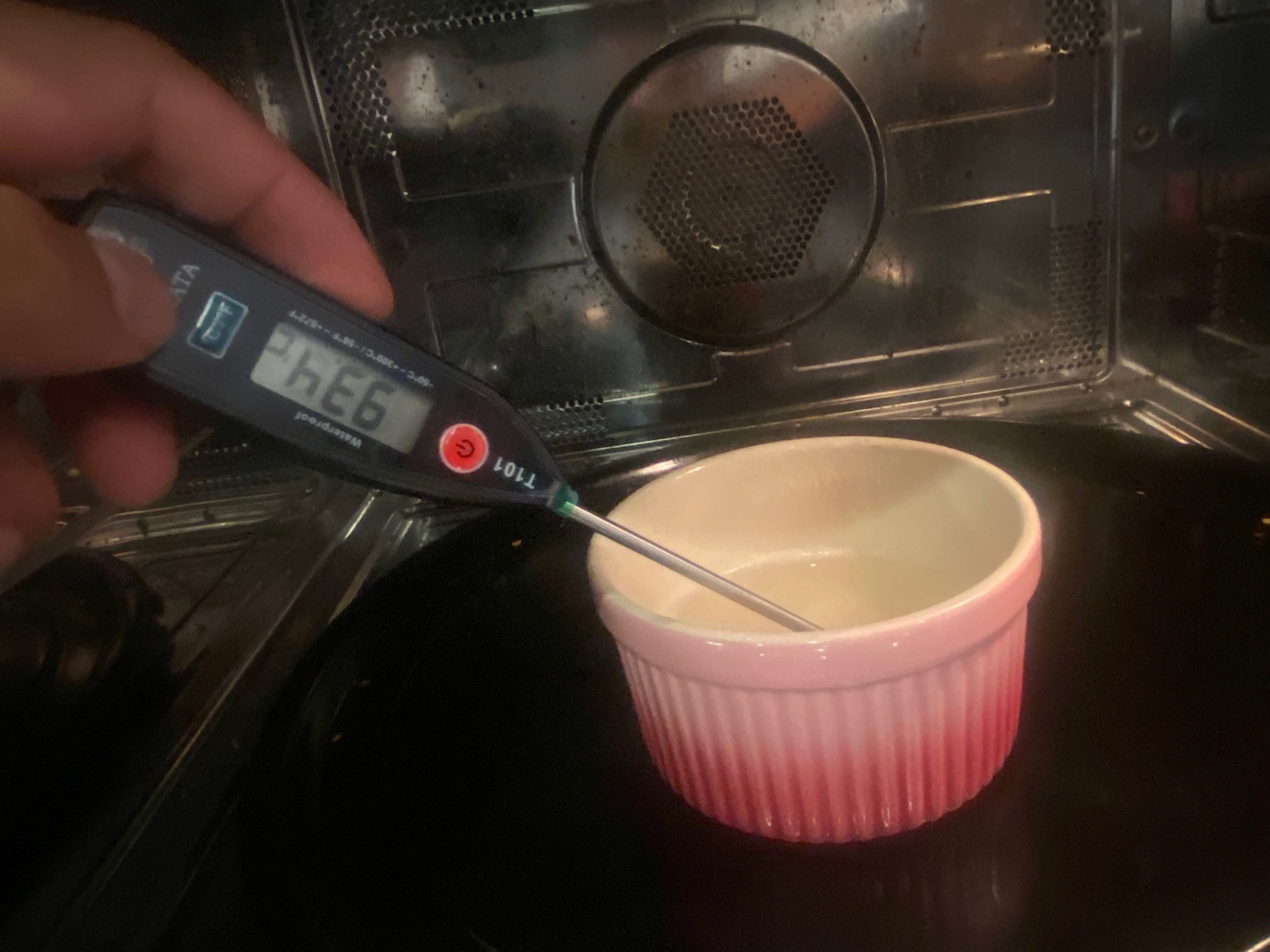
It was much quicker and easier to get the agar to 90C temperature by putting it in a microwave for 40s at 900W. You can get agar from any old food shop or on amazon. I used a basic cooking temperature probe to test that it got to temperature.
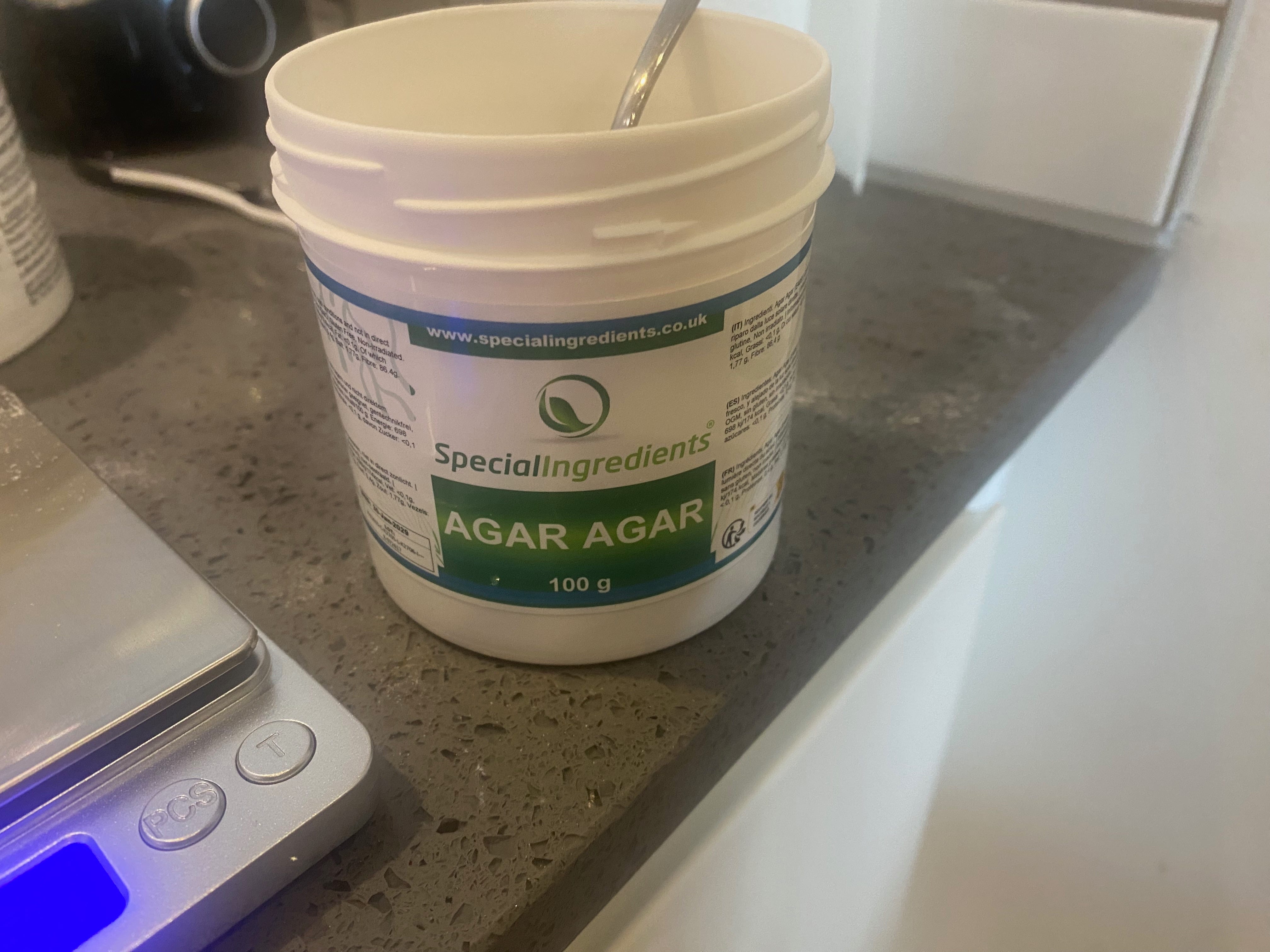
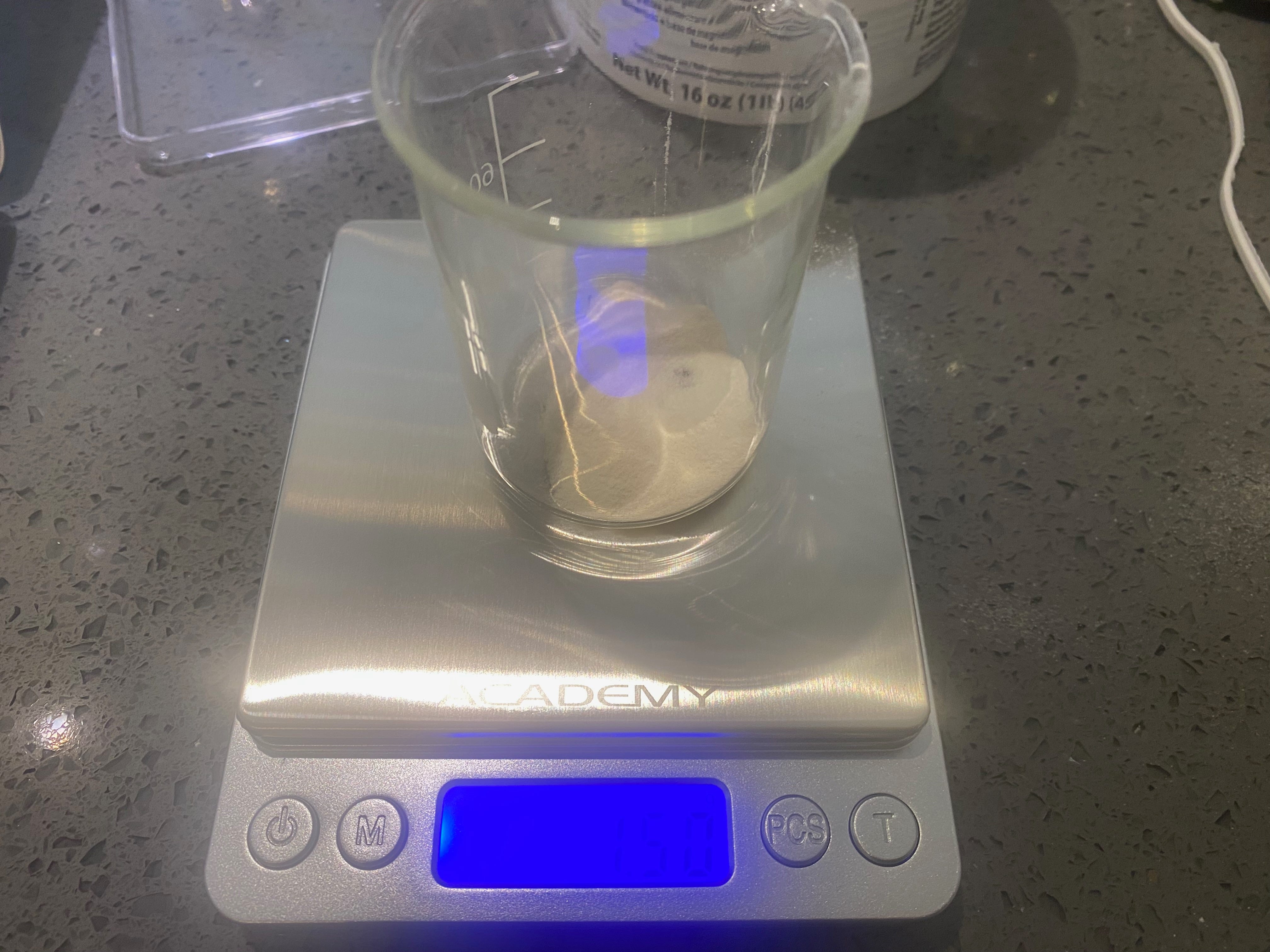
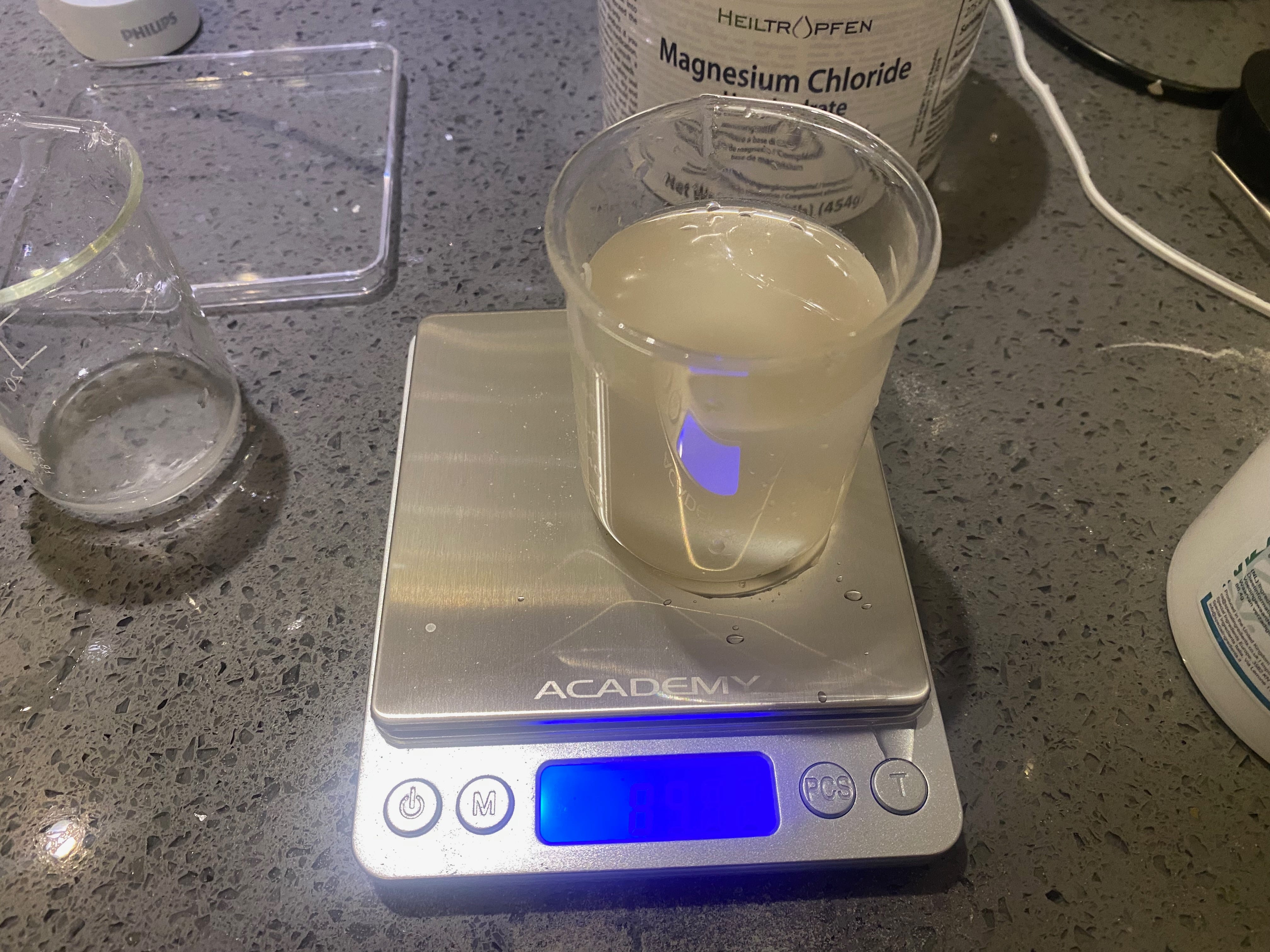
Putting it into the microwave for 40s managed to get it up to the right temperature for dissolution - here it's 94C.
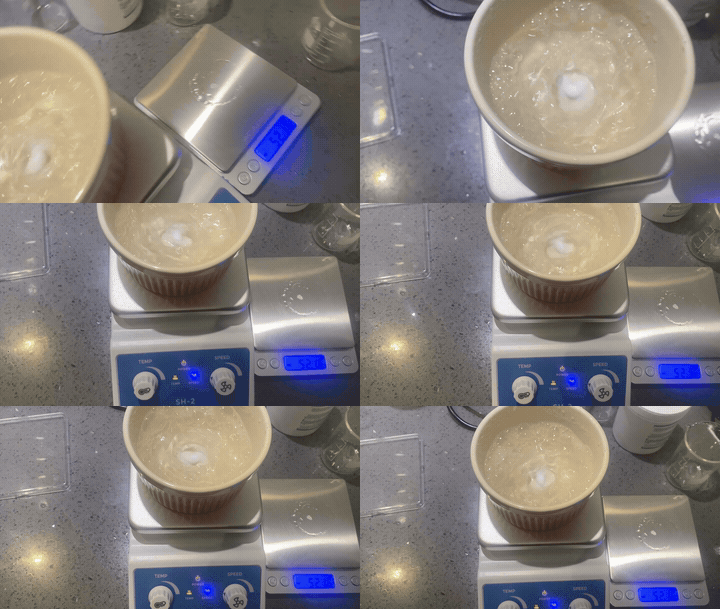
I then kept the agar warm on my magnetic stirrer at 60C.
And then after that I prepared 2g of Magnesium Chloride Hexahydrate in 98ml of water and then put it in the agar jelly
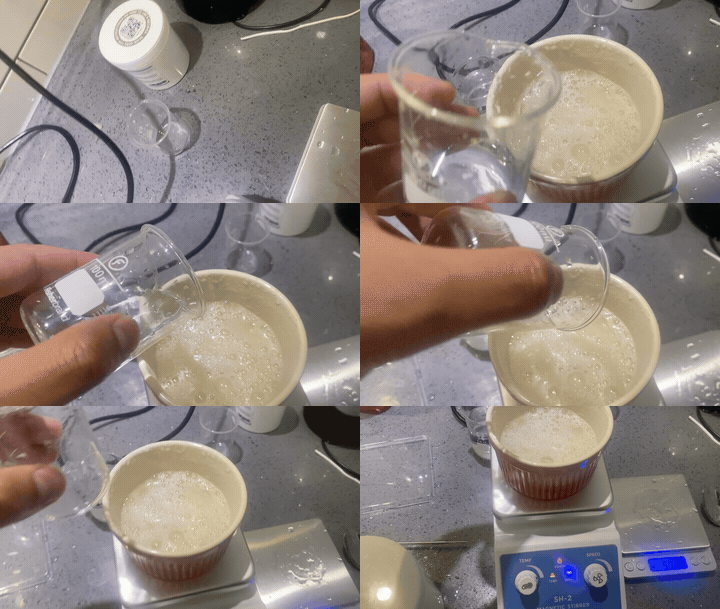
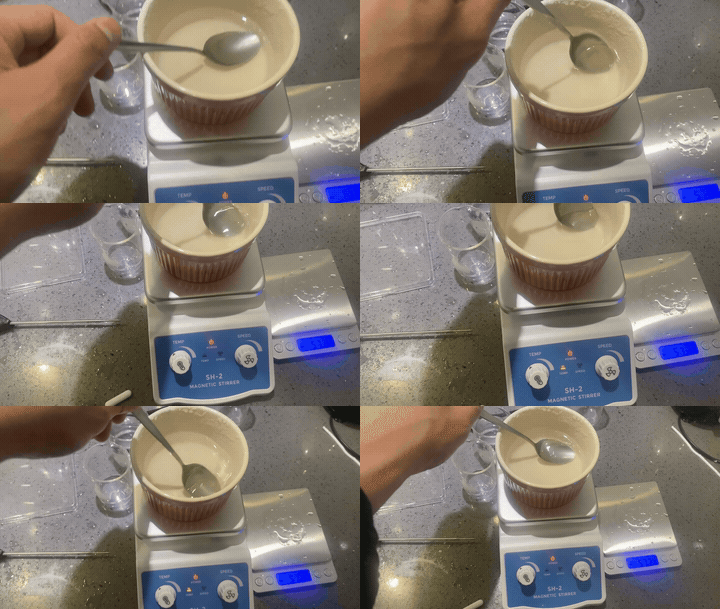
Stirring it and getting the bubbles out
And then I put it in some test tubes and let it cool, in tubes of 20g each
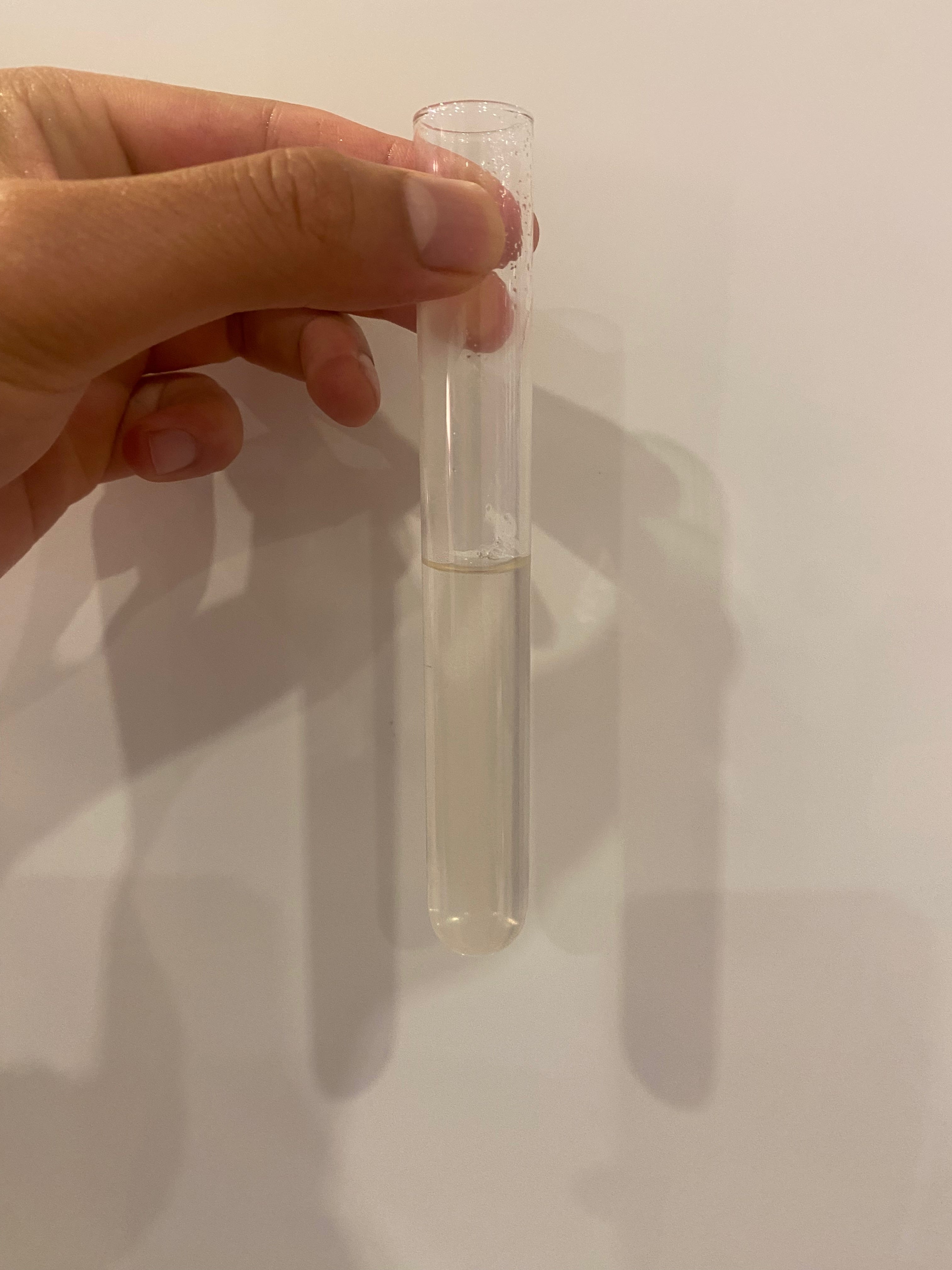
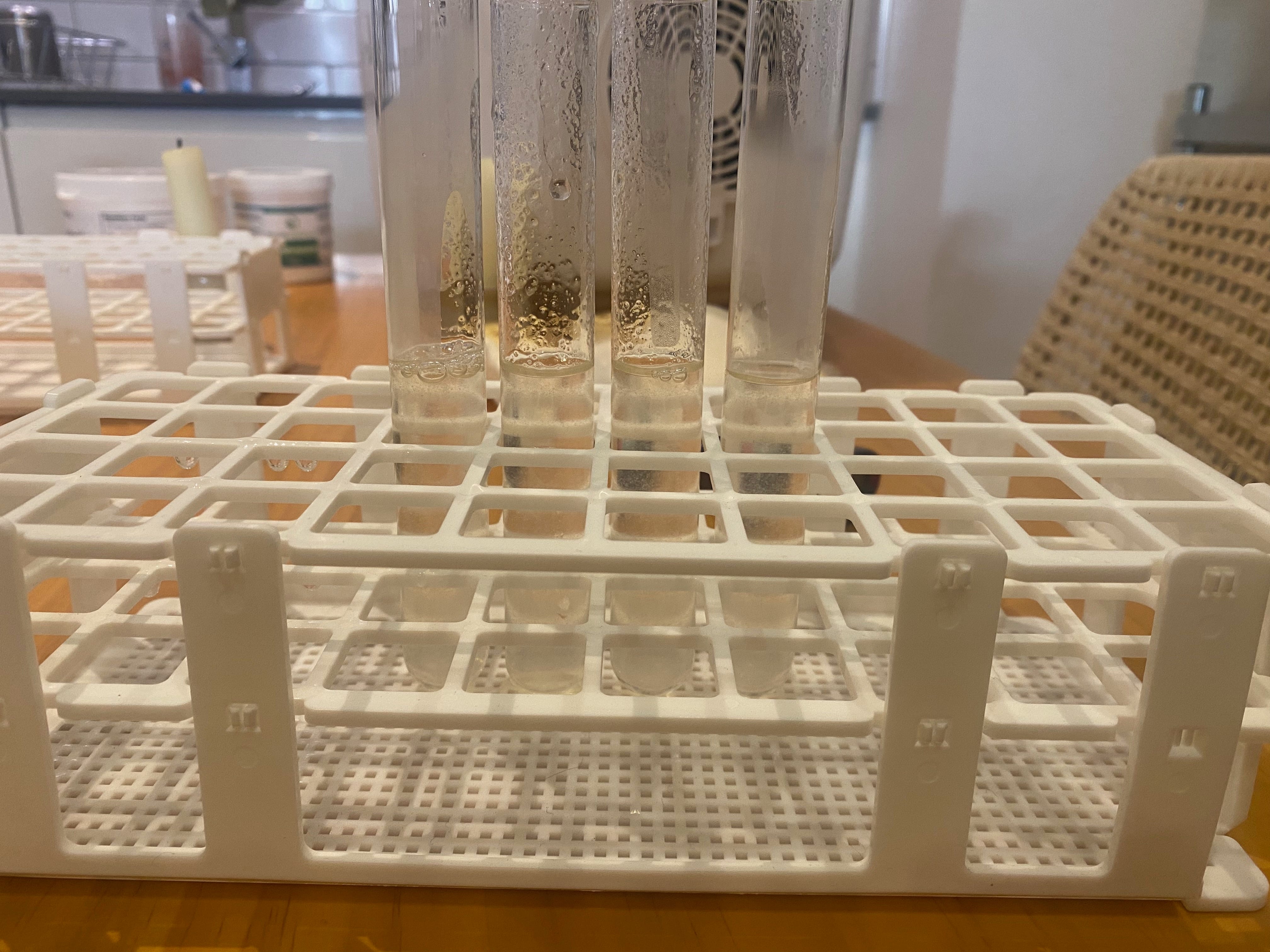
I then let the MgCl soaked tubes rest for 90 minutes until it became a gel.
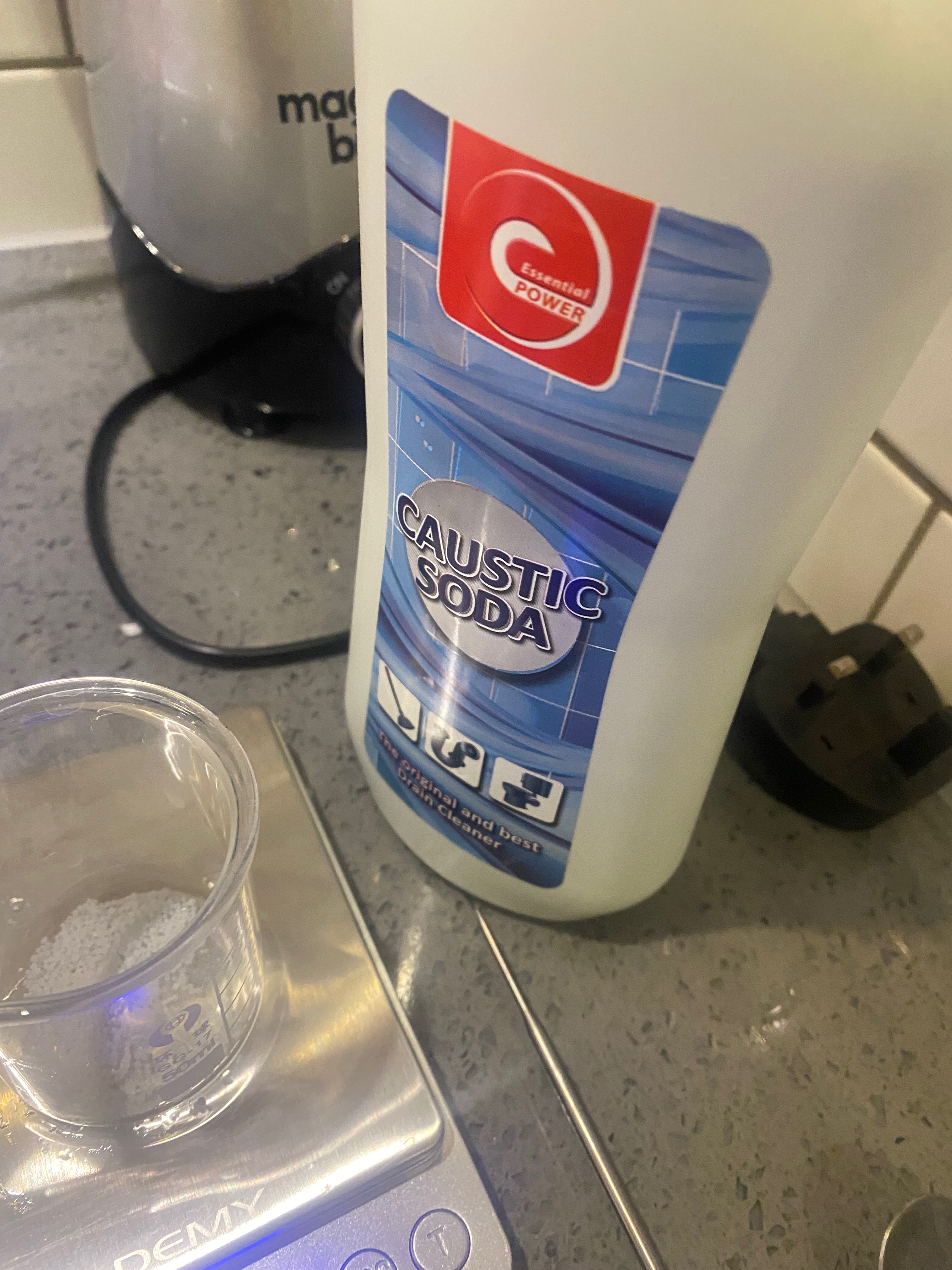
After that I put 1g of NaOH in 50ml of water solution, this is corrosive so be careful
And then i poured the NaOH solution into the gel soak.
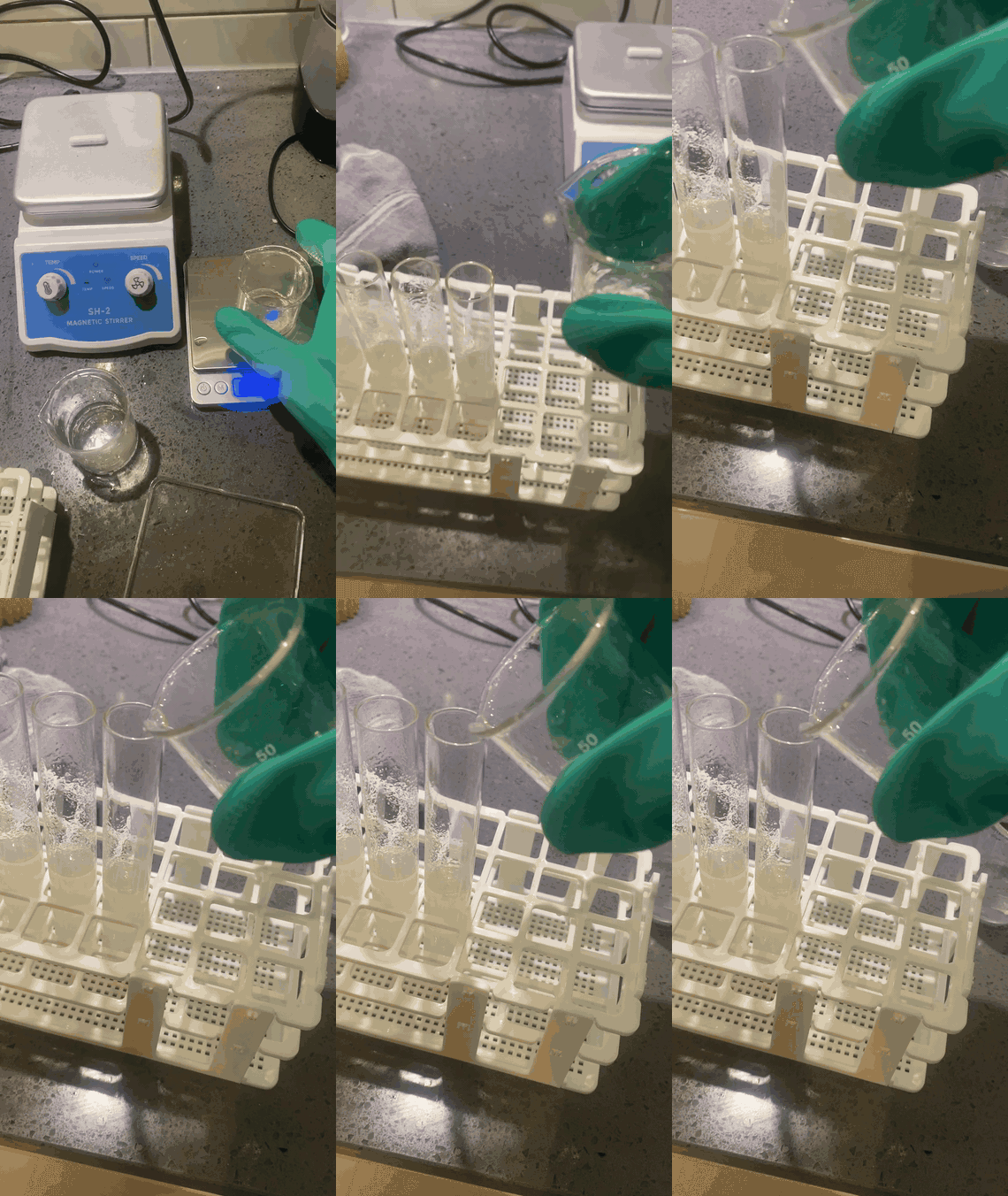
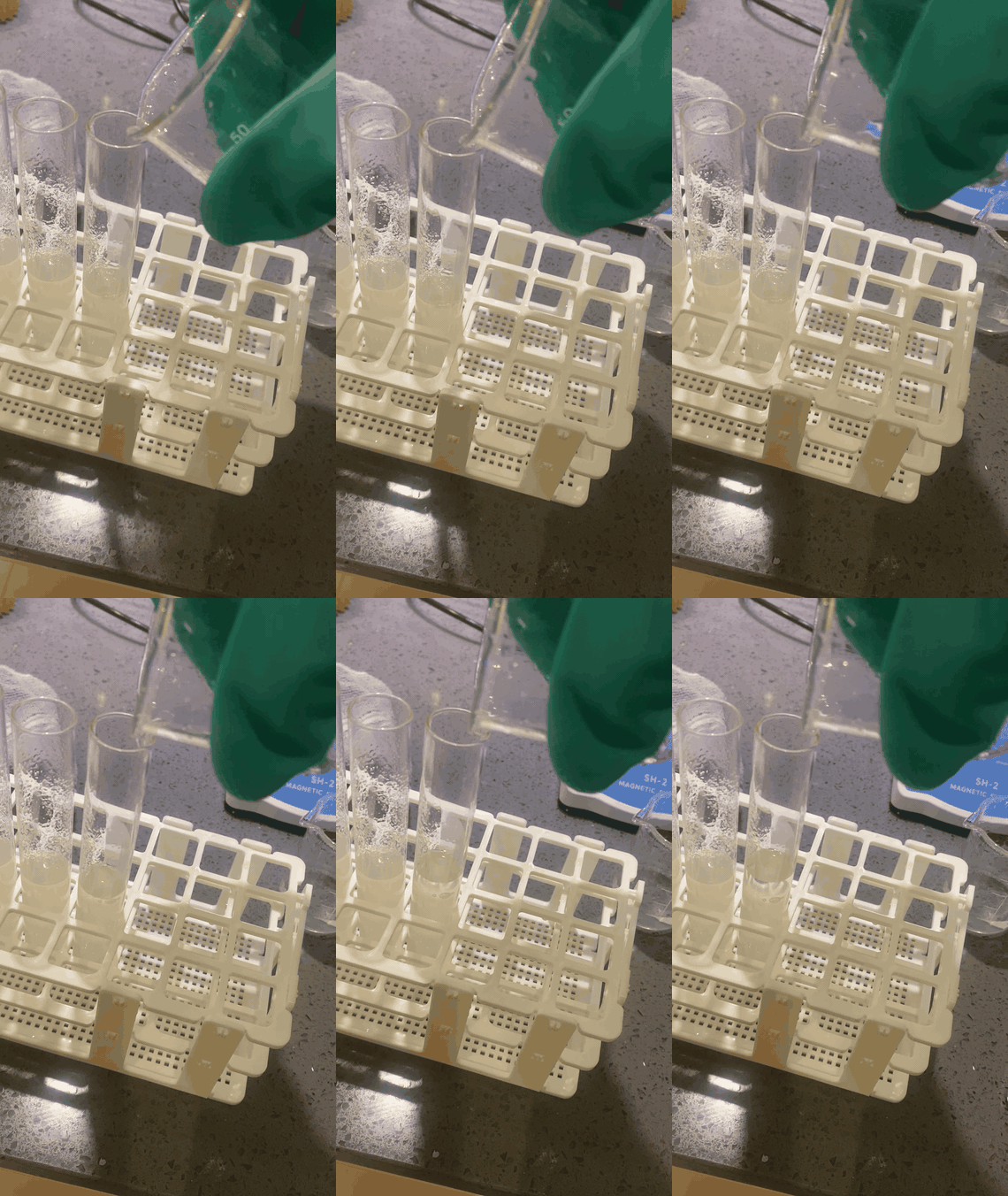
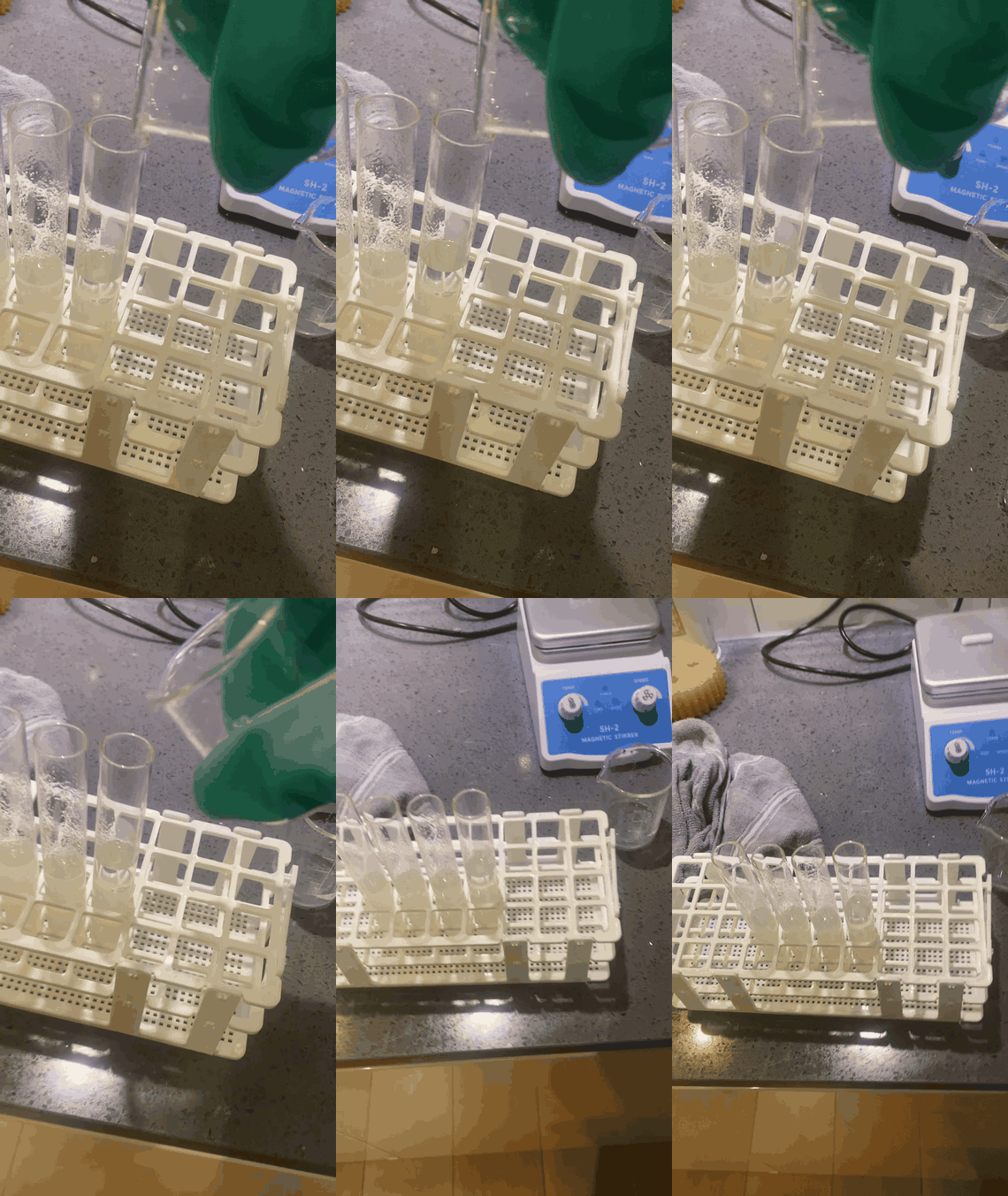
And then I did this with 3 test tubes and then left one alone.
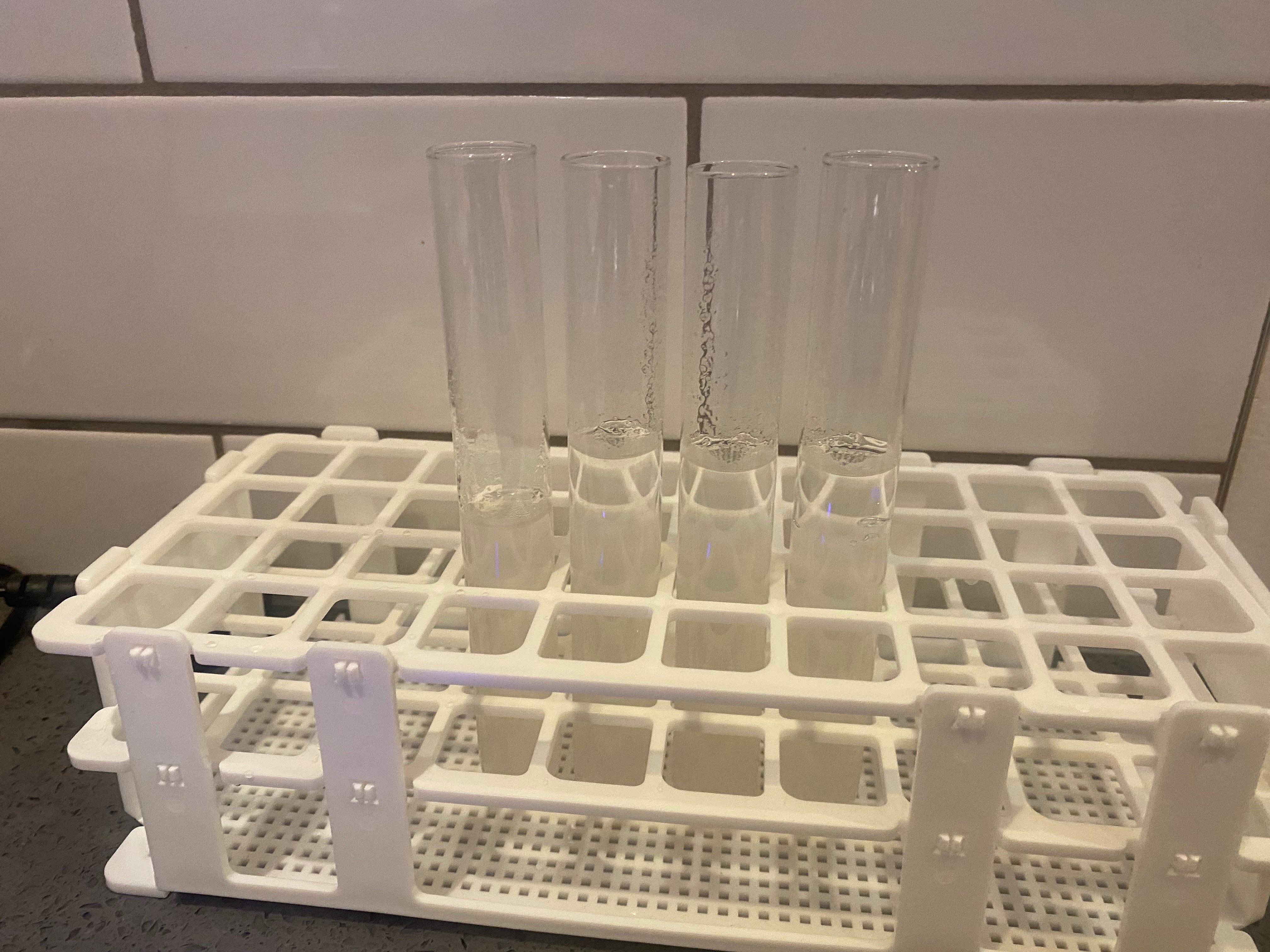
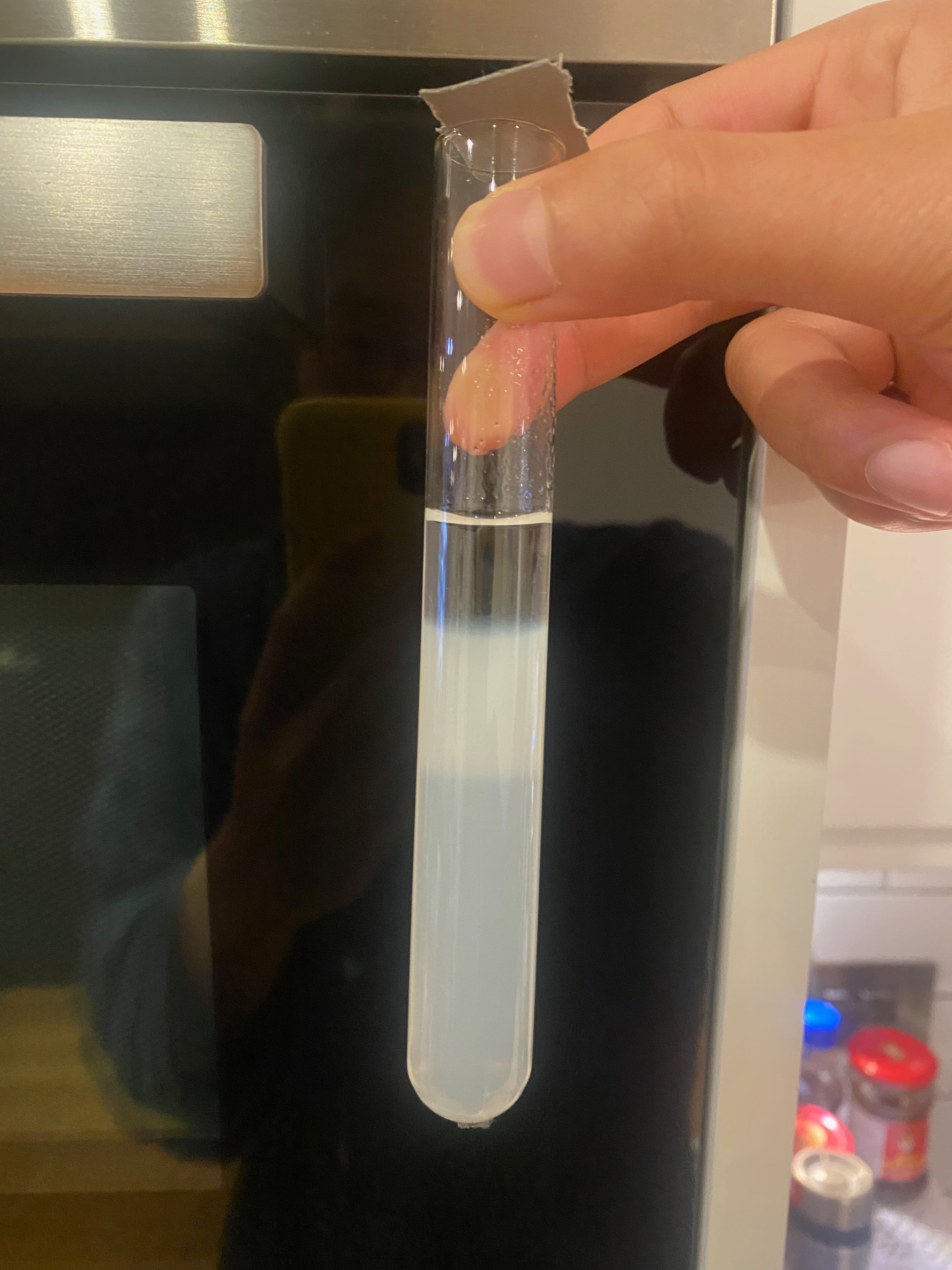
I left it for 10 hours and here's what I got. As you can see there is a white precipitate interface, which is promising. But I don't see the band structures that I so desperately want to see!
B. Chopard, M. Droz, J. Magnin, Z. Rácz, and M. Zrinyi, "Liesegang Patterns: Effect of Dissociation of the Invading Electrolyte," J. Phys. Chem. A 103 (10), 1432–1436 (1999). ACS · preprint arXiv:cond-mat/9809385.
Liesegang ring experiments and models, insilico.hu.
L. Wolpert, The Triumph of the Embryo (Oxford University Press, 1991).
Lim Kim Seng, Lim Kim Chuah, and Yong Ding Li (illus. Dana Gardner), A Field Guide to the Birds of Malaysia, including Sabah and Sarawak (John Beaufoy Publishing). NHBS.
No posts
Comments
Nothing yet. Say the first thing.
Sign in to join the conversation.