
One technical challenge that we are trying to solve at the Independent Science Society is cheap and proper temperature control at home. Professional lab environments have AC in their buildings, expensive 1000 GBP incubators, and all the manner of environment controlling features - it's easy to take this for granted! But its both essential and challenging to home independent scientists to figure out how to do this at lower cost.
The most versatile thing independent scientists can buy are tools that control and measure temperature. Temperature control challenges have appeared in every experimental endeavour I've done, like making a steady temperature gradient for Rayleigh Bernard cells, or keeping the right temperature for biological cultures.
In fact temperature control is probably the most important experimental control to get right regardless of the field of science. But damn, it's such a pain in the ass that even I myself am tempted to bite the bullet and spend a couple grand on incubators so I don't have to go through such a hard time hacking a temperature control system together. I've already installed split condenser AC in my bedroom - maybe I should extend this to the lab space as well... But that would be against the hacking spirit of the Independent Science Society!
Last time I modified a mini fridge as a heat shield from the heatwaves in England.
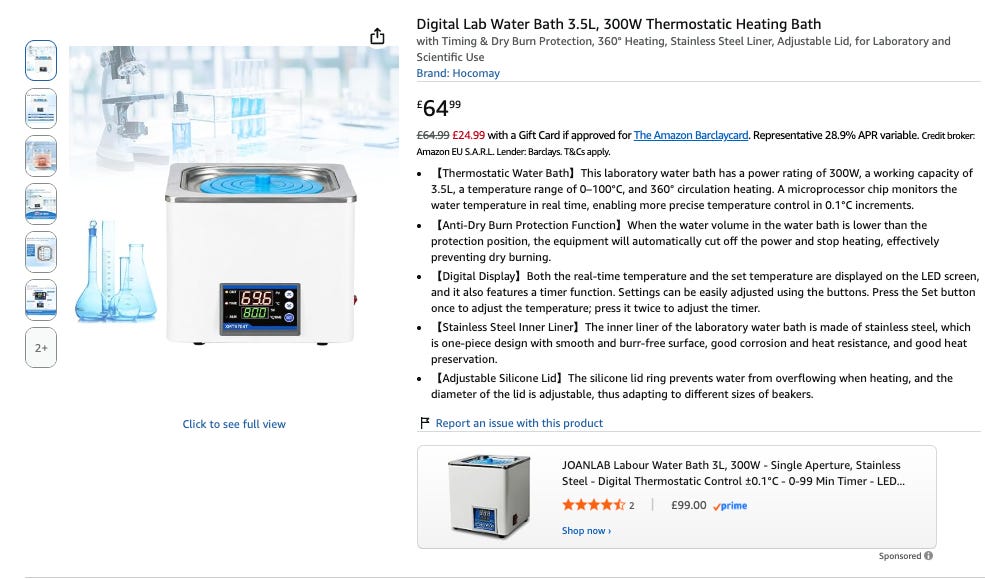
Now I'm trying to test cheap water baths that you can buy on Amazon for 65 GBP and see if they work. So I bought this one... and trying to check if it worked basically put me down a rabbit hole of finding the potential noise around boiling points and freezing points...
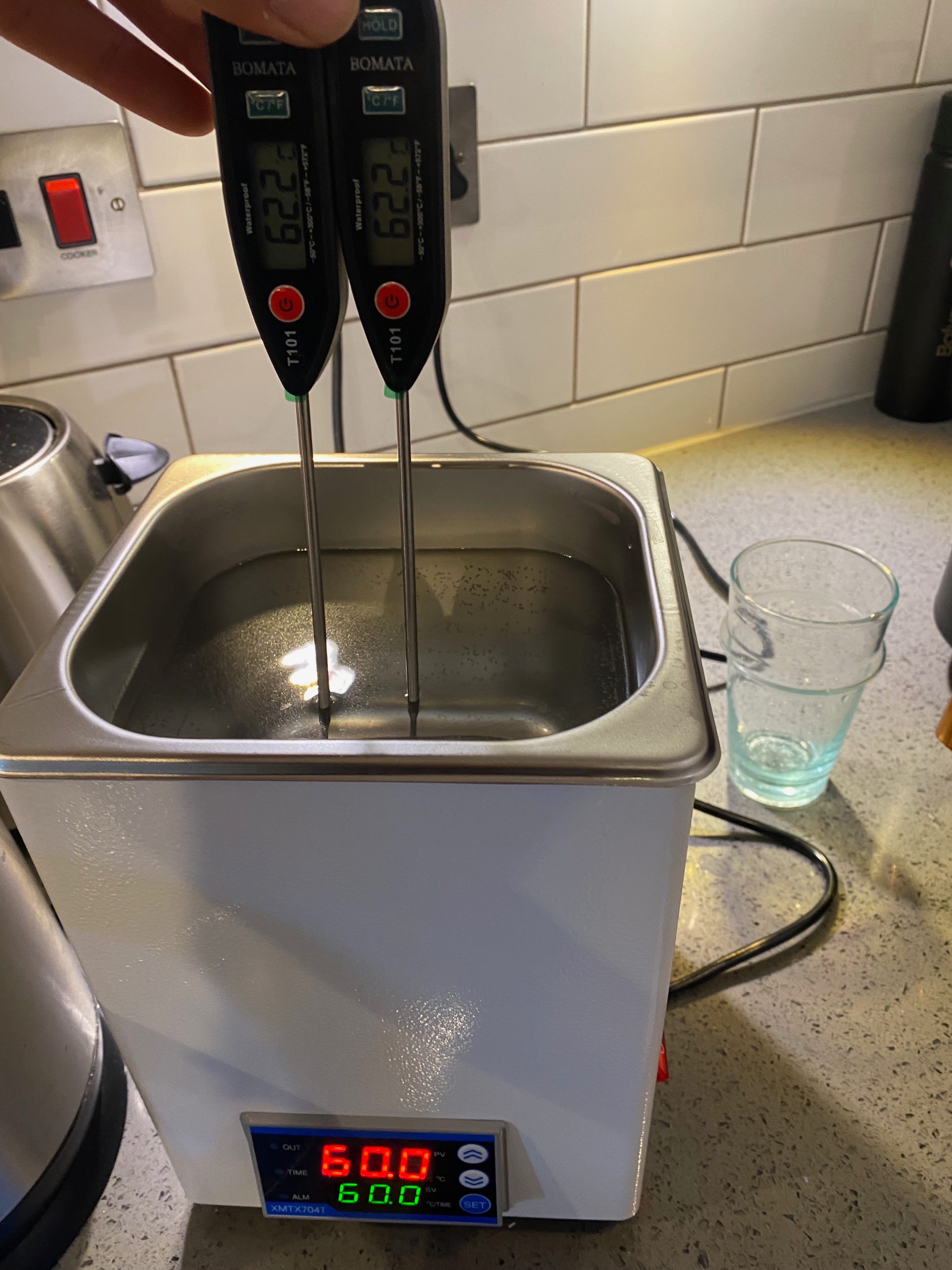
It arrived next day thanks to the wonders of Amazon Prime. I set the temperature to 60C and then tested using two identical kitchen temperature probes. Both showed 62.2C. Excuse the dark image but if you squint you can see the temps in the LCD.
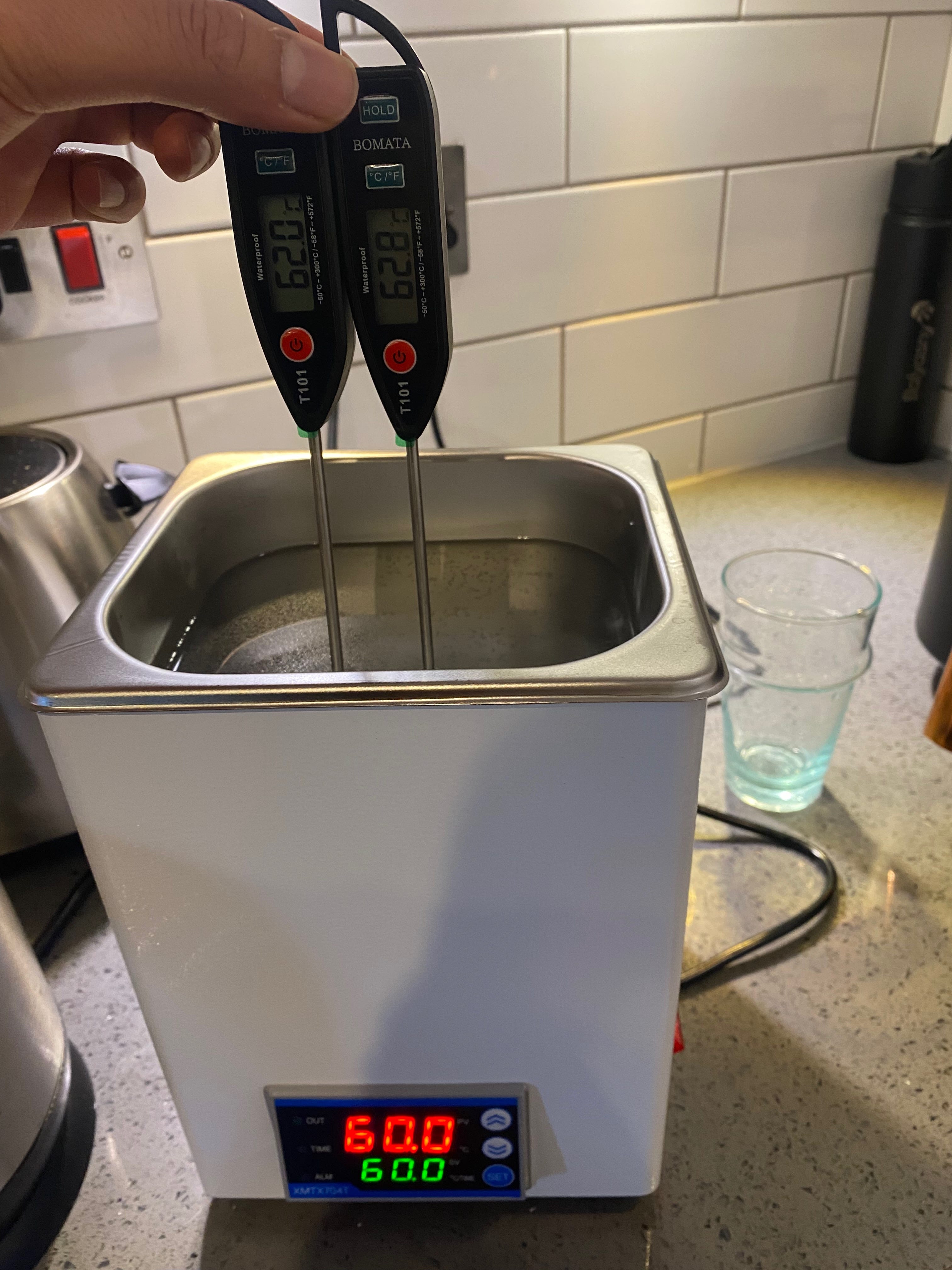
The temperature flickered around a bit on both probes, but despite setting it to 60C, the probes showed the temperature as centered around 62C with a flickering of +- 1C, despite the claimed 60C in the setting. Even after stirring, and moving the temperature probes around in the water this is what I got.
Again after a few minutes of mixing and measuring, to make sure I wasn’t fucking this up with uneven heating, I get 62C, 62.8C
I then was confused... could it be that my temperature probes wrong or was the Chinese water bath wrong? Also, were there mixing effects what I wasn't taking account? Was I measuring in the right place in the water?!
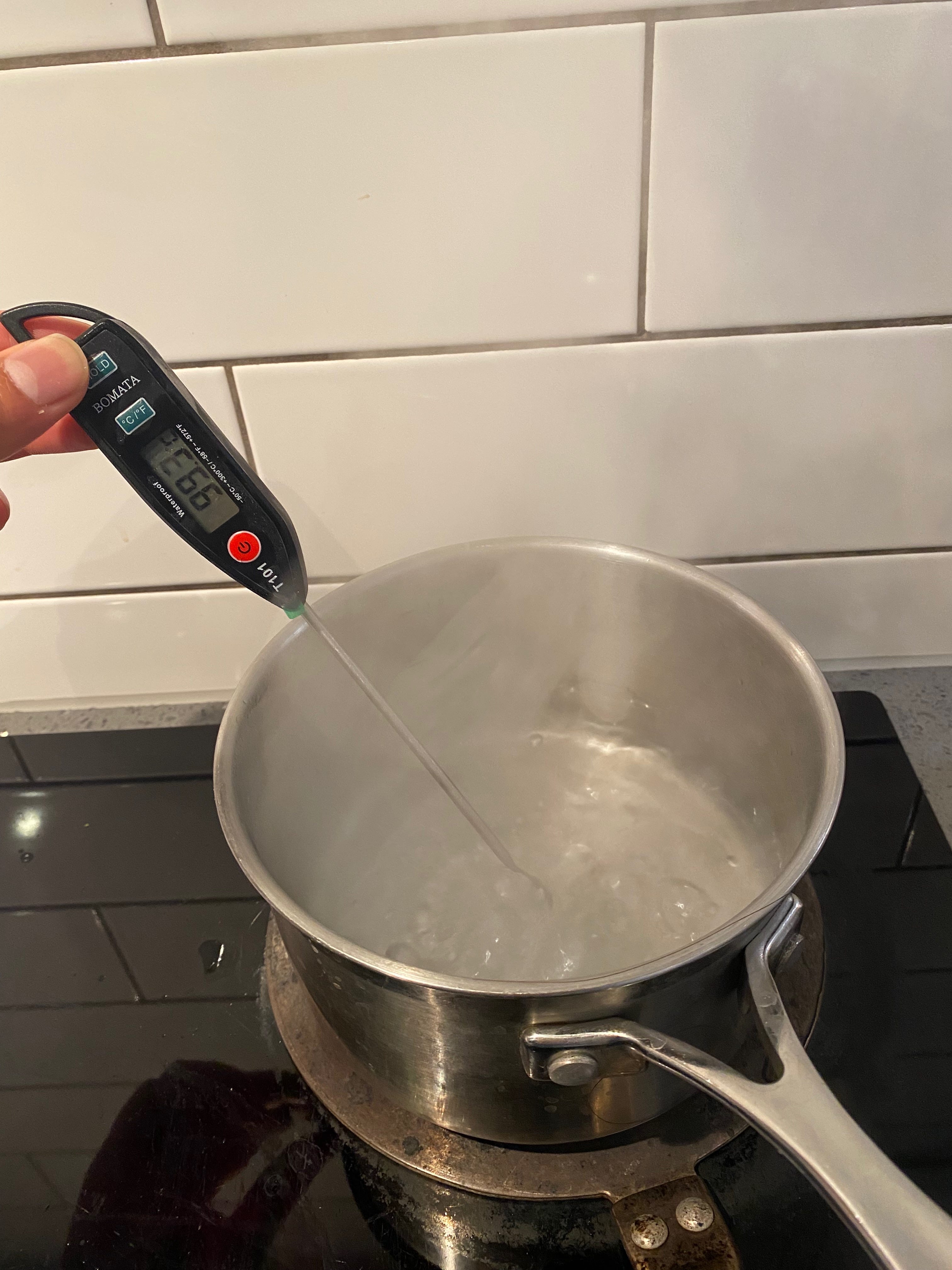
So, inspired by Lord Kelvin, I wanted to test if my temperature probes would work at the boiling point of water. Tap water should boil at 100C - although atmospheric pressure, altitude effects, and mineral effects could push this off. But some rough googling convinced me that such effects weren't going to exceed error 1C off a boiling point of 100C. And so, this was a way to check if the kitchen temperature probes were working correctly.
So I dipped the probes in boiling water to see if they would measure 100C. The first one:
The second one:
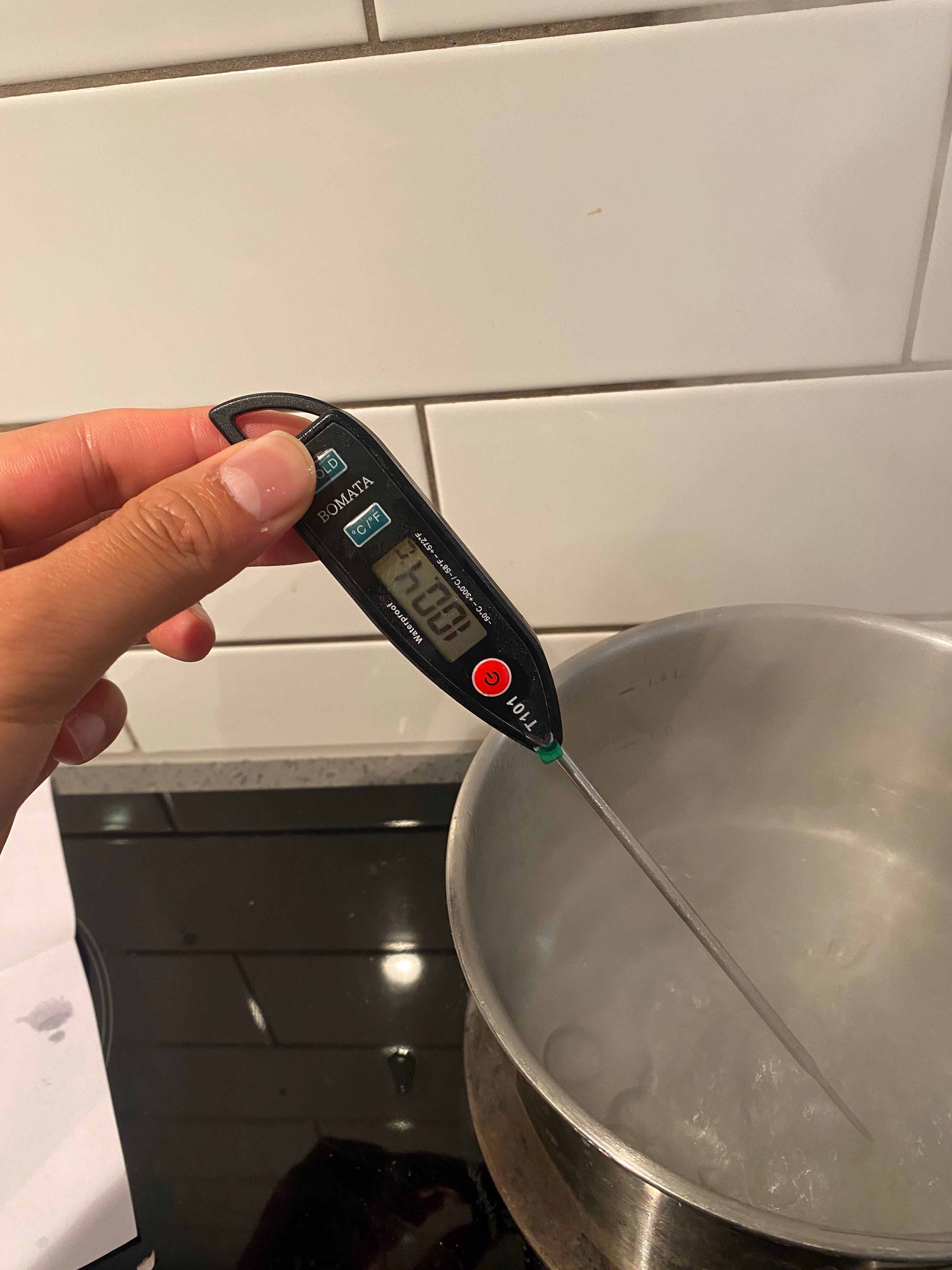
And then I tried to see if the probes would match an ice water slurry so I got a bunch of ice, waited a bit for it to melt and tried to see if I could get the probes to show 0C:
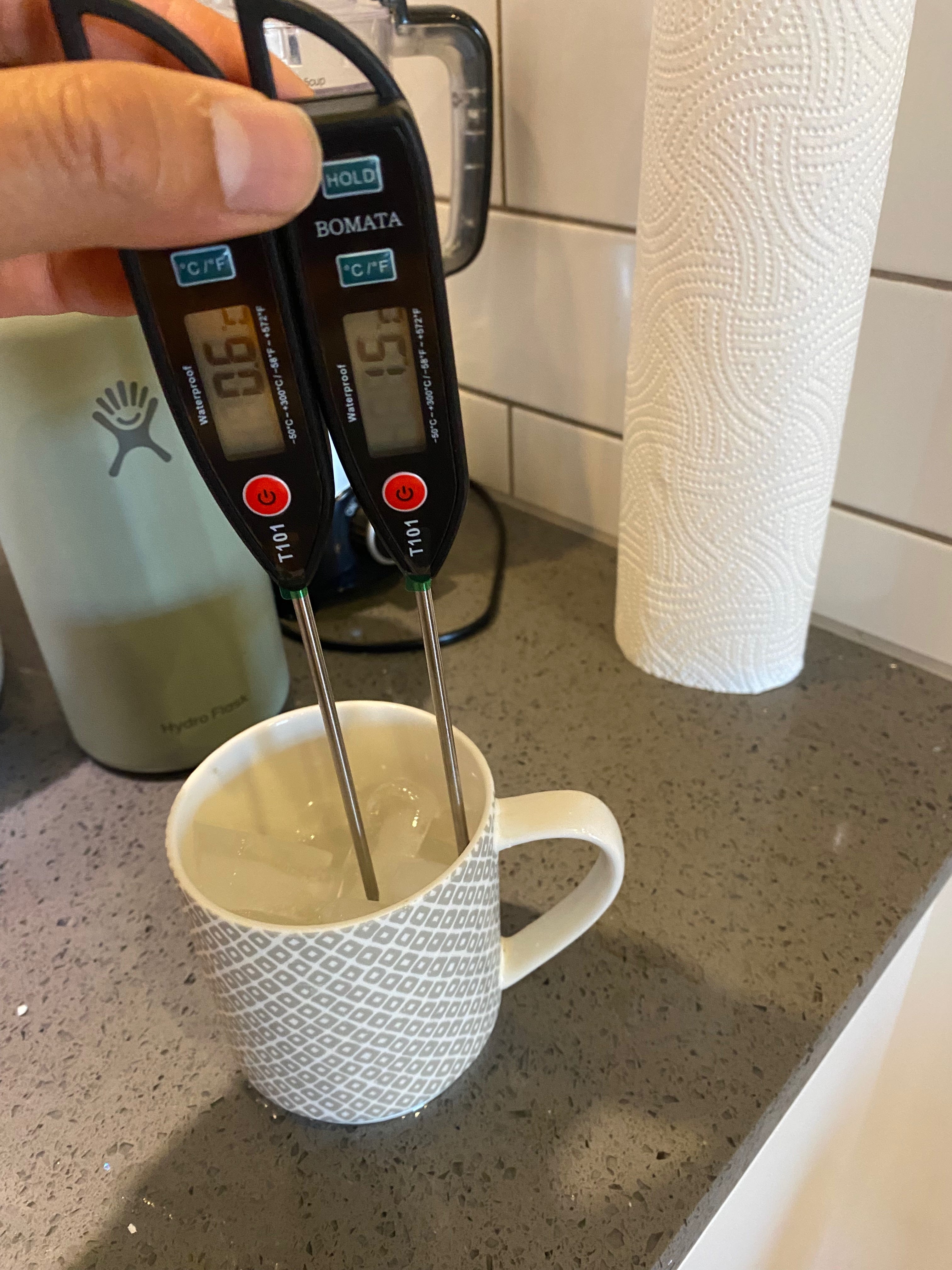
Not exactly perfect, and this seems like a fiddlier way to test temperature probes.
But after this exercise I was convinced that the temperature probes were working correctly and that the water bath just had a systemic error of 2C which I could adjust for. That's fine. And then two weeks later I set it again to 60C on the setting and measured it again:
62.8C, 62.5C. So I think it’s fine!
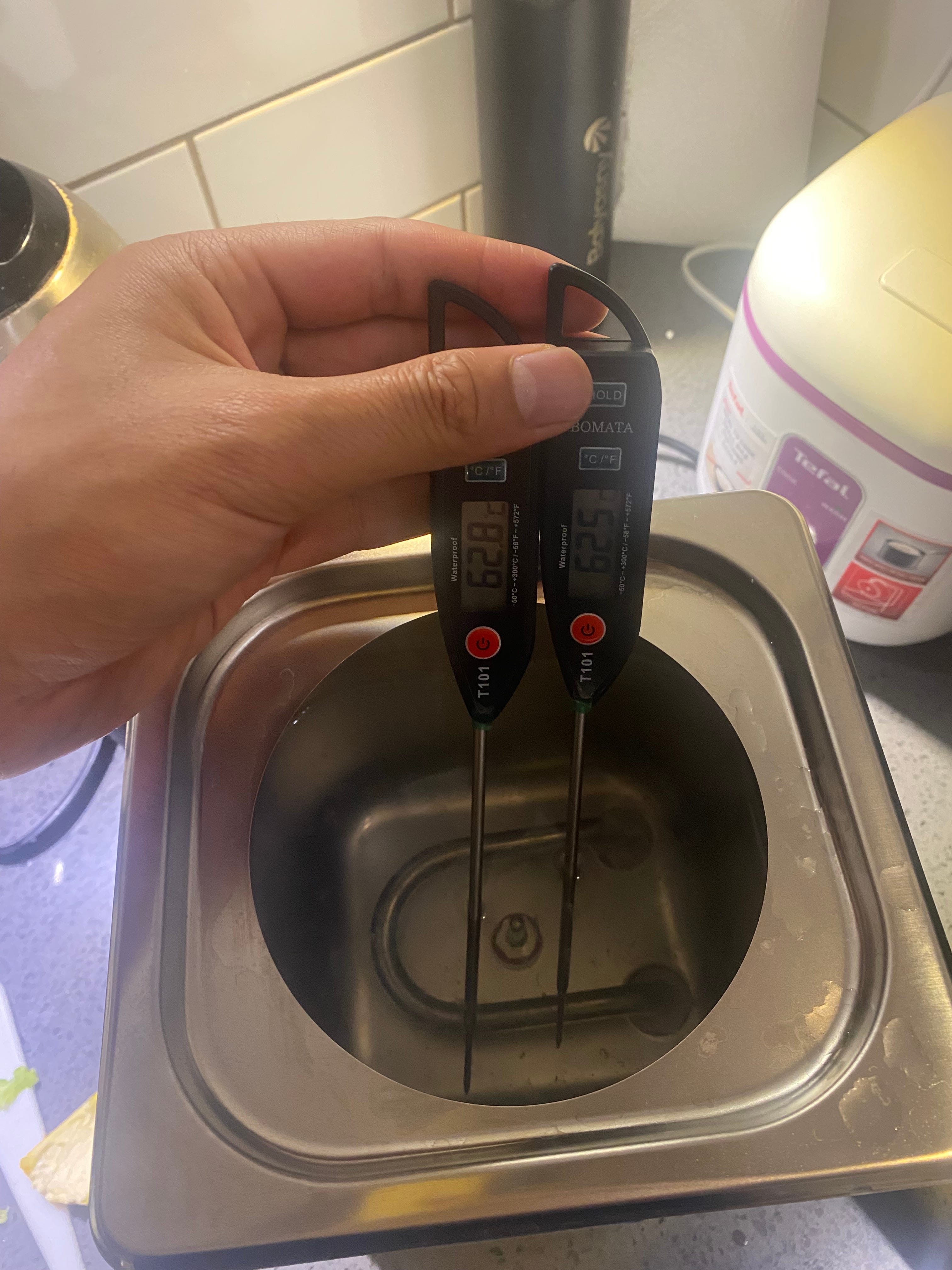
So yeah, it looks like the water bath does what it says, as long as you add +2C and have an error of +- 1C !
No posts
Comments
Nothing yet. Say the first thing.
Sign in to join the conversation.