
What were the little life lessons your child learned this summer… Of course they shouldn’t be expected to get these new social and behavioral skills right on the first try. Allow for intentional time and space so they can keep practicing.
When learning a new behavior or social-emotional skill, it’s important that we carve out space for intentional practice. They aren’t going to get this on the first try... of course! Time for practice will help them get better at that new skill by giving them opportunities to put it to use.
Learning to play nicely?...Set up MORE time with friends, not less.
Learning how to better regulate their emotions? ... Place them into challenging situations where they can put their new regulation skills to use.
Buy the book... Child in Bloom
When meeting with families, I sometimes hear them say…
“Well, we just don’t go to the playground anymore because our son doesn’t know how to get along with other kids.”
Or “ We don’t do the restaurant thing anymore as a family because it’s just too hard for them to behave at the table.”
Or “We don’t go to Mass as a family anymore because the kids just don’t behave.”
What excuse for avoiding a situation are you making for your child’s behavior?
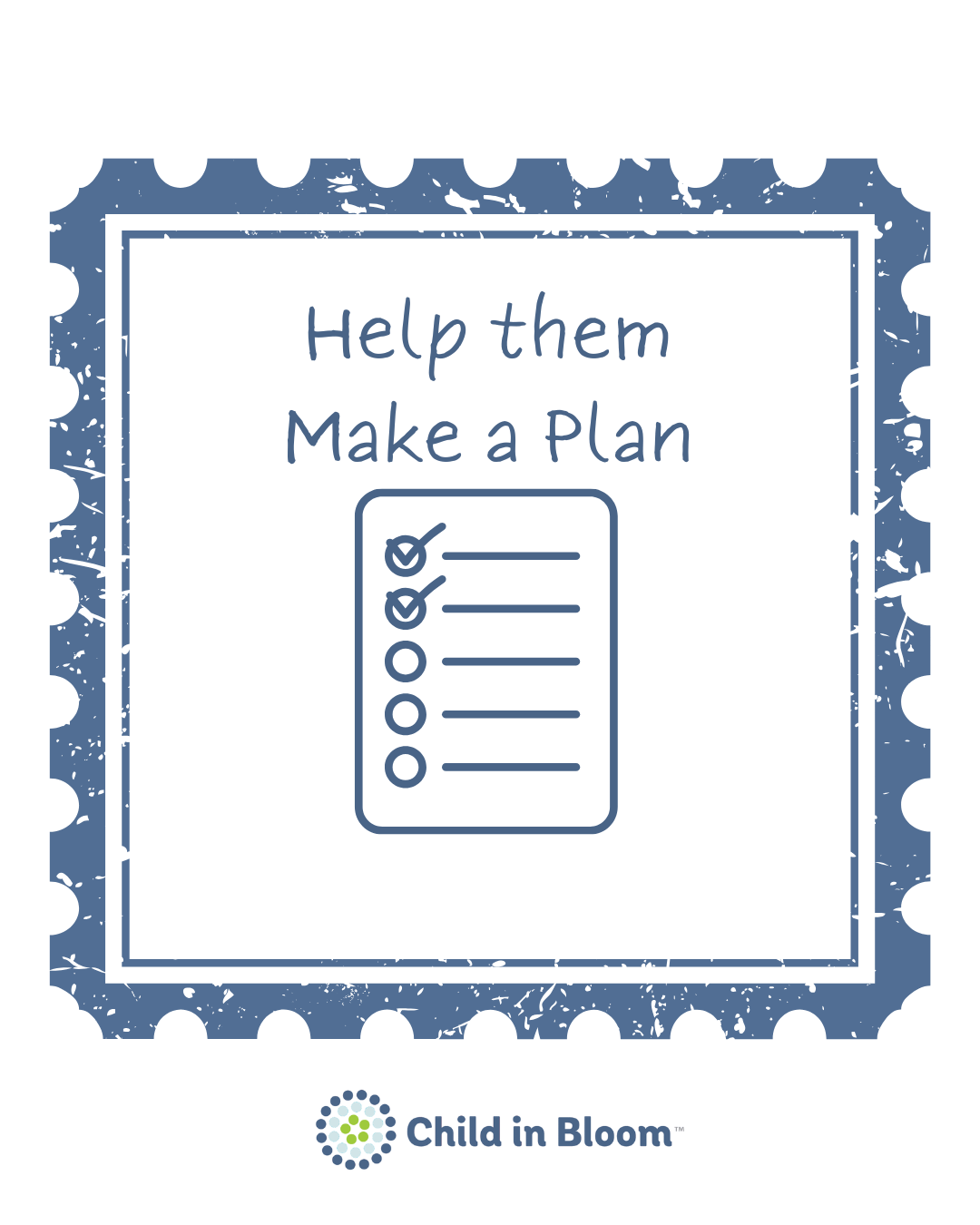
What if you decided that they needed more practice in that zone, not less, and you made a plan for that practice?
Making excuses and avoiding tough situations is the absolute opposite of what your child needs. Instead of less practice, in the real world, they need MORE practice. They don’t have the skills down yet, and that is normal. Because of this, they need time in that situation to practice and refine those skills.
I might suggest even going to that situation and spending time OBSERVING first.
Then you and your child can make a plan to put them into that real-life setting, trying it out through practice and using the new skills you have spent time teaching them.
The first step to getting better at a new skill is to PAUSE and make a plan before you head into that scene. You will have a better plan if they have observed it from the outside or you have drawn out the scene through your modeling and teaching. Then, you can make a plan based on what you’ve drawn out and thought through ahead of time. Your child is bound to do better because you spent time thinking it through ahead of time.
The plan will help them remember.
The plan will keep them on track!
Do they need
a play plan,
a how-to-be-a-friend plan,
a how to be quiet in church plan,
a how to listen to my coach plan
or if they are a teenager, a how to make choices at a high school party plan?
Having a plan before you go into that situation is the first step toward growth. They likely won’t be able to make it all the way through the situation without a break, a cue, a reminder, or a restart. Break the practice into doable small parts so that you can find a way to praise even small bits of progress.
Make sure you embed the cues, restarts, signals, or supports as part of the teaching, modeling, and planning so the child knows to look to you to help them remember.
Connect for Small Group Coaching
The next step is to give them space to
DO IT ON THEIR OWN. This is why you have to drop them into the situation.
They’ve got to get in there and put those skills to use.
You can help by being nearby to give a CUE.
Then when they are in the moment...
Share a signal to help them remember the plan
Show a cue to help keep them on track
Allow for a PAUSE to reset if necessary.
Your child needs an opportunity to do this on their own without your help, so the second part of the practice situation is DO… but you still play a role here. While the child’s busy putting their new skills into action, you can be nearby to give a cue.
The final step of practice is to PAUSE and REVIEW, noting how things went for your child during the practice. Of course, focus on the small steps and bits of progress. If there is more to learn and practice, you can go back to the drawing board tomorrow using what they learned through today’s practice to lead your next little teachable lesson.
Ask…
How did it go?
What was easy?
What did you forget?
What are you going to do next time?
What do you need for next time?
This is the perfect opportunity to add in specific praise (the fourth and final part of the teaching cycle).
I hope you have enjoyed and learned from the ideas in this article. I am Dr. Renee Mattson, licenced educator and master coach with 30+ years of experience working within school and home settings supporting the adults as they help children bloom. You can support my work by subscribing through a paid subscription, and if you do, you will find that there is more to learn and discuss beyond the paywall… Check out how I tie this idea of practice to help parents and teachers understand how metacognition can help kids learn and also help them behave… Help your kids think about their thinking before heading into their next challenging situation.
Comments
Nothing yet. Say the first thing.
Sign in to join the conversation.