
There is a time for compliments and a time for corrections.

This week’s spelling words were a challenge and you aced the test!
It’s awesome how you always look out for the other kids in the neighborhood.
I call these pausitive compliments because the adult makes the positive remark and just leaves it at that pausing and allowing the compliment to sink in and stick. That’s the purpose of a compliment to allow the receiver of it to really hear it so they know it was genuinely noted and given in a way that celebrates the accomplishment or growth. This kind of compliment seals in the progress so the child begins to associate themselves with that positive act and the positive outcomes of that act. This kind of compliment helps the child re-order their story so it is reflective of the good things happening in their life. They begin to see themselves in a positive light and this feels good.
However, what often happens is the parent who just gave the compliment takes the conversation one step further failing to pause while everyone is ahead… The parent might add in a big old BUT and the compliment turns from pausitive to corrective.
The parent uses a BUT statement as a follow up to the compliment to point out the one thing that just doesn’t match up to their expectations. The parent assumes that while I have you here in this conversation, I might as well make it a teachable/corrective moment. When this happens, the compliment we started with goes by the wayside and all the child hears is the big old BUT saying they just aren’t good enough, yet.
This week’s spelling words were a challenge, and you aced the test!BUT it’s time to get those math quiz grades up.It’s awesome how you always look out for the other kids in the neighborhood.BUT I don’t like how you treated your sister at the dinner table.
If compliments are like money well spent, then a BUT statement is a VOIDED transaction. It’s like you did an actual strike-through on your pausitive statement. It didn’t happen, or at least it feels like it didn’t happen and child’s story ends on a negative note. Still not good enough, still struggling.
Ecclesiastes says… there’s a time for everything under heaven. I am not saying there isn’t a time for helping your child bump up his math quiz scores or a time to curb the sibling rivalry, but NOW right NOW in the middle of this pausitive compliment moment is NOT the time for this corrective conversation.
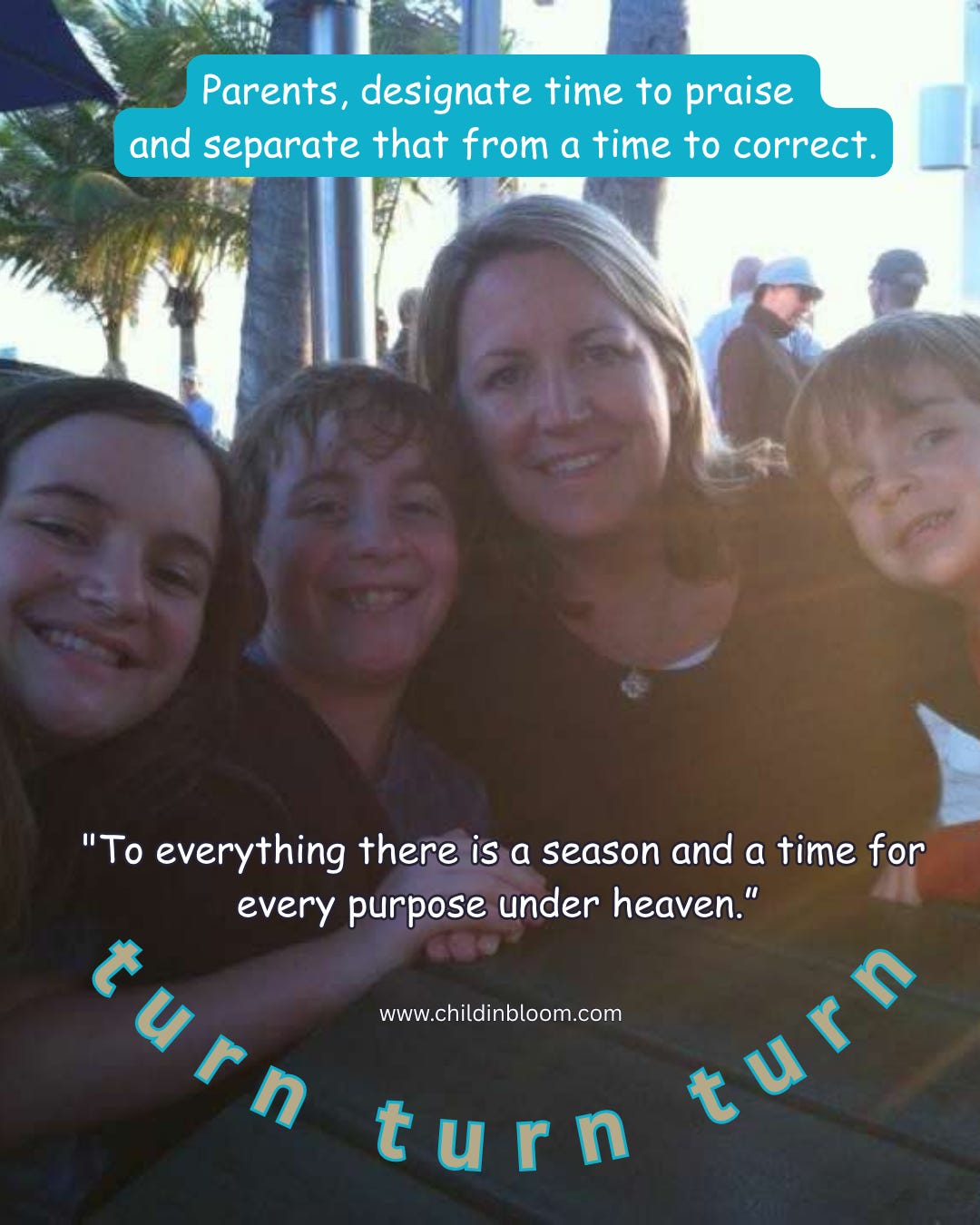
Make time for both things, isolating compliments from correction if you can. When it is time for PRAISE, it is not time for CORRECTION.
I get it… I know what it feels like to be at a loss for time. We are so busy trying to get through our day with kids that if we take a moment to pause and tell our kiddo something positive, we think… “let’s just go ahead and bridge into that tough conversation around the things that aren’t adding up and we will kill two birds with one stone.” But when the parent does this, they end up spoiling the opportunity for true positive reinforcement with a dose of negative reinforcement.
I know parents aren’t doing this on purpose, and in fact they may not recognize the mess this makes. It seems logical that, as a parent, I should be able to take this moment and help my child see I recognize the growth, but they still have more to learn. But kids who get this constant mixed-messaging might begin to believe they’ll never be good enough.
BUT Your kid IS good enough for this moment. This pausing moment. Let’s just relish in the fact that progress is happening in some capacity. Pause into that. Say the positive and then stop there. TELL THEM you see the growth and strike through the BUT statement instead. Step by step, they are growing up, and you are there to witness it.
Do you feel like you need more pausing moments yourself to help you with your parenting? I have a Child in Bloom small group for you…
Here are some examples.
“You have practiced, and it shows.” - But..
“You remembered the rule without being told.”- But
“You listened and followed the example.”- But
“You made a safe choice on the playground.” - But
Can you imagine what those follow-up " but” statements might be?
Do you hear yourself in them?
How nice would it be for your child to just hear the beginning statement? Then sit in that growth, knowing there’s hope for change, and you recognize it.
If I were a little kiddo who had been struggling at home or school, it would feel so good to know that there is something I mastered and someone noticed it.
If adding in BUT statements after a compliment is your natural order, your child might be taken aback when you change this up and leave off the BUT. The pause you add in at the end of your compliment might catch them off guard; they have gotten used to your pattern of correction after compliment. They probably assume there’s always a BUT about to be dropped into your compliment.
It’s in that perfectly placed pause where change begins. Where they begin to see their story in a new way. Where you begin to see their story in a new way. They are making change happen.
I think sometimes parents drop in the corrective BUT phrase only because they think they need to be highly productive. Always producing new growth with their kid. Never letting the dust settle always raising the bar on expectations. But what they aren’t understanding is that the PAUSE for positive compliments is productive in its own way. You can stop the production and allow for the pause, and the pause will actually allow you to reap more growth later. It’s like a teacher saying I don’t have time to allow for recess when we all know that the recess pause will allow for more productive learning in the long run. Your positive comment will allow for more productive behavior in the long run.
When kids get too much negative feedback attached to positive compliments, I’ve seen that their growth can stall. They may even begin to mirror the negative story you are telling them. They feel like they are never good enough, so they go ahead and just fit nicely into that negative storyline. Living DOWN to your low expectations rather than living UP to their potential.
It’s important to PAUSE and be positive for the sake of being productive… Positive praise is productive in that it usually pushes the child to do that behavior again or helps push them a little further along their path of growth. If you want those positive behaviors to bloom and grow, just leave the compliment as it is.
If you like this, you should check out my book, Child in Bloom, intended to provide parents and educators with actionable, research-based nuggets of information derived from my 30+ years of experience in the field.
So how can you implement this in your day-to-day? Read on for some practical ideas to weave this new approach into your interactions with your kids and a handy chart to help you keep track of the pausitive compliments you are making with your kids. This post has bonus content for paid subscribers. Upgrade to get full access.
Comments
Nothing yet. Say the first thing.
Sign in to join the conversation.