
By Dina Alexander, MS
There’s a number you should know: 148
That’s how many child sexual exploitation lawsuits against Roblox have been consolidated into federal multidistrict litigation as of May 2026. One hundred and forty-eight families. One hundred and forty-eight children whose stories begin the same way, with a brightly colored avatar, a seemingly innocent chat, and an adult pretending to be a kid.
The Roblox Corporation would like you to believe it’s doing everything it can. It isn’t.
The pattern is almost numbingly familiar by now. A child — often under 13 — joins Roblox, which requires nothing more than a username, a password, and a birth date to create an account. No age verification. No parental consent. A predator, posing as a peer, initiates contact through in-game chat. Trust is built. Conversations move off-platform to Discord or Snapchat, where Roblox’s already-weak filters can’t reach. Then comes the exploitation.
In October 2025, a father filed suit after his 13-year-old son was targeted by an alleged sex offender posing as a 16-year-old on a “Pet Simulator” game. The predator offered Roblox gift cards in exchange for explicit photos, then used those photos to blackmail the child — threatening to send them to his parents if he didn’t comply with further demands, including demands for his home address.
In December 2025, a 5-year-old was targeted. Five years old.
In January 2026, the parents of a 12-year-old Washington girl filed suit alleging their daughter was groomed into sending explicit images, which led to multiple suicide attempts.
These are not edge cases. They are the predictable output of a platform engineered, from the ground up, to keep children online, spending money, and socially engaged — with virtually no guardrails about who they’re engaging with.
Roblox’s dangers aren’t bugs. They’re features of a business model.
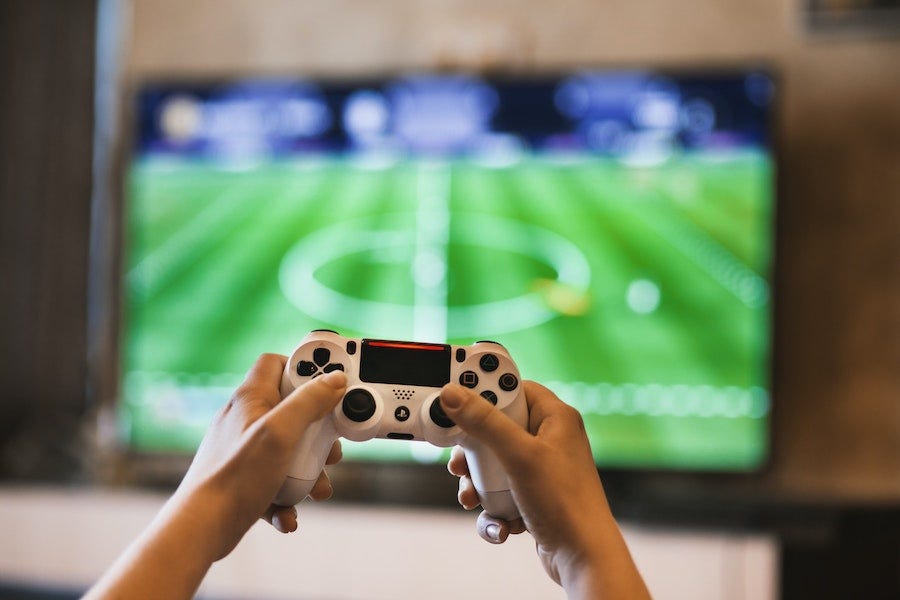
The platform keeps kids hooked with rewards for playing 40 minutes, two hours, five hours straight. Gambling-style wheels offer free spins every five minutes. Daily login bonuses create compulsive return behavior. Limited-time items trigger FOMO in children developmentally incapable of resisting it. And the platform lets kids see exactly what their friends have purchased, a deliberate social pressure mechanism to drive spending.
Then there’s Robux. Roblox’s virtual currency is deliberately confusing. One dollar does not equal one Robux. The obfuscated exchange rate makes it nearly impossible for children — and even many parents, to track real-world spending. Kids have burned through thousands of dollars on virtual items with no real-world value, often without their parents having any idea.
Worst of all, this kid-driven economy hands predators another tool. Robux becomes bait. Predators offer currency to manipulate children into dangerous situations, using the platform’s own financial infrastructure to groom victims.
Roblox has known about this. For years.
For over a decade, child safety advocates, coalitions, lawmakers, and the National Center on Sexual Exploitation, which placed Roblox on its annual “Dirty Dozen” list — have demanded action. Roblox’s response has been a masterclass in the appearance of safety without the substance of it.
In 2017, after public outcry, they added moderators and community rules. In 2019, they launched an “educational initiative.” During the pandemic, as their user base exploded and reports of grooming multiplied, they offered parents a dashboard to see what their kids were spending. Each response shared a common feature: it placed the burden of safety on parents rather than on the platform itself.
The company’s newer AI moderation system, Sentinel, reportedly generated about 1,200 reports of suspected child exploitation to the National Center for Missing and Exploited Children in just the first half of 2025. That sounds significant until you consider the platform has over 150 million daily active users, with 40% of them under 13.
Here is the most damning evidence of Roblox’s true priorities: when a longtime developer began actively hunting and exposing child predators on the platform, Roblox’s response was to ban him. Not thank him. Not partner with him. Ban him.
That tells you everything.
In December 2025, the federal judiciary consolidated the mounting cases into MDL 3166, In re: Roblox Corporation Child Sexual Exploitation and Assault Litigation. States aren’t waiting for federal action either. Louisiana, Kentucky, Indiana, and others have filed their own suits. Roblox has already settled with Alabama, Nevada, and West Virginia for multimillion-dollar figures.
The plaintiffs’ attorneys have a powerful argument: Roblox’s own recent safety improvements, expanded age estimation, ID verification, limits on adult-minor communication, are proof that stronger protections were feasible years ago. Every update is an implicit admission that the previous design was inadequate.
But lawsuits are reactive. They compensate victims after harm is done. What we need are laws that prevent the harm in the first place.
The App Store Accountability Act (ASAA) is exactly what its name suggests: a law that holds app stores — Apple, Google — accountable for what they distribute to children.
Utah became the first state to pass it in early 2025. Texas and Louisiana followed. California passed its own version. The federal bill has been introduced in the 119th Congress. The core requirements are straightforward: app stores must verify user ages, obtain verifiable parental consent before minors can download apps or make in-app purchases, and ensure that app ratings and descriptions are honest and accurate.
It’s not a radical idea.
Roblox is one of the ASAA’s most vocal opponents. Think about that. A company whose platform is the subject of 148 federal child exploitation lawsuits is fighting legislation that would give parents more information and more control. What does that tell you about their priorities?
The opposition claims these laws raise First Amendment concerns. But the constitutional arguments are being weaponized by the same companies that have spent years telling parents to ‘just use parental controls’ while making those controls deliberately hard to find and easy to bypass. These are the same companies that track your child’s every click, scroll, purchase, and pause, building behavioral profiles of minors so detailed they would have struck George Orwell as science fiction, and then turn around and invoke free speech the moment anyone tries to hold them accountable. They have no problem surveilling your children. They just don’t want you to have any say in it.
You’ll also hear opponents call the ASAA a “Meta bill,” implying that Facebook’s parent company wrote it to hurt Apple and Google. This talking point deserves to be called what it is: a deflection. Utah’s bill was drafted by state legislators, passed the Senate 24-1 and the House 64-3, and was signed into law by the governor. Meta issued its supportive statement after the bill passed, months after the legislation was written and moving through the Utah legislature. The claim that child safety advocates were secretly doing Meta’s bidding inverts the timeline and insults the parents, survivors, and legislators who drove this fight long before Meta weighed in. Apple and Google, who are the ones actually opposing the law, would love for you to argue about Meta’s motives rather than examine their own. Don’t take the bait.
Critics are right that no single law stops every predator. Determined abusers adapt. But that’s not the standard. The standard is: are we making it significantly harder for children to be put in harm’s way?
Right now, Roblox can market itself as a safe, child-friendly platform to parents, while operating a system where a predator can create an account in minutes, adopt a childlike avatar, contact any child on the platform, offer them Robux, and transition the relationship off-platform before any moderation kicks in, if it ever does.
The App Store Accountability Act changes the economics of that. When Apple and Google must verify ages and obtain parental consent, the anonymous free-for-all ends. When developers must accurately represent what their apps do, including chat features, in-app purchases, and who users might encounter, parents can make real, informed choices.
The baseline of protection rises for every child, on every platform, all at once. Not because we trust corporations to do the right thing. Because we’ve stopped giving them the choice.
One hundred and forty-eight lawsuits. A 5-year-old targeted. A 12-year-old driven to attempt suicide. A vigilante developer banned for exposing predators. A company opposing the very legislation designed to protect its youngest users.
Roblox has had a decade to get this right. They chose profit. Now it’s time for the law to choose children.
Support the App Store Accountability Act: at the federal level and in your state. Contact your representatives. Share these stories.
The platform may be colorful, but what’s happening inside it is not a game.
Dina Alexander is the founder of Educate and Empower Kids and the author of books helping families navigate media literacy, body image, pornography prevention, healthy sexuality, and digital safety. Her books include Conversations with My Kids, Noah’s New Phone, and 30 Days to a Stronger Child.
Sources
Child Predators on Roblox: Lawsuits Filed by Parents — TorHoerman Law (2026)
Roblox Lawsuit for Child Safety & Exploitation — Simmons Firm (2026)
Roblox Child Sex Abuse Lawsuit Settlements — Lawsuit Information Center (2026)
Roblox Banned a Creator for “Hunting” Pedophiles — Rolling Stone (2025)
Bill Targeting App Store Accountability Passes Through Utah Legislature — ABC4/Yahoo News (2025)
The App Store Accountability Act: Overview — Pillsbury Law (2025)
Utah App Store Accountability Act: New Compliance Requirements — Stoel Rives (2025)
Comments
Nothing yet. Say the first thing.
Sign in to join the conversation.