
Clinical and forensic psychologist Dr Ahona Guha has assessed and treated women who have killed their children or have attempted to do so. For many, these warning signs are missed, just as they might have been for Lindsay Clancy. All views in this piece are Dr Guha’s own.
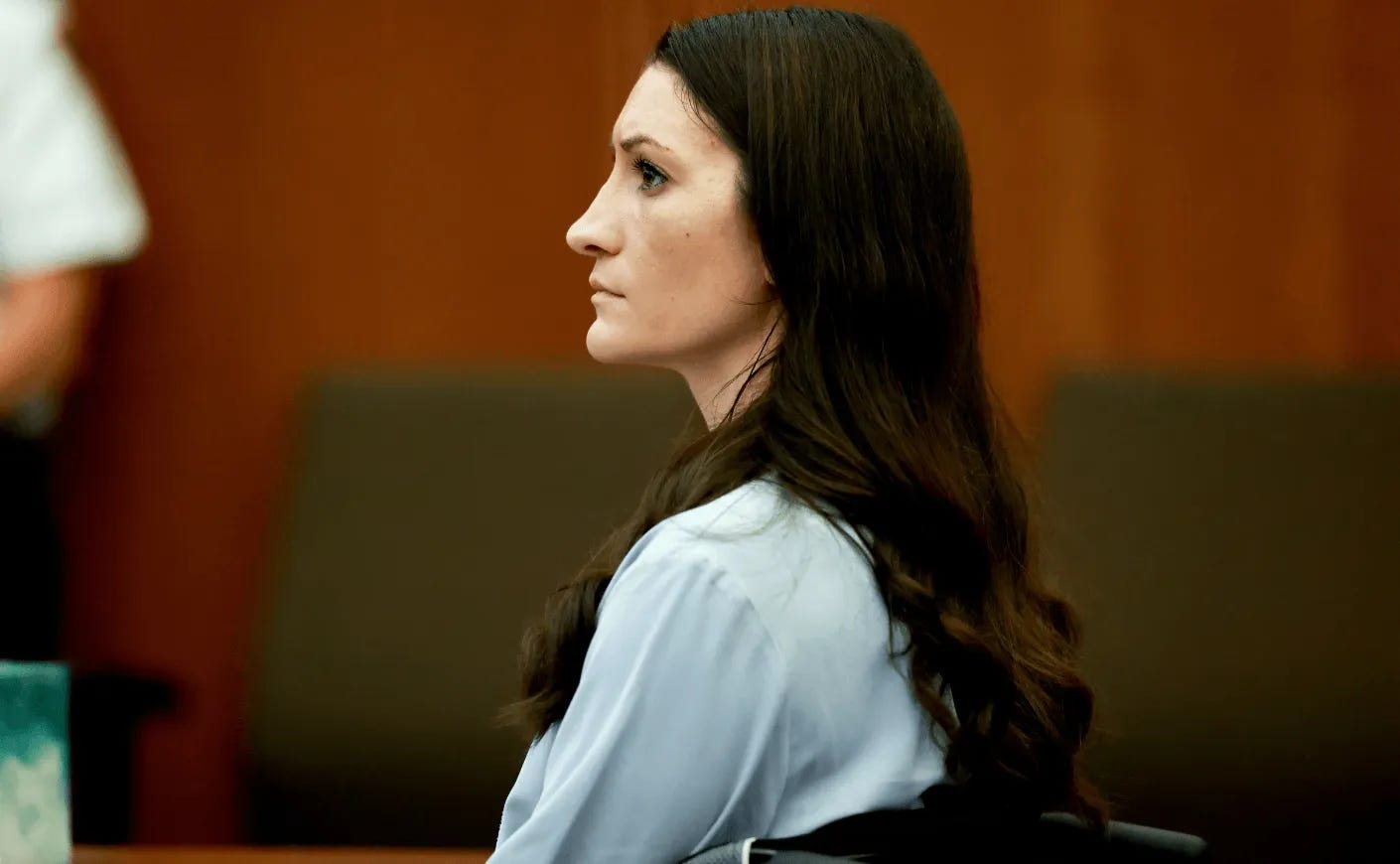
As a forensic psychologist and avid reader of crime fiction, I carefully track court cases that draw public attention. Rarely have I seen a case command global attention quite like Lindsay Clancy’s. The case has all the attendant motifs that accompany sensationalised true crime; armchair experts theorising about the role others played, conspiracy theories about the husband, moral judgements, stigma about mental illness, veneration of Clancy’s defence attorney as a feminist hero for simply doing his job, and numerous hot takes from purported “experts” about the psychiatric treatment she received.
Clancy is currently on trial for the murder of her children. She has entered a plea of not guilty by reason of insanity, with the defence presenting the stance that postpartum psychosis rendered her unable to recognise the nature of her acts. Not guilty by reason of mental impairment/insanity is a well-established precedent in the courts, and is often utilised in cases where psychosis resulted in offending.
The huge interest in this case reflects social forces coming together; growing anger toward the way the medical profession has sidelined women’s needs and the lack of systemic support offered to mothers, and the failures of the American for-profit, insurance-driven healthcare model. Less helpfully, the devastating and dramatic nature of the offence, the true crime frenzy on social media, and Clancy’s status as a young, white, and attractive woman — which allows many women to instinctively identify and sympathise with her — are also influential factors.
Additionally, many women experience mental health difficulties in the post-partum period and will identify with Clancy. The speculation around this case has led to immense anxiety and distress for these women, some of whom may have struggled with thoughts or fears of harming their children. The stigma around mental illness is apparent in public discourse; though the reality is that most people with mental health difficulties will never harm another person.
Despite this, when certain warning signs are present, careful screening is important to ensure the safety of both mother and baby.
As a forensic psychologist, I have both assessed and provided treatment to women who have killed their children or have attempted to do so. For many, these warning signs are missed, just as they might have been for Clancy.
First, the facts. Filicide, where a parent deliberately kills their own child, is rare. It accounts for most cases of child homicide in Australia, approximately 19 deaths each year. Research suggests that a few risk factors are associated with filicide, namely a history of serious mental illness, prior suicide attempts, younger age of child and parent, exposure to recent violent victimisation and financial hardship.
Risk factors have a specific meaning — they are factors statistically linked to a higher probability that someone will engage in a certain behaviour. They are a measure of group membership (i.e., someone is in a higher-risk bracket for doing X). They are not causal or predictive in nature. Many people with risk factors present will not offend. Research to date is underdeveloped and we cannot determine who is at risk of engaging in filicide.
Postpartum psychosis is a rare but very difficult condition and requires prompt intervention, without panic or unnecessarily punitive responses. Psychosis itself is a complex condition. Commonly, people consider that hallucinations (sensory experiences that are not aligned with reality) and delusions (fixed, false beliefs) are the hallmarks of psychosis, and that people are either acutely psychotic or have no symptoms. Clinically, we know that some of the most prominent symptoms of psychosis are thought disorder (i.e., disorganised thinking, speech and behaviour, including changes in thinking and memory) and negative symptoms (the absence or loss of normal behaviours). Additionally, symptoms can fluctuate, as can insight into these difficulties. In Clancy’s case, these difficulties were further complicated by the vulnerabilities of the post-partum period and insomnia.
All this renders assessment and treatment a complex task.
It is too early to make any determinations about who is at fault in this case.
The facts are stark and sad.
Clancy was very unwell and sought help before killing her children.
The help provided may not have been adequate and her condition may not have been adequately diagnosed or treated. However, the baseline rate of violence and homicide for those who are unwell remains very low, and it is impossible to predict filicide, even for trained forensic professionals. While the public appear keen to crucify Clancy’s treating team — and it may well be that they did not treat her appropriately — this is a complex matter and one for the courts and psychiatric experts to resolve.
However, the clinicians who treated her also faced a difficult set of demands; the same demands placed on all who work in the forensic system. The clinicians must balance client autonomy with the risk to others, manage care in a system with strained resources and very limited practical supports, while insurance companies require a justification of each clinical decision.
Clancy is in the dock and her treating team are on the stand as the defence mounts a case to show she was unwell. Notably absent are those who have built and maintained the health systems that have failed Clancy, and so many other women.
About the author

Dr Ahona Guha is a clinical and forensic psychologist who works with both victims and perpetrators of abuse. She is the author of Reclaim: understanding complex trauma and those who abuse (2023), Life Skills for a Broken World (2024), and How We Relate (2026). She writes widely for the media on matters related to mental health, health, social justice, and equity. Her work has appeared in The Age, The Guardian, The Saturday Paper, Breathe Magazine, SBS, and ABC. You can find out more about her work here.
References
[i] Brown T, Bricknell S, Bryant W, Lyneham S, Tyson D & Fernandez Arias P 2019. Filicide offenders. Trends & issues in crime and criminal justice no. 568. Canberra: Australian Institute of Criminology. https://doi.org/10.52922/ti09685
[ii] Lysell, H., Runeson, B., Lichtenstein, P., & Långström, N. (2013). Original Research Risk Factors for Filicide and Homicide: 36-Year National Matched Cohort Study.
Frederique, A., Stolberg, R., Estrellado, J., & Kellum, C. (2023). Maternal filicide: A review of psychological and external demographic risk factors. Journal of Aggression, Maltreatment & Trauma, 32(1-2), 34-52.
Van Berkel, S. R., Aarten, P., Alink, L. R., & Liem, M. (2025). Estimating risk on filicide: A comparison of risk factors between fatal and non-fatal parental violence against children. Aggression and Violent Behavior, 102106.
No posts
Comments
Nothing yet. Say the first thing.
Sign in to join the conversation.