
Welcome back to our summer series on Venture Capital. This is Edition #4 on Founders.
If you missed it, you can read:
We finally reach the stage of our exploration where we stop being so self-centered as investors (1) and finally look at the raw material without which there would be no VC industry to begin with: founders.
A lot of ink (literal and digital) has been spilled already to talk about founders from the VC’s perspective ; often to know whether there was a magical trait, a gene, a cultural background, a school, a terroir, an age, a gender, a life experience that was a predictor of success of failure. From founders made myth under Walter Isaacson’s quill (Steve Jobs, Elon Musk, Bill Gates), to academic research on founder backgrounds, to a heavily developed podcast industry (20VC, TBPN) doubling as a fundraising-and-hiring aid (2) - founders are often dissected at the first, second and third person and their life stories are reverse engineered to pinpoint the element(s) that determined their success.
So much ink in fact, that I struggled to know, not even what modest contribution I could make to the topic, but what angle to put forward. Critically, I am not one that believes that there are elements that predict success in VC (3) - every time you meet a founder, there is a blend of character, experience, passion, team complementarity, momentum that may indicate that a bet is worth taking (that’s the job!) but not that the bet would be successful. Alas, there is no stable founder archetype from which venture outcomes can be mechanically derived. If such was the case, I would be running an index fund on *insert whatever founder category I believe has the strongest outcomes*. So the taxonomy of good founders is both overexploited and a dead end … Where does that lead us? Ours is the exploration of the Venture Capital industry. If we talk about founders, then we must talk about founders from a VC perspective. And there is something that VCs do unimaginably often (Claude would say “comically often”) when they talk about what they do with founders.
Go to almost any VC website (Sequoia, Greylock, Bessemer, Index, GC), and you will find some version of “we back great founders” in there - maybe permuted with ‘generational’, ‘category-defining’, ‘builders’, ‘exceptional’, ‘we help’... Some exceptions exist of course, e.g USV or Founders Fund (4) who focus more explicitly on themes and markets than founders, but it is not the rule.
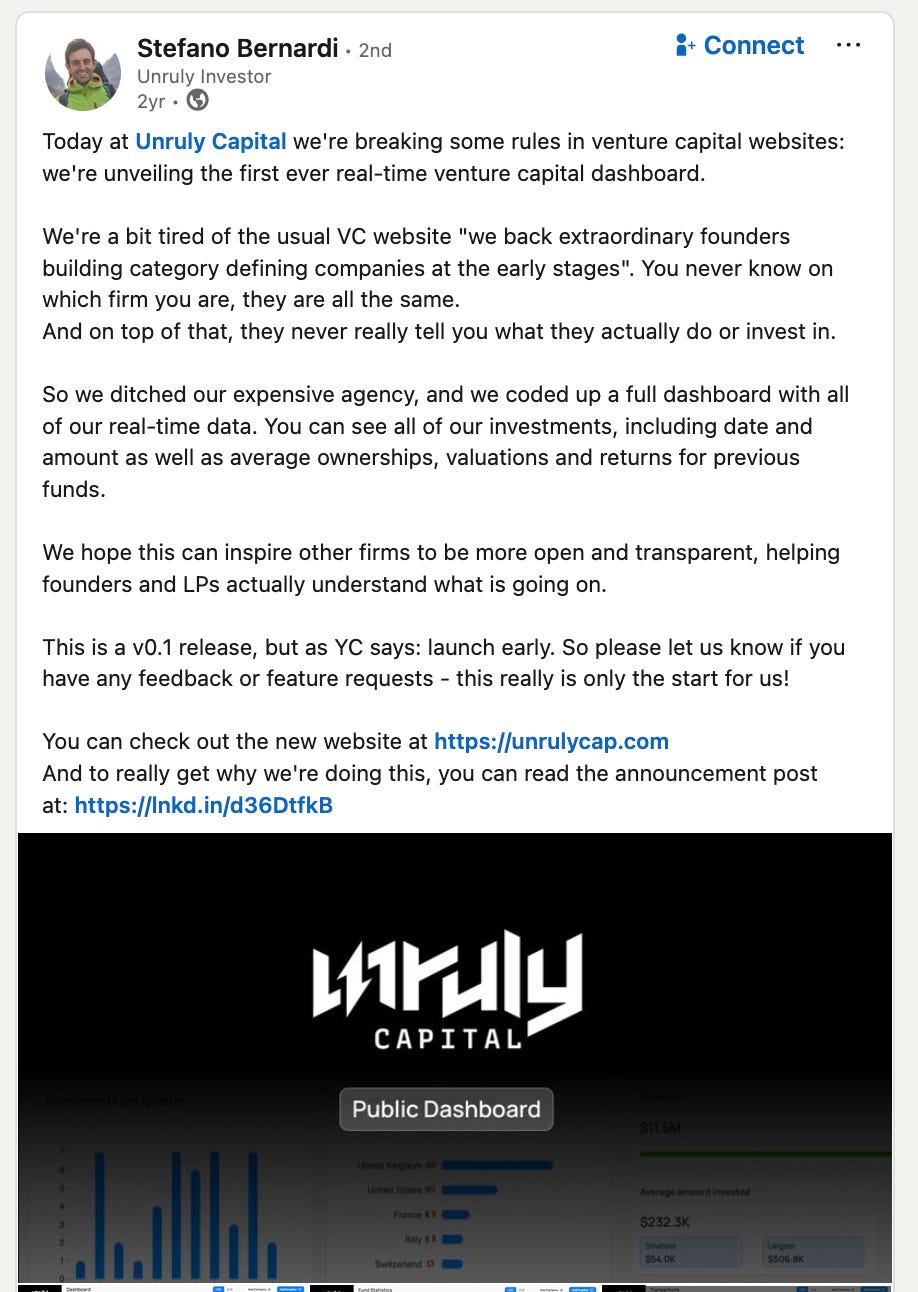
If the entire industry keeps reshuffling those exact words to present itself to the outside world, it must then mean that it is the directional truth of VC - kind of like the counterpart of Paul Graham coining ‘make something people want’: you read and think ‘obviously, this is what entrepreneurship is about’.
But there’s something else about PG’s maxim, and he says it himself: “it sounds obvious, but not doing it is the most common mistake founders make”. What if, similarly, the VC industry revolved about ‘backing great founders’, but not doing it is the most common mistake investors make? A truth, hidden in plain sight, written on every VC’s website, but missable.
Why is it missable though? Why do most funds fail at backing great founders (5), even though they write it on their website? I think it’s mostly because greatness often cannot be seen yet. The scarcest skill in venture capital is fortune telling. Not fortune telling in the crystal-ball sense - the future isn’t predictable - but putting the pieces together to foresee a possible future that has a compelling case and a gravitational pull to manifest it. You don’t really need to be contrarian - quite the opposite actually, in most cases you need to be early to what becomes consensus. Which reframes the entire job: everything the industry revolves on - the theses, the models, the signals, the “proprietary deal flow engines” - is machinery that becomes a substitute to the dreadly simple task of determining whether a founder will become great and you should back them rather than being an input to it.
This is why “back great founders” (I believe) has the same property as PG’s “make something people want”: it is obvious and universally professed and yet constantly underdelivered. Of course, no VC claims to invest in mediocre founders, just like no founder claims to build things nobody wants: the problem is not recognizing when we’re acting against it. And I think the industry departs from the maxim in several recurring ways:
it backs markets: thesis-first, with the founder and team as an interchangeable piece (or - picture my grin - a fungible token)
it backs momentum/signals: a hot round or the lead’s logo is information about other investors, not about the founder, but it does exert FOMO.
it backs legibility: the ex-Stripe PM, the second-time founder with the modest exit, the PhD in Applied Machine Learning - résumés you can defend to your partnership and your LPs that end up being the “nobody gets fired for buying IBM” of venture.
Each of them is a way of investing in something that isn’t the founder while telling yourself otherwise. That gap between what the motto professes and what the industry actually buys is our angle for today (yes, this was a long - I have a cold start problem).
So let’s do what we do best in this series and break the sentence apart, word by word. Back. Great. Founders. And since this is the essay about founders, we’ll start backwards (but also because, as you’ll see, temporality is everything).
“I’m trying to be what I’m destined to be”
50 Cent - Many Men
The problem with founders, I reckon, is much more critical at the early stage. At this point, there are no metrics and the company barely exists, and definitely not independently from its founders. So what exactly are you underwriting when you are making an investment at this stage?
I believe that - in a similar way we said that LPs invest in individual GPs much more than they invest in theses or financial products in our second essay - you are indeed buying a decade of their decision-making process and making a bet on the outcome of those decisions. You want people who are able to navigate the idea maze (borrowed from Chris Dixon) efficiently. But even that formulation is deceptively simple, because “the founder” is not an isolated individual making decisions in a vacuum (otherwise, we could tie some traits to some decision-making processes and conclude). A founder’s decisions are constrained by who they are, what they are trying to build, who they are building it with, and the market in which they are operating.
I just had an exchange on LinkedIn w/ Hexa’s Thibaud Elziere about what we call ‘entrepreneurship’. Beyond semantics (what you decide to call each group), I think we both agreed that there is an important distinction to be made between people who run a business (a baker, a restaurant owner … or a GP at a VC firm) and people who have in them to create something and bring a new combination or innovation - new product, new market, new business model, new technology … The latter, to me, are the founders. VC does not finance founders simply because they founded something. It finances a particular entrepreneurial act: attempting to create something whose outcome is sufficiently uncertain and whose upside is sufficiently large.
If you read Khosla Venture’s website, there’s an interesting ‘what we don’t invest in’ section. It lists: growth capital, project financing, real estate, small businesses, niche markets with low upside but good IRR, public companies, copycat business plans. Honor to whom honor is due, Khosla does not strip those businesses from their entrepreneurial DNA, from the right to call themselves ‘entrepreneurs’ or even from being successful investment options, he just points out that they are not founders, thus not what he seeks.
My view on that is that a founder, quintessentially, is an explorer (6). He or she tentatively builds something to see whether it will stick. That it’s done out of a compelling vision, or luck, or just cold calculation because the founder knows the market well doesn’t really make a difference in that sense. We back those attempts - and this is why PG’s maxim is so compelling: it’s much easier not to miss if you’re trying to build out of a customer’s needs rather than assuming your attempt or idea will be the one making waves. But both could land equally: you can be Henry Ford and (allegedly (7) ) ‘if I’d listened to my customers they would have wanted faster horses’, or you could be Oliver Samwer and copycat existing businesses to bring them to new markets (the newness here being in the market you export it to) with Rocket Internet (8) and remain a founder.
In most cases, the unit we’re underwriting is not even the founder, it’s the team of founders. And interestingly, two brilliant people can form an awful founding team while two individually unremarkable people can be extraordinarily complementary. So this should beg the remark “we as VCs should look for founders plural, not a founder, singular”.
This is not exactly my belief. I think beasts with several heads are discombobulated (literally trying to do several things at once that are incompatible) and bound to die, while a beast with a head and other assets to show for is a different animal (9). If we bring that into the VC realm, this means that I believe that (a) solo-founders can perform just as well as teams of founders and (b) there’s always somehow a lead founder, at least in the vision, and whose intrication with the company you’re underwriting - companies need a single point of final creative authority, even when leadership is distributed. Which does not mean you should not look at the team of founders.
Quite the opposite actually: what’s more interesting is when there’s a dynamic where a second or third founder exhorts the best in the lead one. There’s a long litany of co-founders in the shadows inside and outside of the tech world that did a lot of the heavy lifting for an otherwise very visible founder. Some of them were even employees that rose to incredible delivery standards, revealing that founder-like importance doesn’t hinge on formal founding status. Here’s to Roy Disney (to Walt Disney), Pierre Bergé (to Yves Saint-Laurent), Steve Wozniak (to Steve Jobs), Paul Allen & Steve Ballmer (to Bill Gates), Charlie Munger (to Warren Buffet), Eric Schmidt (to Sergey Brin and Larry Page), Sheryl Sandberg (to Mark Zuckerberg), Andrew Jassy (to Jeff Bezos) and Daniela Amodei (to Dario Amodei).
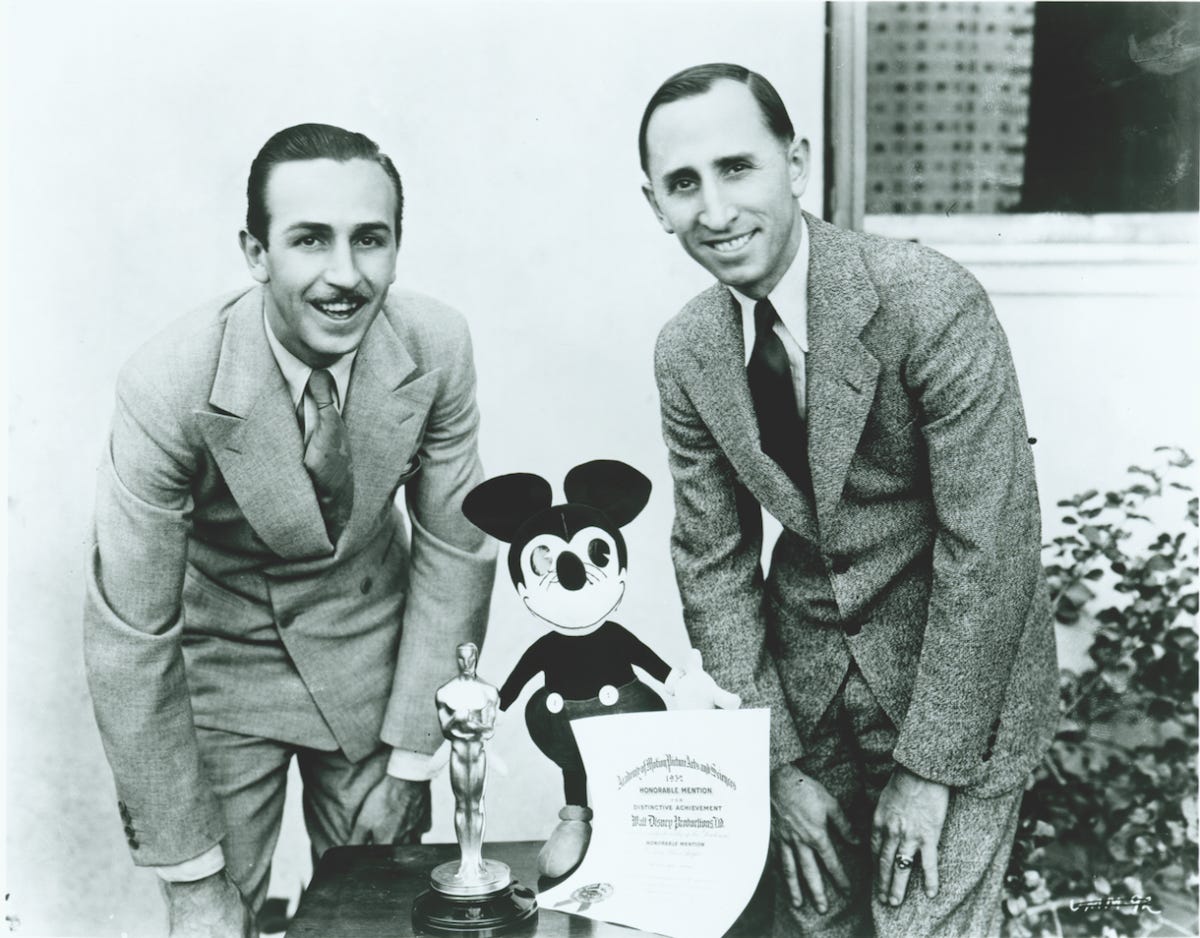
This is very much unspoken, but I think investors often, almost always, primarily back one of the founders. Better investors make sure that the rest of the team is not a drag, and ideally that they are the ones that can make the founder the bet hinges on perform in top conditions.
Another adage that was deeply held at my previous firm. Yet, I take this one with a pinch of salt.
Not only can the same people look like geniuses in one market and fools in another (Stewart Butterfield tried twice to build a gaming studio. He ended up building Flickr and Slack from side features of his games, and never shipped a successful game). A great founder is therefore difficult to separate from founder-market fit: you aren’t trying to rank human beings on an absolute scale, but trying to see whether they’re adapted to this market and what it requires to succeed. The market does not beat the team: it’s an ecosystem - if the team is adapted, it thrives, if not, it dies.
But more importantly, yes it is true that founders need market tailwinds. If you’re a strong founder in a lousy market, you don’t succeed. If you’re an average founder in a really deep market, you may make some cool bucks. I don’t deny that. But the founder chose the market, and market-choosing is itself a founder trait. Great founders are upstream of great markets more often than the reverse, because those exceptional individuals know how to focus on something that will become important years before it is obvious by the numbers that it is. This is the ‘fortune telling’ I mentioned earlier.
I mentioned Marc Andreessen’s Onion Theory of Risk in Essay #1, mentioning what type of risks you gradually have to peel off an asset to underwrite an investment. I think the same approach can be taken when underwriting the sole “founder” part of the investment: my way of thinking about founders when investing isn’t “does this person possess trait X?”, but progressively more contextual questions: Can they build? Do they have a compelling vision? Can they steer it? Can these people build together? Are they unusually equipped to build this particular thing?
Venture investors talk about founders as though “greatness” were an intrinsic property of an individual. At the early stage, however, what we actually underwrite is a person or team in context: their capacity to make thousands of (good) decisions about this particular company, together, in this particular market. That’s what makes a founder.
“Don’t believe the hype”
Public Enemy - Don't Believe The Hype
Fine. If greatness is contextual, and you’re underwriting it prospectively, then when exactly can you know that someone is great?
The honest answer is that greatness, in the common sense of the word, is a retrospective title. Nobody debates whether Muhammad Ali was great: the fights happened, the record exists, the title is settled. People argue whether the GOAT was Messi or Ronaldo, LeBron or Jordan, The Beatles or the Stones, but there is no denying that they were all great (10) .
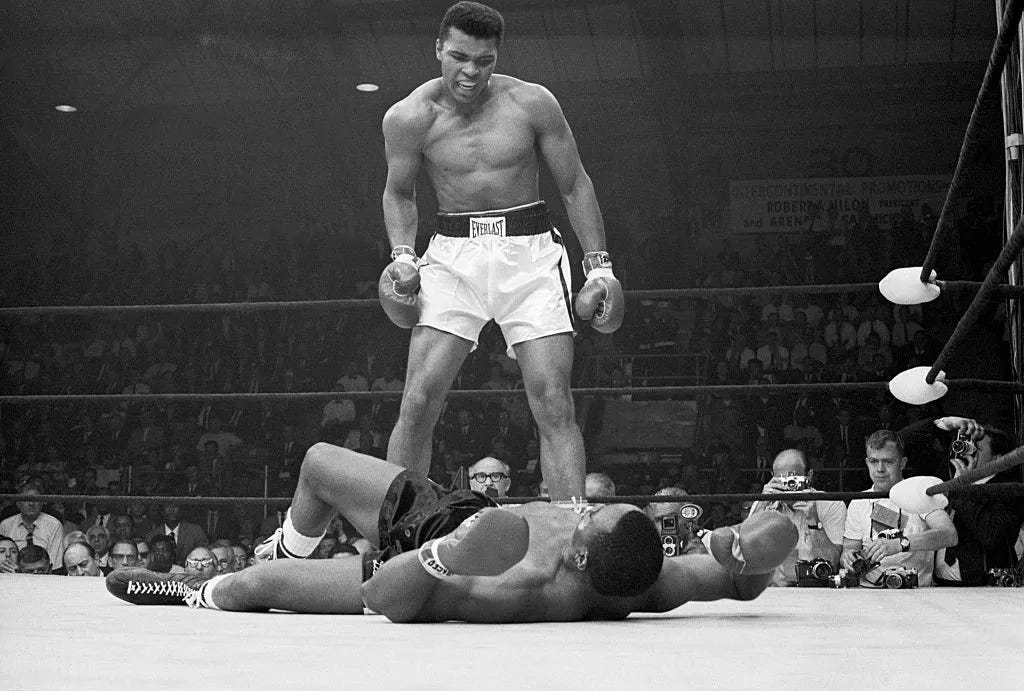
Greatness of that kind is a property of the past, however VCs don’t get to invest in the past - the whole trade is buying prospectively what everyone will call greatness retrospectively. When a VC writes “we back great founders”, the tense is doing an enormous amount of work: what they actually mean is “we back founders before their greatness has occurred”. Which is a much stranger sentence, and a much harder job.
This is where the seduction of legibility comes in. Since prospective greatness can’t be observed, the industry substitutes it with things that can: the résumé, the alma mater, the previous exit, the former team, the logo of the lead investor. All those markers increase the credibility of the founder, but not necessarily the prospective greatness. Credible and great are not even measured on the same axis: credibility is a measure of the past being reassuring; greatness is a bet on the future being exceptional.
Of course, they overlap sometimes - credible founders can lead to good outcomes and become great, there’s no questioning that (Bezos was a VP at D.E. Shaw, inarguably one of Wall Street’s most legendary hedge funds, a strong signal of credibility). But when the two axes seem to converge, when a founder’s signals are readable by everyone in the market, the market clears accordingly: the round is pre-empted, the valuation makes your fund model (and your LPs) weep, or you’re simply not invited. Legibly credible founders are either expensive or unavailable. That’s not bad luck, it’s an efficient market doing its job on the only part of the asset it can price (11).
And the ultimate case of legibility is the founder who has already been great once. This is where investors should be most aware, not least: because here, greatness itself gets priced in - as if it were a stable, transferable property of the person, when everything we said in the previous section says it’s contextual.
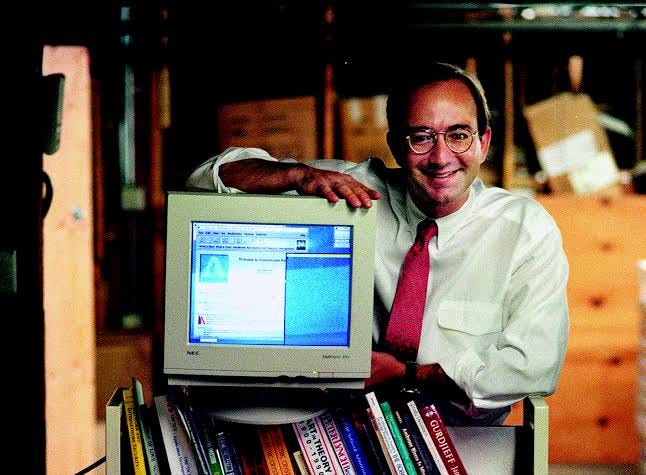
Let’s stay on Bezos. Credible as VP at D.E Shaw, indeed became one of the greatest with Amazon. But if you buy into Bezos’ Project Prometheus at $Xbn out of the gate, you are taking on enormous risk on the thing that actually matters - whether this project, in this market, at this point of the founder’s life, will be great - while paying as if that question were already answered. Same if you back Travis Kalanick’s or Adam Neumann’s next act (12) . Were they great founders? At Uber and WeWork, by the standard of company-building, yes. Can they pool humongous amounts of capital and hire exceptional people on day one? Absolutely - that’s the residue of past greatness, and it’s real. But will the second project be great? Nobody knows, and that’s precisely the point: past greatness is a blessing on the inputs and a curse on the price. You get the recruiting gravity, the capital access, the playbook ; but you pay a valuation that assumes the output too. Proceed with caution.
So the actual job of the VC - and the reason “great” is the hardest word of the three - is recognizing greatness while it is still illegible. Being early to what becomes consensus afterwards, as we said. Not fortune telling in the crystal-ball sense: the founder is right there, in front of you, in a meeting. The information exists. It’s just not written anywhere.
What does it look like, then, if not a résumé? A few things I’ve learned to watch:
Rate of learning between two meetings. Not what they know in absolute terms, but how fast the delta closes. You meet a founder in January and again in April: some come back with the same deck, maybe slightly better formatting and a couple of Tier-5 investors added to the round; some come back having metabolized every objection you raised, and much more you didn’t, telling you about what they learned from their customers. The second kind compounds. You’re underwriting a decade of decisions, remember, so as the math geek that I am, I’ll point out that the derivative matters more than the position.
Behavior under adversarial questioning. Not whether they have the answer - after all, there’s no right or wrong, and I mostly ask out of curiosity as to how they approach it rather than granting points on a proverbial grading scale. I’m more interested in what happens to their thinking when they don’t. Deflection, seduction, collapse or visible reasoning in real time. I found the best founders can separate what they know (facts) from what they believe (hypotheses), explain the first principles sitting between the two and how they intend to test them, then reason forward to what the business could look like if those hypotheses hold at scale. They can move cleanly from fact, to hypothesis, to implication without pretending that all three carry the same degree of certainty. Live pushback helps reveal how they think about their business when the deck, data room and written Q&A (all polished by AI) aren’t doing all the work.
Recruiting gravity. Do exceptional people keep falling into their orbit before there’s any rational reason to? I’ve written in the past about the Elon Musk effect - the ability to make absurdly talented people take absurd personal risk on your behalf. A founder (ex-chief of staff to Alan’s CEO who just finished YC. Shouldn’t be too hard to pinpoint) recently told me the same thing about Jean-Charles Samuelian: years in, people around him still can’t fully explain why they’d follow him anywhere, they just would, and his ability to convince someone to work with him is apparently unparalleled. That pull predates the metrics, and it is one of the least fakeable signals that exist: you can rehearse a pitch but you cannot rehearse other people’s revealed preferences. The more credible those people are, the more reinforcing the pull is (this is when credibility is useful - if five ex-Palantir move to a Defense AI company as founding employees, you should definitely pay attention).
The idea maze. How they navigated the idea maze versus how well they present it. Some founders are brilliant narrators of a shallow exploration; some are terrible narrators of a deep one. The deck measures the founder’s polish; the maze measures the founder. Only one of these correlates with the next ten years. That is not to say that the deck should be unpolished (although recently I saw a bunch of very exciting companies with Comic Sans decks made my toes curl or that just skipped the deck altogether and only sent a 2-6 pager memo), but that it won’t do much if the contents thereof aren’t authentically metabolized by the founders.
Those are merely my observations, I’m sure there are other tells - Harry Stebbings mentions founders with a broken relationship with a parent, who started being entrepreneurial early on and who played high level video games for instance, but those are traits and as you’d have understood by now I don’t think it boils down this easy. Happy to exchange notes on this if you have some.
There is also a sourcing corollary : deal flow doesn’t organize itself around great founders - it organizes itself around themes. Every vintage has one: the sector the industry has collectively decided is where the future happens, the panel topic of every conference, the word in every fund deck. The problem is that the defining company of a given year is rarely founded inside that year’s theme. Alberto Gimeno made this point brutally by lining up the most valuable company founded each year against the dominant VC theme of that same year: when OpenAI was founded, the industry’s obsession was autonomous vehicles. The great founder was there (I’m not talking Sam Altman who hadn’t left YC then, I mean a founder genuinely building something novel in AI in 2015), findable, taking meetings - but the sourcing machine was pointed elsewhere, because sourcing machines are built to find the theme, and themes are, by construction, what’s already consensus.
The tempting conclusion is “so look right when everyone looks left” - the mighty contrarianism - but that’s a trap too, because it’s just consensus with a minus sign in front. You’re still letting the crowd set your coordinates, you’ve only inverted them. The actual discipline is more boring and much harder: hold the objective constant. Chamath Palihapitiya’s latest annual letter has a striking illustration of what that looks like over time: Social Capital’s portfolio increased in valuation when NVIDIA licensed Groq for $20B, but as Chamath notes, the decision to invest was made ten years earlier, so the 2025 result doesn’t represent any meaningful work done in 2025. It was 2016 work, and interestingly, nobody’s theme in 2016 was AI inference chips, not even Social Capital when they made the Groq investment. The bet wasn’t contrarian in the theatrical sense: it was simply indifferent to the theme, made against an internal conviction rather than an external scoreboard. And that’s the broader point: the feedback loops are so long that for years at a time, the only person who can judge whether you’re on the right track is you. Everyone else is reading the scoreboard, and the scoreboard tracks lagging indicators. Sourcing great founders and sourcing the theme are two different activities that happen to look similar - but only one of them usually produces the desired outcomes.
One last distinction before we move to “back”, because it is worth making: great already versus becoming great. Even the founders we retrospectively canonize were not finished products at the seed round - they became great partly through the company, the market, the adversity, sometimes through the backing itself. Which means “great”, in the maxim, is not a state you detect - it’s a trajectory you join early.
Which reframes the last word of our dissection: if greatness is partly built after your wire hits, then “backing” isn’t as much what happens after the recognition than it is part of what makes it come true.
“If we’d go again, all the way from the start. I would try to change the things that killed our love. (...) Is there really no chance to start once again? I’m still loving you”
Scorpions - Still Loving You
Finally, “back” is the word everyone doesn’t stop to question. It reads like a synonym for “invest”. But in all truth, it isn’t and conflating the two is like confusing stock and flow. Investing is an event - you deploy capital ; backing is a duration. Investing happens at the term sheet, in the honeymoon phase, when the story is intact and everyone is charming. Backing is revealed in years two and three, when the story has cracked somewhere - because it always cracks somewhere, remember, the great founders keep navigating the idea maze and you’re buying their decision-making engine - and the question is no longer “do I believe?” but “do I still?”
The industry has historically been terrible at this word, and I’d argue in both directions.
For decades, the standard playbook was “adult supervision”: back the founder until the company works, then replace them with a professional CEO - the founder was merely a spark, a detonator, tinder disposable after ignition. Then we got the remix to ignition (13): Facebook happened, Zuckerberg kept control, the returns spoke, and the industry flipped to founder-friendly ideology: dual-class shares, “founder-first” as a religion, boards defanged. Here’s the thing: neither extreme is backing. The first backs a company and treats the founder as a removable part ; the second backs a founder so unconditionally that it stops being a relationship and becomes an abdication (or an absolution, depending on how you look at it). Backing is the uncomfortable middle of that spectrum: committed and awake.
So what does backing actually look like, operationally? My take is that it’s rooted in behavior. Real behavior, which does not appear on a website but gets shared by founders in ref calls:
Follow-ons when the middle is awkward. Of course any one will re-up into a hot round marked up 3x by a Tier-1 (if they have a follow-on strategy). The real conviction test is the flat bridge at month 20, when the founder is between narratives and the partnership is between convictions. Your follow-on behavior in the unglamorous middle is your revealed belief, everything else is stated belief. And of course, no investor will automatically re-up in every portfolio company. Backing doesn’t mean re-upping into every one of your portfolio companies: reserves are finite and some bridges shouldn’t happen. The question is whether your decision is owned: fast, stated, signal-managed, useful - versus the awkward default of declining by evaporation, where the founder learns your answer from your silence, stalling, going quiet, letting the round “come together without you. You can pass on a bridge and still be backing, but you cannot fade and be backing.
Defending the position internally and holding your role. Every portfolio has companies that drift out of fashion inside the partnership itself: nobody decided anything, but the company stopped being discussed and the champion went quiet, emails get much slower replies … the founder still thinks they have an investor when in fact they have become a line in a spreadsheet - and they’re lucky if that line is not heavily discounted already.
Staying at the table when it would be cheaper to fade. Answering in the bad quarters at the same speed as in the good ones. The best investors are supportive and engaged when things are not going well ; they are demanding and push you to go even faster when things are going well. The worst investors do the exact opposite. (unapologetically borrowed to Gokul Rajaram). Founders compare notes on this constantly, and they remember: reputation among founders is just your backing behavior, compounded over dozens of reps.
One thing is notably missing from the list: transforming the company. And this is where I’ll say something that does not go well with a VC’s ego - true backers don’t overstate their contribution either. The industry’s favorite way to dress up “backing” is the platform pitch: support, value-add, community - all of which are usually largely overrated by founders and oversold by investors (14). Real operational value-add exists but it is narrow: business intros, key-hire intros, strategic conversations at genuine inflection points. The rest is narrative cosmetics around it. The honest posture of an investor that “backs” is closer to cheerleader than coach: on the sidelines, cheering when they succeed and when they fail, occasionally arranging the conversation that unlocks something, but never fooled into believing you personally had a transformational influence. Founders do the heavy lifting. Backing means being unmistakably there ; it does not mean being the reason (15).
Which gives “back” a strange and precise shape: a backer’s floor is higher than the industry’s practice (don’t disappear on your lines and own your follow-on decisions), and a backer’s ceiling is lower than the industry’s marketing (don’t bring up the hero narrative: there’s no deus ex machina). Most firms manage the exact inverse: inflated ceiling in the deck or on the website, collapsed floor (“éclaté au sol” as we say in French) in the portfolio.
You may have realized by now if you’ve followed through the four editions that I’m a fan of tests. If everything above still feels abstract, I’d like to propose a simple one that operationalizes the entire maxim in one sentence, and that you can run against your own portfolio today:
If this founder pivoted to a different idea tomorrow, would you still want your money with them? If not, you didn’t back a founder, you bought a lottery ticket on a market.
I can already hear the thesis investors objecting: “Of course I wouldn’t follow the founder anywhere. Founder-market fit means greatness is contextual, and you said it yourself in the first section! The founder I backed is exceptional at this problem ; her insight is earned and domain-specific. Transplant her anywhere else and she’s ordinary. Your test does not reveal founder quality, it tests generic charisma, which is a trait …”
It’s a good objection, but it’s only partly correct. Greatness is contextual, I won’t contradict my own earlier writing. But this objection also makes the assumption that the context is the idea, when the context is the adjacency to the idea. Founders (usually) don’t pivot from hospital procurement to consumer social ; they pivot within the territory they know, from one attack angle to another, and the history of venture is largely a history of those pivots. Let’s bring up Stewart Butterfield again: backed to build games (a $280k F&F round), delivered Flickr (a $25m outcome), backed to build games a second time (with $17m this time), delivered Slack. The turf is the same (how people interact online), different angles of attacks, and the investors who followed him through the second failure own one of the great returns of the era. Instagram was Burbn, closer to home Zenly was AlertUs. In every case, what survived the pivot was precisely what the test tests: the person, their instincts - in short: the founder as the asset. The idea died, which is to say the part the thesis investor thought they were buying (16).
And we can finally close our loop: we said greatness is not a state you detect but a trajectory you join early ; well to that regard, backing is your share of that trajectory. Every moment in between, every actual behavior you adopt as an investor are inputs into whether the founder gets to become what you initially recognized. And most of it is not strategic bravado or transformational influence over the company. In the words of Kendrick Lamar, it’s more: “sit down, be humble” - sit through the awkwardness, own it, embrace it and you may see the light at the end of the tunnel.
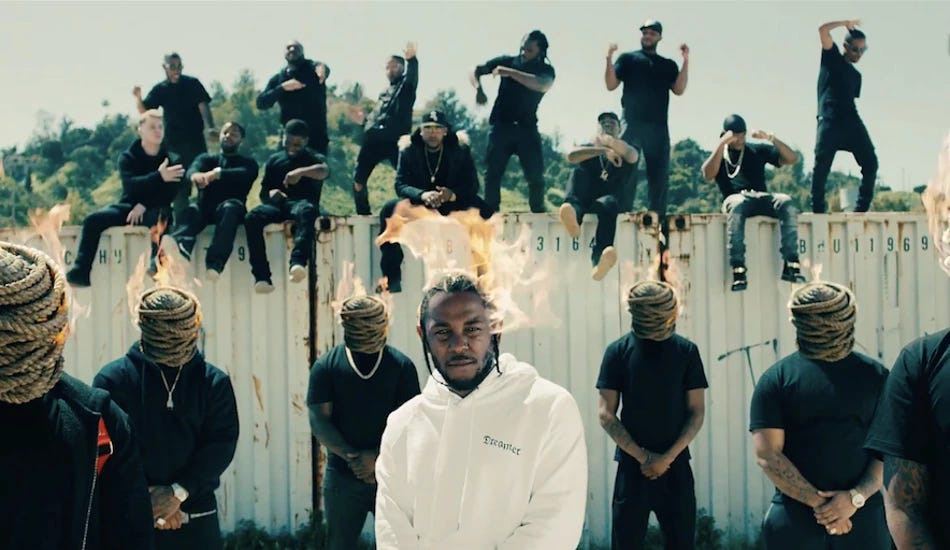
Why did I say temporality was everything? Well, you recognize prospectively, the world judges retrospectively, and backing is what happens in between. Backing is the only part of “back great founders” that is entirely within your control. You can’t make a founder nor can you will greatness into existence. But whether you actually backed is the easiest part to check.
Let’s put the sentence back together. “We back great founders”: those three words are written completely static and sit still on every VC website like a photograph. “Founders” is a noun (a profile to pattern-match), “great” is an adjective (a property to detect), “backing” is a verb, interchangeable with “investing” and thus frozen at the term sheet step (make the wire, add the logo on the website, post on LinkedIn, and forget).
But if you followed the dissection, none of the three words is actually static. Quite the opposite, they suggest motion. A founder is a person moving through a context. Greatness is a trajectory you join early. Backing is a behavior you sustain for years. The maxim is not a photograph, it’s a film - and I believe most of the industry fails at it not out of disagreement, but because it keeps trying to catch the still version of a moving phrase.
And indeed, if you look back at every way of trampling on the maxim we’ve listed, they are all ways of trying to freeze the frame. The résumé is the founder frozen in their past. The priced-in legendary founder is greatness frozen at its last peak (hello, Prometheus). The theme is the market frozen at consensus. Legibility, in the end, is just what motion looks like at any given time - and Essay #2‘s law (whatever is legible gets priced) takes its final form: the market prices the “cliché” (often when there is momentum) but the returns live in the film. Hence the test I suggested, which is a motion test. The pivot is the founder moving ; the question is whether your conviction moves with them.
Backing great founders is the essence of a VC’s job. It’s only true if you accept that it is in motion on all sides: you have to durably back a moving, shapeshifting founder on their way to achieve greatness. I’ll acknowledge it makes for a worse website motto, but for a much better investing attitude. The whole industry is downstream of three words it wrote on its own website. It would be a shame to keep reading them in the wrong tense.
Next up we’ll see how the motto gets operationalized and will dive into VC ops: sourcing, selecting, winning, picking, and the rest. Look out!
(1) Essays #1-3 were about the capital part of the industry, we’re now shifting towards the practice and operations of VC (and will end with perspectives).
(2) I’m convinced that media exposure has become part of the toolkit ops VC can leverage for their portfolio, but more on that in a later edition.
(3) My previous firm’s motto - that shaped my thinking on this - was “Anyone can be an entrepreneur”. Which does not mean that everyone can, but that a great entrepreneur can come from anywhere. Entrepreneurship, in its rawest expression, is indeed universal.
(4) There is an interesting observation here: the most distinctive partnerships (USV, Founders Fund, but also Benchmark or a16z that I didn’t mention) are also among the least inclined to define themselves primarily by the tautology that they invest in unusually good founders. They tell you something about what they believe instead.
(5) Not judging the investment decisions here, I’m describing the outcomes, statistically - this was our essay #2.
(6) That’s the entire argument of Essay #1: the founder is the person doing the venturing, VC is the capital structure built to finance the expedition.
(7) There’s no proof in literacy that Ford actually said the quote, which allows me to use the word ‘apocryphal’ that I owe my knowledge of to my prep school History & Geopolitics teacher.
(8) This only works for a while, though. The way the startup industry has matured, there are YC alums in all parts of the world, building locally. Copycats spread organically long before a factory has had time to hire a team and duplicate ; and businesses have playbooks to roll-out internationally much faster.
(9) I still don’t know WTF this means, and Kobe Bryant (RIP) surely brought this secret to the grave.
(10) Note that VC only requires great, which is hard enough. You don’t need the GOAT. You need founders in the top decile of outcomes, not a once-in-a-species phenomenon - venture math is forgiving that way. R. Kelly did write Ali’s OST “The World’s Greatest” about being, precisely, the greatest… but he’s been cancelled since, so we’ll stay with Ali and the greats, and leave the GOATs.
(11) This is Essay #2‘s logic coming back around: whatever is legible gets priced. Returns live in what isn’t yet.
(12) Greatness and controversy are apparently not mutually exclusive, but that’s a topic for another day.
(13) Another R.Kelly reference, I might be trapped in the closet.
(14) With a few exceptions - if you have a16z’s scale and hundreds of internal operators actually doing marketing, sales and hiring for portfolio companies, you can claim the words. Below that scale, the claim is mostly branding. Much more on this in the next essay tackling VC Operations.
(15) Again, you have a handful of counterexamples where a board member or investor has been transformational: Gurley at Uber (for a while at least), Thiel at Facebook. Those are not common.
(16) One honest caveat is about stage: this test is a pre-seed/seed instrument. By Series B, there is a company, revenue, an org chart - the asset has genuinely migrated from the founder into the company, and “would I follow them elsewhere” becomes the wrong question. This essay, like our fund, lives at the stage where the founder still is the company: the early stage.
No posts
Comments
Nothing yet. Say the first thing.
Sign in to join the conversation.