
“The Peaks of Otter are thought to be of a greater height, measured from their base, than any others in our country, and perhaps in North America”
That was a quote from then-Governor of Virginia Thomas Jefferson, who believed that the Peaks of Otter, a trio of peaks within the Blue Ridge Mountains in Virginia, were the tallest mountains on the continent. If you hadn’t heard of them, that is perhaps a good clue to the fact that he was wrong — indeed, they are not even the tallest peaks in Virginia.
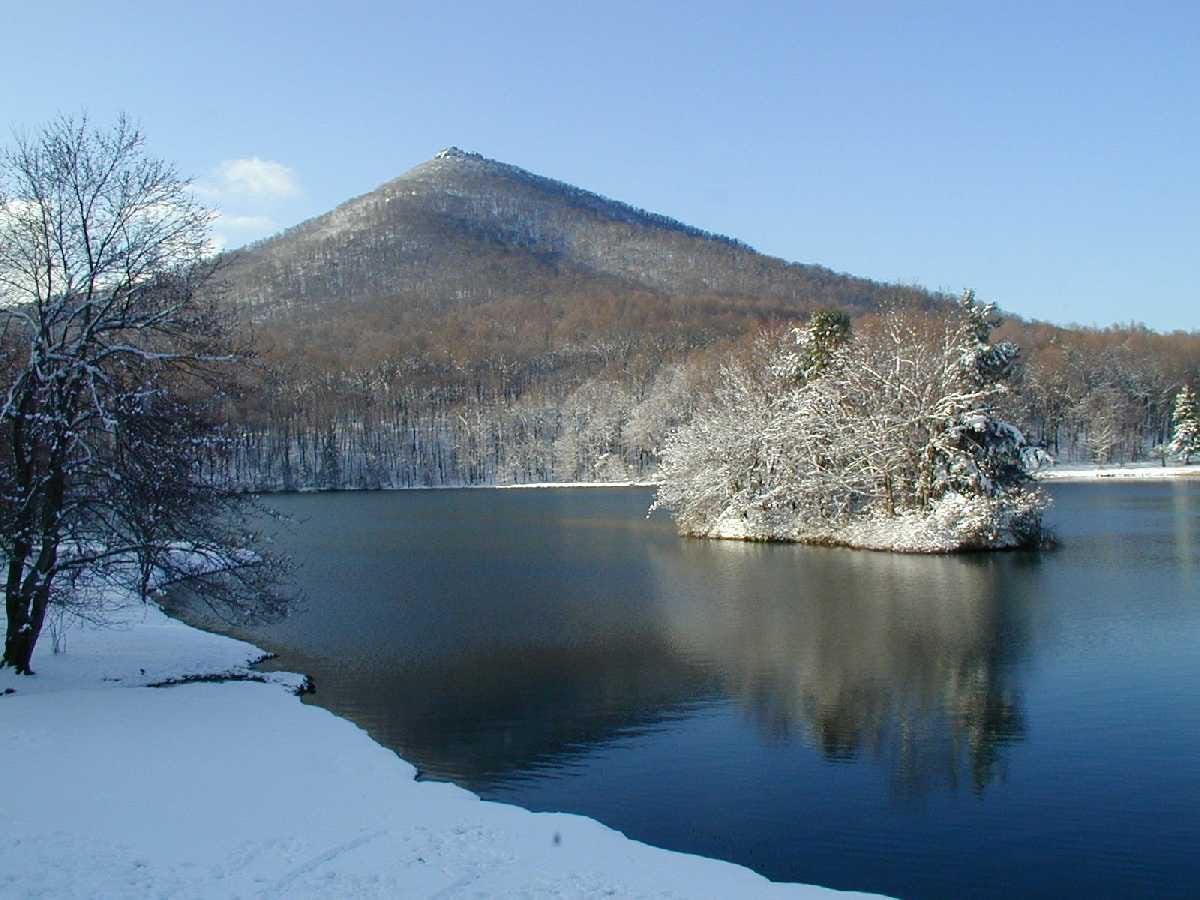
Though the height of these mountains may not live up to Jefferson’s imagination, they are still spectacular in their own right, particularly in their biodiversity. Each summer, the buzzy song of the cerulean warbler rings down from the tree tops, while Canada warblers sing back from the understory. Flying squirrels scamper through the branches, risking attack by a hungry bobcat if they ever wander too low. More than 2,000 species of plants grow in the broader region, and the Peaks of Otter themselves are home to a variety of rare species like piratebush.
But in the leaf litter beneath all these organisms lives perhaps the rarest species of all: the Peaks of Otter salamander. Small and brown with brilliant flecks of gold running down its back, it is both adorable and beautiful. It is also entirely restricted to 45 square miles of forest surrounding the namesake peaks. It wasn’t until the 1950s that scientists recognized that this salamander even existed — and when they did, it set off one of the cattiest dramas in the history of herpetology.
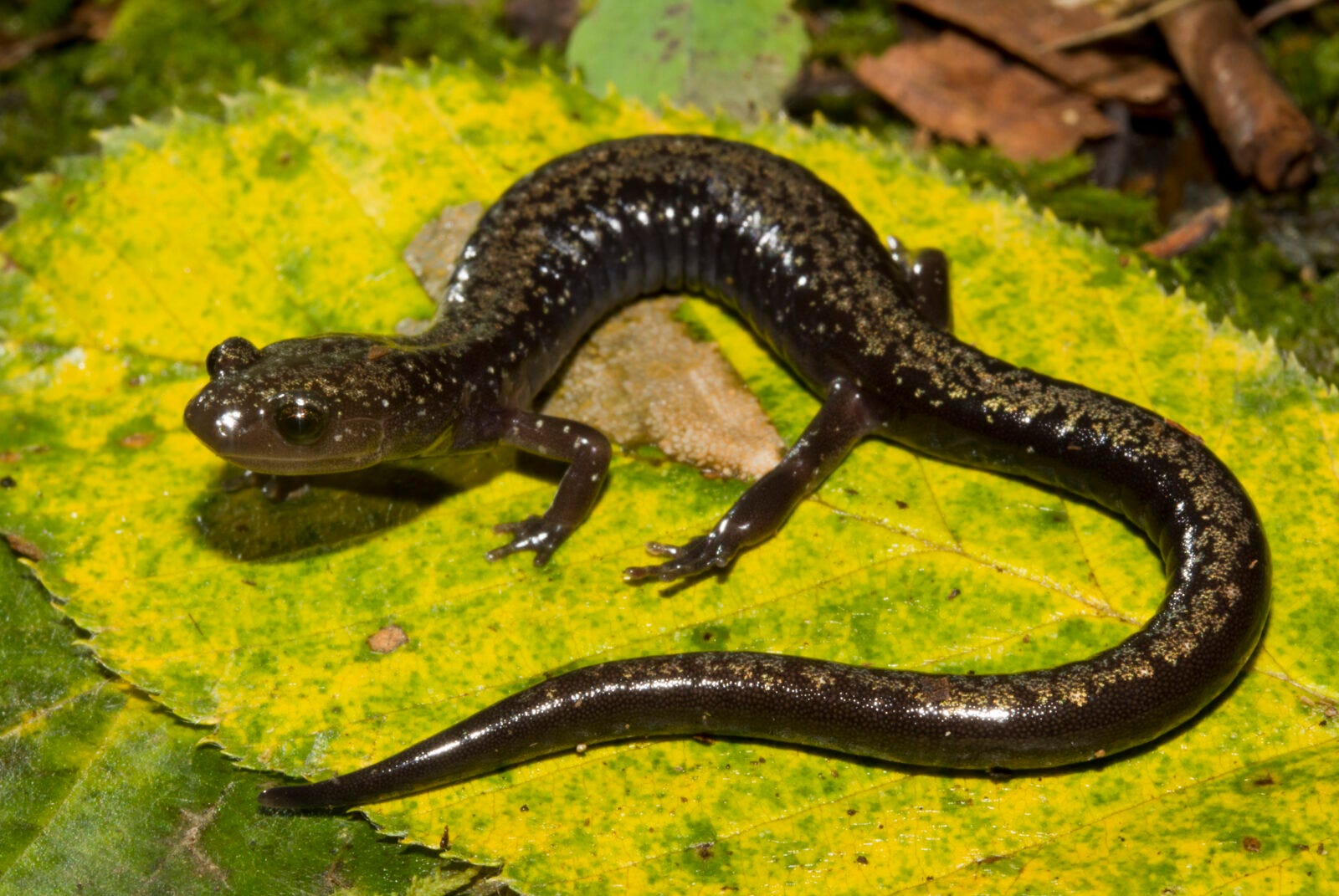
In the mid-20th century, there was something of a herpetological gold rush in the Appalachians as scientists realized how many undiscovered salamanders lived there. Today, the Appalachians are often called the global hotspot of salamander diversity, but this is a relatively new designation. The Peaks of Otter Salamander’s genus Plethodon, for instance, included only six recognized species at the beginning of the 20th century. Today, that species count sits at 49.
As the number of salamanders grew, however, so did competition between herpetologists to describe them. The biologists M. Graham Netting and Myron B. Mittleman exemplify this well. The pair — one from the Carnegie Museum of Natural History and the other from Ohio University — each independently discovered the Plethodon richmondi, the ravine salamander, in West Virginia. When they each realized the other was planning on describing it, too, they began to argue over who deserved priority and had a falling out in 1938. They reconciled their differences, though, and opted to co-describe the species that same year. Then, ten years later, a Master’s student at Cornell University named Richard Hoffman sent them both specimens of an undescribed salamander from Virginia, and yet again, Netting and Mittleman couldn’t agree who should get to describe the species. They had another falling out, with poor young Richard Hoffman being carbon-copied on every nasty letter they sent each other. During this spat, Netting told Hoffman directly that he shouldn’t study salamanders, since too many people were already working in the field.
(As a side note, I cannot confirm this, but I sincerely hope that this Myron Mittleman is also the Myron Mittleman that got hospitalized at 16 after being bitten by his pet Gila monster).
Richard Hoffman is one of the three heroes in the Peaks of Otter salamander story. After being caught in the middle of the Netting-Mittleman drama, he had soured to herpetology, but he and his herpetologist friend Richard Highton, a biologist at the University of Maryland, continued to take salamander-finding field trips together. On one of these trips, Hoffman and Highton decided to look for a recently described population of salamanders along the Blue Ridge Parkway near the Peaks of Otter. This population had been discovered by snail biologist Leslie Hubricht (who also discovered the Iowa Pleistocene Snail) and described by herpetologist Gordon Thurow, who deemed the specimens to represent a population of Cheat Mountain salamander. Highton, however, had looked at the specimens, too, and he thought they might belong to an entirely new species.


These men are our three protagonists: Richard Hoffman, Richard Highton, and Gordon Thurow. On an October 1956 salamander-ing trip to follow up on Highton’s suspicions, he and Hoffman found the salamander that Thurow described in abundance near the Peaks of Otter. Highton went to great lengths to note that the location they found it was different than the one Thurow listed in his paper, since Thurow apparently mis-wrote where Hubrict had found the original salamander specimens. Hoffman and Highton agreed that the salamanders were not Cheat Mountain salamanders, but an entirely new species. Hoffman suggested the name Plethodon aureolus for them, and the two began preparing a manuscript for submission.
That November, while working on the paper, Highton learned that Thurow, who was also a medical doctor in the Army, was stationed at Fort Detrick, Maryland. Since this was not far from Highton’s home, Highton phoned Thurow and invited him and his wife for dinner. During the phone call, Highton informed Thurow, with what one can only imagine was a hint of gloating, that he and Hoffman had collected more specimens of the salamander and were planning on describing them as a new species. Highton also informed Thurow that he had mislabeled the type locality of the population. Despite Highton’s goading, Thurow and his wife accepted the invitation to dinner.
By December, Hoffman and Highton had completed their paper. Before publishing, the two men decided to donate their type specimens to the Smithsonian Institution. When Highton telephoned the museum, however, the curator told him that she already had type specimens for that salamander. They had been donated by Thurow.
It turned out that Thurow, upon hearing from Highton that he and Hoffman were planning on describing “his” salamander population as a new species, rushed down to the Peaks of Otter, collected some new specimens, and quickly wrote up a description of the species. He called it Plethodon hubrichti, after the snail biologist that had collected the original specimens. As Thurow wrote in his description, “thanks to Richard Highton who pointed out an error in the locality…Mr. Highton had also collected specimens of the new form, but since I had first reported and studied the form I feel free to describe it here.”
Highton did not agree.
As Highton wrote many years later, “Richard [Hoffman] was again subjected to receiving nasty letters between herpetologists, Thurow and me!” He did not go into detail about what the messages contained. We’ll probably never know what these letters said, but I would give a lot to get to read them.
And thus, the Peaks of Otter salamander entered the realm of official scientific description. From there, it has become the basis for a surprisingly rich body of research. Its life history has been reasonably well-studied, and the impacts of logging, roads and trails, cover objects, and competition with red-backed salamanders on the species have all been investigated.
The three researchers, meanwhile, went down rather different paths. Gordon Thurow became a professor of biology at Western Illinois University, and ultimately published a handful of interesting herpetology papers, including the first description of a caecilian producing sound. Richard Highton, meanwhile, became one of the most successful herpetologists in the country, focusing most of his research on Plethodon salamanders. He described 23 members of the genus over the course of his career and sampled 70,000 individual salamanders across 1,500 populations. As Ohio University herpetologist Shawn Kuchta wrote in 2019, “no one has ever known more about Plethodon, no one will ever know more about Plethodon, than Richard Highton.”
Richard Hoffman, meanwhile, had had enough of herpetology and its drama. Instead, he became perhaps the foremost authority on millipedes in North America. Over the course of his career, he published over 380 scientific papers on millipedes and described over 400 species and subspecies. In 2009, the Virginia Natural History Museum, where Hoffman served as a invertebrate curator for twenty years, published a festschrift — a collection of academic papers to celebrate an academic’s career — in honor of him for his 80th birthday. It was in that festschrift that Highton first published the full story of the Peaks of Otter salamander controversy. The piece is evidence of Highton and Hoffman’s deep friendship — and given his snippy tone, evidence that Highton and Thurow never fully made up after the incident.
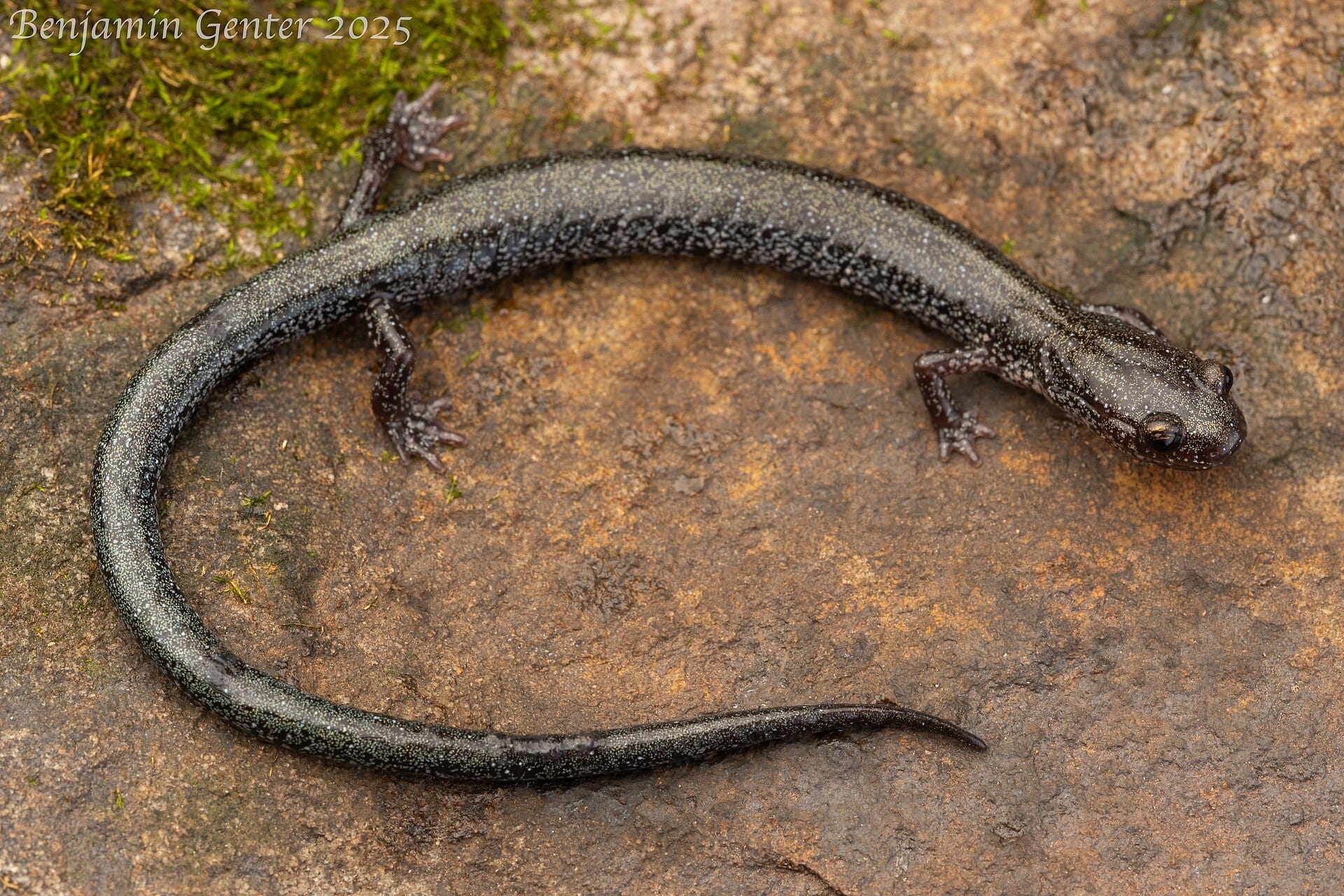
As a final coda, remember that undescribed salamander that Hoffman sent to Netting and Mittleman that caused them to fall out? Amongst all the fighting, Netting and Mittleman never got around to describing it. No one did, in fact, until Highton in 1972. The scientific name he chose for it was Plethodon hoffmani, in honor of his good friend and co-discoverer of the Peaks of Otter salamander.
Say what you will about naming animals after people, but that’s pretty cute.
No posts
Comments
Nothing yet. Say the first thing.
Sign in to join the conversation.