
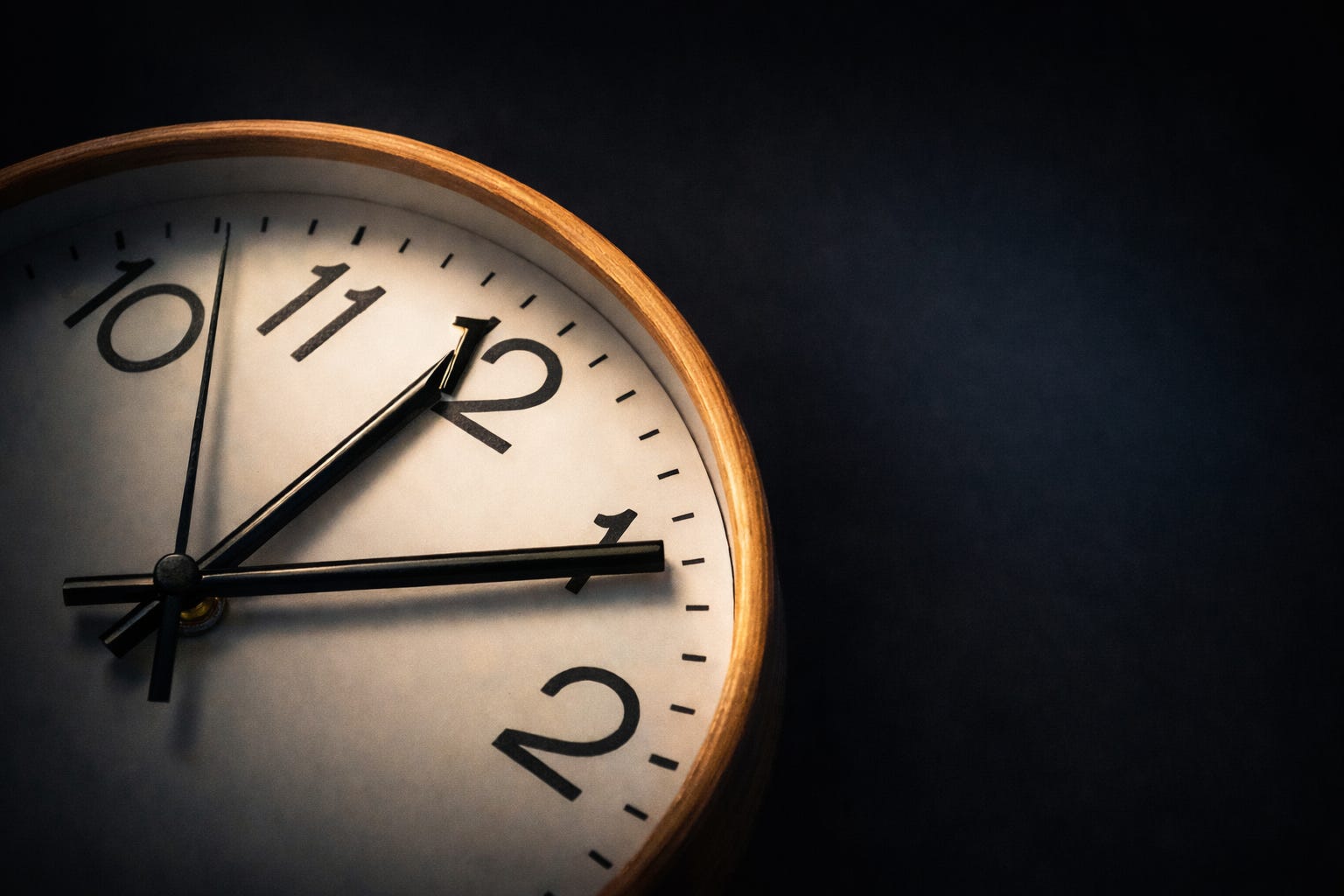
In a few weeks, daylight saving time will end and most of North America will turn its clocks forward, a shift that will disrupt the sleep and schedules of millions of people. Most of us have done this strange ritual all of our lives: set our clocks forward an hour in the spring and back an hour in the fall.
“The problem with daylight saving is that dogs and babies don’t respect clocks,” my husband said back in 2022, as we struggled to adjust to the time shift with a 3 month old baby. For weeks afterward I worked desperately to correct our infant’s nap schedule while in a fog myself. Having a newborn is hard enough, I said to myself. Why did we just make it harder?
Talking to friends and family I can find few people who tolerate this semi-annual tradition well. Back when I worked an office job, it seemed like everyone hated it, but no one did anything about it aside from complain. I considered the “fall back” to be the worst of the two shifts, heralding the arrival of months of seasonal depression. I detested it all — the 4PM sunsets, the months and months of evening darkness, the whiplash of the inevitable shift back. But like so many things, it felt like a societal decision we had no control over.
Then, in 2024, we asked ourselves, What if we extend daylight saving all year, and skip the fall turn-back? What’s stopping us?
And so that’s just what we did.
How Does This Actually Work?
This is our second year of extending daylight saving all year. In the fall we do not change the clocks in our house. We set a select few to “outside time” (like phones and computers) so that we can coordinate with anything (or anyone) outside of our local time. In spring when everyone else sets their clocks forward, we don’t have to change anything — outside time shifts and once again matches ours.
(It’s worth noting that we could’ve done it the other way – kept “standard time” all year — but this approach favors having more daylight into the evening in winter. So that’s the one we went with.)
What About Jobs, School, Scheduled Activities?
This is easier to manage than you might think. Cody works full time from home but his job has a fairly strict schedule — the start and end of the formal work day and all meetings take place on outside time. But this is a matter of perspective; the way we see it, in fall and winter his work schedule shifts later, not our local time. We wake up at the same time each morning, eat meals at mostly the same time, and go to bed at the same time. All our personal activities take place on “local time”. Because our home time zone is only an hour off from the rest of the northeast, honoring outside time when we need to — such as when businesses open or close — is a relatively simple matter. And because businesses stay open “later” for us, it’s actually easier to squeeze in an important phone call in the less hectic evening hours, because our 5PM is 4PM for everyone else.
Other Good Things
In general, our local time seems to align better with our sense for time of day. When we eat our lunch the sun is high in the sky: a mid day meal at mid day. There’s alignment with human habits and what’s happening in the sky and that feels intuitive and “right.”
The greatest advantage is in the evenings, though. Even when the day is at its shortest in December, the sun sets at a time that still seems reasonable: 5:30, as I’m making dinner, instead of 4:30, which feels too early.
Being up early is nice, too. I probably saw a handful of winter sunrises in 30-something years of winter standard time, but now I see them most every day, countless pink and orange dawns streaming across our snowy fields as I drink my morning coffee. I never tire of seeing them — even after two winters they still take my breath away.
In Conclusion: We can Just Do Things
For years, science has shown that sudden disruptions to circadian rhythm negatively impact long term health as well as contribute to car and industrial accidents.
And should we really be surprised? When something doesn’t feel good, interrupts our sleep schedules, and becomes a source of dread, is it likely to be good for us?
So why wait for society to grant you permission to do something different? You can decide, for yourself, to make this the last year you change your clocks ever again. It’s easier than you think. Just stick to one “time” throughout the year. Shift your habits, not your clocks, and keep your sleep habits the same. Enjoy quiet mornings as the sun rises, eat your dinner near to sunset. Use a few clocks to keep track of outside time and honor things that require that time as needed.
It’s that simple.
Comments
Nothing yet. Say the first thing.
Sign in to join the conversation.