
Ever since Nolan’s The Odyssey came out, I’ve been fascinated by the raging debates and massive cultural discourse it has spawned. It seems everyone wants to claim ownership of this epic poem that appeared in the 8th century BC.
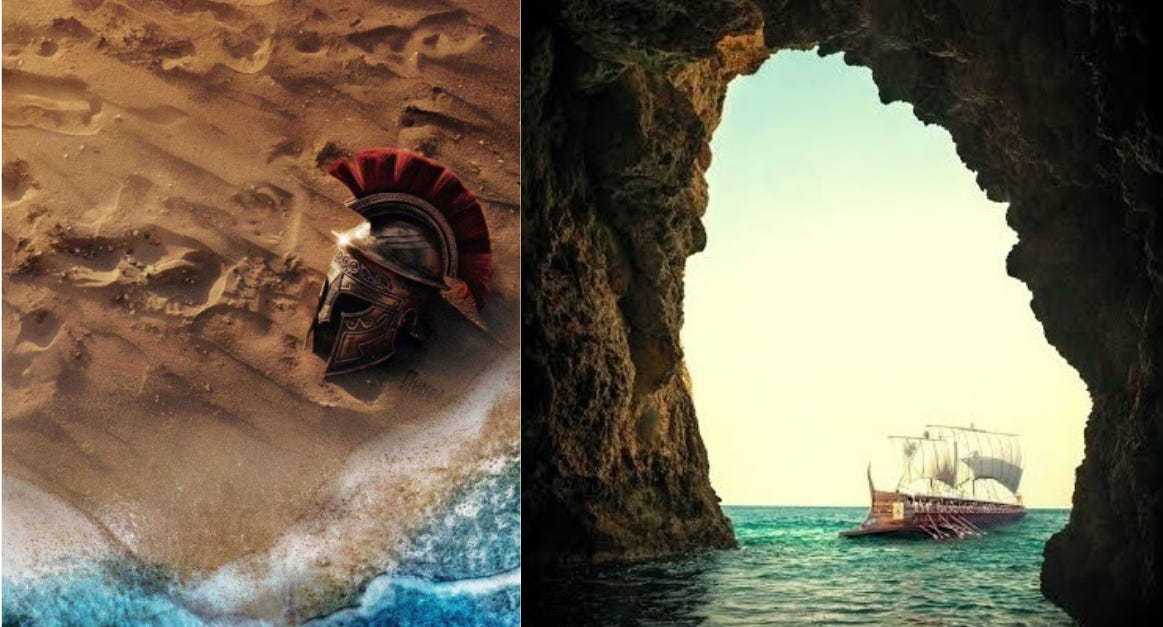
I’m encouraged by this engagement because it can serve as a gateway into the humanities. It can demonstrate that studying the past helps us understand the present and maybe make a case for keeping the humanities in the curriculum.
If The Odyssey can make people discuss its heroism, morality, politics, and human nature 3,000 years after it was written, that is a strong argument for why the humanities still matter.
I also love that this cultural moment comes at a time when we have these two extraordinary scholars of the Classics in our midst: Emily Wilson and Mary Beard. They represent the pinnacle of modern classical study and are getting a lot of airtime as they share their views of the film.
Remember, when you listen to or read their views, that as Classicists they are trained to see dimensions and layers that an average movie-goer is not. They have an entirely different sensitivity to the story and will ask different questions about it. For me, it’s a pleasure and a gift to hear their views.
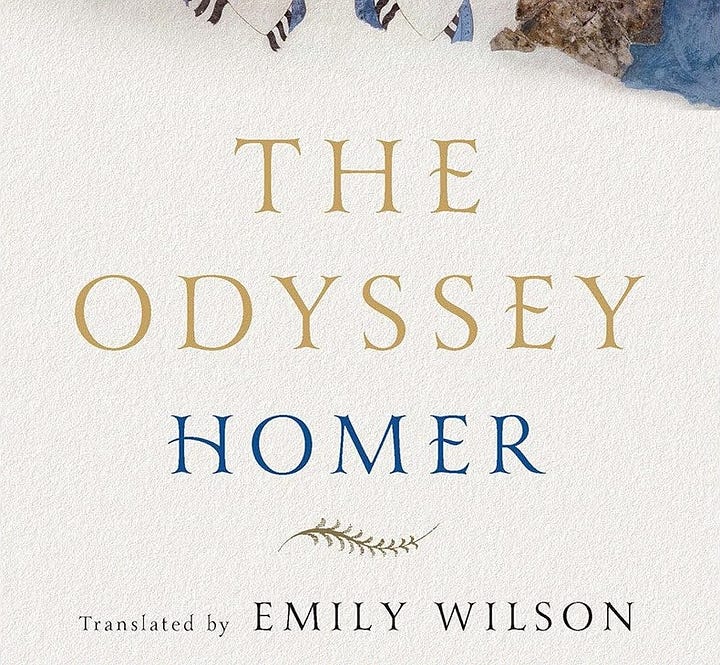
Emily Wilson, a MacArthur “Genius” Fellow, is a professor at the University of Pennsylvania, has translated many tragedies by Euripides and Seneca, and received much acclaim for her translation of the Odyssey.
She belongs to the top tier of worldwide experts (probably less than 5,000 people) who can read, analyze, and recite Homer’s original dactylic hexameter from the page by sight.
Just think for a moment about being able to do that.
Mary Beard, the world’s most famous living classicist, makes the classics accessible for a modern audience by treating the past as a conversation with the present. She taught at Cambridge for over 30 years, has written over 20 books, hosted five documentaries with the BBC, and was made a Dame for services to classical scholarship. Her humor and conversational style make her a delight to listen to.
Nolan cut out Princess Nausicaa and Queen Arete, who Mary Beard calls “extraordinary, powerful characters.” She says this choice means the audience will not realize that The Odyssey can be read as “a woman’s poem”. Nolan omits Odysseus’s sexual detours with goddesses, and Mary Beard points out that this flattens a morally complex man into a sanitized, predictable Hollywood husband trying to get home.
She notes that most of Nolan’s films feature desperate male protagonists fighting against time and aging to return to a woman who serves as the destination of his journey. She implies that in Nolan's films, the woman is a goal/symbol for the male journey rather than as a full agent with her own arc. This is consistent with her broader critique of Nolan's flat, expository dialogue and her critique that none of the female characters were served as well by the screenplay as they are in Homer's text.
“But Damon’s Odysseus remains miserable as he hikes doggedly towards the camera across yet another beautiful landscape.”
For Ezra Klein (political journalist with a philosophical approach), Odysseus and his men in Nolan’s movie are embodiments of a destructive imperial mindset that mirrors contemporary American power. Klein says the world looks at the United States and sees that we are now the barbarians. He speaks beautifully. It’s worth a listen.
This is the perfect hot take on how Hollywood applauds male actors for filming in cold or other uncomfortable conditions while seeming blind to the relentless scrutiny female actors face. (Brought on by the movie’s male actors turning every press tour into the Olympics of Performative Suffering.)
“Nolan removed the complexity and grey areas of Odysseus' character so he could tell a commercial moralistic story that will appeal to the widest possible audience without asking said audience to think too much.”
All the laypeople complaining that the adaptation doesn’t “look like” the source seem to have a fixed idea of what archaic Greek society looked like. From where do they get their idea? Pop culture, I’d wager. Likely from Assassin’s Creed: Odyssey. It isn’t from serious historical study; otherwise, they’d know that bards in Ancient Greece added their own spin to these epic poems and that reinterpreting epic poems is the oldest storytelling tradition in Western history.
When a bard performed for people who loved Odysseus, he might heighten the cleverness of the hero’s tricks. If people were ponderous, he might focus on the tragedy of war. A movie director today who changes an Ancient Greek epic isn’t any different. I will give Nolan that. But I also think Nolan has a problem giving women agency in his movies, and that’s a topic for another time.
I admit this post isn’t exactly about Italy, but as a historian focused on Italy, Greece hovers at the edges of my historical vision. In the ancient world, Italy and Greece connected in a Mediterranean mosaic of interaction. Look at all the sites from Magna Graecia in southern Italy! Look at the Roman adoption of Greek philosophy, literature, art, and mythology! Read about an aspect of this interaction in my article on Venus statues.
Get Emily Wilson’s translation of The Odyssey! It’s flying off the shelves!
(If you prefer Amazon, go here for the audio and here for the paperback.)
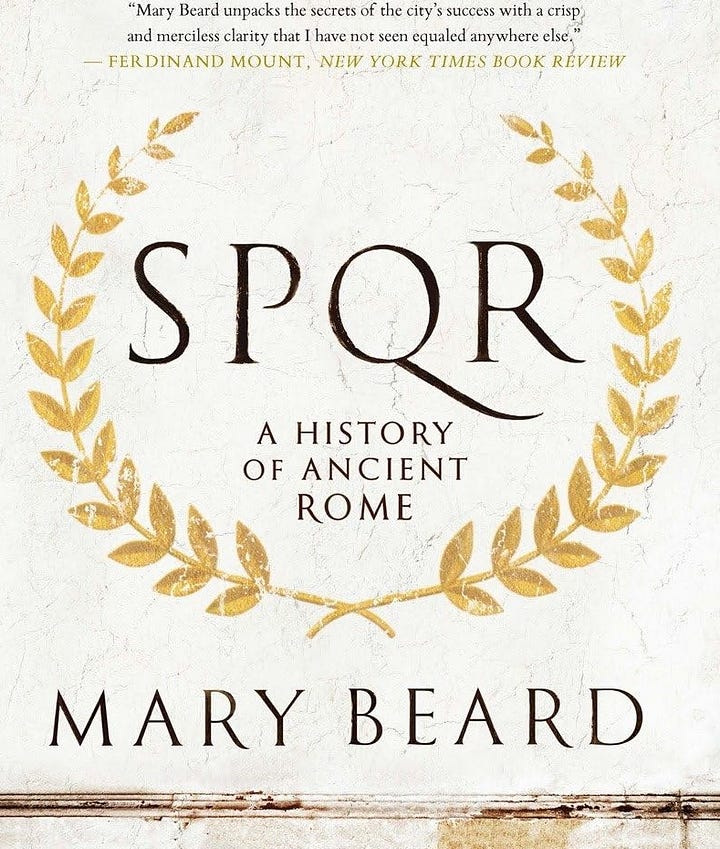
I recommend Mary Beard’s highly readable (no technical jargon) history of Rome. SPQR A History of Ancient Rome.
(If you prefer Amazon go here for the audio and here for the paperback)
Check out Mary Beard’s “Meet the Romans” video series. In the UK it’s on BBC Two and BBC iPlayer. Everywhere else it’s on Amazon Prime. Or how about her 38-episode video podcast exploring The Odyssey? It’s called “Exploring the Greats” and you can find it here. Some individual episodes are on YouTube.
Thank you for supporting my work and using those affiliate links for the books which gives me a small commission at no extra cost to you.💛
Comments
Nothing yet. Say the first thing.
Sign in to join the conversation.