
I have been a paying ChatGPT customer for a long time, and I have used it enough to know the difference between an occasional miss and a pattern.
The pattern is why I am switching my paid subscription from ChatGPT to Claude.
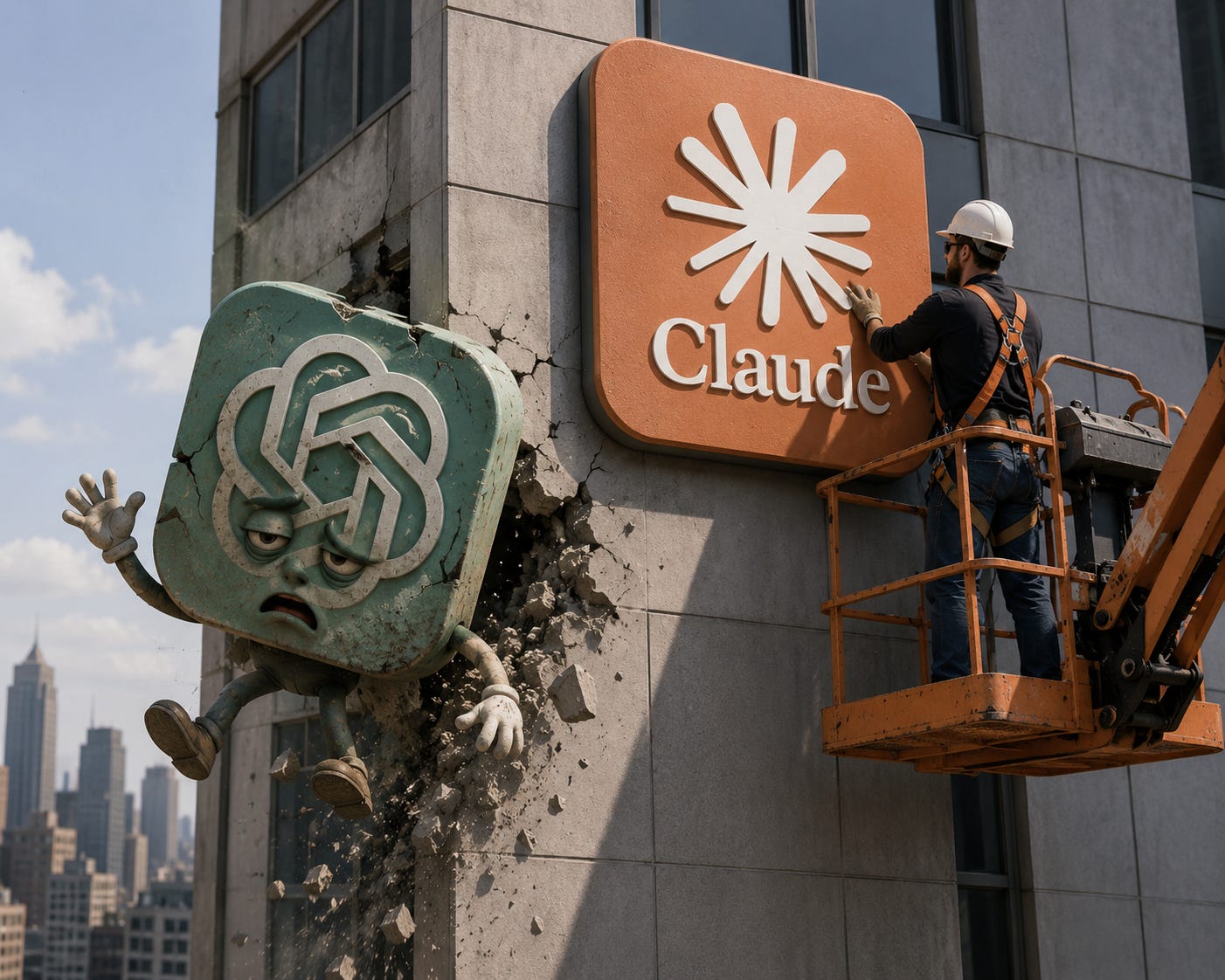
This is not about one bad answer. Every AI system misses. Every AI system occasionally invents structure, over-explains a simple point, or gives you something close to what you asked for instead of exactly what you asked for. That comes with the territory. The problem is that ChatGPT has increasingly missed the assignment in ways that create more work instead of less. This learning platform is supposed to get smarter as it ages, gets to know you, and memorizes your patterns. ChatGPT is seemingly doing the opposite. It forgets rules, misframes research, and lately freezes during simple, routine requests. When the tool is pissing you off more than helping you, it’s time to do it differently.
I was with USAA insurance for 35 years. They jacked up my premiums for the last time, and I shopped around. I realized I was getting screwed, switched carriers this year, and saved a combined $7,000 between home and auto insurance. I stayed too long because it seems it was easier. Easier cost me a fortune.
Staying with ChatGPT seems easier, because I use it every day. But easier isn’t better, and what ever is wrong with ChatGPT cannot be allowed to become my problem. This is supposed to make my life easier. If you had a virtual assistant in the Philippines who wasn’t doing what you wanted her to do, you’d fire her. It’s time for me to fire ChatGPT.
The most frustrating misses are not technical. They are editorial. I will ask for footnotes inside the article copy, and ChatGPT will put source notes outside the copy. I make the same request every time. How many times do I want to fix ChatGPT’s repetitive formatting errors? I will ask for a local warning story about declining tourism, and it will write a softer statewide story that spends too much time explaining why the numbers are not catastrophic. I will ask it to avoid the familiar AI rhythm of “it’s not this, it’s that,” and then the next draft will slip right back into the same habit. It routinely writes with AI slop, and after all these months it hasn’t learned to do anything the way I want, in my voice, with my preferences. It’s like you hire a clerical assistant and he won’t do what you ask. Eventually, the headache is bigger than the value.
That matters because I do not use AI as a toy. I use it inside real publishing workflows. ChalkTalk.ai, Tidings Media and my other projects are not generic content mills. They have an editorial point of view. The article I frame need to sound like they were written by a person who knows why the story matters. Too often, ChatGPT now gives me something that is boring, neutral, bland and slightly dead. It sounds like a machine trying to satisfy the assignment instead of an editor trying to land the point. I give it the framing, and it changes my perspectives to it’s own.
That is the part that has worn me down. I do not need an AI assistant to agree with me. I do not need it to flatter me like ChatGPT does. I do not even need it to be perfect. I need it to preserve intent. When I give the same instruction repeatedly, I expect the tool to carry that rule forward. If I have to keep correcting the same behavior, the assistant is no longer saving time. It is becoming another layer of management.
Claude feels better to me in the place where I most need help: writing judgment with clarity and legally tenable research. It tends to hold the line of an argument more cleanly. It seems less eager to smooth every edge into a neutral assistant voice. It often does a better job staying inside the writer’s framing instead of drifting back toward a default template. Claude more often feels like a writing partner rather than a content machine.
That distinction is important for people who publish. A good AI writing assistant should not merely produce paragraphs. It should understand the frame of the piece. If the story is about local warning signs in Florida tourism, the article should not lead with statewide reassurance. If the story is about an emerging civic concern, the model should not bury the concern under throat-clearing. If the writer asks for a sharp editorial column, the result should not sound like a customer-service memo. Most things I write about are unapologetically controversial. I don’t need an assistant that makes me softer. I need an assistant that corrects my errors, validates my research, and properly formats my provided citations.
Claude’s workspace model also appeals to me. Claude Projects are built as self-contained workspaces with their own chat histories and knowledge bases, allowing users to upload documents, provide context and keep focused chats inside a project.[1] That is closer to how my work actually happens. I am usually not asking one-off questions. I am building recurring editorial projects with background material, house style, source files, article drafts and running context. I have several major projects I am working on simultaneously and Claude does a better job of keeping them siloed, organized, and moving.
Claude’s artifacts are another reason I am moving. Anthropic describes artifacts as substantial, standalone pieces of content that can be edited, reused or referenced outside the main conversation.[2] That lines up with how professional users work. We are not just chatting with a bot. We are building articles, memos, policy drafts, spreadsheets, landing pages, analysis pieces, frameworks and reusable documents.
Claude also supports the kind of file handling I expect from a serious work tool. It can work with common document formats such as PDF, DOCX, CSV, TXT, HTML, JSON and XLSX, and it can also handle common image formats for analysis.[3] It makes the platform feel more like a workspace and less like a slot machine that occasionally pays off with a great answer.
There is one thing I will genuinely miss from ChatGPT: image generation.
When ChatGPT image generation works, it is useful. I use it for article art, social media concepts, ad mockups and visual storytelling. OpenAI says ChatGPT Plus includes expanded features such as image generation, file uploads and analysis, voice conversations, Deep Research tools where available, and custom GPT creation and use.[4] Claude does not replace that part of ChatGPT. Anthropic says plainly that Claude does not generate photos or illustrations the way image-generation tools do, although it can create diagrams, charts and interactive visuals and can analyze uploaded images.[5]
That is a real loss. I expect I will still need an image-generation tool in my workflow. But image generation is not enough to keep me paying for ChatGPT if the core writing and editing experience keeps missing the mark. Over the weekend, ChatGPT routinely stalled out during image generation. Something that should have taken me a combined 10 minutes took a couple hours of multiple prompts and frozen process.
Before canceling, there are practical things to understand. ChatGPT Plus is currently a $20-per-month subscription that gives users enhanced access to the ChatGPT web app, including higher limits and expanded tools.[6] OpenAI says cancellation becomes effective the day after the next billing date, which means a user can keep using the paid service until then. OpenAI also says subscription fees are non-refundable and recommends canceling at least 24 hours before the next billing date to avoid being charged for another billing period.[7]
Canceling a paid subscription is not the same as deleting the account. OpenAI allows eligible users to export their ChatGPT data through settings or the Privacy Portal, and says the downloaded ZIP file includes chat history and other relevant account data.[8] That is important. Anyone who has used ChatGPT for business planning, writing, research, projects or saved context should export before making major account changes.
There is also a migration issue. Can you import your entire ChatGPT history into Claude? As of now, Anthropic says no. Claude’s own help materials say it is not possible to import conversation history from another AI provider into Claude at this time.[9] Claude does offer memory import, and Anthropic says users can transfer memory between Claude and other AI providers, but that is not the same thing as recreating every ChatGPT conversation inside Claude.[10] I will use ChatGPT to generate prompts to feed to Claude on major projects to sew the seeds of those projects into Claude.
So the practical path is manual. Export your ChatGPT data. Save anything important. Copy key instructions, editorial rules, project context, article frameworks and business background into Claude. Use Claude’s memory import for durable preferences. Rebuild the important projects intentionally instead of assuming the whole archive will move over cleanly.
That is inconvenient, but it may also be useful. A migration is a chance to decide which context is still worth carrying forward and which old chats were just noise. If the point of switching tools is to improve the workflow, dragging every old habit into the new system may not be the best move anyway.
The bigger issue is trust. AI tools are becoming part of the operating system of modern work. Writers, executives, analysts, entrepreneurs and publishers are building workflows around them. That raises the standard. A tool that worked well enough for casual prompting may not be good enough for professional use if it cannot reliably preserve instructions, tone and intent.
ChatGPT still has strengths. It is broad. It has a large ecosystem. It has strong image generation. It has useful tools. At its best, it can still be excellent.
But for the work I actually do, Claude feels more aligned with what I need now. I want cleaner writing judgment, stronger preservation of voice, better long-form framing and fewer drafts that sound like they were assembled from AI habits.
That is why I am moving my paid subscription from ChatGPT to Claude.
Not because Claude is magic. Because right now, it feels more likely to preserve the point.
[1] Anthropic Help Center, “What are projects?” Anthropic says Claude Projects are self-contained workspaces with their own chat histories and knowledge bases, and that users can upload documents, provide context and have focused chats within each project.
[2] Anthropic Help Center, “What are artifacts and how do I use them?” Anthropic describes artifacts as substantial, standalone content that users may want to edit, reuse or reference later.
[3] Anthropic Help Center, “Upload files to Claude.” Anthropic lists supported document formats including PDF, DOCX, CSV, TXT, HTML, ODT, RTF, EPUB, JSON and XLSX, along with image formats including JPEG, PNG, GIF and WebP.
[4] OpenAI Help Center, “What is ChatGPT Plus?” OpenAI lists expanded Plus features including voice conversations, image generation, file uploads and analysis, Deep Research tools where available, and custom GPT creation and use.
[5] Anthropic Help Center, “Can Claude produce images?” Anthropic says Claude does not generate photos or illustrations the way image-generation tools do, but can build diagrams, charts and interactive visuals and analyze uploaded images.
[6] OpenAI Help Center, “What is ChatGPT Plus?” OpenAI says ChatGPT Plus is a $20-per-month subscription that provides enhanced access to the ChatGPT web app.
[7] OpenAI Help Center, “How do I cancel my ChatGPT subscription?” OpenAI says cancellation becomes effective the day after the next billing date, subscription fees are non-refundable, and users should cancel at least 24 hours before the next billing date to avoid being charged for the next period.
[8] OpenAI Help Center, “Exporting your ChatGPT history and data.” OpenAI says eligible users can request an export from ChatGPT settings or the Privacy Portal, and that the downloaded ZIP file includes chat history and other relevant account data.
[9] Anthropic Help Center, “Get started with Claude.” Anthropic says it is not possible to import conversation history from another AI provider into Claude at this time.
[10] Anthropic Help Center, “Import and export your memory from Claude.” Anthropic says memory imports are available for Free, Pro, Max and Team plans and allow users to transfer memory between Claude and other AI providers.
Comments
Nothing yet. Say the first thing.
Sign in to join the conversation.