
“One of the penalties for refusing to participate in politics is that you end up being governed by your inferiors.” — Plato,
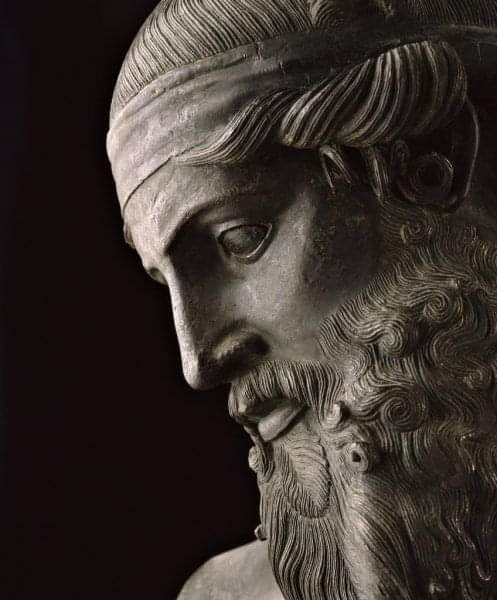
The quotation above is drawn from The Republic, Book I, 347c–e.
Here Plato has Socrates set forth why the best men enter political life, that is, why they enter into the life of the polis, the city understood as a body politic. Politics, in the Greek sense, is not reducible to factional struggle. It concerns the ordering of the common life.
To withdraw from political life entirely is to become, in the older sense, an idiōtēs, from which the modern word “idiot” ultimately derives: the merely private man, severed from the obligations of citizenship and the responsibilities they entail.
The burden of civic responsibility reflects the inegalitarian character of life itself. The cosmos does not distribute man’s capacities equally. Responsibility therefore falls most heavily upon those fit to govern, for their withdrawal permits a greater injustice: the rise of inferior men who lack the strength of mind and force of character required to rule.
Capacity establishes the rightful claim to rule, but the exercise of authority also demands the will to assume its obligations. That will must remain ordered toward guardianship rather than self-aggrandizement. The just man neither withdraws from command nor pursues it as a prize in itself. He assumes power when necessity demands it, bearing rule as a burden proper to his nature.
Wisdom worthy of the name is timeless. Plato’s argument retains its force because it gives expression to a permanent truth of political life: when those fit to rule withdraw, lesser men occupy the ground they abandon. The forms through which power is exercised may change, but the underlying reality does not. Properly understood, this principle opens onto a more elemental conception of politics, one that cannot be confined to the narrow limits of modern electoral participation. To be perfectly clear, especially for those inclined to take such things literally, this is not an exhortation to “vote harder,” as the popular refrain has it. Political life neither begins nor ends with electoral politics or with the periodic and increasingly futile casting of a ballot.
Political order never arises without struggle. It is established through the contest of competing wills, each seeking to dominate the others and thereby determine the form and direction of the common world. Politics therefore concerns power, for through power a will overcomes resistance and transforms its vision into an enduring reality. Electoral participation may or may not serve that end; it remains only one instrument among many, and often among the least decisive.
The broader lesson is that capable men cannot indefinitely abandon the political realm to their inferiors. Political life is one expression of the struggle woven into existence itself. Every order is a conquest: the visible form impressed upon the world by a will strong enough to overcome resistance and hold what it has won. Nature abhors a vacuum, and thus no political ground remains vacant. When capable men withdraw, lesser men advance upon that ground and reshape it according to the limits of their own nature.
The struggle is eternal, for the higher and lower types remain locked in combat over the form of the world, the superior against the inferior. Those who possess power seldom relinquish it voluntarily. They yield only to a superior will capable of bringing greater force to bear. Power must therefore be seized by men who possess both the capacity to rule and the resolve to wield it.
Greek, Stephanus 347c
τιμωρία γάρ ἐστι τοῖς ἀγαθοῖς μὴ ἐθέλουσιν ἄρχειν τὸ ὑπὸ χειρόνων ἄρχεσθαι.
My rendering
“One of the penalties for refusing to participate in politics is that you end up being governed by your inferiors.”
No posts
Comments
Nothing yet. Say the first thing.
Sign in to join the conversation.