
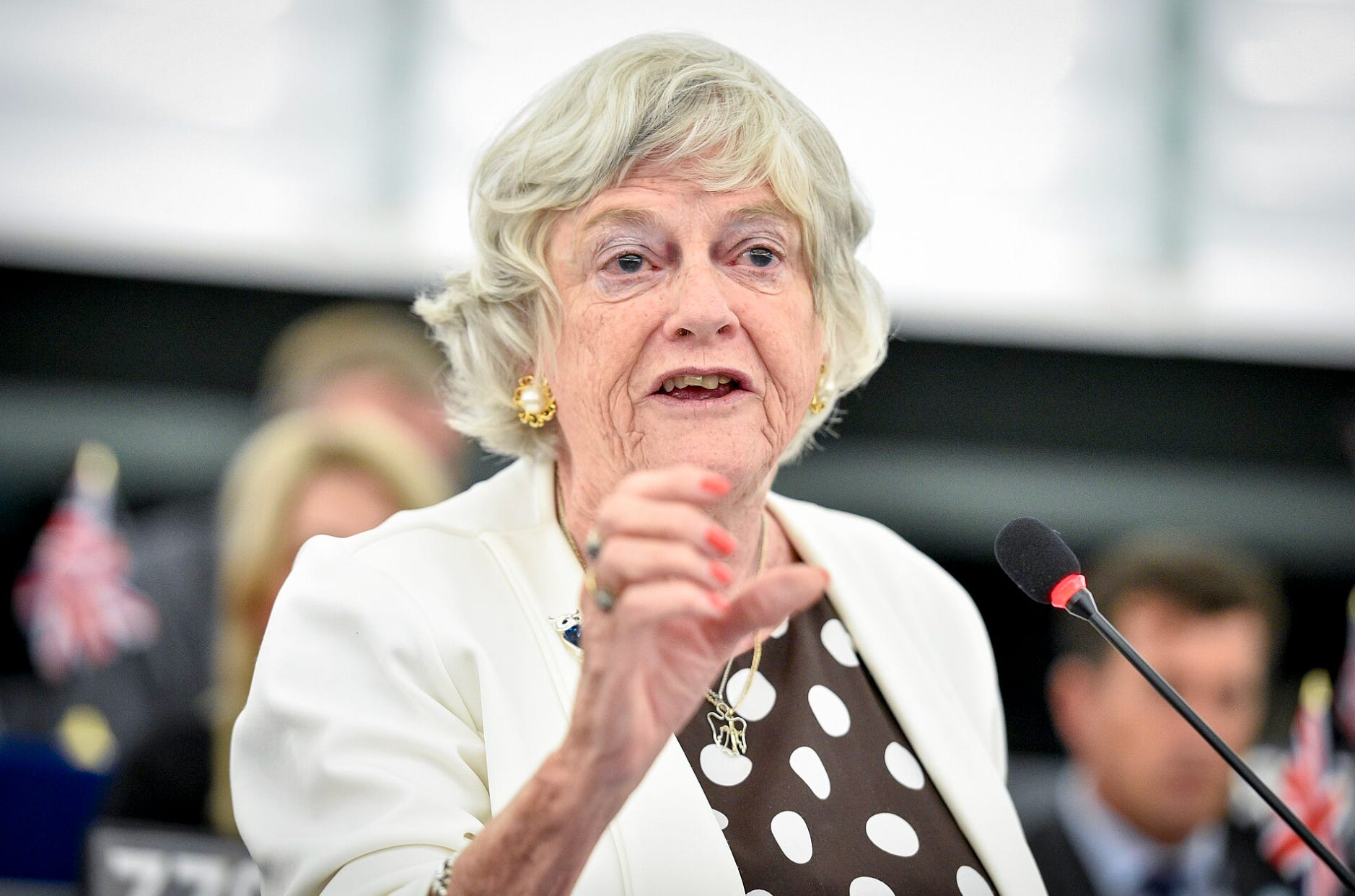
Ann Widdecombe, whose death is now being investigated by counter-terrorism police, was known for her strong socially conservative views that made her popular and unpopular in equal measure. But she was far from being the right-wing ‘battle axe’ of some of the mildly misogynistic journalistic commentary.
I first came across Ann Widdecombe in 1995 when she came up to St Andrews University to answer questions from the local Conservative Association. She was the Prisons Minister at the time, and I decided to ask her a question that had been on my mind - ‘why can’t we keep drugs out of Prisons’. I then explained that, given that drugs were responsible for a large proportion of crimes, could we not use prisons to break the link? I had no idea what the answer would be, but was certainly not expecting a long explanation as to where drugs were concealed on and within a prisoner’s anatomy, the corruption of prison officers and many other routes into the prisons. It was an honest and straightforward response and not one for the faint-hearted. It also showed that she had thought about the issue herself, which is undoubtedly true – she had visited every prison during her short tenure in office. We could do with more politicians like that.
Years later, working in Parliament, she had an office on the same floor, ironically near to the now murdered Sir David Amess, who was a friend of hers, and she was always down to earth and happy to talk to both staff and other MPs – a trait not universal among MPs.
That she was unique in her willingness to take on controversial topics largely explains how her political career long outlasted many of her contemporaries, we hear she was still planning radio interviews the day she died.
She was, however, always direct and unafraid to put her point of view. Not for her the crafted sound bite or careful statement, be it on controversial topics such as abortion (against), lowering the age of consent for homosexuals (against), or indeed the Labour Party’s ban on hunting with dogs, which she supported; she was not churlish.
While she was certainly a ‘social conservative’, informed by her Christian faith, she was also not a caricature of the ‘Tory Right’. She once supported Ken Clarke for the leadership in 2001 repeatedly clashing with the team of the eventual winner and fellow Catholic IDS. Previously, she had been widely ‘credited’ for sinking Michael Howard’s 1997 leadership bid with her famous comment ‘there is something of the night’ about him. She could be equally robust with both left and right.
That she had strong views and was willing to articulate them is healthy for our democracy. This makes her death more than a personal tragedy for her family and those who knew her, but damaging for the body politic.
It is often said that we cannot attract good people into politics, that is unsurprising. Politics is not one for the faint-hearted, MPs are often on the receiving end of volleys of abuse and politically motivated ‘scrutiny’ that in some cases (Widdecombe’s included) last a lifetime. While it is the case across the political spectrum the problem for those on the right or holding socially conservative views are ever more acute. Social media amplifies views held by the mainstream media to portray views, ironically often themselves mainstream as fringe views and morally reprehensible. And so, it was with Widdecombe. Her death has seen the rounds of left wing activists celebrating her death in the same way that many celebrated the death of Margaret Thatcher.
It was already difficult to recruit good people into Parliament. We have already witnessed in a matter of years the murder of Jo Cox and Sir David Amess, and now (for whatever reason) we have seen the alleged murder of a high-profile ex-MP.
This should concern all of us and will sadly put off talented people and particularly those with strong principled views from entering politics. Who wants to go to work, wondering if they might be safe at home for years after the event? Is it no wonder we end up with a Parliament of empty vessels, never willing to voice an opinion?
Her death is a great loss, magnified by the sense that we have lost something that is not being replaced – strong-willed, principled and fearless politicians willing to articulate views held by many voters. Sadly, her death will make it even more difficult to attract her replacements into Parliament.
Comments
Nothing yet. Say the first thing.
Sign in to join the conversation.