
if you’ve ever felt that the real constraint in your life isn’t talent or ambition, but time, you’re definitely not alone.
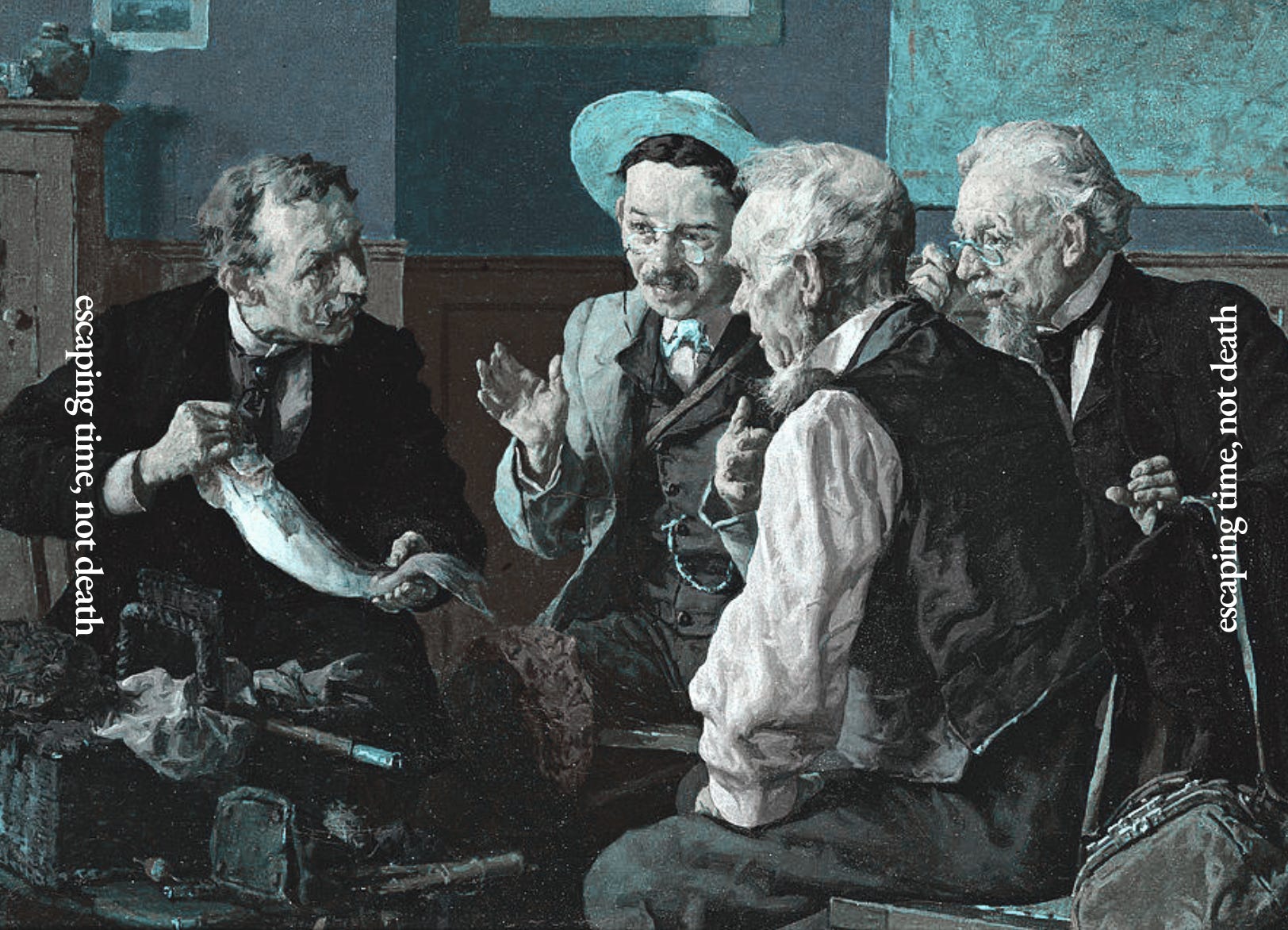
most people who feel this way cope by cutting things. They pick a lane, narrow down, and call it maturity, or “everyone has to choose at one point”. Denisa Lepadatu picked a different response: she decided to fight time itself (you’ll get the pun later).
she’s a writer, a math olympiad finalist, a transhumanist thinker, and today she builds at the intersection of longevity biotech, pop-up cities, and community-driven science. everything she does connects back to the same question: what would you do with your life if biological decay wasn’t the deadline?
and we all know that death is a natural part of life, but what if you could push it a bit further away?
Denisa’s first act of rebellion was small and nine years old. She visited the library, read a book, and decided the ending was wrong, so she rewrote it herself. Not because she wanted to be a writer, because she couldn’t accept that someone else’s version was the only one that could exist.
and she kept on doing that in every project she joined, and by her early teens she’d discovered transhumanism: the idea that the human form isn’t sacred, it’s a starting point to something more!
when asked about death, Denisa didn’t flinch: she’s not afraid of dying, but she’s resistant to being forced to.
that’s a meaningful distinction most longevity conversations skip over, because the popular framing is “defeating death,” which sounds either heroic or delusional depending on who you ask. Denisa’s framing is more honest: she wants agency, she wants to be 80 years old and still be herself (curious, building things, changing her mind) rather than trapped in a body that’s already given up while her brain hasn’t.
healthspan, not lifespan, so the goal isn’t more years. It’s more years that you can live in your best shape.
if you want to listen to the conversation that inspired this newsletter, click below!
so, where can you research and create all of this? Denisa doesn’t work in a lab or a startup office. She works in pop-up cities: temporary communities of a few hundred people who co-live, co-work, and self-organize for one or two months at a time, in places like Argentina, Honduras, and California.
these places represent actual social experiments where how humans can organize when they opt out of the normal structures.
within these cities, she runs longevity programs: aging biology summer schools, self-experimentation residencies, biomarker tracking and health trials. and the thing she keeps noticing is that the environment is the accelerant. Science moves faster when brilliant, curious people can’t stop running into each other at dinner (go back to the scenius concept). Collaboration that would take months over email happens in a week when you’re sharing a kitchen.
this is something traditional institutions are structurally bad at manufacturing, while pop-up cities are an amazing workaround. It’s all a matter of proximity and interest: if you have 100 people interested in the same topic in the same room, they’ll naturally share ideas and build on each other’s thinking.
traveling across these places, Denisa started asking strangers uncomfortable questions: do you want to live to 120, if healthy? how do you feel about death? do you actually take care of your body right now?
the pattern she found wasn’t what the longevity discourse usually expects: the people who do care about their health already want more time, while the people who reject longevity also tend to not particularly invest in staying well today, which means that they’re not interested in making themselves healthy in the long term anyway, as they’ve made a kind of peace with the timeline they were given.
what’s interesting is that the resistance is almost never scientific, it’s mostly emotional, philosophical, cultural. And it can be due to a variety of reasons, like fear of outliving loved ones, distrust of who gets access to the technology, religious beliefs, or the sense that a life with a fixed end carries more meaning than one that is “too long”.
but why sharing her story? Because she was part of the beginning of The Modern Renaissance, and what it gave her (what she said she’d been looking for without quite knowing it) was permission to be a polymath without having to justify it. It sounds simple, like rewriting a LinkedIn bio, but it feels far more permanent. She needed permission to let all those disciplines merge without the need to be constantly structured.
that’s rarer than it should be, especially in science, which has a specialization culture so strong it sometimes mistakes depth for the whole picture.
but here’s the thing Denisa keeps coming back to: most people don’t abandon their dreams at 40 or 50 because they stopped caring. They abandon them because they feel like they’re running out of time and energy. How can we blame them when we’re searching for videos like “how to not feel behind in life?” at 25?
longevity, for her, isn’t about cheating death, it’s about giving those dreams a longer window.
thank you for reading The Modern Renaissance’s newsletter, and if you’re new here, welcome!
The Modern Renaissance is a community for multipassionate people and generalists who want to broaden their horizons and keep discovering across multiple disciplines. It’s a place to create, discover, meet like-minded people, and see what happens when you bring them all together.
you can find more about it here: https://readymag.website/u3615395533/5964648/
and join the discord community here (you can also create your own chapter!): https://discord.gg/TwatnEQd
No posts
Comments
Nothing yet. Say the first thing.
Sign in to join the conversation.