
Sensory play did not come naturally to me at first.
I remember the first time sensory bin I made during the Covid era, and my son was completely absorbed for 45 minutes straight and I stood there thinking, what is happening right now?? He was in another world, and it was the most focused I think I had ever seen his little 3 year old self be. And I realized I had been underestimating this whole time what a simple bin of rice and a few small toys could actually do.
It absolutely felt like extra effort at first. The setups and the cleanups (trust me we’ve had plenty of “dumped” bins). But once I found my groove with it something shifted. Sensory play stopped feeling like an activity I was providing for my kids and started feeling like something we were doing together, and something that made me EXCITED. It was a way for us to connect, but more than that it was a fun creative outlet for me too.
It’s one of those things that feels like extra effort until you’re an hour in and your kid is completely absorbed… and you realize this is just pure magic.
That’s what I want for you with this guide. We don’t need a Pinterest-perfect setup (I mean they’re fun, but they don’t last). Just the ideas that have actually worked in our home, organized so you can use whatever sounds good today and just do it.
All of these are spring-themed, most are low cost (or can be made lower cost), and every single one has created one of those afternoons I want my kids to remember.
Why Sensory Play Matters More Than It Looks
I have a master’s degree in public health and the research on sensory play is genuinely compelling, but you don’t need a research paper to understand it. You just need to watch your kid the first time they dig their hands into cloud dough or pour water through a funnel for the fifteenth time (someone explain to me why water sensory play is always the most popular win of all time.).
What looks like playing is actually your child building neural pathways, developing fine motor skills, learning cause and effect, practicing language, and regulating their nervous system all at the same time. Sensory play is how young children process the world. And for a preschooler, this IS the real work. Forget the curriculums and the worksheets, just bring on the sensory play.
And for us as moms… it is one of the easiest ways to be genuinely present with our kids without having to perform or entertain. You set it up, you sit nearby, and you let them lead. Some of my best conversations with my kids have happened over a sensory bin, or play connections that didn’t involve a lot of effort on my part.
Let’s just get into the ideas because I fear I could ramble all day long.
💧 Water + Sensory Table
These work in a water table, a large bin, the kitchen sink, or the bathtub. Adjust the setup for wherever you have space, please don’t feel like you NEED to buy anything extra.
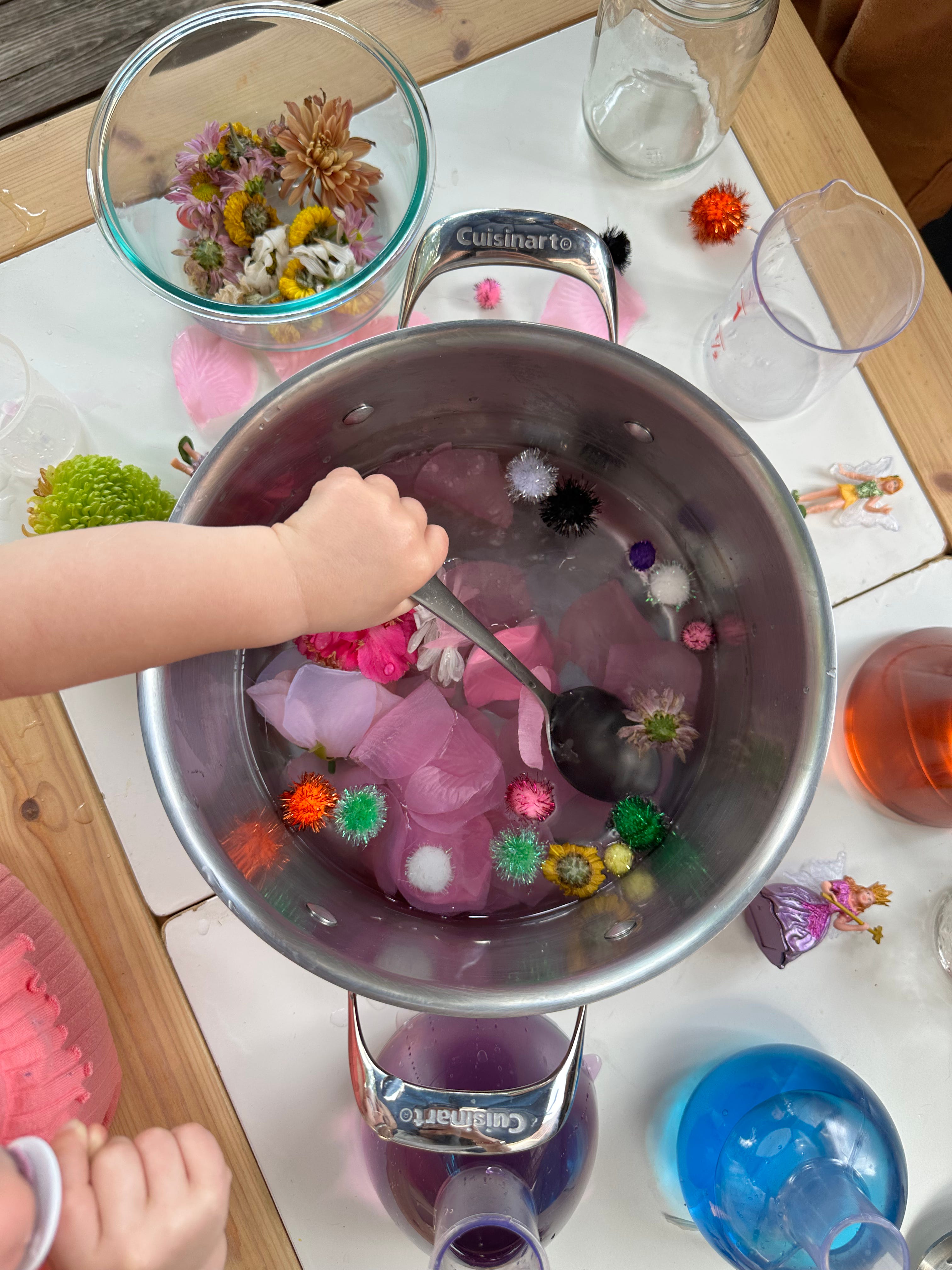
1. Flower Soup
Fill your table with water and add flower petals, small cups, and ladles for flower soup. If you’re inside you can use some lemons to add a sensory element- but be careful using citrus outside on sunny days as it can burn kids’ skin in direct sunlight.
This is the perfect time to grab pots and pans, have them collect nature treasures to add to the soup, and just let them go wild. The mess can be cleaned up, plus I always have kids help me with clean ups so they can value the work and the play.
Tip: Let them take the lead on what goes in. The less you direct, the more creative they get.
2. Duck Pond
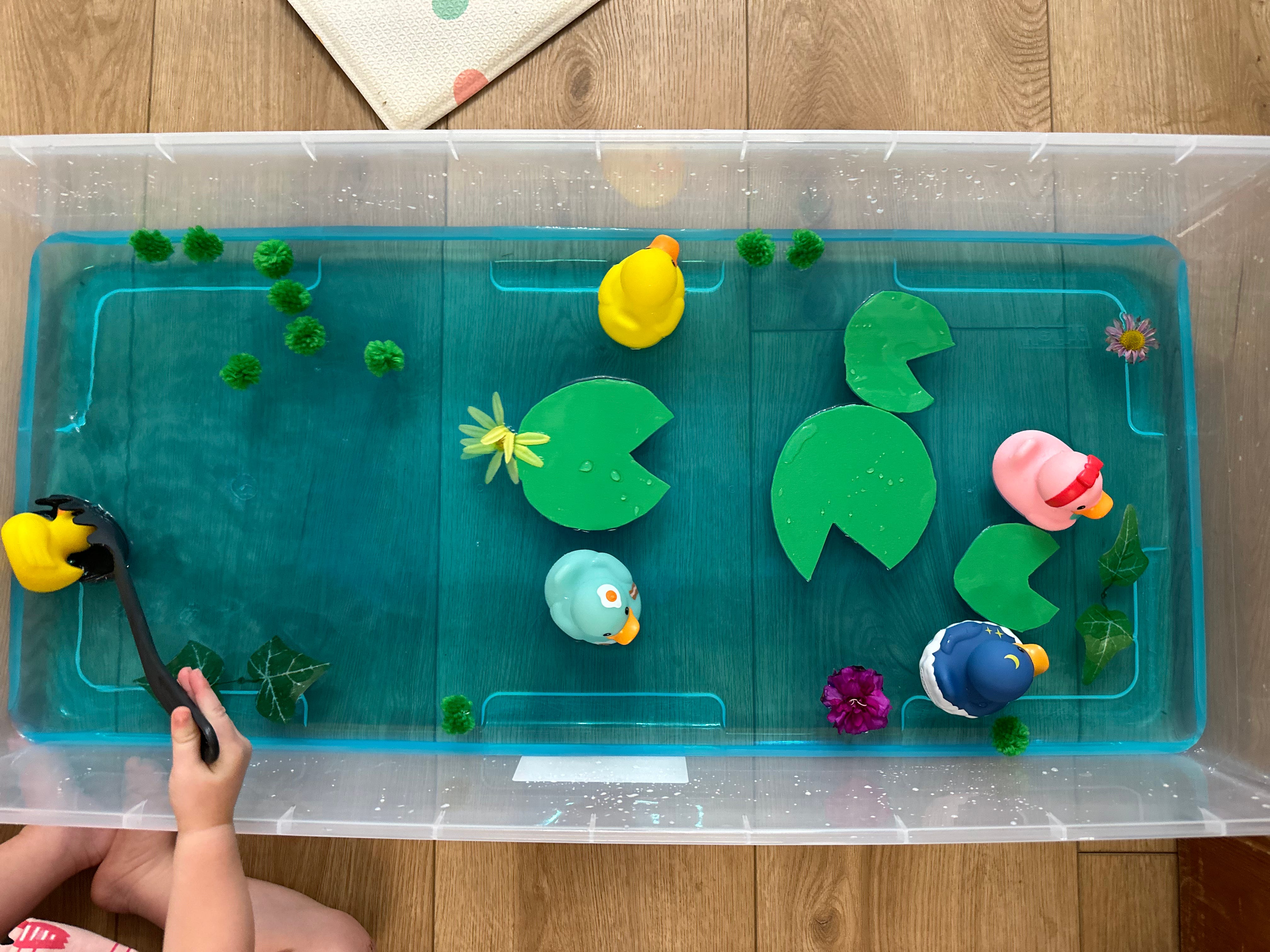
Dye your water blue, float some lily pads (I make mine out of green foam sheets), and drop in plastic ducks for a spring duck pond. Add a small net for scooping and kids will play with this for longer than you expect. I also like to add pom poms and pretend they’re food and this is a fun way to turn sensory play into a learning opportunity too (i.e.- can you feed the duck ten plants?).
Tip: Dollar Tree almost always has plastic ducks in spring. Grab a few sets.
3. Easter Egg Rescue
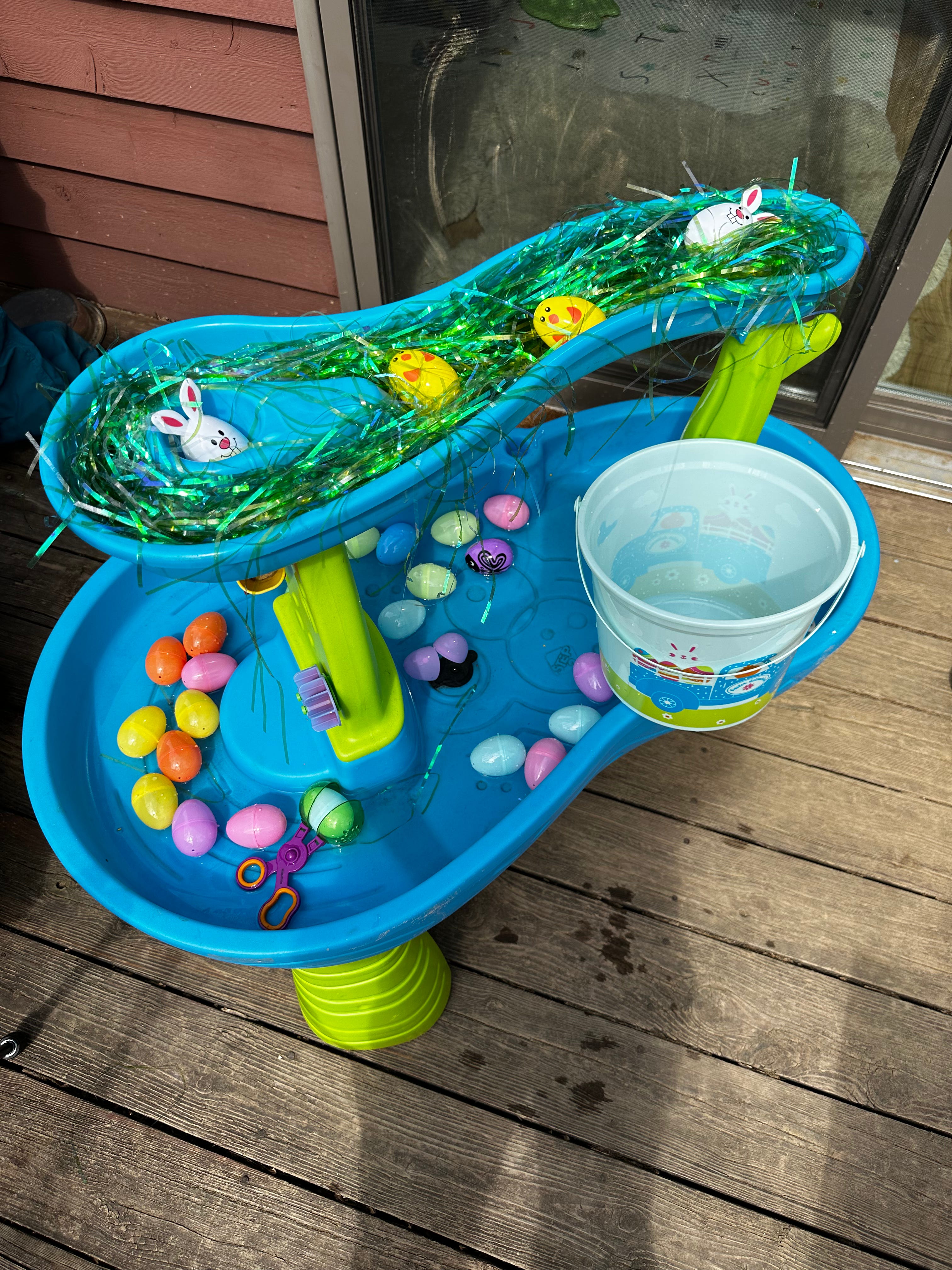
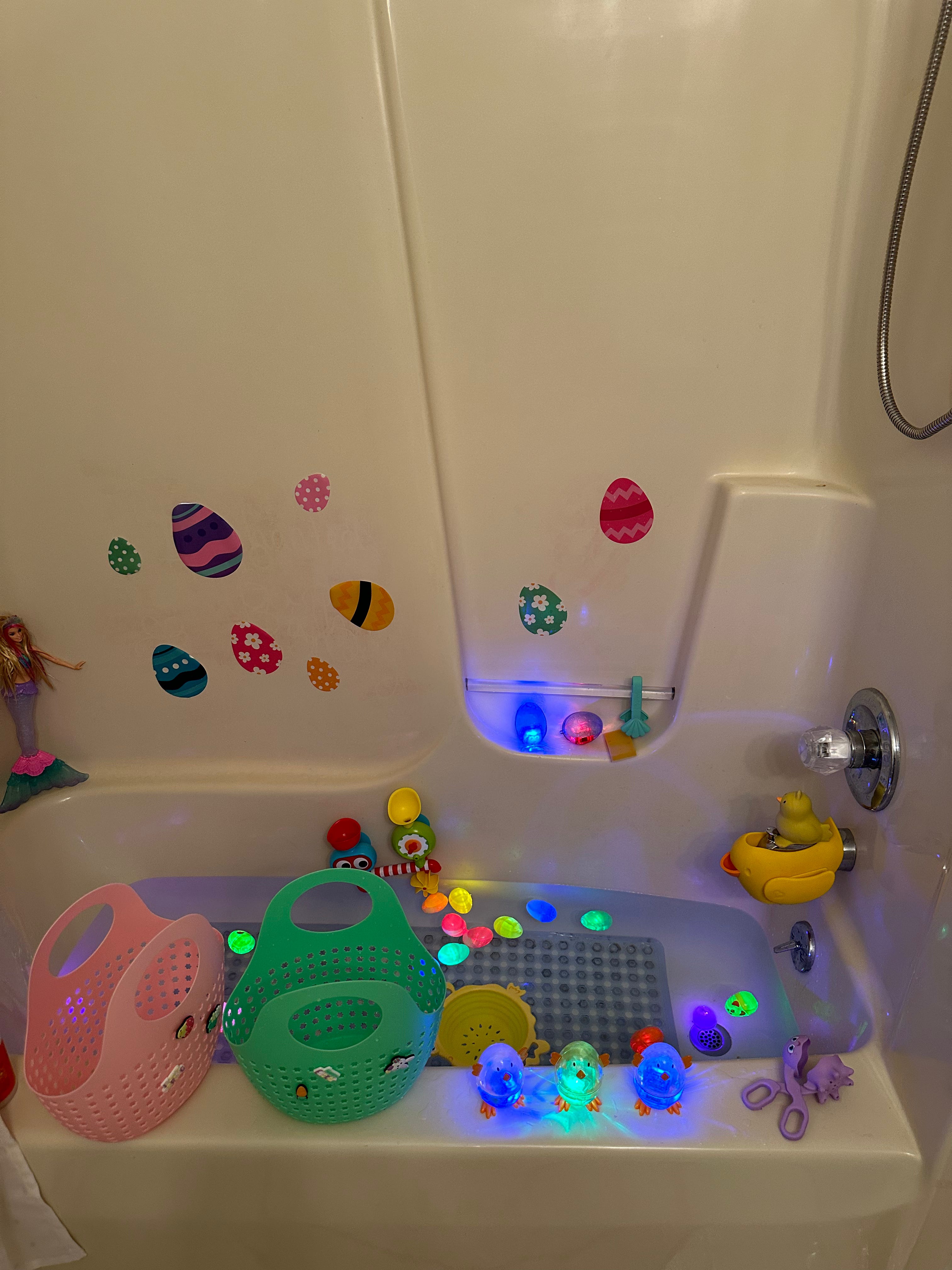
Add Easter eggs to the water table and hide small toys inside them for kids to rescue. Grab a ladle and a bucket and have kids scoop the eggs and drop them in a bucket too. This works just as well in the bathtub-throw the eggs in the bath and let them discover what’s inside while they play. I also love throwing little glow pals into eggs and having a glow in the dark easter bath!
Easter eggs are especially fun paired with water if they have holes in them because then they drip a little (or a lot if you add more holes).
4. Earth Day Ocean Cleanup
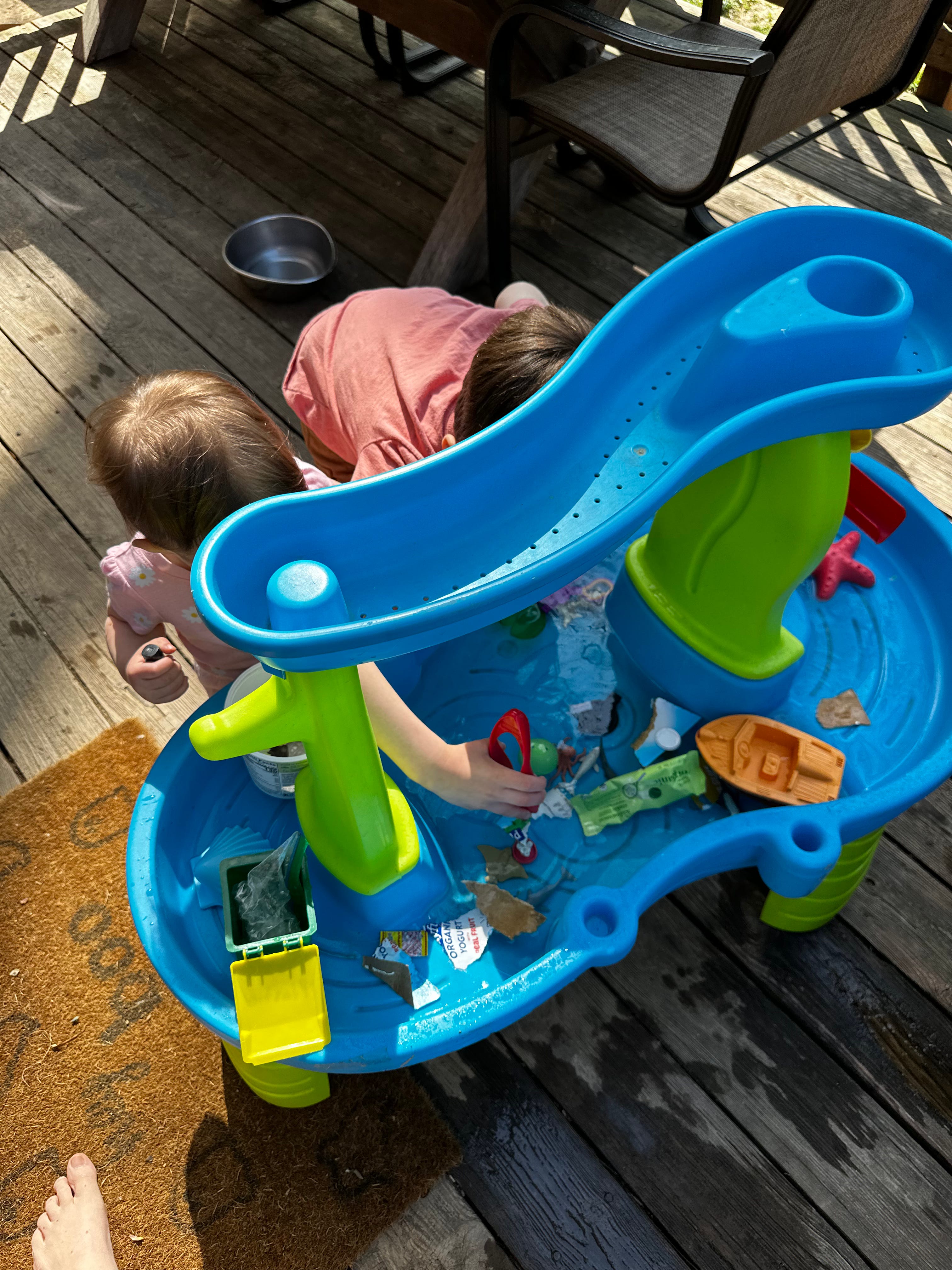
For Earth Day, fill the table with water, toy boats, and ocean animals, then hide small pieces of ‘trash’ that kids have to clean out and sort. I honestly just dove around in my recycling bin for things to use. This is a really great way to talk about the environment and ways we can help.
Tip: Turn this into a whole lesson on types of recyclables, how we can play a role in keeping our Earth clean.
5. Rainbow Bath
Add pom poms, glow sticks, and any rainbow-themed toys to the bath for a bath that your kids will absolutely love. The glow sticks make this feel genuinely magical, especially if you dim the lights. You can also make your bath bug themed, flower themed, anything you have fun little themed toys for!
Tip: This is one of my favorite rainy day activities or everyone is losing their minds and it’s only 4 pm resets.
🌱 Dough + Dirt + Small Worlds
Small world play invites kids into imaginative, open-ended exploration. There is no right way to play with these so you can set it and let kids just explore to their heart’s content.
6. Dirt Dough Garden
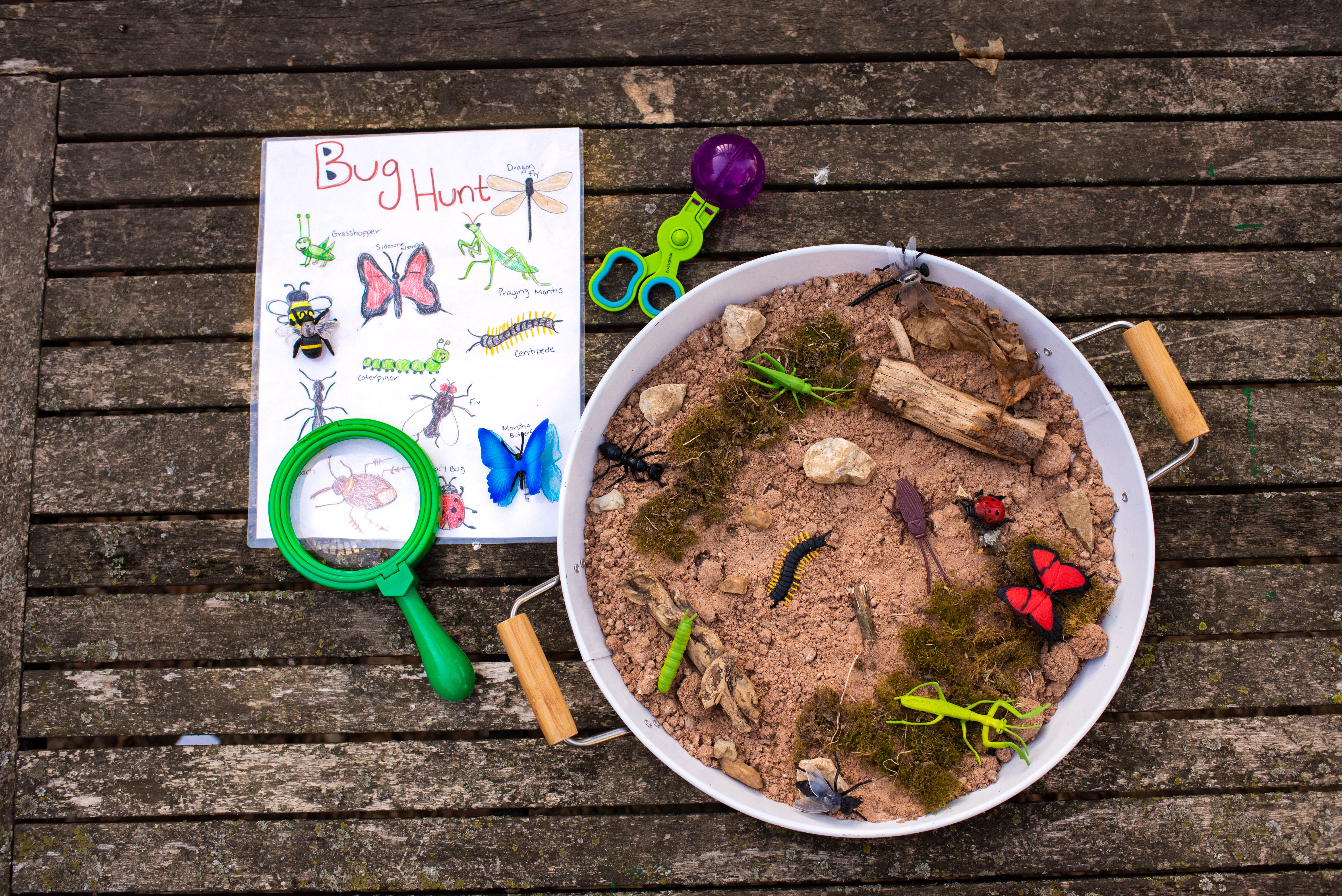
Mix cooked flour, oil, and a little cocoa powder to make a rich dirt-colored dough, then let kids build a garden in it with sticks, flowers, and small figurines or add bugs to it and go on a bug hunt. It smells incredible and the texture is unlike any store-bought dough. Note of caution, it’s messy so bring it outside (but away from where pets go if you use cocoa powder!!).
Tip: Put the dough in a plastic bag and reuse it a few times! It should last a few weeks, just do a quick smell test.
7. Fairy Garden Rice Bin
Use rice as a base (or split peas for grass). I color rice with white vinegar and food coloring and let it dry on a parchment lined baking sheet for 30 minutes. Then to your bin or container, add tiny figurines, stones, and real flowers for a fairy garden. Dollar Tree usually has fairy houses in spring that are perfect for this.
Tip: Colored rice is one of my most-used sensory bases. Make a big batch at the start of spring and keep it in a sealed container for MONTHS.
8. Build a Bird Nest
Put out a basket of play dough, twigs, grass, cotton, moss, and small toy eggs and let kids build a bird nest from scratch. This is a fun little spring activity that quietly teaches so much about nature and how animals care for their young. Plus it pairs perfectly with a unit on birds if you’re a homeschooling family!
9. Spring Garden Play Dough
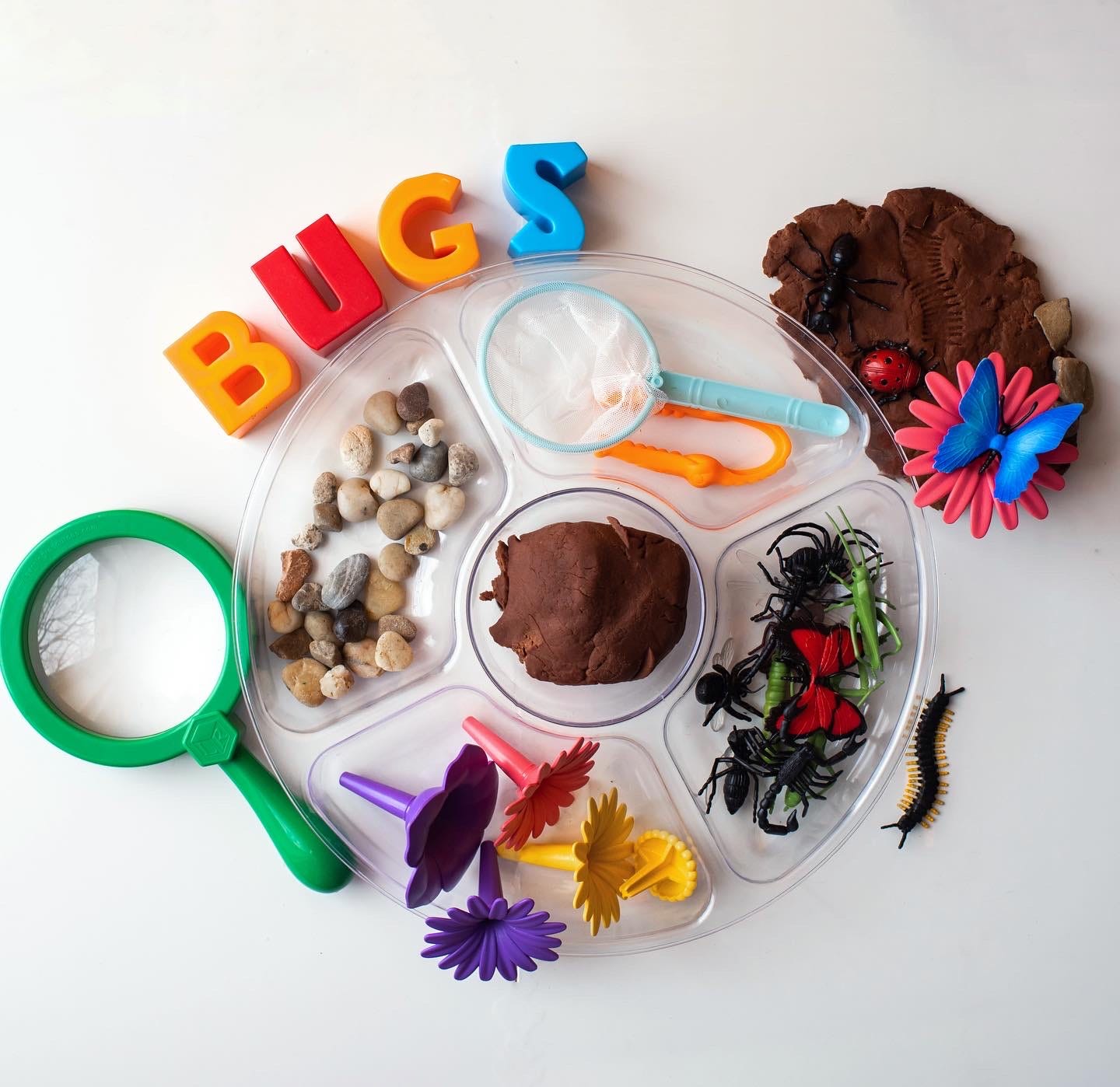
Grab play dough, green pipe cleaners, buttons, and flower cookie cutters and have kids make and decorate their own spring garden. Simple setup, completely open-ended, and again, is the perfect compliment to a flower unit. You can also use brown play dough with some rocks and have an insect dirt garden too.
10. Dirt Oobleck with Insects
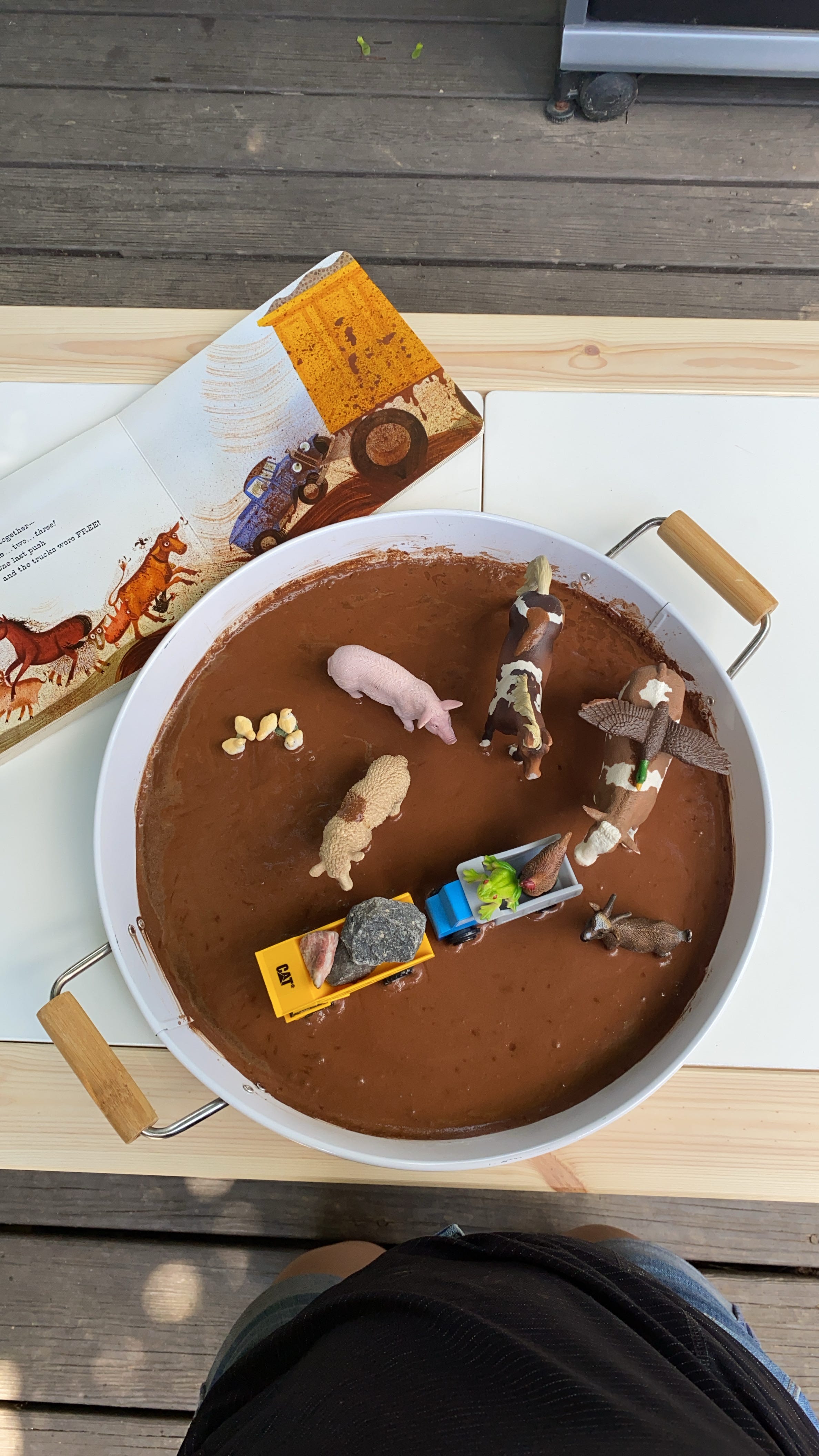
Mix cocoa powder, cornstarch, and water (2 parts cornstarch to 1 part water) to make dirt oobleck. Add plastic insects and have kids explore them in the mud, then wash them off in a container of clean water. You can use toy trucks too for a construction site twist. Oobleck is a wild sensory base, and some kids may hate it so if they turn away from it just let it dry out instead and have kids do a “dirt dig”.
Tip: Oobleck is a non-Newtonian fluid - it acts like a solid when you press it and a liquid when you don’t. So this is one of those super fun science lessons that kids go crazy for.
11. Flower Planting
Make brown rice and add fake flowers, little clay pots, and gardening tools to it. Don’t forget plant labels, my kids love those! You can also just skip the rice and fill a bin with dirt or potting soil. Give kids flowers to plant, add bugs to the bin, honestly anything goes here.
12. Pluffle with Rainbow Insects
Pluffle with little rainbow bees or insects is a fun sensory experience that is not super messy or overwhelming, which makes it a great starting point if you are newer to sensory play or have a child who is more sensory-sensitive.
Tip: Pluffle is a foam-based sensory material that is light and easy to clean up. You can find it on Amazon or at most craft stores.
🧪 Science + Reactions
These activities have a built-in wow moment. Set them up, step back, and watch their faces.
13. Fizzy Easter Eggs
Pack baking soda tightly into Easter eggs, set them in a tray, and let kids pour vinegar into them for a fizzy surprise reaction. It’s the one activity that just NEVER loses its magic.
Tip: Add a few drops of food coloring to the vinegar for a colorful fizz.
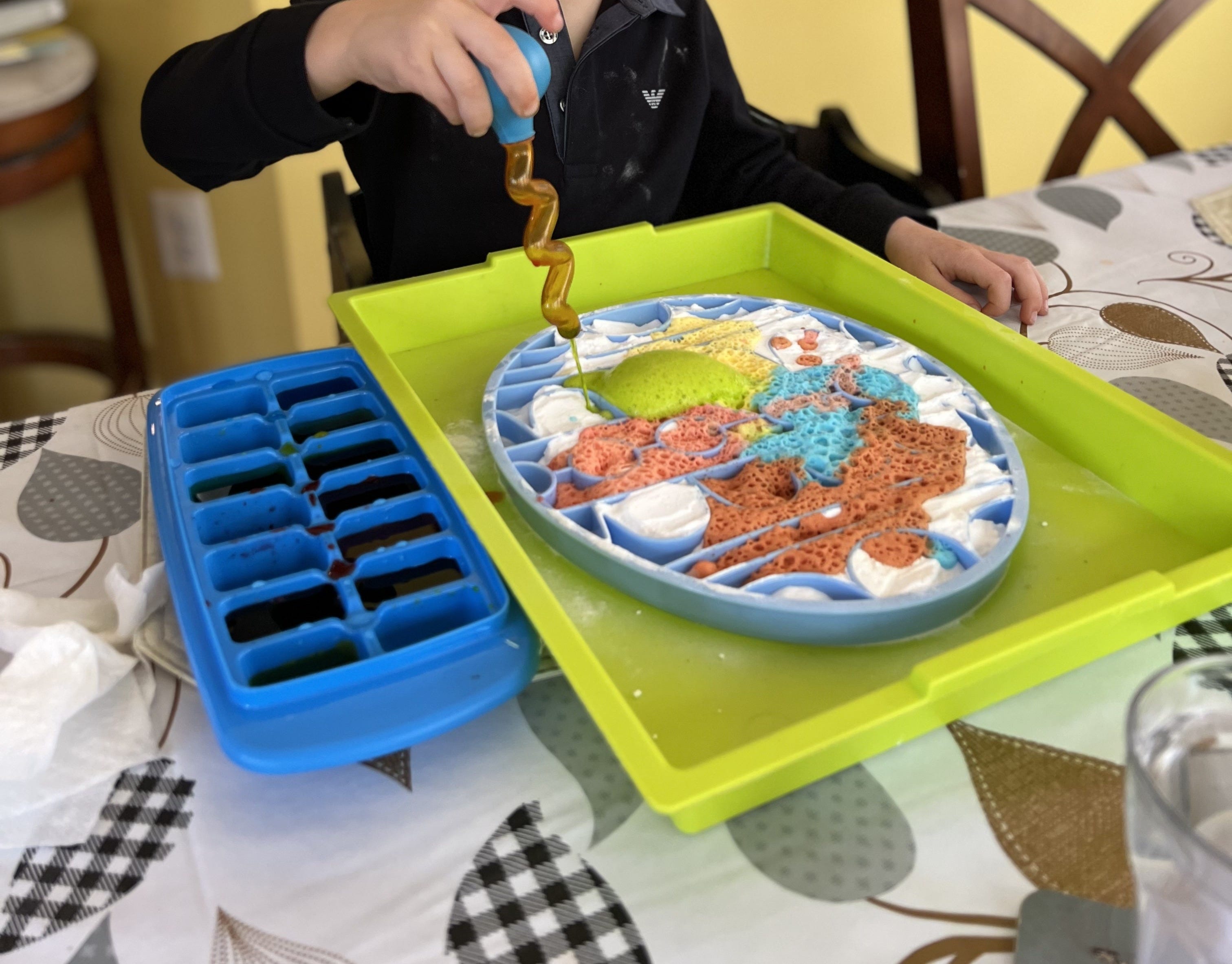
14. Gelatin Excavation
Add small Easter toys inside gelatin, let it set overnight, and let kids dig them out slowly. Gelatin is always a huge hit and is much less sticky than flavored jello, just a fun little fact.
Tip: Use a silicone mold to make fun shapes. Let kids use small tools like popsicle sticks or plastic spoons to excavate.
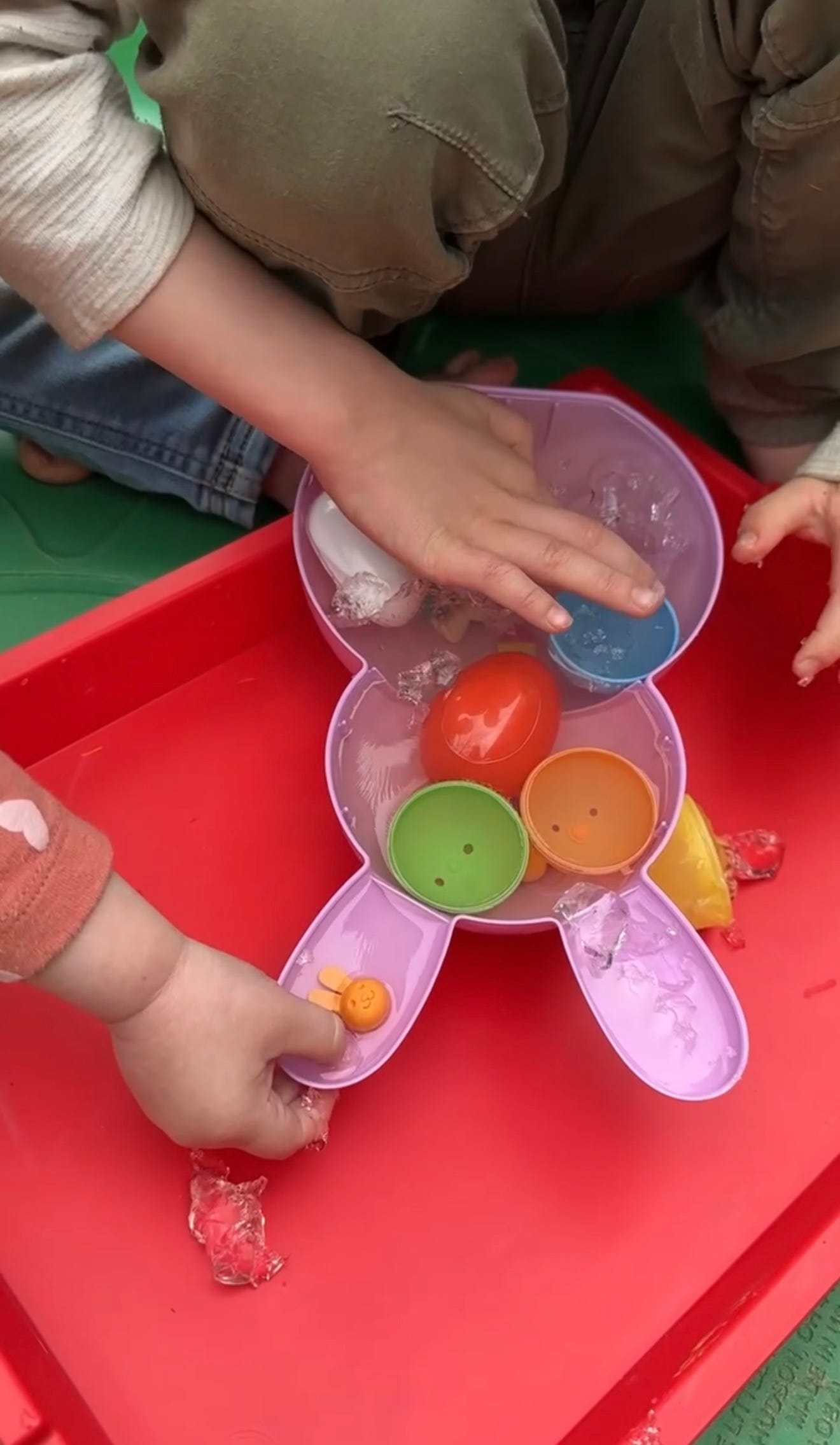
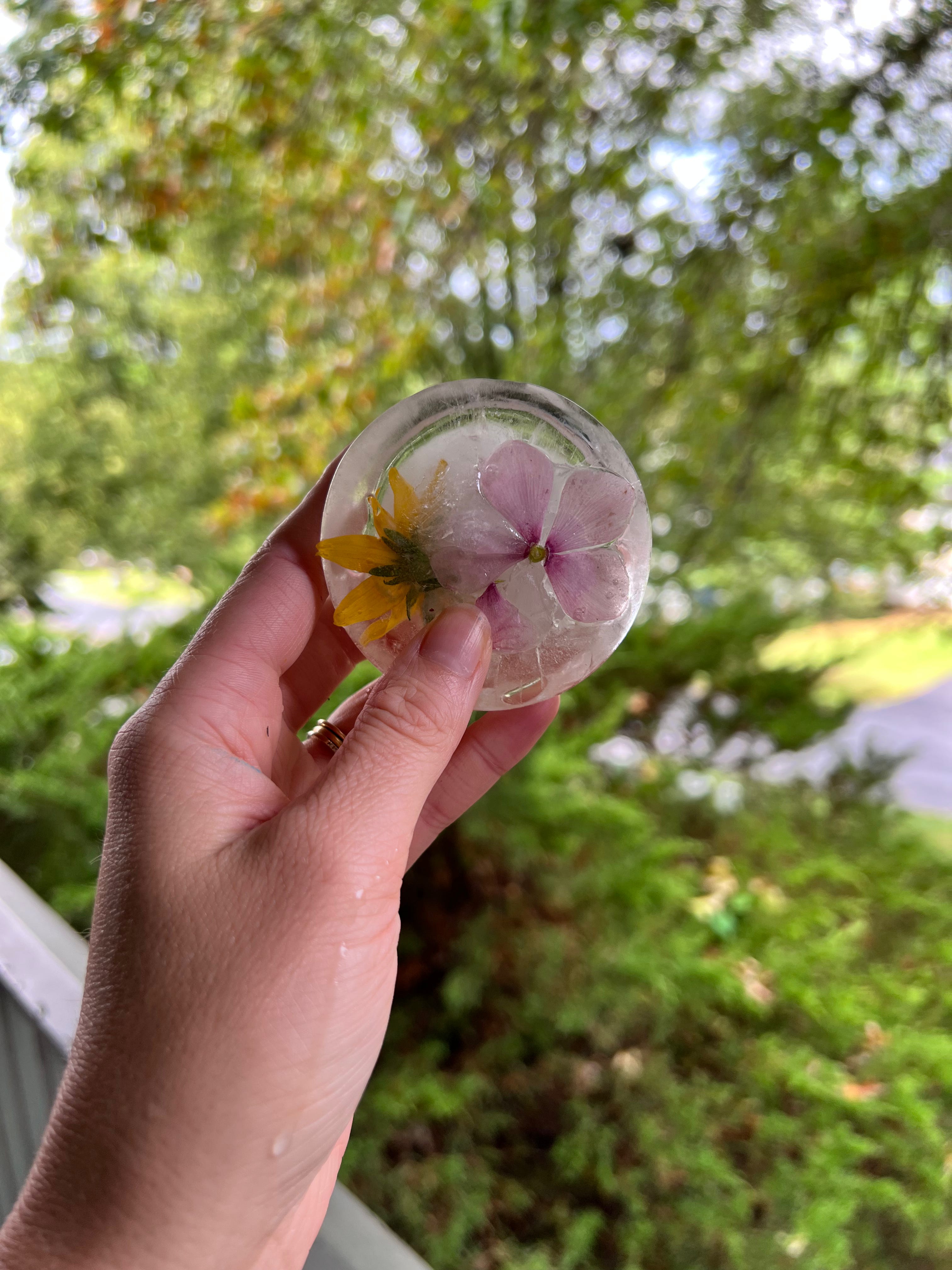
15. Frozen Flower Excavation
Freeze flowers and small toys inside a block of ice and let kids melt it with warm water from a spray bottle or small cups. I love to do this on a warm day and I usually just drink my coffee in peace while my kids rescue away.
Tip: Add food coloring to the water before freezing for a beautiful colored ice block. Also sand castles are really fun things to freeze if you have the freezer space.
🌿 Nature + Outside
These are some of my favorites and are great for when you just need everyone to be outside and to put in the lease amount of effort.
16. Nature Soup
Send kids outside with a bucket and let them collect whatever they find. Anything goes here, sticks, rocks, leaves, petals, dirt, water from the hose. Then have them make nature soup. No setup required and it is always magic. This is one of those activities where the less you say, the more they create. I just like to give them old pots and pans, ladles, whatever they request I usually have something cheap or old to give.
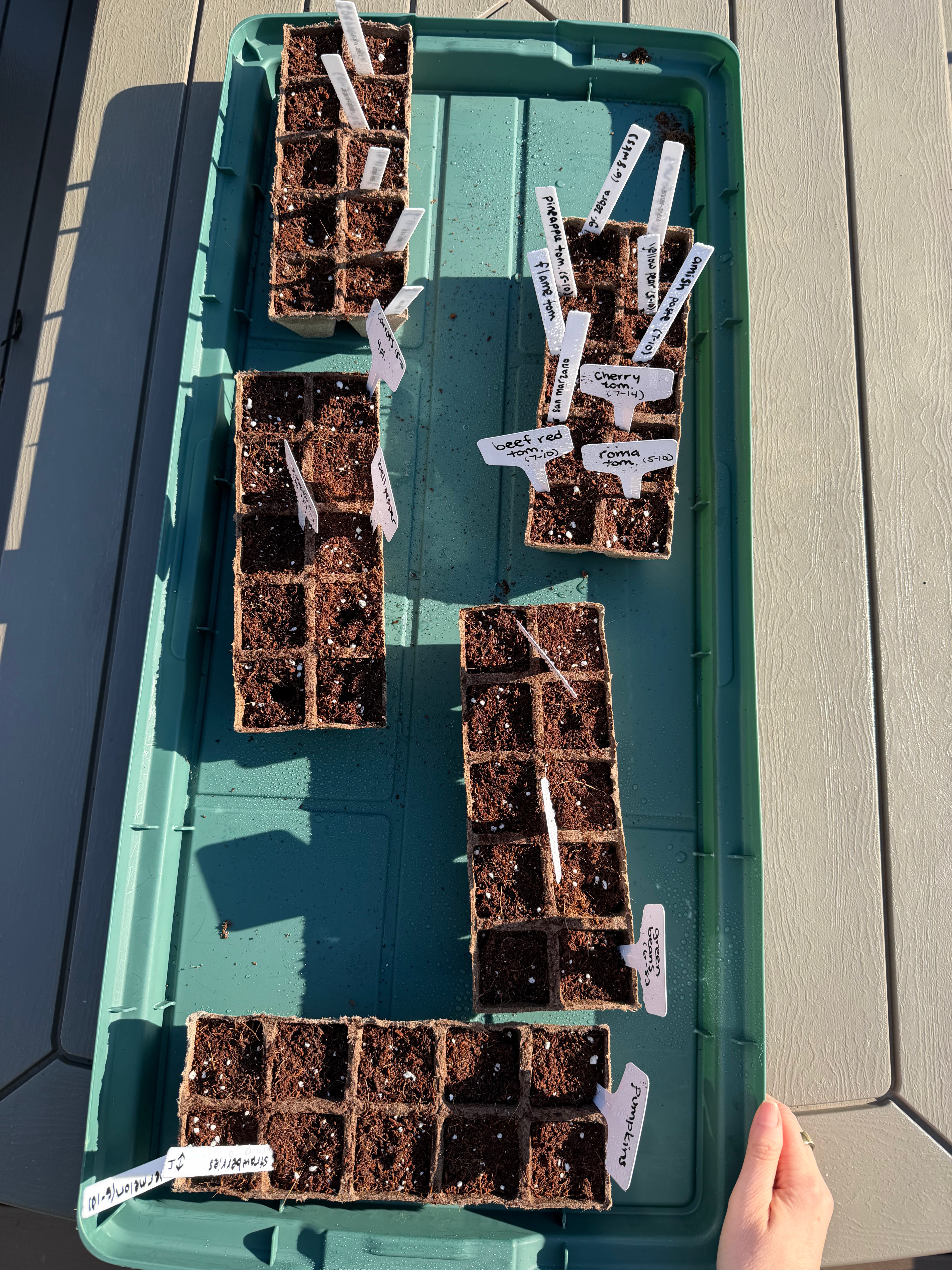
17. Plant Something Real
Give kids real soil, seeds, small pots, and a watering can and let them plant something they will actually tend. I love having them plant grass seeds because it grows so quickly- kids can see results in just a few days which keeps them invested plus it’s a great way to do plant science in real time!
Tip: Grass seeds, bean sprouts, and radishes are the fastest growers and most satisfying for young kids.
18. Nature Paint Brushes
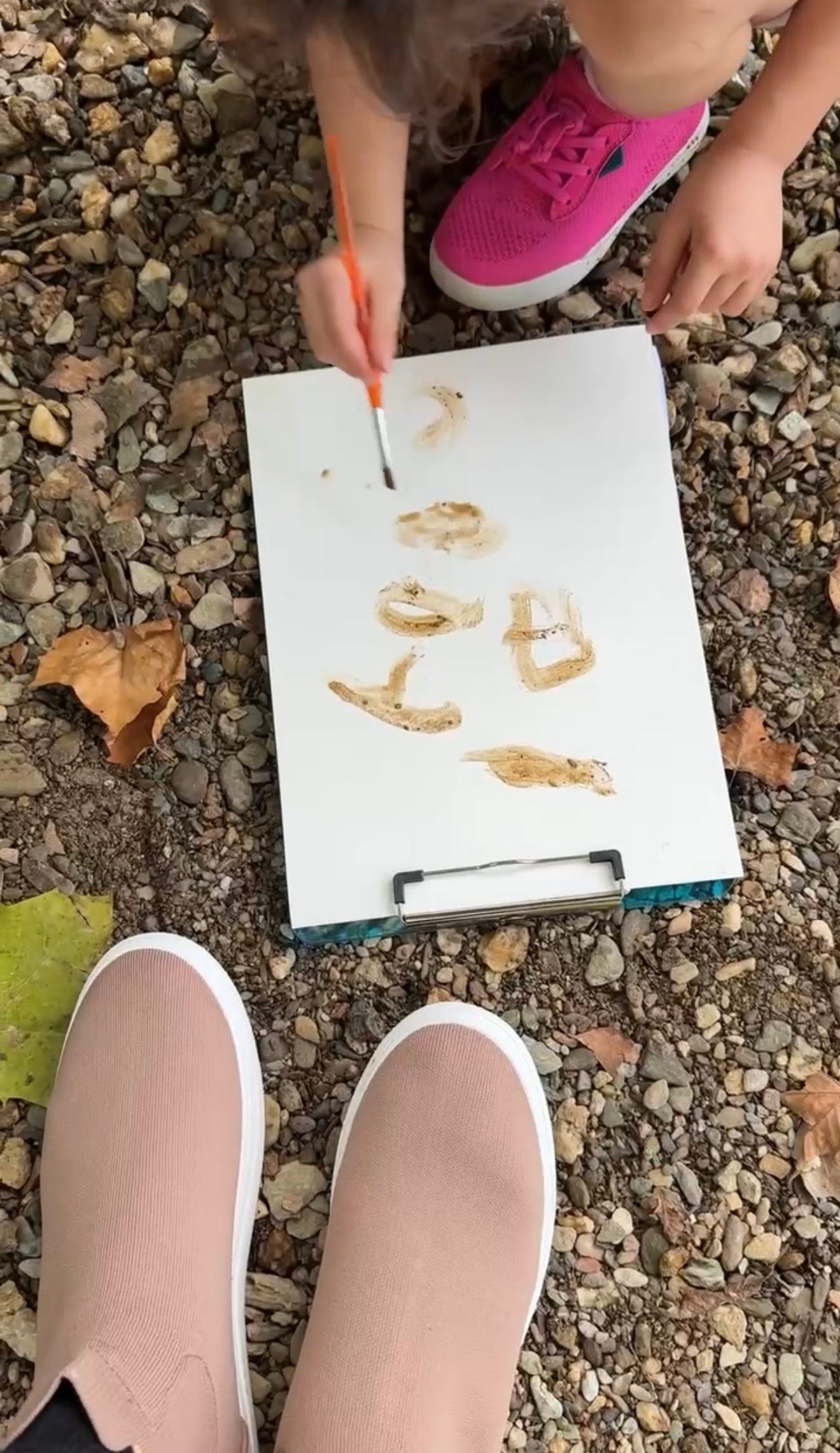
Go outside and use flowers, leaves, and sticks as paint brushes on paper. We sometimes bring paper to a creek and use nature as our only brushes and paints. The results are always so pretty, and even I get into creating art this way.
19. Nature Sticky Canvas
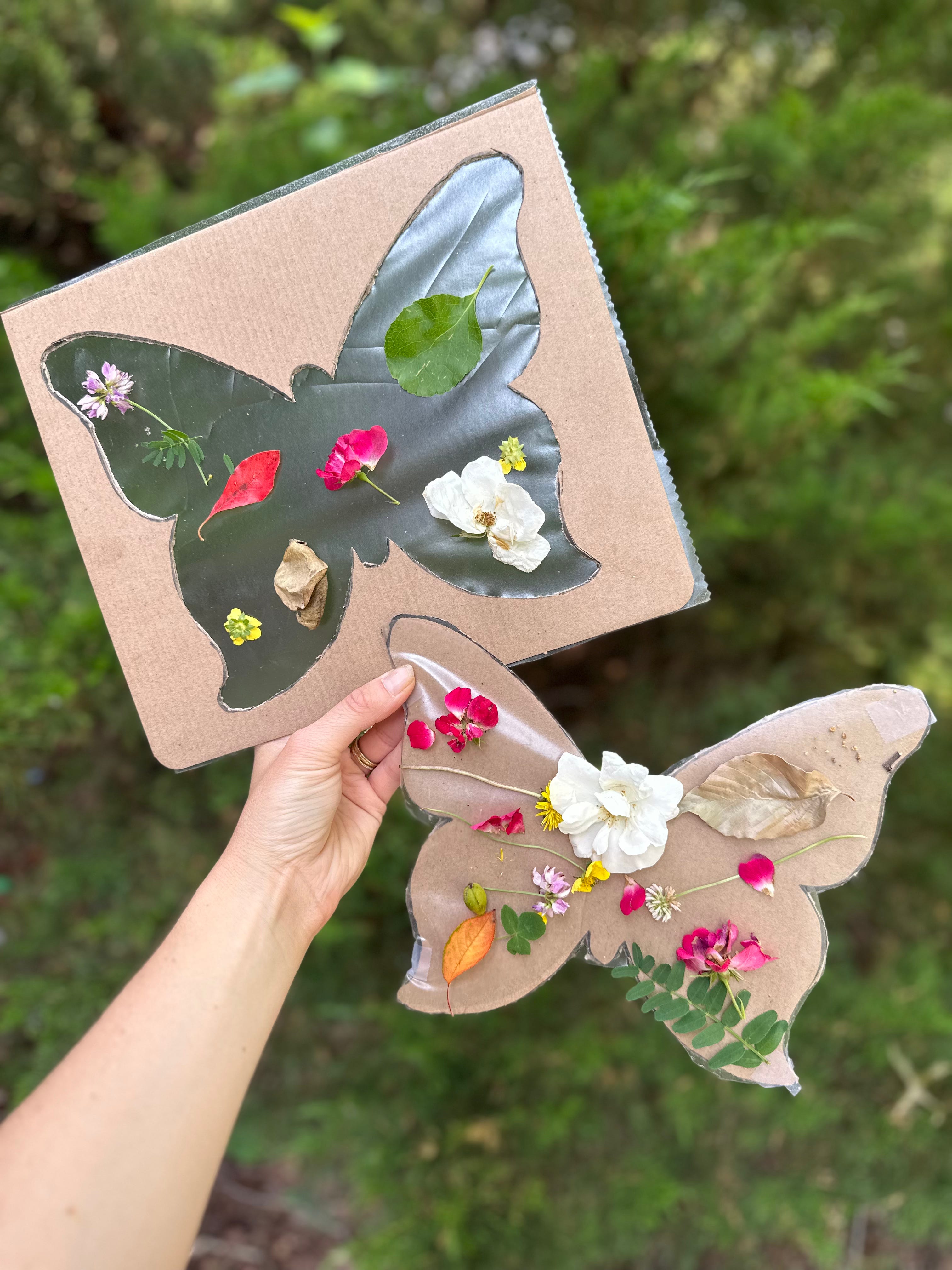
Tie sticks into a square shape and add tape to one side so there is a sticky surface. Go on a nature walk and have kids press flowers, leaves, and petals onto their canvas to make a picture.
Tip: Use clear contact paper instead of tape for a cleaner look and a more durable finished piece.
20. Nature Color Scavenger Hunt
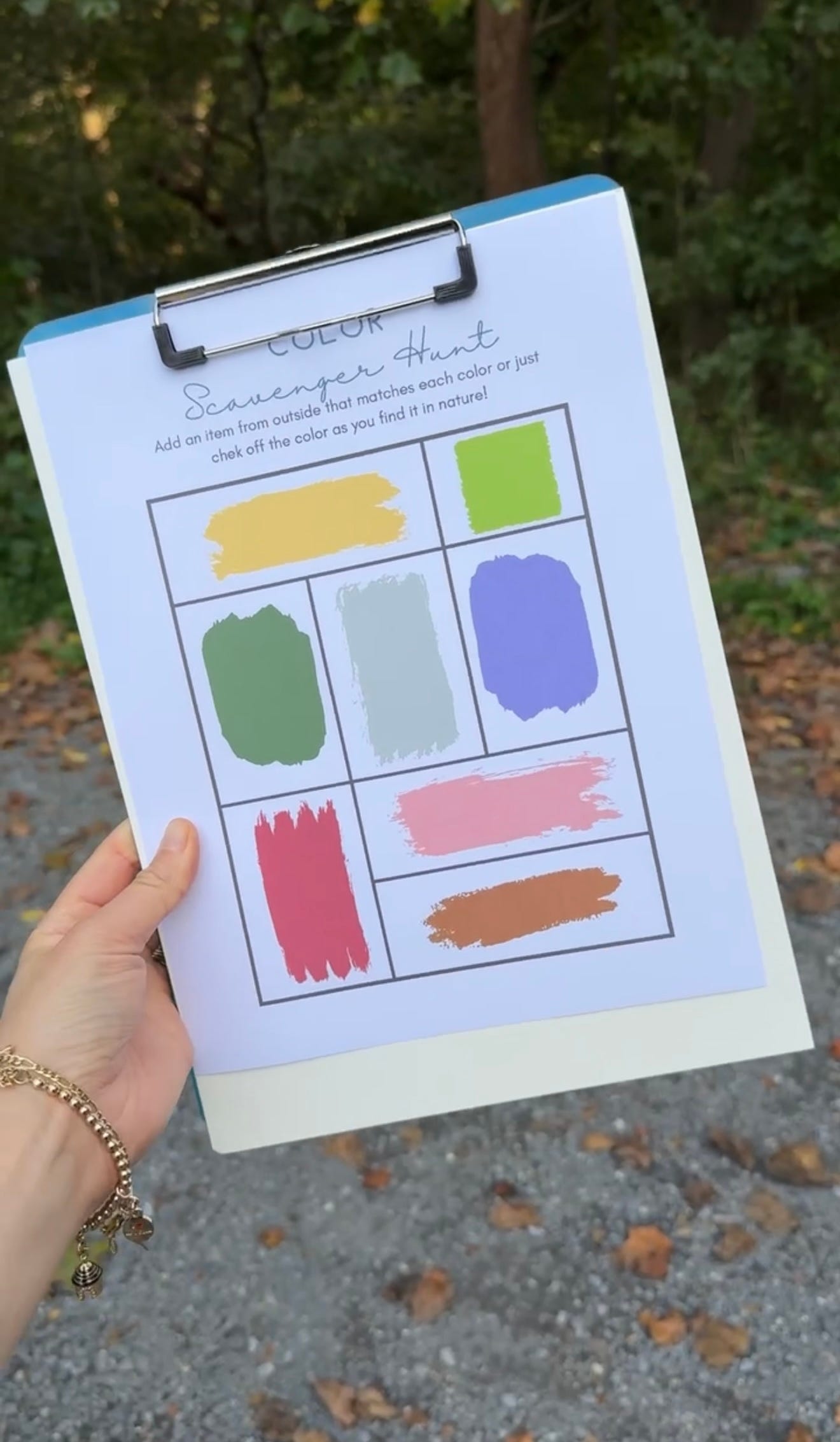
Paint an egg carton with a different color in each cup, then go on a nature walk and have kids find something in nature that matches each color. It’s simple, free, and endlessly replayable as the seasons change. If you don’t feel like doing an egg carton, I fully support you just printing a color hunt out.
Tip: This works at any age. Older kids can be challenged to find more specific shades (i.e.-not just green, but dark green and light green.)
A little note <3
You do not need a perfectly organized sensory shelf or a dedicated play space or expensive supplies to make any of this happen. You need a bin, a few things from around the house, and the willingness to let it be a little messy for an hour (trust me anything can be cleaned up).
I hope this guide gives you a whole season’s worth of those afternoons. Save it, share it with a friend who needs some spring activity ideas, and let me know in the comments which one you try first.

Did this help? Share it with a mom who needs a rainy day idea.
And if you’re not subscribed yet, Hi! I’m so glad you’re here.
Comments
Nothing yet. Say the first thing.
Sign in to join the conversation.