
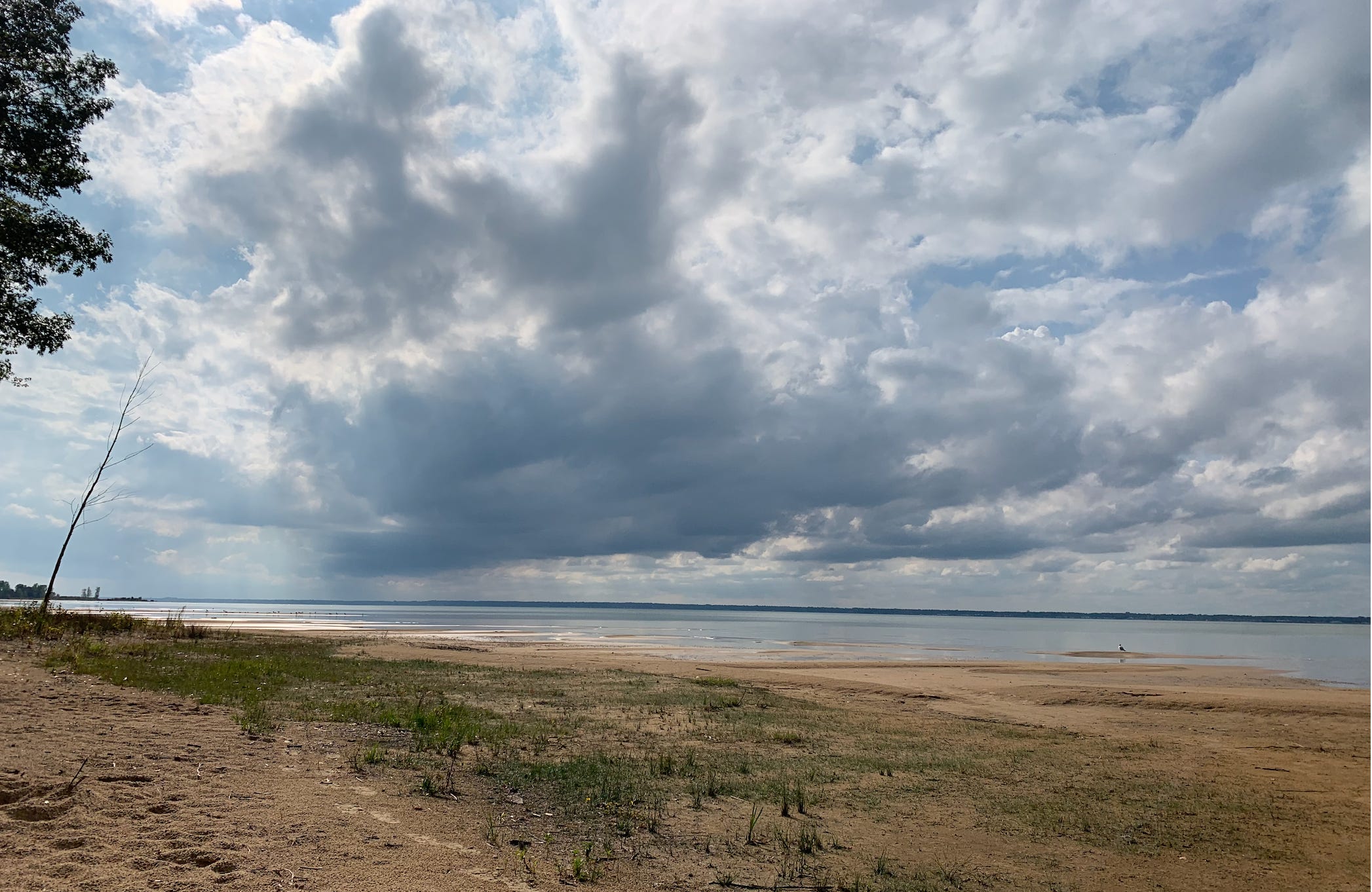
Solace and solitude. That’s what I had in mind for a camping getaway last week at Tawas Point State Park in Michigan, but I left with so much more. It’s next to impossible to get a beachside spot in the summertime. But in late September, there’s no problem choosing a prime spot about 20 steps away from a serene shoreline. No boats, no jet skis, no people.
Aside from the dreamlike beach, the main feature of Tawas Point is its lighthouse. I walked out to see it, mainly for the exercise. When I got there and read the signs along the path, I was surprised to discover its uncommon history and the geological nature of the land I stood upon. With all the reflection time I had, I saw heartening metaphors for activism everywhere I turned. I want to share them with you today, so that I won’t forget them.
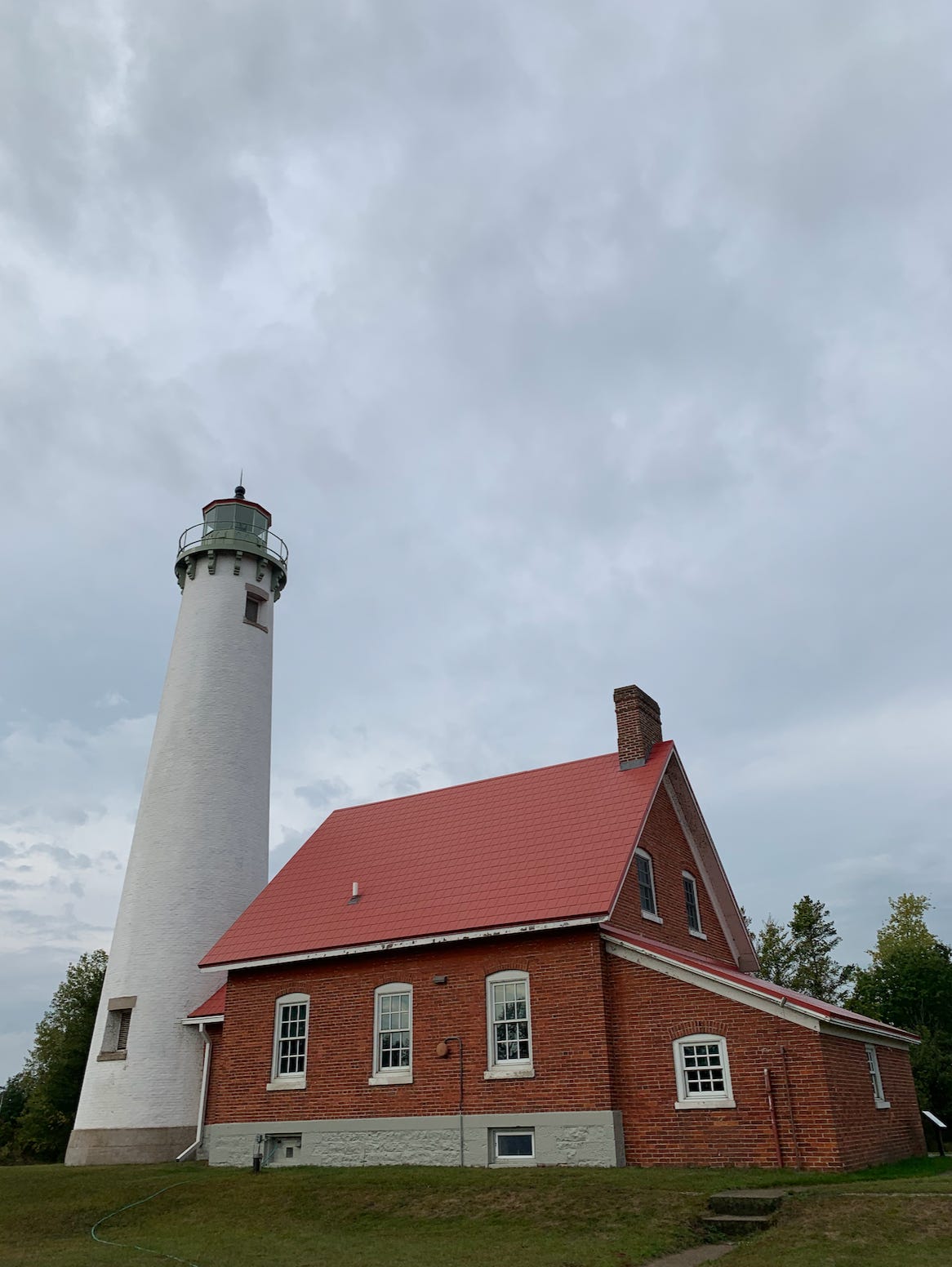
Not even 70 feet tall, the lighthouse is a modest structure painted white with rust colored accents to match the keeper’s house beside it made of brick. The curious thing I noticed was how far inland it stands. After wading in the bay earlier, I knew I could walk an incredible distance on a sandy bottom with shallow water not even up to waist level. So, what gives? Why is there a lighthouse warning boats a mile or more inland of where they might run aground?
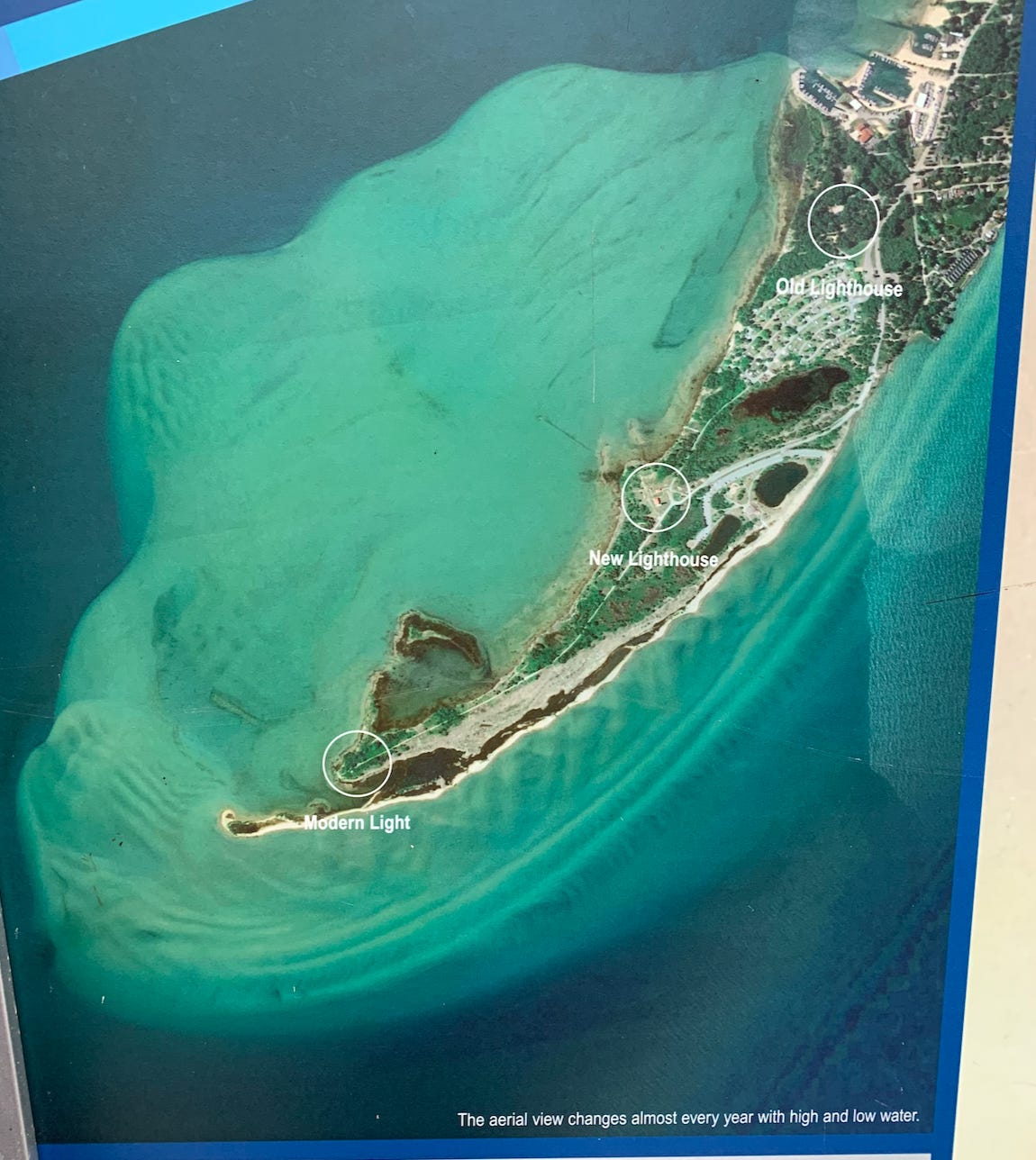
The Tawas Point Lighthouse was built in 1876, but it’s actually the second lighthouse built on this point. The first lighthouse was built in 1853, near the current park entrance. But the land here isn’t eroding away…it’s growing! Currents in giant Lake Huron carry sediment around the great lake, but as they hit the still waters of Saginaw Bay, they slow down and drop the sandy load. In just 20 years, the original 1853 lighthouse was more than a mile inland. By 2016, the coast guard gave up on costly lighthouse towers and just placed a modern light on a pole at the end of Tawas Point, which can be moved as accretion adds more land year after year.
Even before I stepped on the path to the point, I knew I wanted to make a lighthouse meme for Instagram with a quote I’ve been seeing around the internet: “If you cannot change the course of the storm, be the lighthouse.” - Ronn Daigle. (I don’t know who Ronn Daigle was and an internet search couldn’t tell me. I hope he wasn’t a jerk.)
Lighthouses are sturdy and can weather the storm. They cast their beams far and wide with intention. They guide sailors to safety and offer hope to people who are lost. Others depend on their consistency. They draw people to them. Lighthouses are also a product of communities acting for the common good. They exist where they are most needed because we want to help others be safe.
It’s not hard to extend the metaphor to how we feel storm-tossed and adrift with our government safety nets and research funding disappearing at every turn. We might not be able to avert the meteorological or political storms alone, but we can manifest all those good lighthouse qualities in ourselves to lessen the damage.
While a light on a pole isn’t as romantic an image as a picturesque lighthouse, that super-bright light does the job effectively. It’s cheaper, more flexible in location, and certainly less dangerous than the system that had a lighthouse keeper lugging flammable liquids up and down the stairs. Activists must also change with the times. We’ll have to give up old structures that don’t serve us anymore and find new ways to rally others to our causes.
The lesson I didn’t expect to find might be the most important one. I reflected on how tiny bits of sand can combine to dramatically change everything. The land encompassing the campground didn’t exist when the 1853 lighthouse was built nor when the local Ojibwe tribe lived freely in the area. (“Tawas” is a derivation of his name of Ojibwe Chief O-ta-was) Incredibly, it’s now covered with grasses, shrubs, and trees. It supports humans in their RV’s, deer, squirrels, plus an incredible number of migrating birds seeking respite after migrating across the Great Lakes.
I love it when nature surprises me. I need to be reminded that things are not as impossible as they seem. Yes, a hurricane or a tsunami can destroy a coastline in a day, like the sudden wiping away of USAID. Erosion can slowly carve away a riverbank, like the gradual defunding of education programs. But nature also has metaphors of beautiful things being built up, like fiery volcanic eruptions still forming the Hawaiian islands or the steady growth of Michigan sands that turn into solid ground. Can we remember that our individual actions, both noisy and quiet, can combine to create a foundation for democracy? Persistent actions will build upon each other to create an environment favorable to programs that provide medical care to the sick, food to the hungry, and equity for all.
The tiniest things can add up to a shift in the whole landscape. All of our political actions, no matter how big or small, can change our current political landscape. It’s happened before. It will happen again if we continue on together.
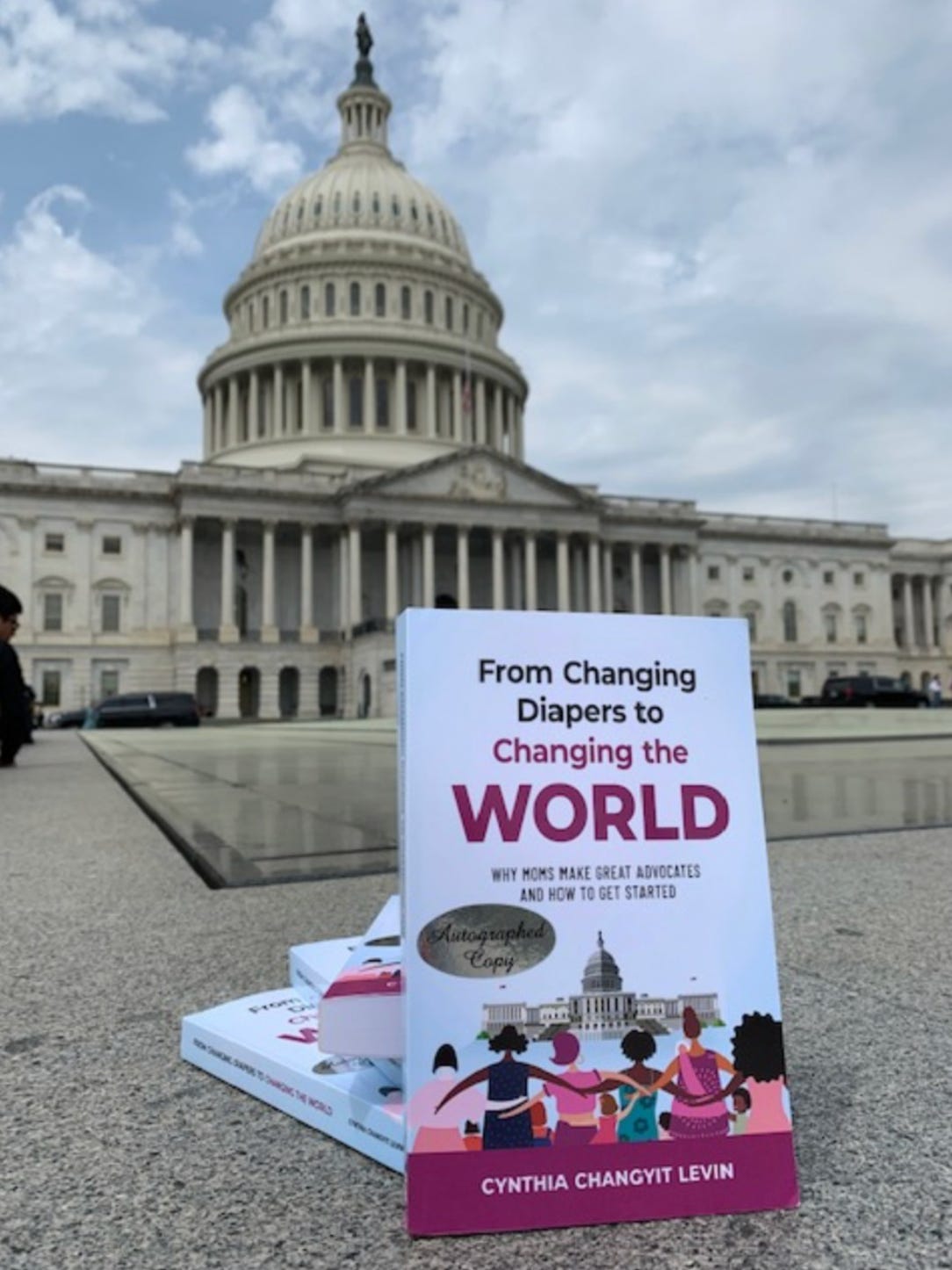
My first book “From Changing Diapers to Changing the World: Why Moms Make Great Advocates and How to Get Started” is a warm and witty guidebook helping moms to make a better world for all of us. It provides inspirational stories and step-by-step instructions for new and experienced activists to get more involved in advocacy!
Buy an autographed copy from my website at www.changyit.com/books.
Order online at bookshop.org or Barnes & Noble.
Order from any independent bookstore near you!
My new book “Advocacy Made Easy: The Handbook for Turning Civic Frustration into Powerful Action” will launch October 29, 2025 and is available for pre-sale now! Subscribe to my newsletter at www.AdvocacyMadeEasy.com for updates.
Comments
Nothing yet. Say the first thing.
Sign in to join the conversation.