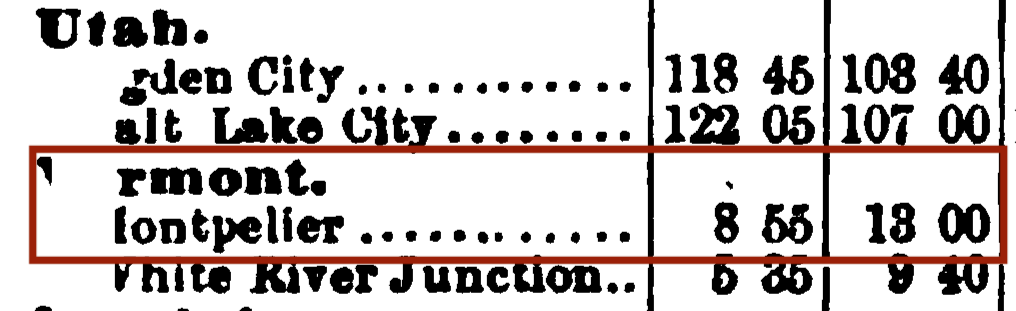
When I was researching my dissertation, I came across an intriguing snippet in an otherwise boring, 900-page government document: a four-page table showing how long it took mail to travel by railway between roughly 130 US cities and twelve major railroad hubs in 1882. This set my wheels spinning: what if I could use this to create a nationwide map of how fast information traveled between different…
If you’ve followed debates around generative AI, you’ve probably seen the dismissal of Large Language Models (LLMs) as nothing more than “autocomplete on steroids”. This line of critique isn’t just about how the technology works; it’s an implicit claim about what it can produce. The idea is that because LLMs are just predicting sequences of words, all they can generate is plausible-sounding,…
We’re now two years into the Generative AI Era in higher education. For those of us in the humanities, much of the conversation around Large Language Models (LLMs) has revolved around teaching - the tenor of which is captured in headlines like “The College Essay is Dead” or “Another Disastrous Year of ChatGPT School Is Beginning.” Which, fair enough! LLMs pose all sorts of new pedagogical…
This summer, I’m diving into how teachers can use Generative AI. My first foray began with a simple premise: let’s use AI to automate the boring stuff. When I thought about the parts of my job that are both tedious and time-intensive, I immediately thought of grading papers. Before tackling the thorny question of whether we should use Generative AI to grade student papers, I wanted to find out if…
On Wednesday I taught my last class of the spring semester for my undergraduate-level course History of the Western United States. When I was preparing for the class, I kept experiencing that nagging worry that, for most of my students, this was the last history class they’d ever take. So I decided to do “one last lecture” on a basic question: what did I want them to remember from this class? As I…
During my first year of grad school I was part of an initial cohort of grad students that helped get the Stanford Literary Lab off the ground. I took a class with Matt Jockers in 2009 that segued into an ad-hoc research seminar that segued into the official launch of the lab in 2010. Over the next few years I worked on projects, helped bring speakers to campus, and tried to attend as many of the…
The first two weeks of Donald Trump’s presidency have made my day-to-day work as a historian feel pretty inconsequential. Diving back into the past can feel a lot like sticking your head in the sand while the world around you goes up in flames. There is, of course, an urgent place for history and historians under this particular administration, in part to meet a wider hunger to understand just…
This is the second half of a review of American Panorama (you can read Part I here). Together, the two posts are a follow-up to my earlier call for digital historians to more actively engage with the historical contributions of each other’s projects.
I recently wrote about the wave of digital history reviews currently washing over print journals like the American Historical Review, The Western Historical Quarterly, and The Journal of American History. This wave brings into focus the odd reticence of digital historians to substantively review digital history projects in open, online venues. I ended the post with a call for the field to more…