
As May blooms into June, my mind meanders toward a mumbling bee, bumbling in and out of poppy petals, half open like sleepy eyelids waking to loud, midday sun. Their fragile red rumbles in a barely there breeze and fuzzy stems swirl into new growth.
The corn poppy (Papaver rhoeas), field poppy, or Flanders poppy, is one of the most distinctive wildflowers in the UK. It’s characterised by its delicate scarlet petals and a pale yellow centre surrounded by a network of black stamens, sitting upon slender, hairy stems.
Once predominating many of Britain’s fields, the poppy population has decreased since the rise of ‘scientific’ agriculture and herbicides. They’re now mostly found in disturbed areas of land, such as agricultural fields, roadsides, meadows, and by railways.
Blooming from late May to August, each flower is fleeting – only lasting for one to two days. Their association with blood and new life goes all the way back to the Egyptians and Romans who made garlands with them to ensure their crops’ fertility.
The most poignant association with these poppies arises from World War I, when they were the first flowers to grow out of the mud and violence of the battlefields. John McCrae, a doctor serving in the war, wrote In Flanders Fields in 1915, transforming the corn poppy into an official symbol of hope and remembrance.
Text within this block will maintain its original spacing when published
“In Flanders fields the poppies blow
Between the crosses, row on row…”
As the poppies in front of me shudder with new life, I contemplate their papery fragility and all they’ve come to represent.
Text within this block will maintain its original spacing when published
The Corn Poppy
Percolating in the punctual pulse
Of muddy spring and lark’s soft wing,
Pockets of pulp and seed—
Red raged through needless greed;
Long lost pictures, black and white
Of loved ones left behind,
Bones sodden beneath soil,
Killed by man’s worthless toil;
And though we wear them on our breast,
The bloodshed does not rest—
Now where the bodies lay their heads,
No poppies grow from rubble beds;
On stolen lands, no flowers blow,
Just guiltless corpses, row on row.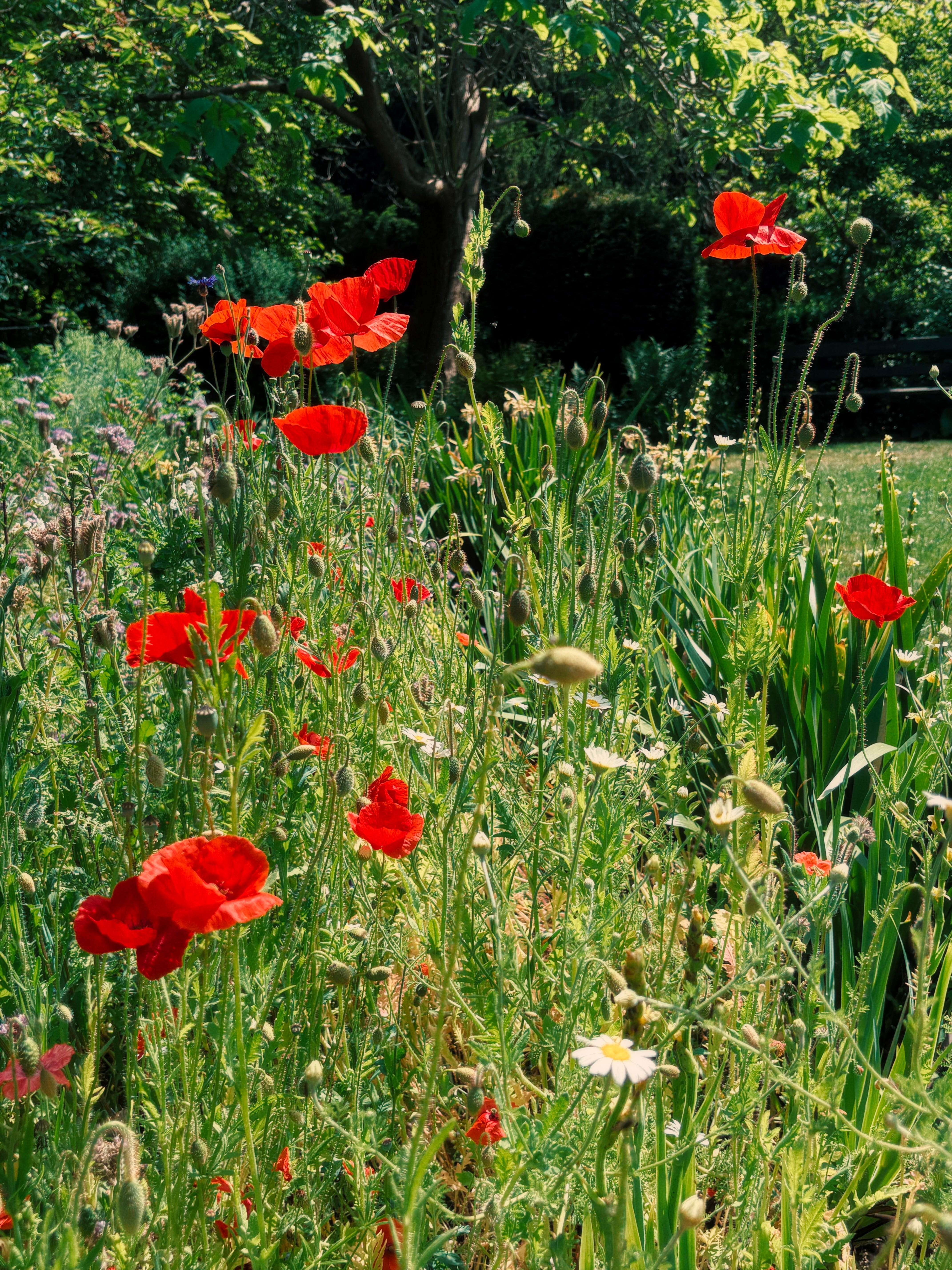
No posts
Comments
Nothing yet. Say the first thing.
Sign in to join the conversation.