
Around the Fourth of July, I think about the poem by Arab American poet Naomi Shihab Nye entitled “No Explosions”. This pointedly short poem asks the reader to re-consider the use of fireworks. Nye suggests that enjoying fireworks is the result of living “a different kind of life” that can find fun in the flashes and bangs. It is a kind of life very different from the one that has only known explosions in the form of bombs bringing death, terror, and destruction.
Plenty of fireworks will accompany the 4th of July holiday in the U.S. or as this administration calls it, “Freedom 250.” The semiquincentennial celebration has been rebranded to better satisfy and enrich those in power. “Freedom trucks” rove throughout the nation, offering a Christian nationalist version of America’s founding while the less shining, less white parts that involve Black history or the history of indigenous people are literally scrubbed from the national narrative.
For many, it’s difficult to find a celebratory spirit. The New York Times reported this week that ICE detained more than 10,000 immigrants in five days. A nun was detained in Texas on her way to Mass. Fear has surged among immigrant communities this week—whose freedom is being feted this weekend? The “Freedom 250” celebration puts privilege on display, white supremacy over the true complexity of our history. In some ways this is a break with the recent past, and in some ways it is entirely consistent with American history.
And yet, there is still Spirit at work in America. It is in the hands and hearts of those actively seeking Truth and reconciliation. In this week’s newsletter, you’ll read about folks who fasted and prayed on the steps of the Supreme Court this week for abolition of the death penalty. There’s also the ongoing “Dorothea Project” with over 1,000 women who have come together in prayer and action to witness for the dignity of immigrants. A storefront Catholic Worker in Baltimore runs a gun buyback program and offers space to grieve for families impacted by gun violence.
In CWReads, Eric Anglada of St. Isadore Catholic Worker Farm offers one way of reconciling with American history - through the land itself: “Instead of engaging with the living world as ‘a resource’ or a ‘thing’ to be dominated, then, we are taking active steps to be in relationship with the world as relatives and kin worthy of respect, care, and attention.”
Yes, we invite the Spirit to move among us when we seek reconciliation and life in relationship, with the land and each other. The same Spirit helps us to hear and to respond to the cry of our brothers and sisters as they plead for no explosions.
Til next time - peace!
Ashley

Support the work of Roundtable to keep it free for all readers! Please consider making a donation today:

On Thursday, CWReads republished Eric Anglada’s essay on land justice from the June 2026 Catholic Agitator from the Los Angeles Catholic Worker. In this essay, which also commemorates the tenth anniversary of the founding of St. Isidore Catholic Worker Farm, where Anglada lives, the author shares different techniques they have learned from native American wisdom for healing their relationship with the land and its peoples—past, present and future:
We continue to learn and grow into our skills of building up more and more life, both human and otherwise. With our notill regenerative gardening and extensive composting, we strive to build up topsoil that is teeming with life while sequestering carbon into the ground. We have been planting and tending native plants, shrubs, and trees. So many of them—especially the Oaks, a keystone species that host and support more creatures than any other—are now thriving.
Bit by bit, we have replaced some of the lawn with prairie flowers and grasses. We have also begun to utilize fire, a crucial feature of Indigenous stewardship for millennia, to regenerate the land. We have marveled as the land has responded to this varied engagement by producing an abundance of healthy food and attracting a multitude of different creatures.
Only a few months before we moved here, my wife Brenna and I had a profoundly transformative encounter with Stockbridge-Munsee Mohican storyteller Jim Bear Jacobs. A Christian pastor, Jim Bear says that he is a “missionary in reverse,” bringing white folks to Indigenous ways. Having received permission from Dakota elders in Minneapolis, Minnesota, Jim Bear tells, in place, the stories of both the genesis and the attempted genocide of the Dakota people. For Brenna and me, listening to these stories tapped into not only a profound sense of grief, but also a call to listen and learn more deeply and to act.
We had no idea where this call might lead us. Yet we emerged from that encounter with a strong desire to be a part of the healing and repair of the manifold wounds of colonialism.
Read the full story here.
On Friday, CWReads (you can subscribe to CWReads here) shared a dialogue written 90 years ago, an imagined conversation between a “Patriot” and Christ. Rev. Paul Hanly Furfey, spiritual advisor to Dorothy Day and frequent contributor to the early editions of The Catholic Worker, demonstrated the incompatibility between the logic of American patriotism and the logic of Christ’s love.
The “Patriot”: Yet we must be practical! There are, of course, some nations whom we can trust. Canada is a good neighbor. We shall never have a war with her. But unfortunately not all nations are like that. Japan and Russia are casting jealous eyes at us. Our basic policies conflict. We must arm to defend ourselves against such nations.
Christ: You have heard that it hath been said, Thou shalt love thy neighbor and hate thy enemy. But I say to you, love your enemies; do good to them that hate you; and pray for them that persecute and calumniate you.
Read the full dialogue here.
Thanks for reading Roundtable! Like, restack, or share this post with a friend to help spread the word about the Catholic Worker
Art Laffin, from Dorothy Day Catholic Worker in Washington, D.C, participated in Starvin’ for Justice: Fast and Vigil. Laffin, along with participants from across the country, gathered at the steps of the Supreme Court for the 33rd consecutive year to call for an end to capital punishment in the United States. The four-day event engages participants from across the country with daily vigils at the Supreme Court, evening educational programs, and optional fasting. The event culminates in an all-night vigil on July 2nd. Organizer Scott Langley writes,
This year, July 2 marks the 50th anniversary of the Gregg ruling that allowed states to resume executions. In place of the teach-in that night, we will be holding a special rally at 6:00 pm with various national and state coalition partners to mark this tragic milestone.
For more coverage of this event, visit the Starvin’ for Justice: Fast and Vigil Facebook page.
Christopher Douçot, from the Hartford Catholic Worker, shared an update from the Hartford houses in an email to subscribers, commenting on the general atmosphere of melting overtaking the East Coast, as it is dominated by a brutal heat wave. He turned his attention to the upcoming national holiday, and recommended reading for Catholic Workers:
I've been giving thought to Frederick Douglass' "What to the Slave is the Fourth of July?" as our nation celebrates America 250. I know my musings on things like this likely cost us donations, but what is America 250 to the people deported to Venezuela the day before the 2 massive earthquakes? What is America 250 to my disabled friend Sedrick who every two years has to prove he is still disabled? Sed turned 40 this week in prison. He has never been a threat to public safety. He is imprisoned because he missed appointments with a probation officer and then a judge. When he is released next week without a home or income- what will the fireworks mean to him? And, of course, what does America 250 mean to the descendants of the people who were forcibly displaced here and in Africa by the founding of this country?
Douçot recommended skipping all the firework-laden hoo-ha and taking a community member out to ice cream or Red Lobster (or both) and
“celebrate love, family, and friends who care for each other no matter what.”
Sign up for their mailing list to get more emails like this on their website here.

Little Platte Catholic Worker Farm in Platteville, Wisconsin, is offering several different workshops for the remainder of the year. In July, come learn about how to care for cast-iron cookware. They invite attendees to bring a cast-iron pot in need of reseasoning! August, harvest season, means learning how to pickle and can the abundance of the farm vegetables. Later in the month, a friend will offer a natural dying class. And, finally, in November, they will be offering a class to create homemade Advent wreaths. Learn more on their Substack.
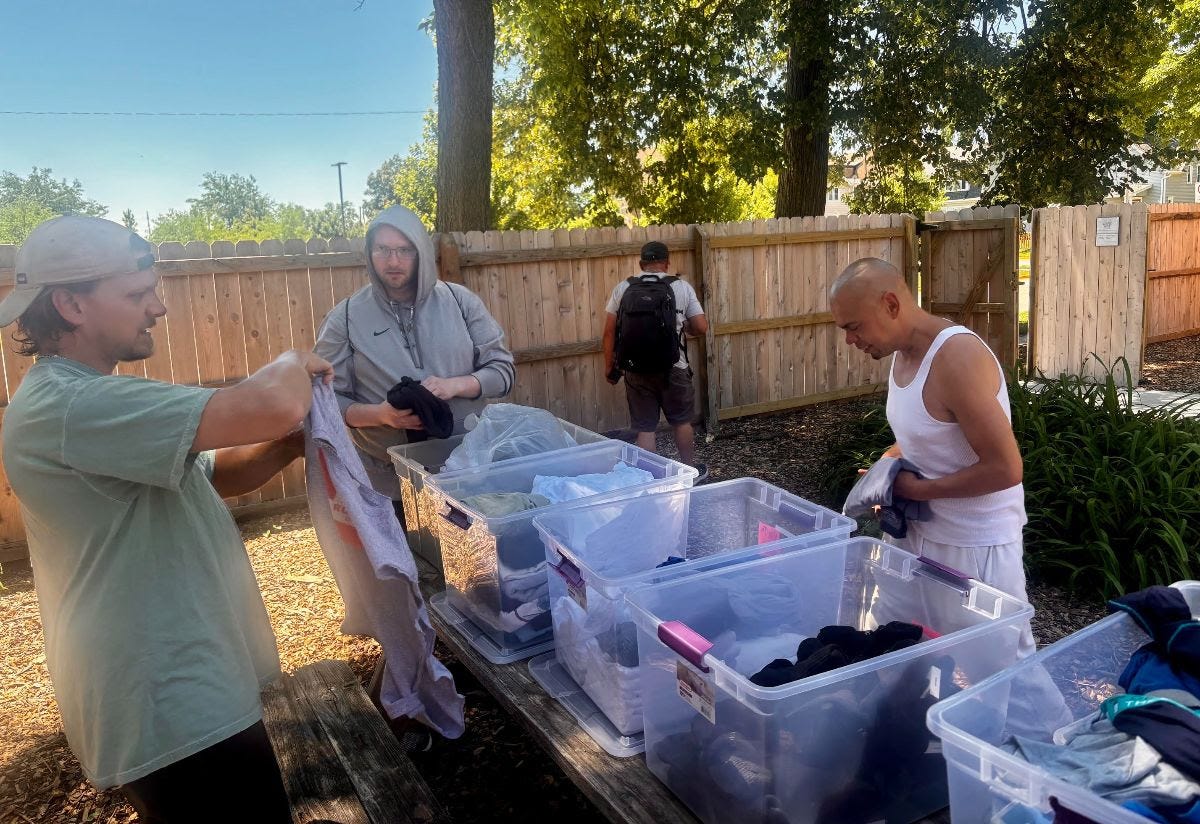
The Romero House in Ames, Iowa, shares a community member’s story in their updated newsletter format. They give a glimpse into the life of the house, the numbers of guests who have been arriving for meals, shelter, or clothing, and they share some photos of their clothing giveaway in June (in milder weather!)
On a beautiful June afternoon, we set up tables in the backyard, inviting guests to select what they needed—t-shirts, shorts, stockings, underwear, sandals, and other essential summer items. Empowering our guests to choose restores a sense of dignity for those who arrive with very little.
Sign up for their mailing list on their website here.
Jessica Reznicek, a Catholic Worker from the Des Moines Community, appeared in the Zinn Education Project—a people’s history of the United States—marking the five-year anniversary since she was charged on June 29, 2021, with terrorism for vandalizing the Dakota Access Pipeline in an environmental protest. Read more on the Zinn Education Project here.
A personal from Malcolm Schluderfritz, former host of Happy Are You Poor podcast:
I’m very inspired by the Catholic Worker, and am friends with Catholic workers in various places around the country, but there are no longer any CW houses in the Denver metro (or, for that matter, in Colorado). If you’re also inspired by the CW vision, it would be great to get in touch! I’d like to form a network of Catholics who support one another in living a Catholic Worker lifestyle (or maybe better said, a Gospel lifestyle!) Maybe there’s a house of hospitality in the future, but even if not, such a network could still serve to carry out the works of mercy and spread the message in the local area. My email address is mschluenderfritz@gmail.com
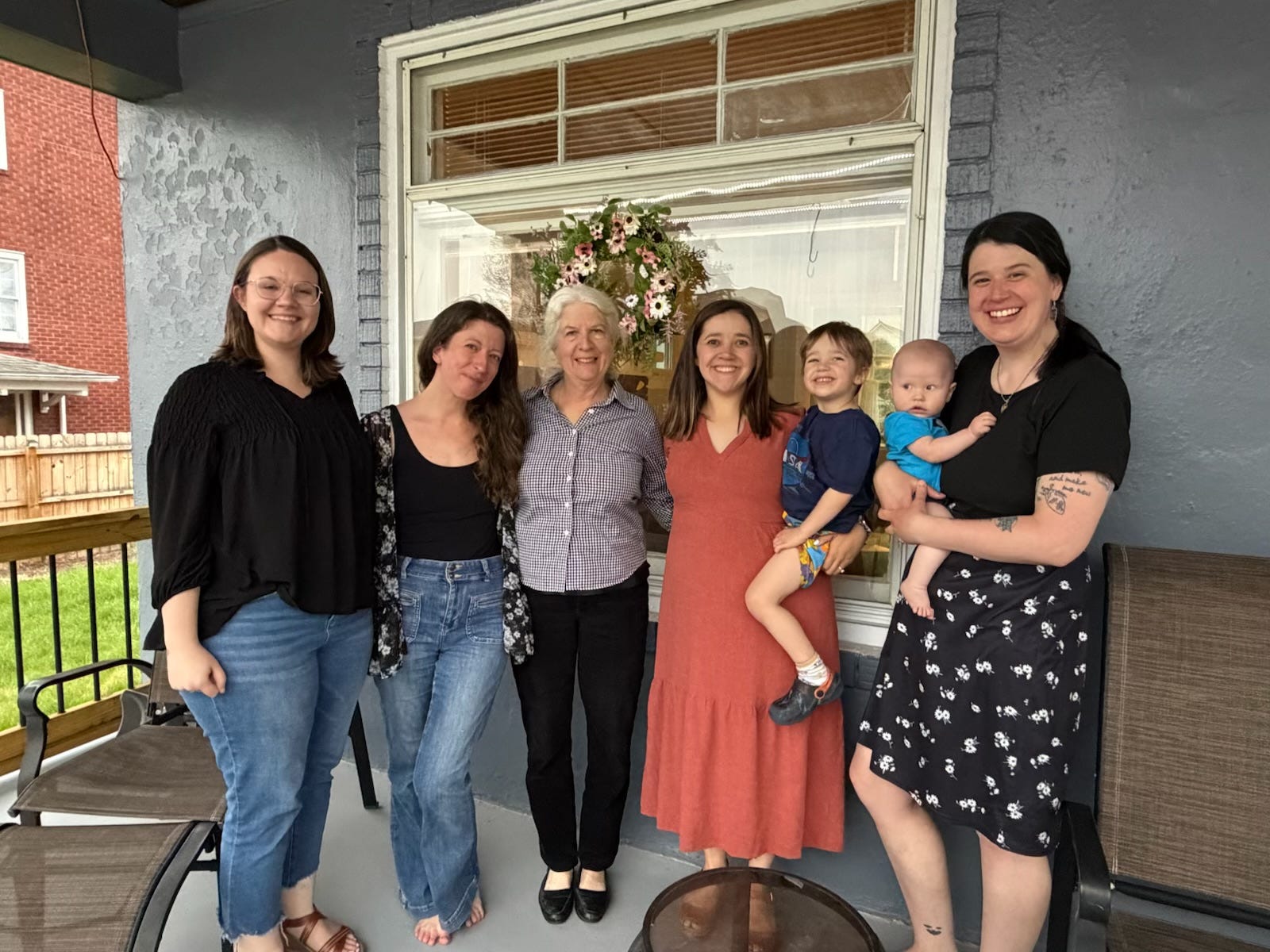
US Catholic reported on the growing movement, “The Dorothea Project", founded by Katie Holler and named for Dorothy Day and Thea Bowman. Celia Viggo Wexler wrote about the group’s action at an ICE facility in January, the date chosen to coincide with the feast of the Conversion of St. Paul:
“The purpose behind it was to pray publicly for the conversion and repentance of ICE agents and the protection of immigrant brothers and sisters,” Holler says. The aim “was to get people in community with each other, get people taking action with each other, and get people saying publicly that these actions don’t align with our faith, and we have church examples of people changing their minds, converting and repenting from violence and from persecution and choosing a better way.
The group began last summer as a letter-writing campaign to bishops. It now encompasses over 1,000 members in chapters throughout the United States, seeking to educate fellow Catholics on Catholic Social Teaching. Martha Hennessy spoke in April at a lecture Holler hosted at Franciscan University of Steubenville. Holler told U.S. Catholic: “We need the lay faithful in action. We need them educated. We need them moving. We need them in solidarity. And then we also need the bishops and the priests.”
Read the full story at US Catholic.
The National Catholic Reporter republished birthday greetings to America from its 1976 bicentennial issue, which included a message from Dorothy Day. Alongside messages from entertainers and a first lady was Day’s simple address: “Repent.”
To read the full story, visit NCR Online.
J. Barry O’Connell writes in Maryland Wire about the work of Father Mike Murphy and Damian O’Doherty, who have run a gun buyback program and removed over 1,000 guns from Southwest Baltimore over the last three years. The program expanded this year, adding the storefront Holy Family Catholic Worker. O’Connell describes the new space:
… a small but vital space where families who’ve lost someone to violence can rest, talk, pray, and get food support. It’s not glamorous. It’s not political. It’s human. This is the kind of work Baltimore respects — the kind that doesn’t need a press conference.
The program is seeking to raise $100,000 by July 30 to continue to fund the gun buyback program, with any excess funds going to support the Archdiocese Grief Ministry, which serves victims of gun violence.
Read more at The Quiet Work That Holds Baltimore Together”.
Williston, Vermont— The Vermont Catholic Worker will host a roundtable discussion answering the question “What is the Catholic Worker?” on July 7 in Williston, Vermont at 6 p.m. All are welcome. Get directions to the event and learn more here.
Sugar Creek, Iowa—The Midwest Catholic Worker Gathering at Sugar Creek, Iowa, will take place the weekend of September 10-13, 2026. Mark your calendar and stay tuned for more information! You do not have to be living in an existing Catholic Worker community to attend.
Frank Cordaro of the Des Moines Catholic Worker is organizing an eight-day delegation to El Salvador in honor of Rev. Bob Cook, a good friend of the Des Moines Catholic Worker. They plan to bring a delegation of between five and 15 participants to visit the communities in El Salvador that Cook developed a relationship with—they plan to “visit rural communities, learn about ongoing water and infrastructure projects, share meals with local families, and experience the culture and beauty of El Salvador.” Cordaro shares that the purpose of the delegation is to “deepen relationships, witness the impact of community-driven projects, and continue the spirit of solidarity that Bob championed throughout his life.” Interested parties should reach out to Frank Cordaro at the email below to learn more: frank.cordaro@gmail.com.
Birmingham, Alabama—Mary’s House Catholic Worker in Birmingham, Alabama, will offer an Advent retreat entitled “Building a New Society in the Shell of the Old” with Brian Terrell and Betsy Keenan, leading reflections on building community and resisting the evils of the day. More information at maryshousebham.com.
by Dorothy Day, from the April 1948 issue of The Catholic Worker
We are against war because it is contrary to the spirit of Jesus Christ, and the only important thing is that we abide in His spirit. It is more important than being American, more important than being respectable, more important than obedience to the State. It is the only thing that matters. We are against Universal Military Training because it is preparation for sin, For the sin that is war. That it is better that the United States be liquidated than that she survive by war.
What would we advocate? Wholesale disloyalty to Americanism. Wholesale refusal to fight. Wholesale withdrawal of labor (a general strike) from all industries that further the war effort. We would urge a mighty band of Catholic Conscientious Objectors who will refuse induction, who will follow Jesus of Nazareth, Prince of Peace, in the way of non-violence, in love for all mankind!
Read the full column here.
Thanks for reading Roundtable! Like, restack or share this post with a friend to spread the word about the Catholic Worker movement
Comments
Nothing yet. Say the first thing.
Sign in to join the conversation.