
Mast Cell Activation Syndrome (MCAS) is a complex immunological disorder characterized by excessive mast cell degranulation, leading to systemic inflammation and multisystem symptoms ranging from allergic reactions to gastrointestinal distress and neurological dysfunction.
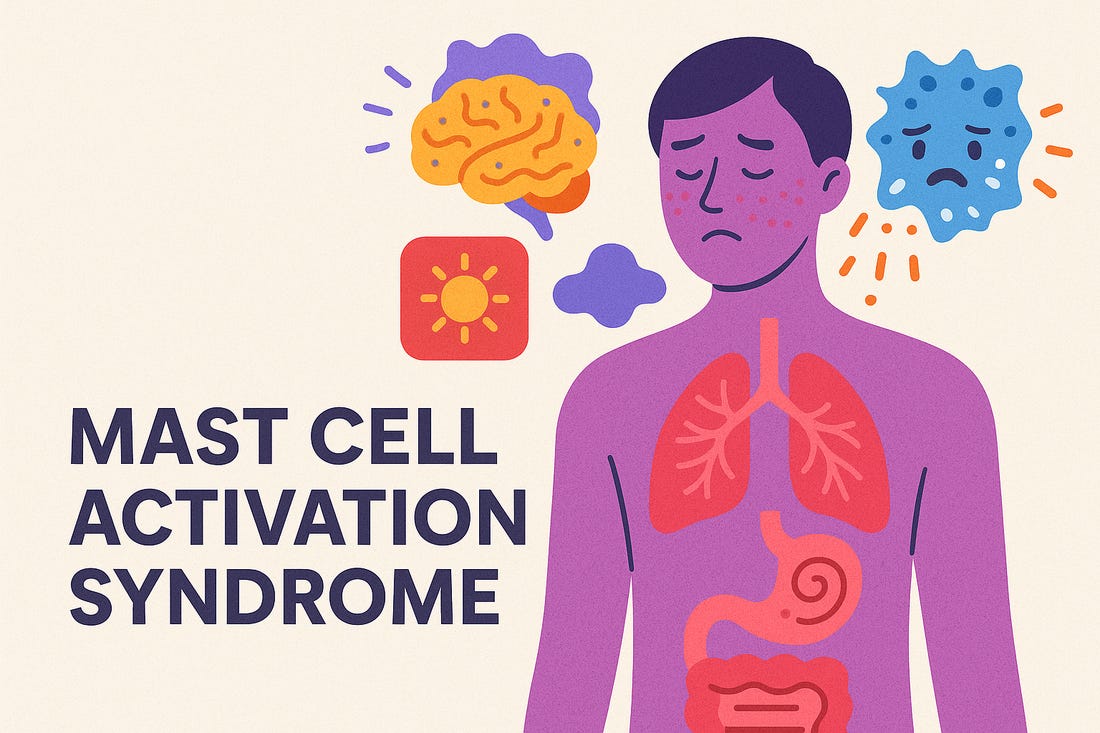
This was once a rare issue, but in the last 4 years MCAS has skyrocketed. For me the most shocking part about this is that it is mostly caused by toxic man made interventions that many, myself included have been trying to educate the public on for years. Once you learn what causes MCAS you can avoid those things. There is also a powerful natural tool that can help mitigate the issue as well.
Mast cells are tiny immune cells that live in your tissues, especially near your skin, airways, gut, and blood vessels. You can think of them as the body’s alarm system: they help detect threats and then release chemical messengers like histamine to trigger an immune defense response, which is useful when you’re fighting infection or dealing with a real danger, but can also cause allergy symptoms when they react too strongly or to the wrong thing.
While mast cells are essential for host defense, dysregulated degranulation contributes to chronic inflammatory diseases, including asthma, eczema, gastrointestinal issues, severe allergies and mastocytosis (a condition marked by excessive mast cell proliferation). Furthermore, mast cell-derived cytokines like TNF-α and IL-6 are implicated in autoimmune disorders and neurodegenerative diseases, suggesting broader systemic effects.
1. Vaccines and Adjuvant Toxicity
One of the most controversial yet scientifically documented triggers of MCAS is vaccine adjuvants, particularly aluminum and other immune-stimulating compounds. These adjuvants can provoke excessive mast cell degranulation, leading to chronic inflammatory responses. Research indicates that aluminum nanoparticles in vaccines persist in tissues and may trigger aberrant immune reactions, including mast cell hyperactivity. Additionally, mRNA vaccine technology has been linked to immune dysregulation, with reports of post-vaccination MCAS-like symptoms such as flushing, hives, and anaphylaxis .
2. Glyphosate and Pesticide Exposure
The herbicide glyphosate, widely used in industrial agriculture, disrupts gut microbiota and impairs detoxification pathways, contributing to mast cell instability. Glyphosate has been shown to increase intestinal permeability (”leaky gut”), a known precursor to MCAS, by damaging tight junctions and promoting systemic inflammation . Furthermore, pesticide residues in food have been correlated with higher incidences of immune-mediated conditions, including MCAS, due to their ability to trigger oxidative stress and histamine release .
3. Electromagnetic Fields (EMFs) and 5G Radiation
Emerging evidence suggests that non-ionizing radiation from Wi-Fi, cell towers, and 5G infrastructure may activate mast cells through oxidative stress and calcium channel disruption. Mast cells are particularly sensitive to EMFs, which can provoke degranulation and the release of pro-inflammatory mediators like histamine and interleukin-6. Chronic EMF exposure has been anecdotally linked to MCAS flare-ups in electrohypersensitive individuals, though this remains understudied in conventional medicine .
4. Pharmaceutical Drugs (Statins, Antibiotics, NSAIDs)
Many commonly prescribed medications destabilize mast cells. Statins, for instance, deplete CoQ10 and disrupt mitochondrial function, exacerbating mast cell reactivity. Antibiotics, by altering gut flora, contribute to dysbiosis, which is strongly associated with MCAS due to the gut-mast cell axis. Nonsteroidal anti-inflammatory drugs (NSAIDs) like ibuprofen can also provoke mast cell degranulation, particularly in individuals with pre-existing sensitivities.
5. Mold and Mycotoxin Exposure
Toxic mold species, such as Stachybotrys and Aspergillus, produce mycotoxins that directly activate mast cells. Chronic mold exposure has been clinically linked to MCAS, with patients exhibiting symptoms like brain fog, fatigue, and skin rashes due to mast cell-derived cytokine storms . Mycotoxins also impair liver detoxification, compounding mast cell dysfunction .
6. Processed Foods and Additives
Artificial food additives, including MSG, artificial dyes, and preservatives, are potent mast cell triggers. These chemicals stimulate histamine release and disrupt immune tolerance, worsening MCAS symptoms . Processed foods high in refined sugars and industrial seed oils further exacerbate inflammation, creating a vicious cycle of mast cell activation.
7. Chronic Stress and Trauma
Psychological stress activates the hypothalamic-pituitary-adrenal (HPA) axis, leading to cortisol dysregulation and increased mast cell reactivity. Trauma, both physical and emotional, has been shown to prime mast cells for hyperactivation, contributing to long-term MCAS . The gut-brain axis plays a critical role here, as stress-induced gut permeability allows mast cell mediators to cross into systemic circulation .
8. Heavy Metal Toxicity (Mercury, Lead, Aluminum)
Heavy metals accumulate in tissues and act as persistent immune triggers. Mercury, commonly found in dental amalgams and contaminated seafood, has been shown to induce mast cell degranulation and autoimmunity. Aluminum, present in cookware, antiperspirants, and vaccines, similarly contributes to mast cell instability through oxidative damage.
9. Viral Infections and Spike Protein Toxicity
Post-viral syndromes, including long COVID, are increasingly recognized as MCAS triggers due to viral particles and spike proteins lingering in tissues, provoking chronic immune activation. The SARS-CoV-2 spike protein, in particular, has been implicated in mast cell hyperactivation through ACE2 receptor interactions.
10. Dental Toxins (Root Canals, Mercury Fillings)
Chronic low-grade infections from root canals and mercury leaching from dental amalgams contribute to systemic inflammation and mast cell activation. These toxins create persistent immune challenges, leading to MCAS in susceptible individuals.
Recovery from MCAS must include avoiding the contributing factors, but this may not be enough to modulate overactive mast cells.
Immune Molecules are low-molecular-weight immune messenger molecules derived from colostrum, egg yolks or leukocytes. They have demonstrated significant potential in modulating mast cell hyperactivity by recalibrating immune responses and reducing inflammatory cascades. This is extremely important because MCAS, which is often overlooked by mainstream medicine, causes so many health issues.
Immune Regulation and Mast Cell Stabilization
Transfer factors contain antigen-specific information that educates the immune system to recognize and respond appropriately to threats without overactivation. Research indicates that these molecules can suppress excessive histamine release by downregulating IgE-mediated pathways, a key driver of MCAS symptoms. Additionally, they enhance regulatory T-cell (Treg) activity, which helps restore immune tolerance and prevent mast cell hyperreactivity .Reduction of Inflammatory Cytokines
MCAS is often associated with elevated pro-inflammatory cytokines such as IL-6, TNF-α, and IL-1β. Transfer factors have been shown to modulate cytokine production, shifting the immune response from a Th2-dominant (pro-allergic) state toward a balanced Th1/Th2 response . This rebalancing is critical in MCAS, where chronic Th2 skewing exacerbates hypersensitivity reactions.Support for Gut-Immune Axis
A significant proportion of MCAS cases are linked to intestinal permeability (leaky gut) and dysbiosis, which further aggravate mast cell activation. Transfer factors derived from colostrum contain immunoglobulins and growth factors that repair gut lining integrity, reducing systemic antigenic load and subsequent mast cell triggers. Studies also highlight their role in promoting beneficial gut microbiota, which indirectly stabilizes mast cells through microbial-immune crosstalk.
The first step in diagnosing MCAS involves recognizing its diverse and often overlapping symptoms, which may include chronic fatigue, skin rashes (e.g., urticaria, flushing), gastrointestinal disturbances (e.g., bloating, diarrhea), neurological symptoms (e.g., brain fog, migraines), and cardiovascular instability (e.g., hypotension, tachycardia) . These symptoms often fluctuate and may be triggered by environmental factors such as foods, chemicals, or stress. A detailed patient history is crucial, as MCAS symptoms frequently mimic other conditions like autoimmune disorders, histamine intolerance, or chronic infections.
While conventional medicine often overlooks MCAS, several biomarkers can support a diagnosis when properly interpreted:
Serum Tryptase Levels – A transient elevation in tryptase (≥20% above baseline plus 2 ng/mL) during a symptomatic episode may indicate mast cell activation [S-8]. However, many MCAS patients have normal tryptase levels, making this test insufficient alone .
24-Hour Urine Methylhistamine and Prostaglandin D2 (PGD2) – Elevated levels of these mediators are more reliable indicators of mast cell activation than serum tryptase.
Plasma Heparin and Chromogranin A – These markers, though less commonly used, can further corroborate MCAS when other tests are inconclusive [S-3].
Conclusion: If you have a “mystery” health issue that doctors can not explain, it could be caused by MCAS. You can ask your doctor to run tests. You will also want to remove exposure to the long list of contributors.
If you want to learn more about how to use the Immune Molecules, then please drop me an e-mail cathey@catheypainter.com or text me (213) 999-9008 and I will be happy to share more information.
DISCLAIMER: The information in this article is not meant to treat, cure or diagnose. Always consult with your healthcare provider before adding a new protocol.
https://my.clevelandclinic.org/health/diseases/mast-cell-activation-syndrome
https://tmsforacure.org/signs-symptoms-triggers/symptoms-and-triggers-of-mast-cell-activation/
https://www.mastcellaction.org/managing-triggers
https://www.histamined.com/post/heavy-metals-mast-cell-activation-and-histamine-intolerance
No posts
Comments
Nothing yet. Say the first thing.
Sign in to join the conversation.