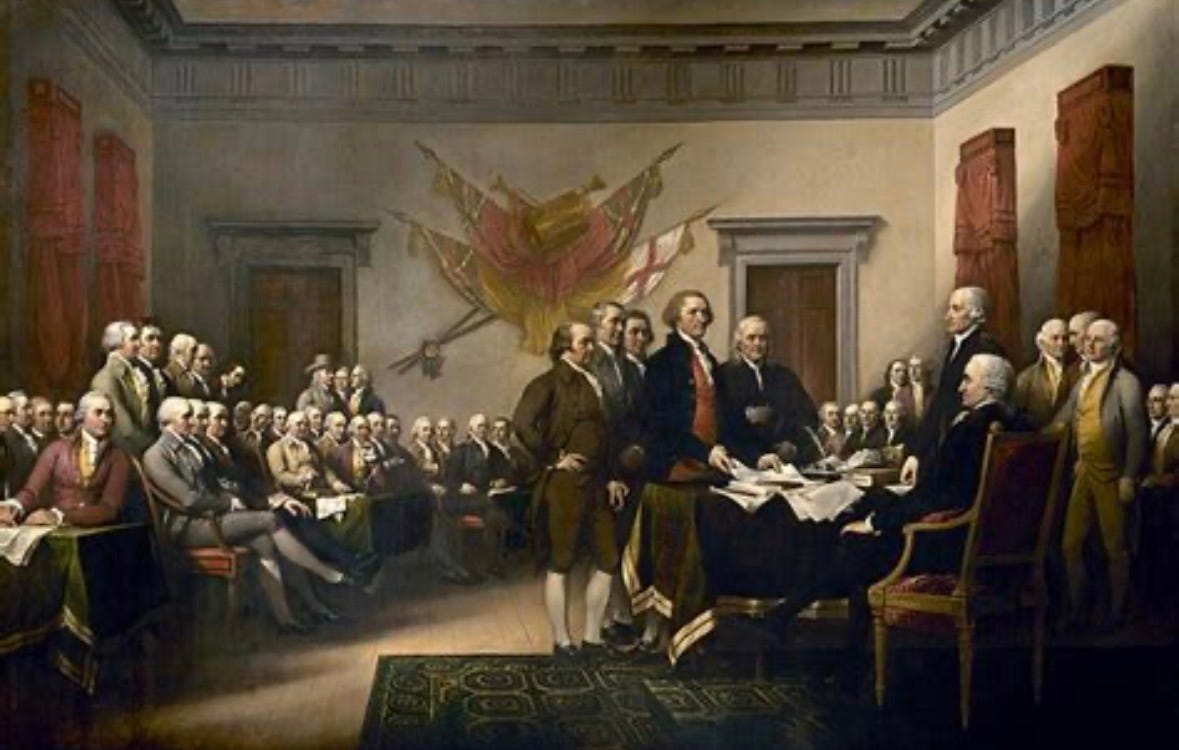
Exactly two and a half centuries ago today (August 2), delegates to the Continental Congress began the official signing of the Declaration of Independence, which they had first approved July 4.
Some of the signers died in the war, some of them lost family members, and some of them lost property or significant amounts of money. All of them committed their lives, their fortunes, and their sacred honor to the cause.
Benjamin Rush of Pennsylvania remembered the atmosphere that August 2, 1776, in Independence Hall was full of a “pensive and awful silence [that] pervaded the house as we were called up, one after another, to the table of the President of Congress,” where they signed “what was believed by many at that time to be our own death warrants.” Harrison, a heavy-set man, joked to thin Elbridge Gerry that it would take a much shorter time for him (Harrison) to die by hanging. Defying Great Britain could have deadly consequences.
[National Archives] On August 2nd John Hancock, the President of the Congress, signed the engrossed copy with a bold signature. The other delegates, following custom, signed beginning at the right with the signatures arranged by states from northernmost New Hampshire to southernmost Georgia. Although all delegates were not present on August 2nd, 56 delegates eventually signed the document. Late signers were Elbridge Gerry, Oliver Wolcott, Lewis Morris, Thomas McKean, and Matthew Thornton, who was unable to place his signature with the other New Hampshire delegates due to a lack of space. Some delegates, including Robert R. Livingston of New York, a member of the drafting committee, never signed the Declaration.
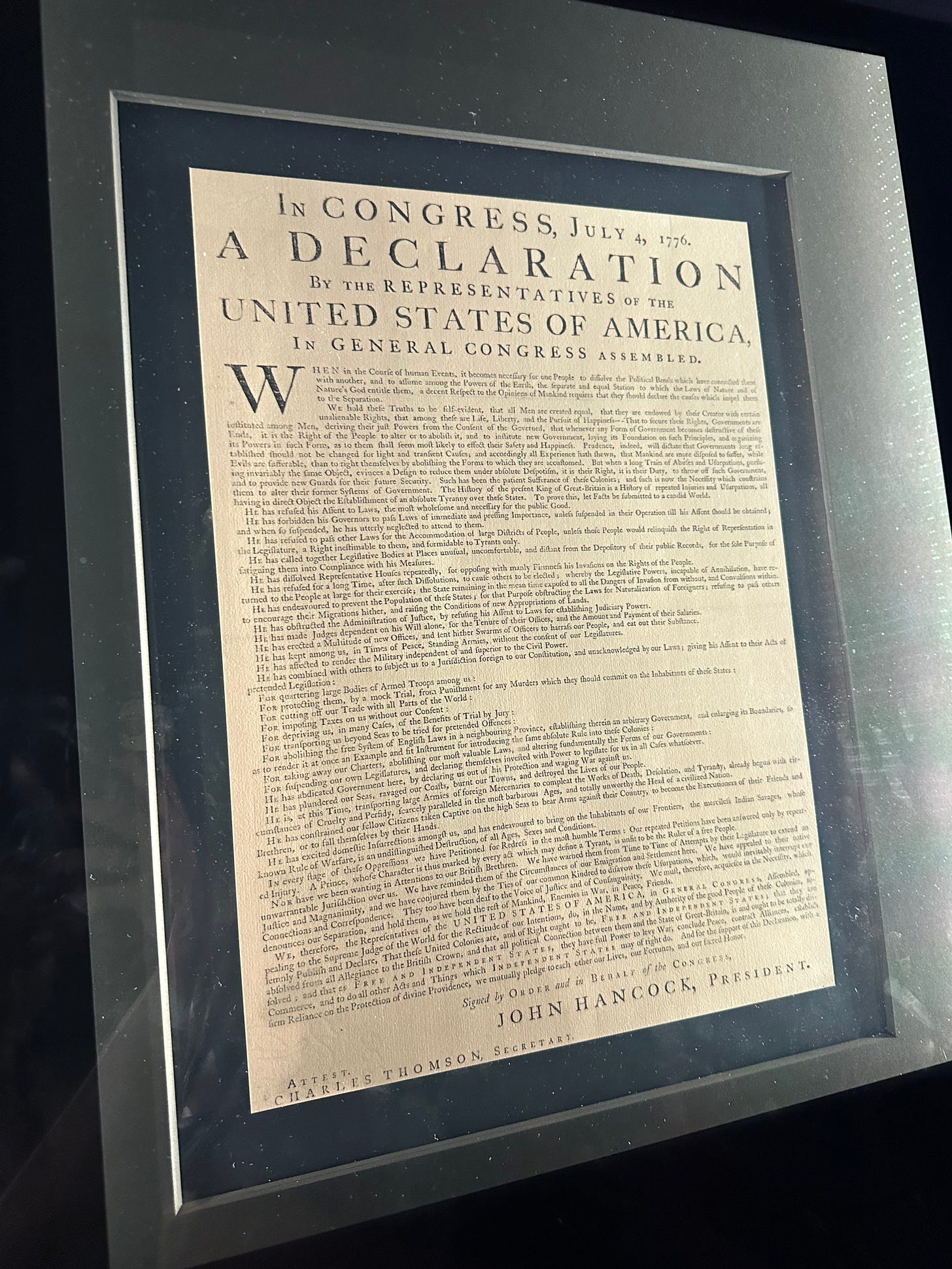
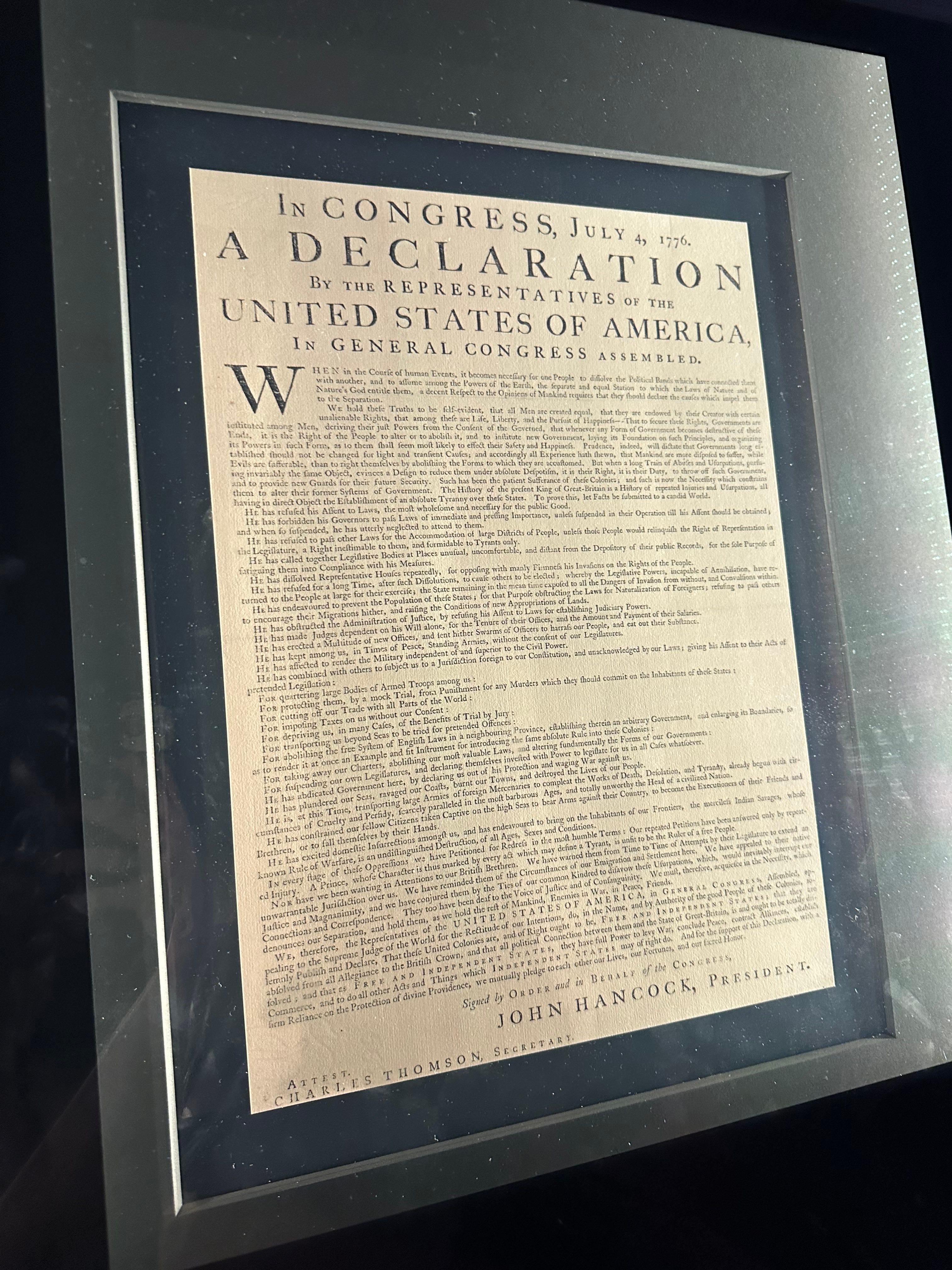
One of the original ‘Dunlap broadsides,’ or the first official printing of the Declaration. I took the photo at Independence Hall.
We salute all the men who voted for American independence and who signed the Declaration in 1776. And we must vow to carry on their legacy of opposing tyranny and injustice.
Inside Independence Hall, where the Declaration was approved and signed


Comments
Nothing yet. Say the first thing.
Sign in to join the conversation.