
The Great Lakes undergo a visually impressive transformation through the winter months. Because the five lakes vary in size, depth, and orientation, they freeze very differently. The relatively shallow Lake Erie can come close to freezing over despite being the southernmost lake, while Lake Ontario, deep and also southern, typically has the least ice.
Lake Michigan usually reaches its maximum ice cover in mid to late February. Historically, that peak has ranged between 25 and 40 percent. In recent years, overall ice coverage has trended downward, but following this winter’s sustained cold weather, Lake Michigan rebounded from a deficient ice season to near-normal conditions.
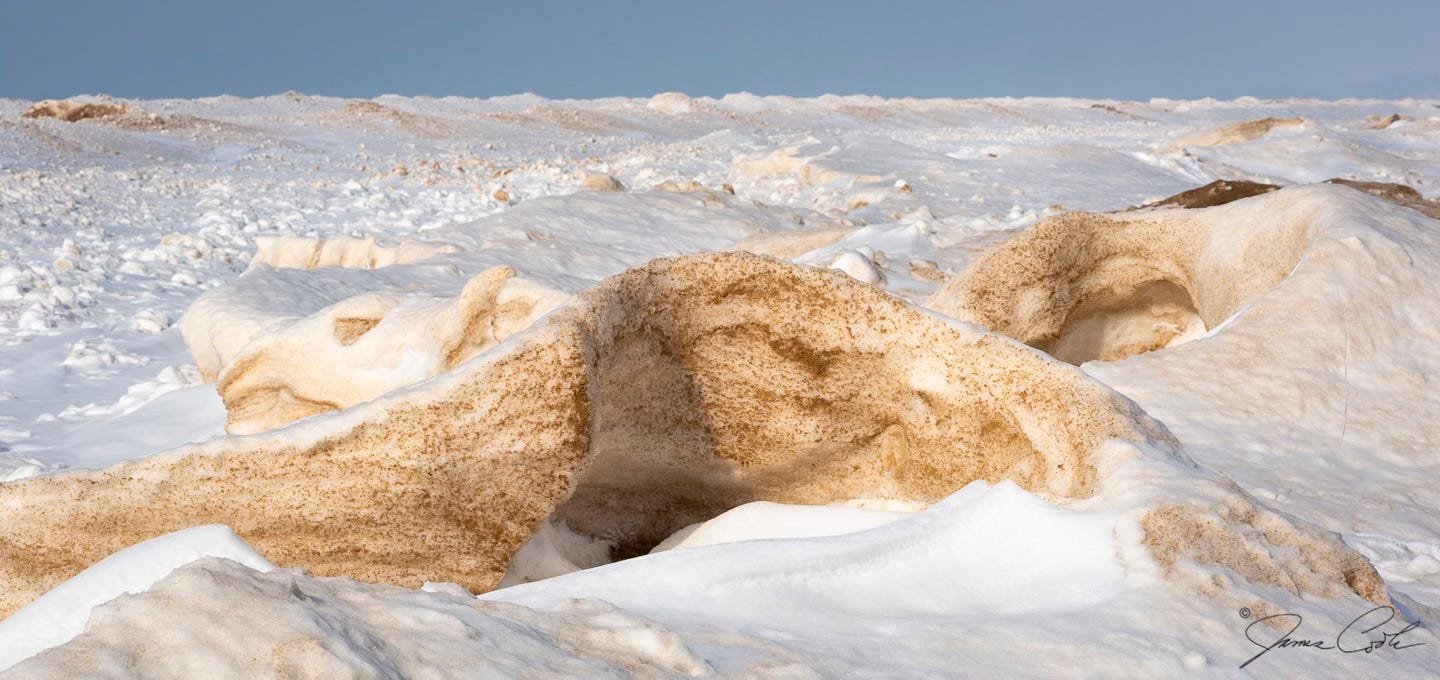
Prevailing winter winds over Lake Michigan are often from the west–northwest. These winds generate waves that mix warmer deep water upward, slowing ice formation and breaking ice that has already formed. Wind and waves also push broken ice toward the leeward shore. Much of the lake’s ice forms along the Wisconsin shoreline, then piles up against the Michigan coast.
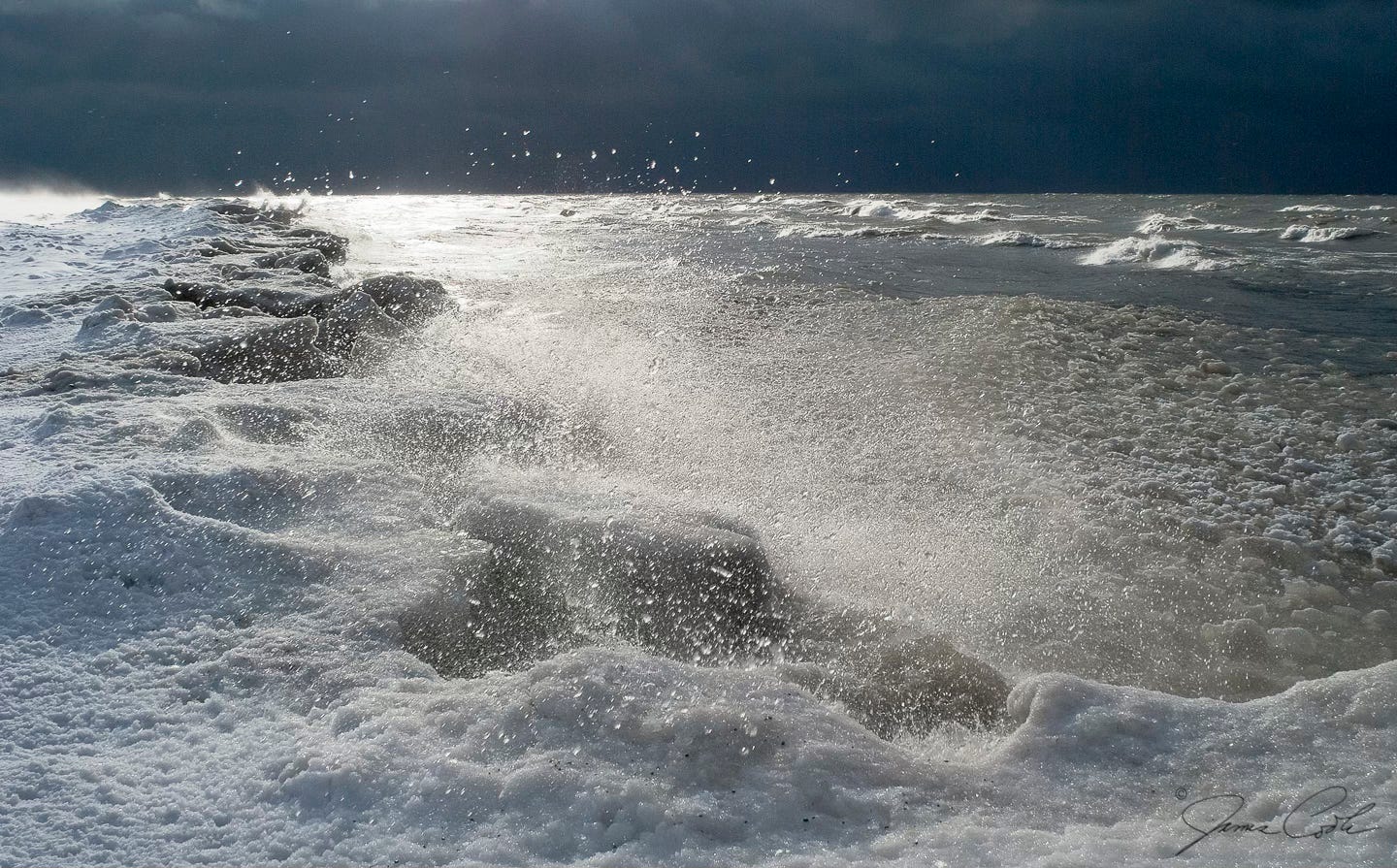
The Michigan ice shelf becomes a record of the winter itself, reflecting the severity of storms, temperatures, and prevailing winds. Calm but bitterly cold weather forms broad fields of rough ice, often blanketed with snow. At other times, wind and waves combine to create chaotic piles of ice, some of them immense.
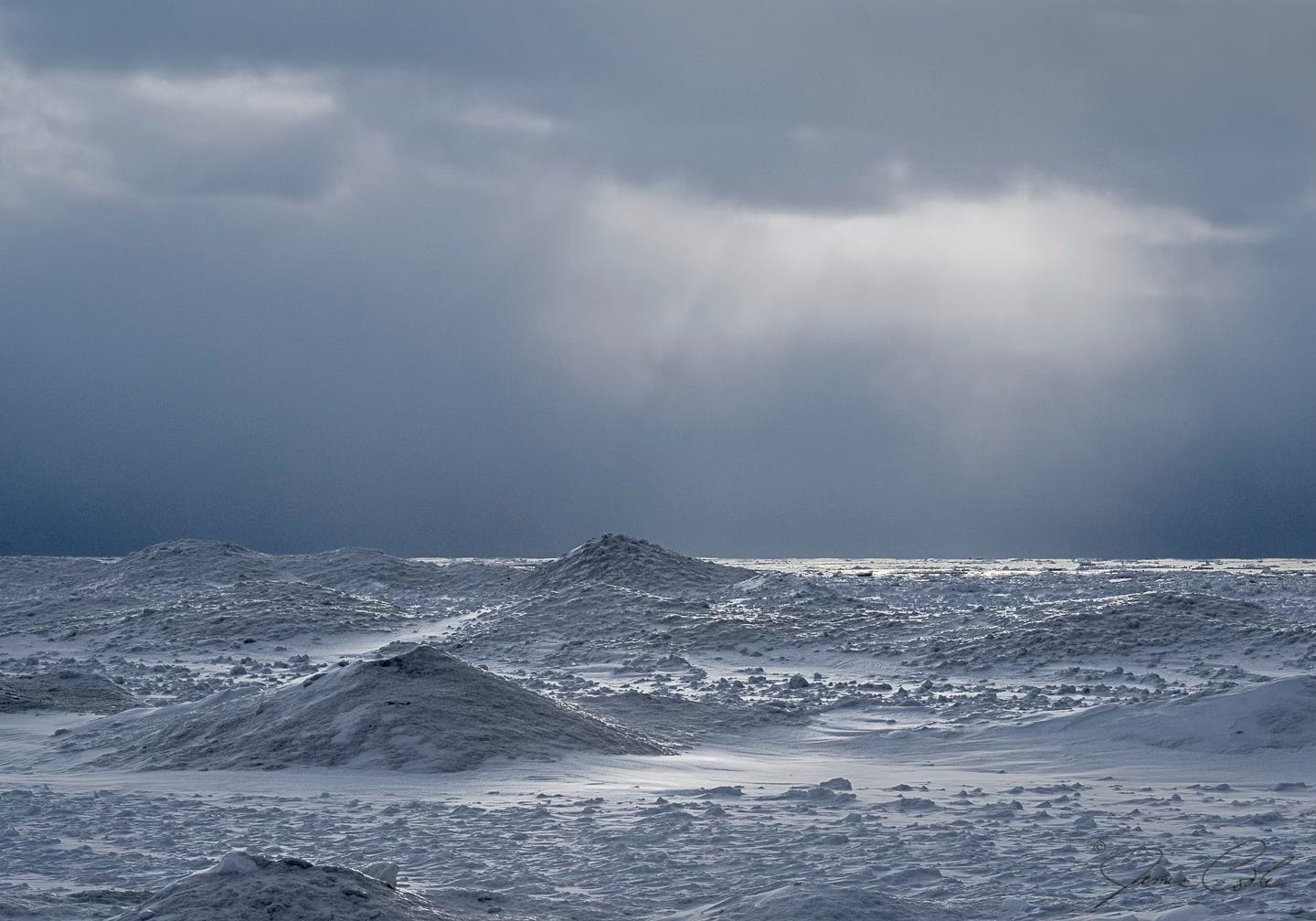
In 2008, sustained storms and strong winds created towering ice ridges. Between storms, continued cold weather froze loose chunks of ice together into a rough plain of ice and snow, before the next storm built up another substantial ridge farther out onto the lake.
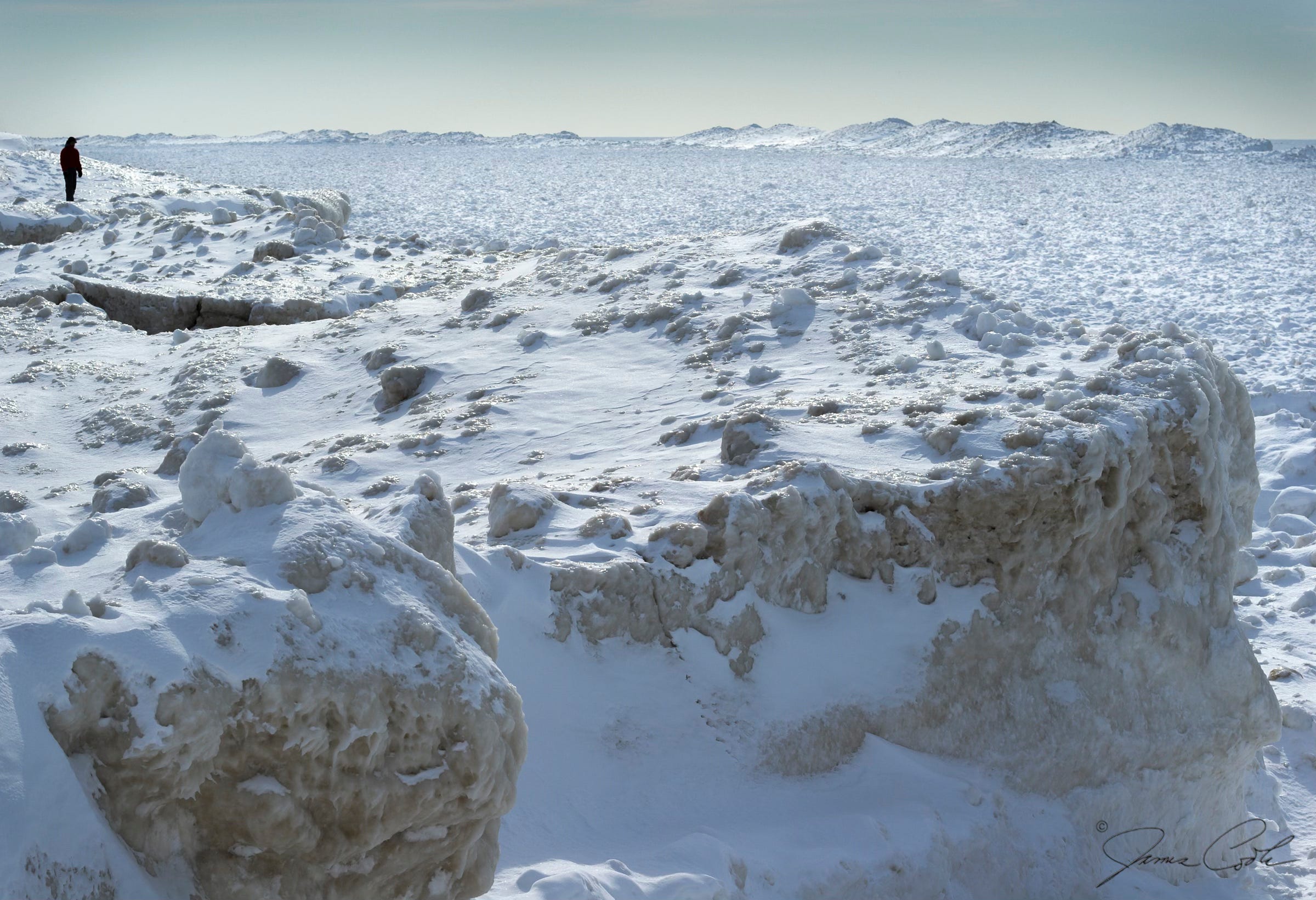
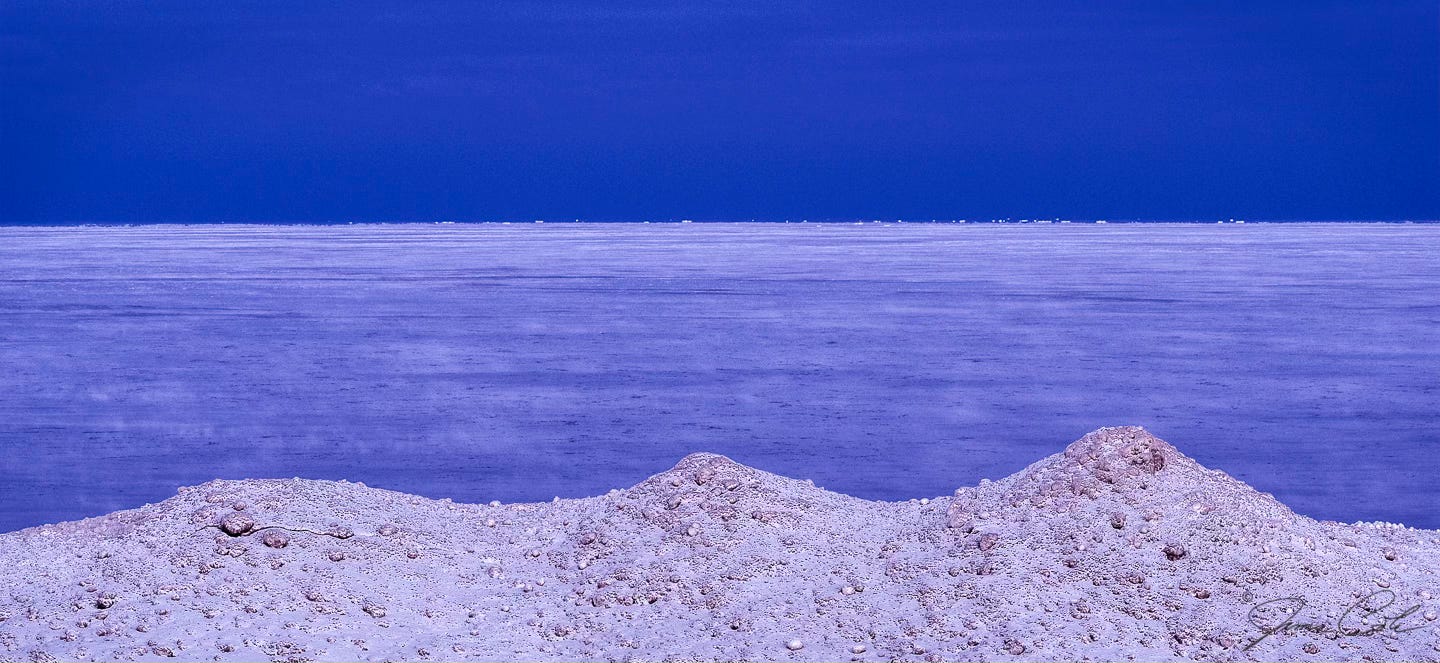
It takes a prolonged stretch of warming weather to erase the ice of a cold winter. With the help of wind, waves, and sunlight, the cycle slowly reverses, breaking up the ice shelf piece by piece.
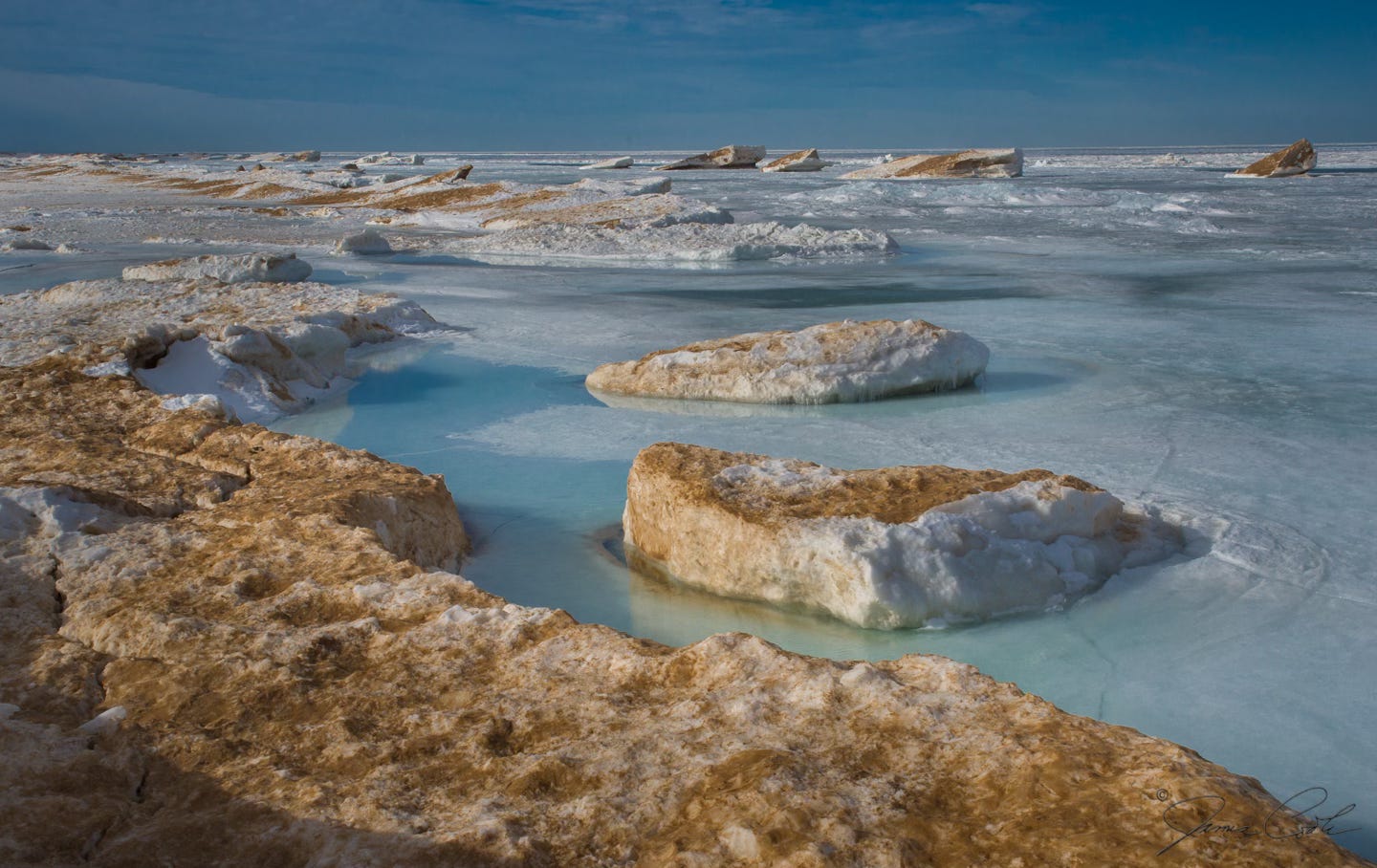
Every hour of every season, the lake and the weather remain entwined in a restless exchange. The patterns are predictable; the results never are. The sculpting goes on.
I get too much email. That’s why, from the start, I promised that I wouldn’t fill your inbox with email, even as I continue to post new pieces to Catching Shadows. Recently I added a new section, Encounters, where I’m posting pieces on the people I’ve photographed. Many more are coming. I hope you’ll take a look.
Comments
Nothing yet. Say the first thing.
Sign in to join the conversation.