
Around 1800, the Ojibwe (Chippewa) controlled nearly all of present-day Michigan, northern Wisconsin, and Minnesota. They were a dominant presence in the upper Great Lakes and part of the long-standing alliance known as the Council of Three Fires with the Odawa and Potawatomi.
As American settlement expanded westward, Ojibwe leaders pursued their own diplomatic strategies to protect their homelands. During the War of 1812, many bands calculated that an alliance with the British offered the best chance of checking American expansion. It was a strategic decision made on their own terms, not simply a choice of sides. Chiefs were sometimes presented with red military coats as diplomatic gifts, visible signs of alliance and mutual obligation. They became prized possessions, and the Hudson Bay Company carried on the gifting of redcoats to chiefs who had been friendly and of service to them.
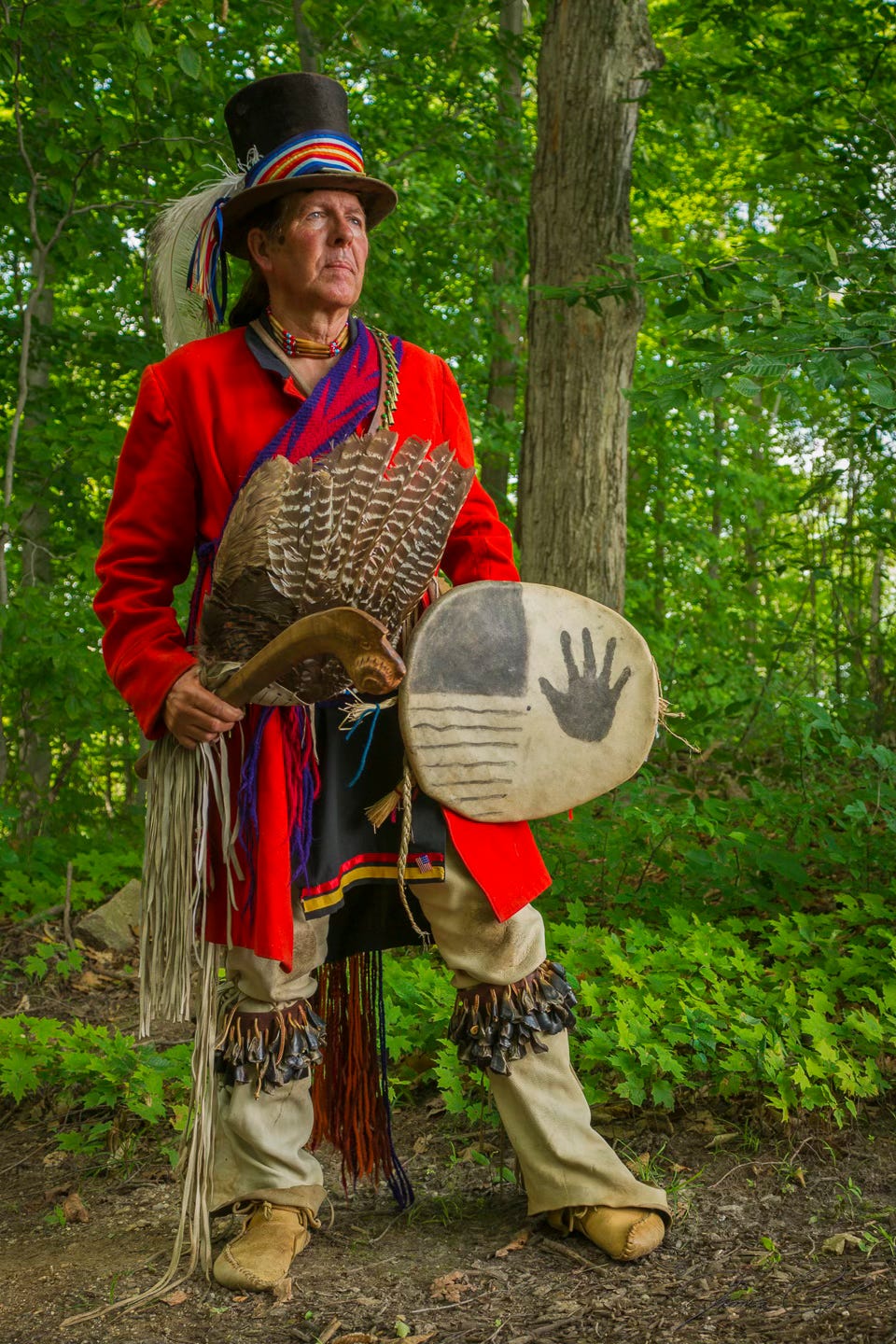
Among the leaders navigating those years was Chief Buffalo of the La Pointe Band on Lake Superior. Born around 1780, he spent decades arguing that his people had never agreed to abandon their Lake Superior homelands. In 1852, at nearly ninety years old, he led a delegation by canoe to Washington, D.C. to directly confront removal orders. It was a journey of extraordinary determination that helped ensure many Ojibwe communities remained in the region.
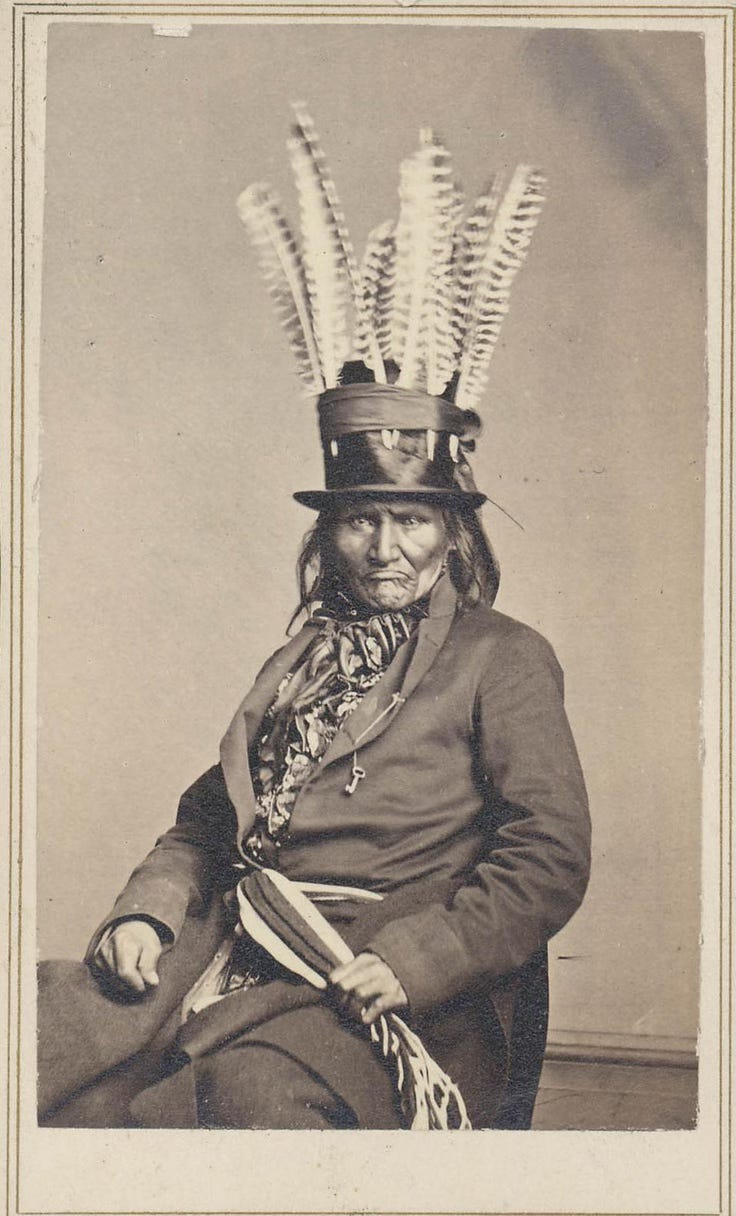
The nineteenth century brought land cessions and reservations, but Ojibwe communities endured in Michigan, Wisconsin, and Minnesota. Treaty rights to hunt, fish, and gather continued and were reaffirmed in federal courts in the twentieth century.
The redcoat traces to that treaty era in the upper Great Lakes. The Ojibwe communities connected to it remain there today.
Comments
Nothing yet. Say the first thing.
Sign in to join the conversation.