
When traveling through Norway, you don’t just happen to stumble upon the village of Vik i Sogn. It’s well off the beaten path. So it was with some effort that we met Ørjan Tingvik. We didn’t know we were looking for him but as it turned out, he was just what we were looking for.
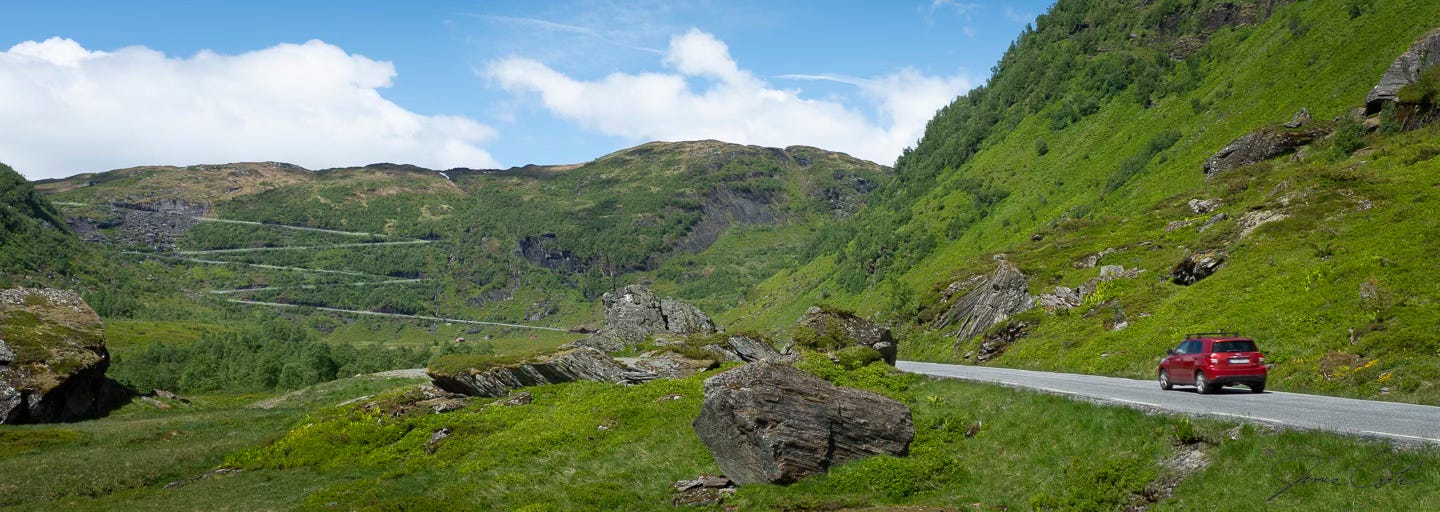
On the previous day, we had driven the only road into Vik i Sogn, high into the Stølsheimen mountains and wove our way up steep, winding hairpins to Vikafjellet pass; one of the most dramatic in Norway.
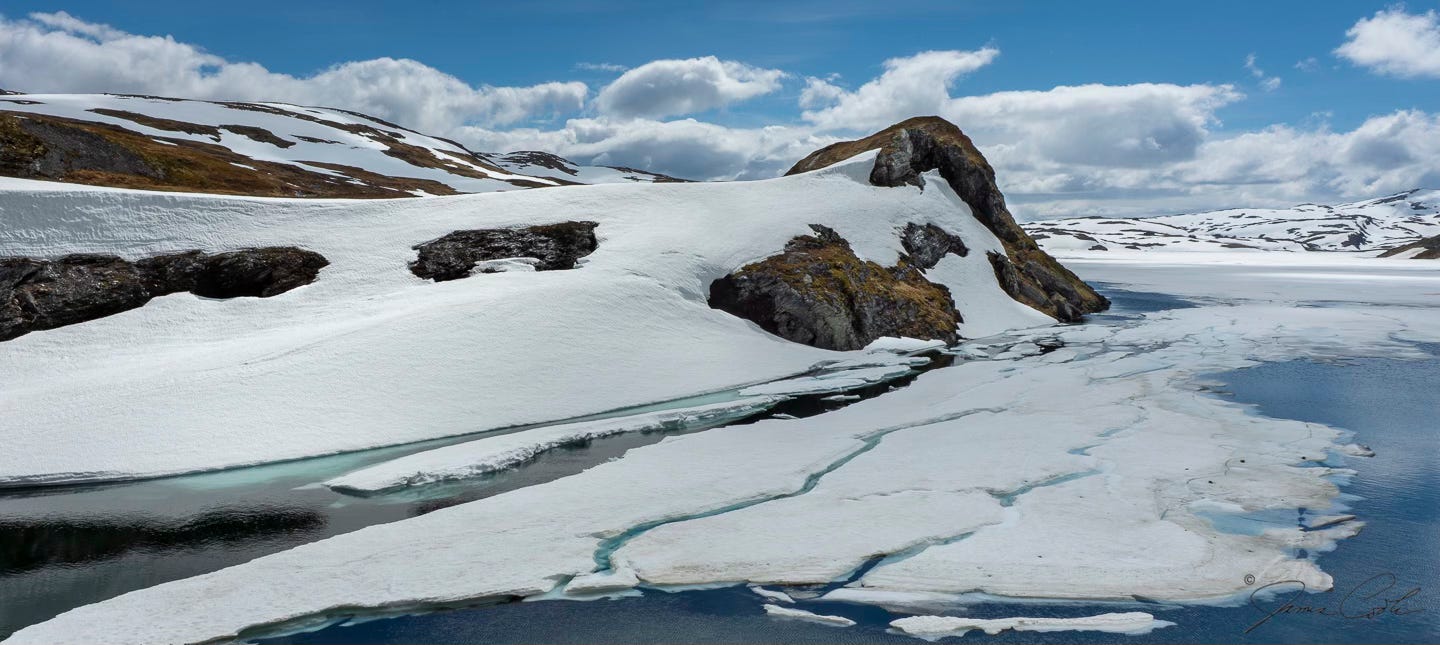
It was mid-June, but the summit of Vikafjellet Pass was indifferent. At the top of the pass, a vast, silent plateau of fractured ice and snowfields stretched before us to every horizon.
Then we began the long, visually dramatic descent into Vik i Sogn, which sits on the edge of the Sognefjord, Norway’s longest and deepest fjord.
The village of Vik i Sogn was our intentional destination in order to see the medieval Hopperstad Stave Church. Built around 1130, it is one of the best preserved of 28 surviving stave churches of the thousand or more that once existed in Norway.
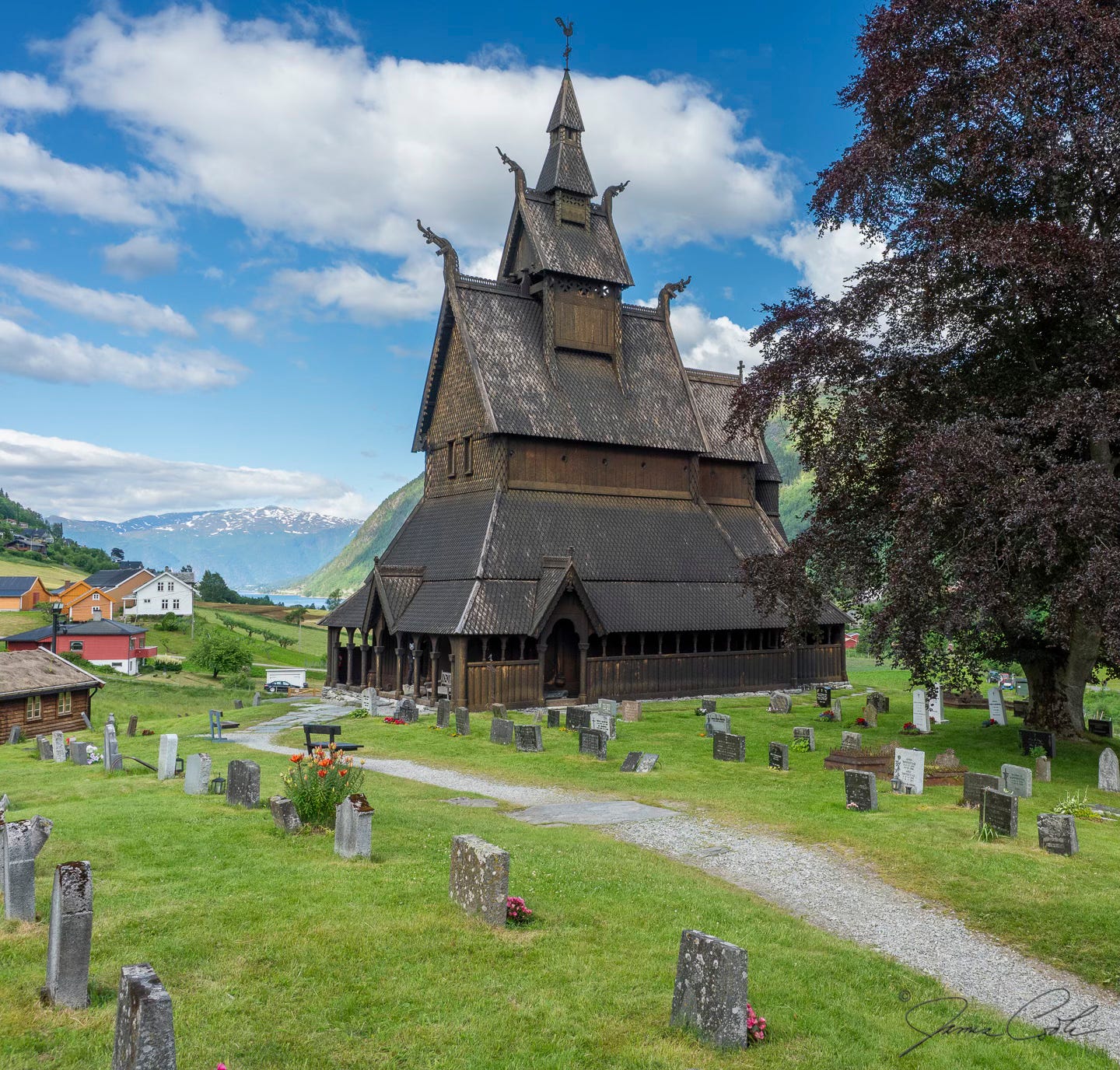
A stave church takes its name from its structure: vertical load-bearing posts, or staves, form the framework, with upright planks fitted tightly between them. Built almost entirely of timber, typically pine or fir, these churches represent some of the most sophisticated wooden architecture of medieval Europe, assembled with precision joinery rather than nails.
At Hopperstad, the parking area was empty. For a moment we wondered if we’d arrived too late, but we discovered a young man sitting in the ticket house. He sold us two tickets, we walked in, and he followed.
Our guide, though we hadn’t expected one, began to share the church’s story in remarkable detail. He spoke of its origins as a Catholic church, and then its transition, along with Norway itself, into Lutheranism. At the entrance, he traced the carved dragons and intertwining vines, symbols of a culture in transition, where Norse mythology and Christianity overlapped rather than replaced one another.
As our eyes adjusted in the dim, unlit interior, he led us from one detail to the next: the roof structure with ribs resembling the inverted hull of a Viking longship; the doors and their iron locks; the rare, intact chancel screen - unique among surviving stave churches; the columns, the painted surfaces demonstrating the accumulated centuries.
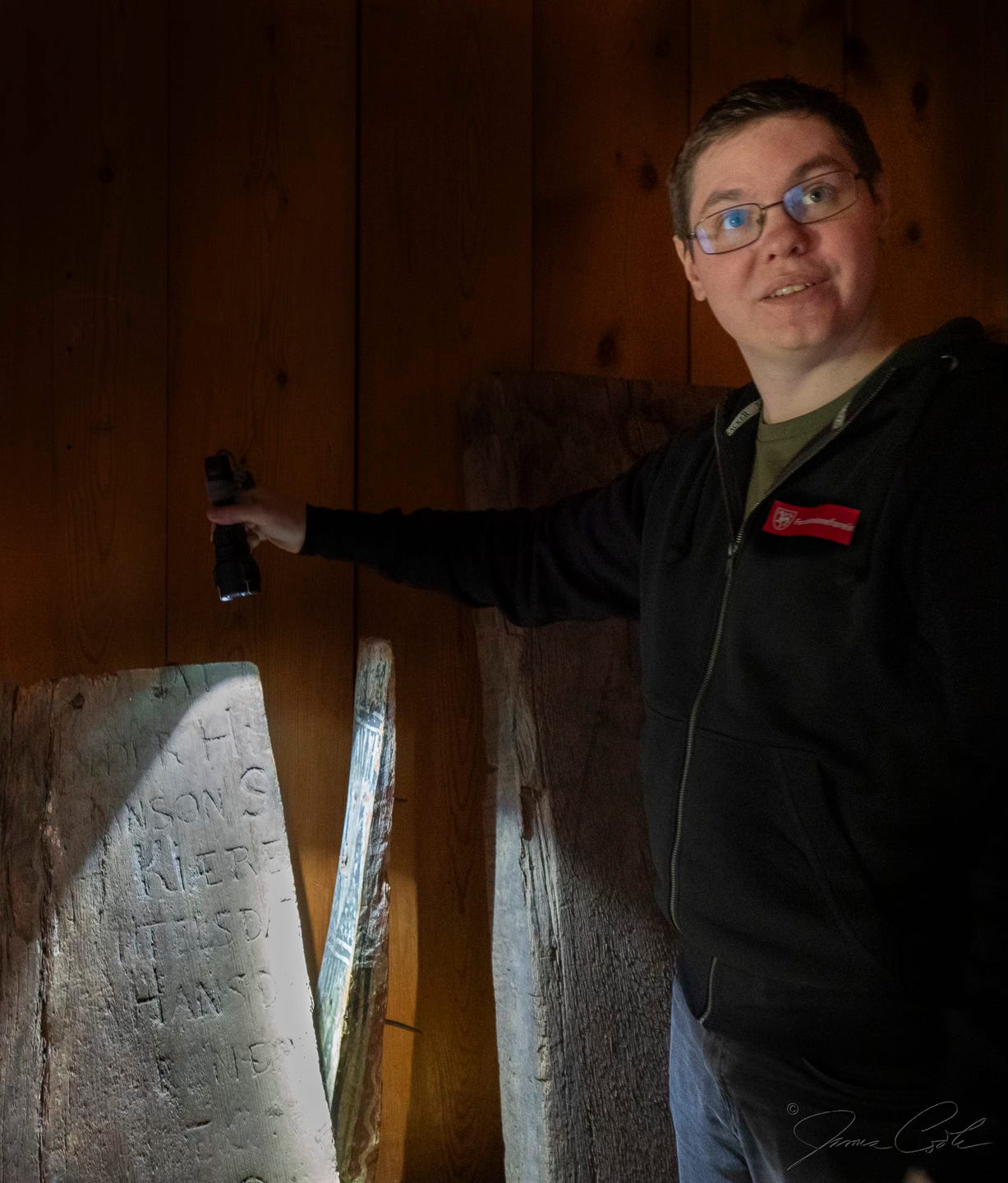
He shared with us that until 1805, it was common practice across Norway to bury the privileged beneath church floors. The ban wasn’t a matter of reverence, but practicality, since overcrowding led to shallow graves, and shallow graves meant stench, damp and the risk of infection. Perhaps because their status was already evident by their position beneath the altar rather than in the churchyard, most received no grand markers. The few floor boards that survive represent humble grave markers.
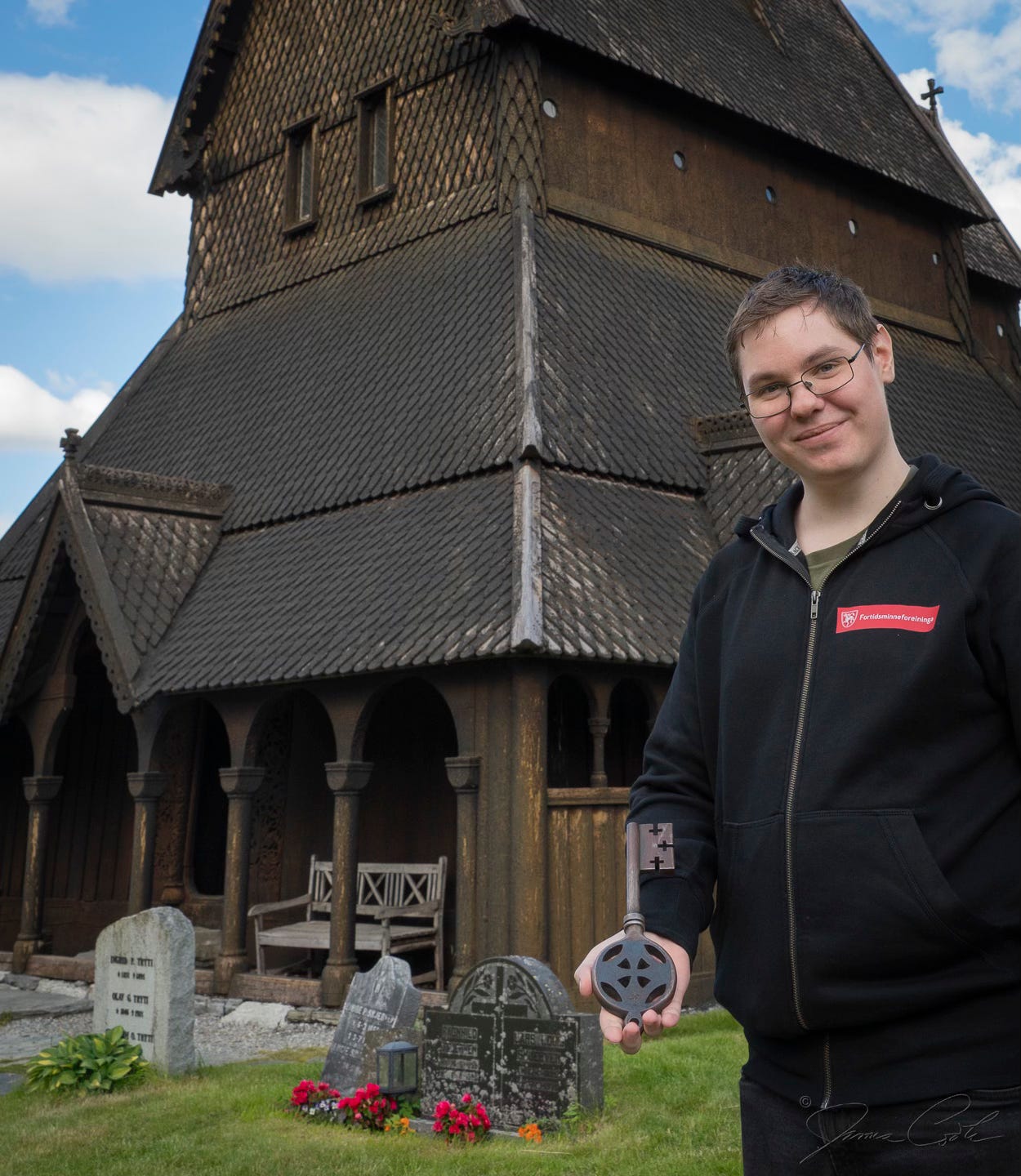
Undoubtedly, by now, you’ve guessed that our guide was Ørjan Tingvik, the church’s caretaker.
When Norway made fixed surnames mandatory in 1923, families were required to abandon traditional patronymic surnames ending in “sson” or “sdatter”. The majority of Norwegians chose place names such as farms, bays, or towns. Vik is a common place name in Norway, referring to a bay or inlet. Ting refers to a meeting place. Ørjan’s family surname, Tingvik, is from a small bay in the southwest of Norway, possibly an important meeting place.
Clearly, he was very proud of the church and his encyclopedic knowledge of it and its history. In fact, he proved to be well-versed in far more. Our discussions transitioned easily from the purpose of our visit to broader histories, to philosophies, to the universe, and to the essence of life itself.
He would make a marvelous dinner companion.
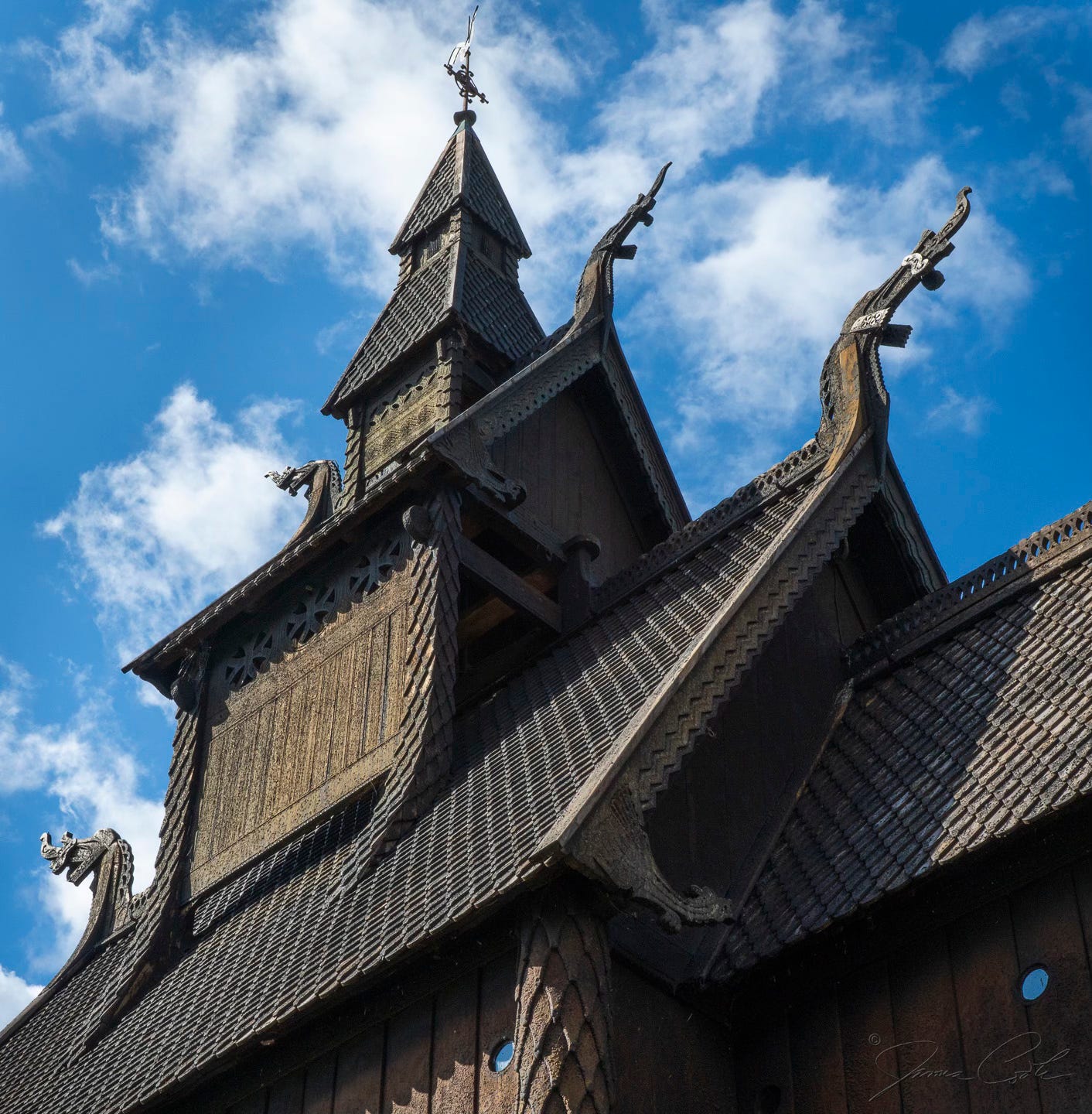
Dragon heads at the roof peaks, wooden shingles reminiscent of scales, and other mythological symbolism represent the cultural blending of Norse beliefs and Christianity from a time when Norwegians weren’t fully prepared to abandon their old gods.
Even the materials carry continuity: the same pine tar once used by Vikings to seal their longships was applied here as well, preserving the walls and roof of the church against centuries of weather.
We hadn’t come to Vik i Sogn by chance. We intended to get there. We thought it was to see Hopperstad Stave Church. But standing among the gravestones in the churchyard, watching its caretaker lock the door with that centuries-old key, it was clear our journey had led us not just to a place, but to this person who brought it to life for us. Ørjan Tingvik was an intricate part of our visit, bringing history to life for us that day.
That’s the part you just can’t find on a map.
Comments
Nothing yet. Say the first thing.
Sign in to join the conversation.