
It wasn’t typical for me to pursue a photo shoot and to deliberately show up with no cameras. But that’s exactly how I approached Tesuque, one of the Eight Northern Pueblos in New Mexico. Indeed, signs declaring “no cameras or photographs” greeted me when I reached the entry to the pueblo. The pueblo is known for prohibiting photography and restricting public access.
In spite of being only about ten miles from Santa Fe and surrounded by non-Native communities for centuries, Tesuque is notable for having preserved its traditions more intact than many neighboring communities.
I proceeded though. A Denver friend had provided me with an introduction. Her twin sister was married to Gil Vigil, the governor of Tesuque Pueblo. She had advised me to approach slowly.
The pueblo is small so it was easy enough to find my way, knock on a door and introduce myself, although I was expected. I was welcomed and invited in. After a bit of friendly conversation I explained to Gil about the documentary I had been working on for several years. I had several prints with me so that I could show him how my subjects were being portrayed. He was interested and said that he would take it up with the tribal council.
My next visit was again with no cameras in hand and solely consisting of discussions with Gil. The council was somewhat agreeable, but needed assurances about how I would handle the images if I were given permission to photograph a sacred dance. It was then that I worked out a release that would give me permission to use such photos for artistic, historic, or educational use, but never for any commercial applications. They also insisted on being allowed to review and approve of the results before anything was printed or displayed.
Just about two years after my initial visit, my cameras came along. I had been given permission to photograph two young people performing the Buffalo Dance.
Months later I returned to show the results and get permission to use my chosen image. I had one image that I loved, in which the dancers were looking joyous, and the light was playing on a hill behind them. Gil was horrified. The dance is sacred, and smiles were not fitting. It was with some degree of pain that I destroyed the original right there. But I needed to establish trust. We found an image we agreed on, as shown in a previous post.
During that previous visit, Gil had agreed to let me to photograph him.
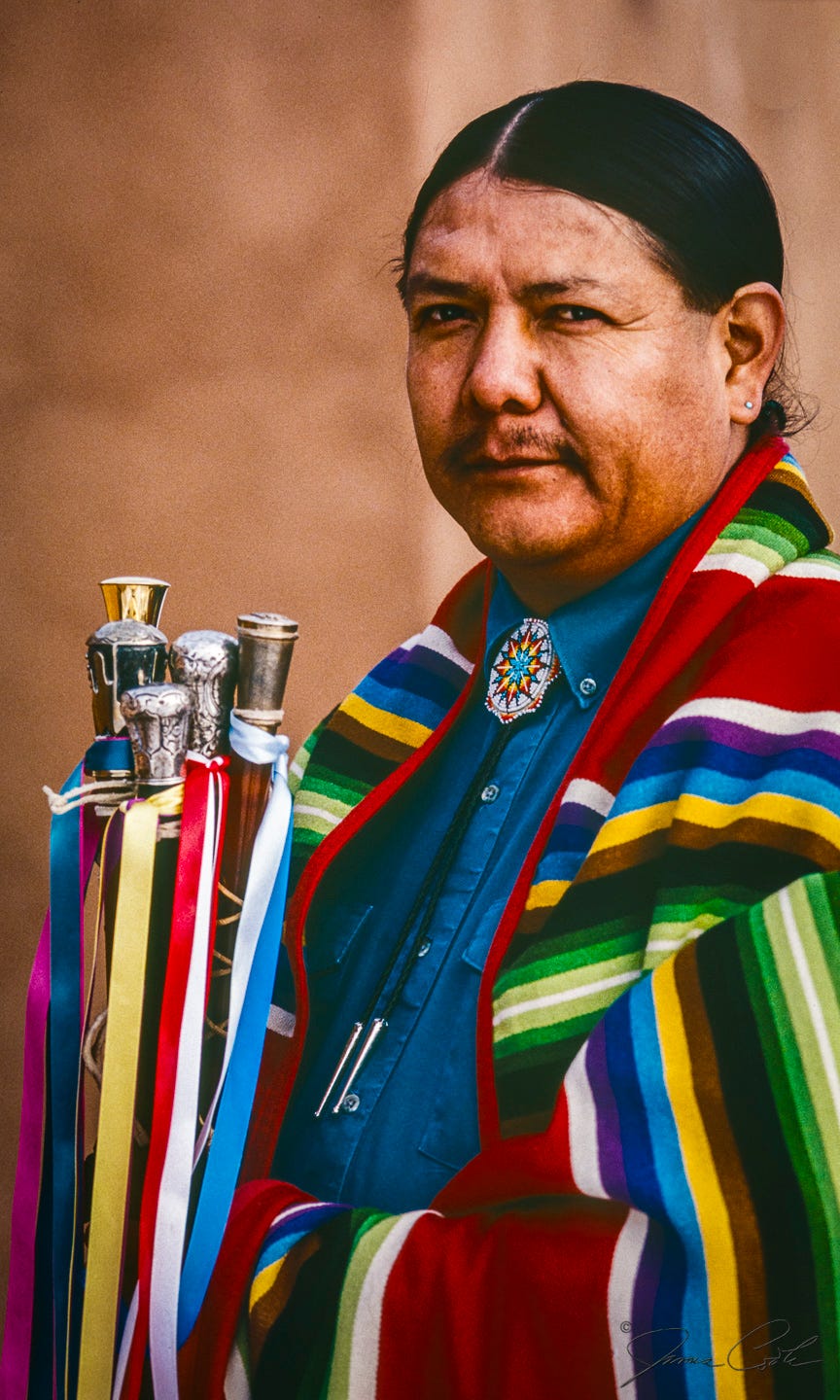
Gil was intent on including the pueblo’s historic canes in the portrait. Each pueblo holds several — successive symbols of authority handed down from Spain, Mexico, and the United States. The earliest, silver-headed and engraved with a cross, came from the Spanish Crown around 1620. Mexico added its own after independence in 1821. The cane Gil holds most prominently is the Lincoln cane, presented in 1863 alongside the federal land patents, its silver head engraved with the president’s name and the name of the pueblo. Each January a new governor is elected, and the canes pass to him for his year in office.
On the visit during which I presented the results, it was agreed that I could do a portrait of Gil’s parents. We made several images inside the family’s ancestral home. Then we moved outside into the pueblo plaza for a few more.
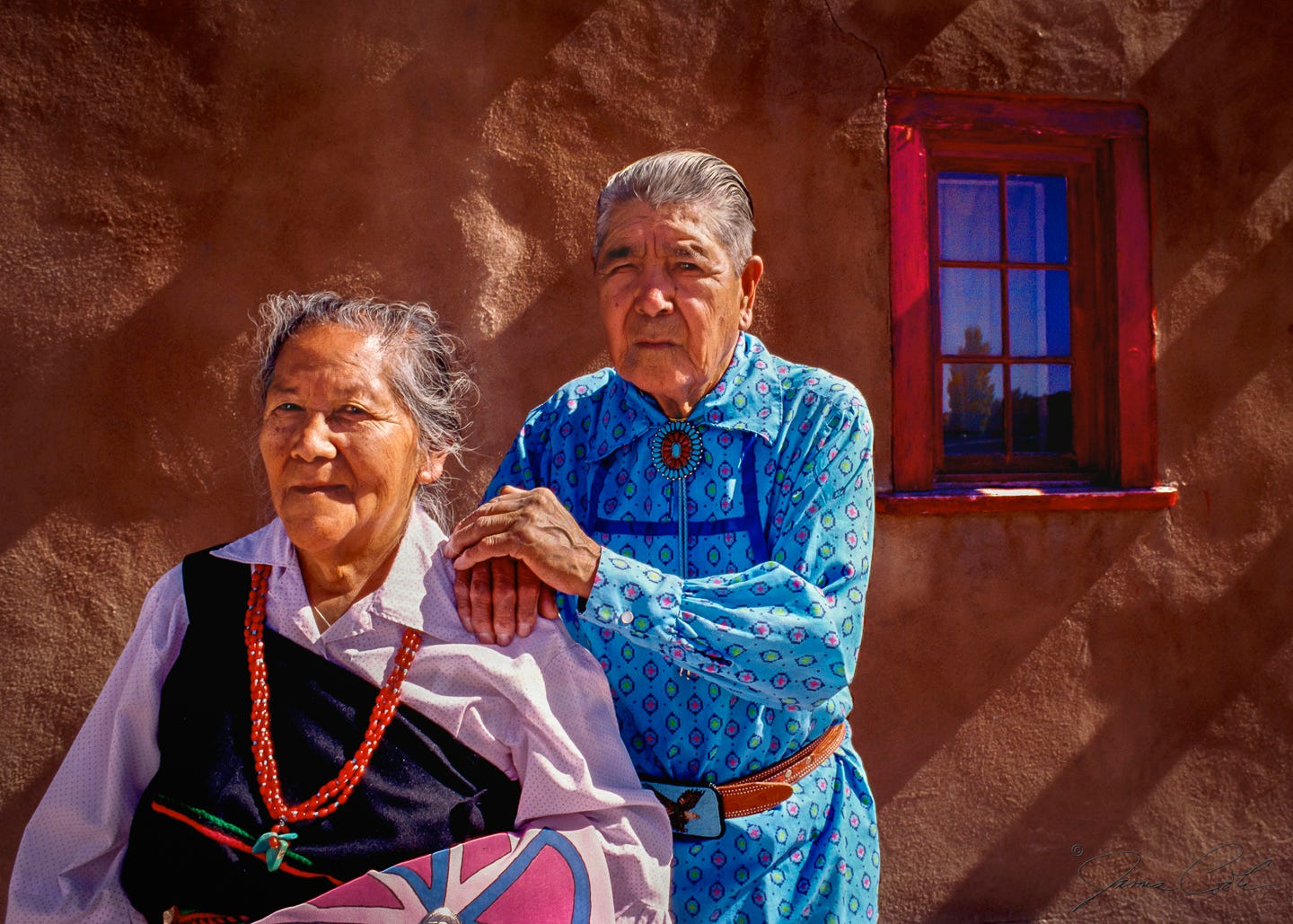
They had dressed for the occasion; Priscilla in a traditional manta with coral at her throat, Jose in a best shirt and bolo.
It had taken years to arrive at this moment. I had come to Tesuque empty-handed; I left with images I cherish.
Comments
Nothing yet. Say the first thing.
Sign in to join the conversation.