
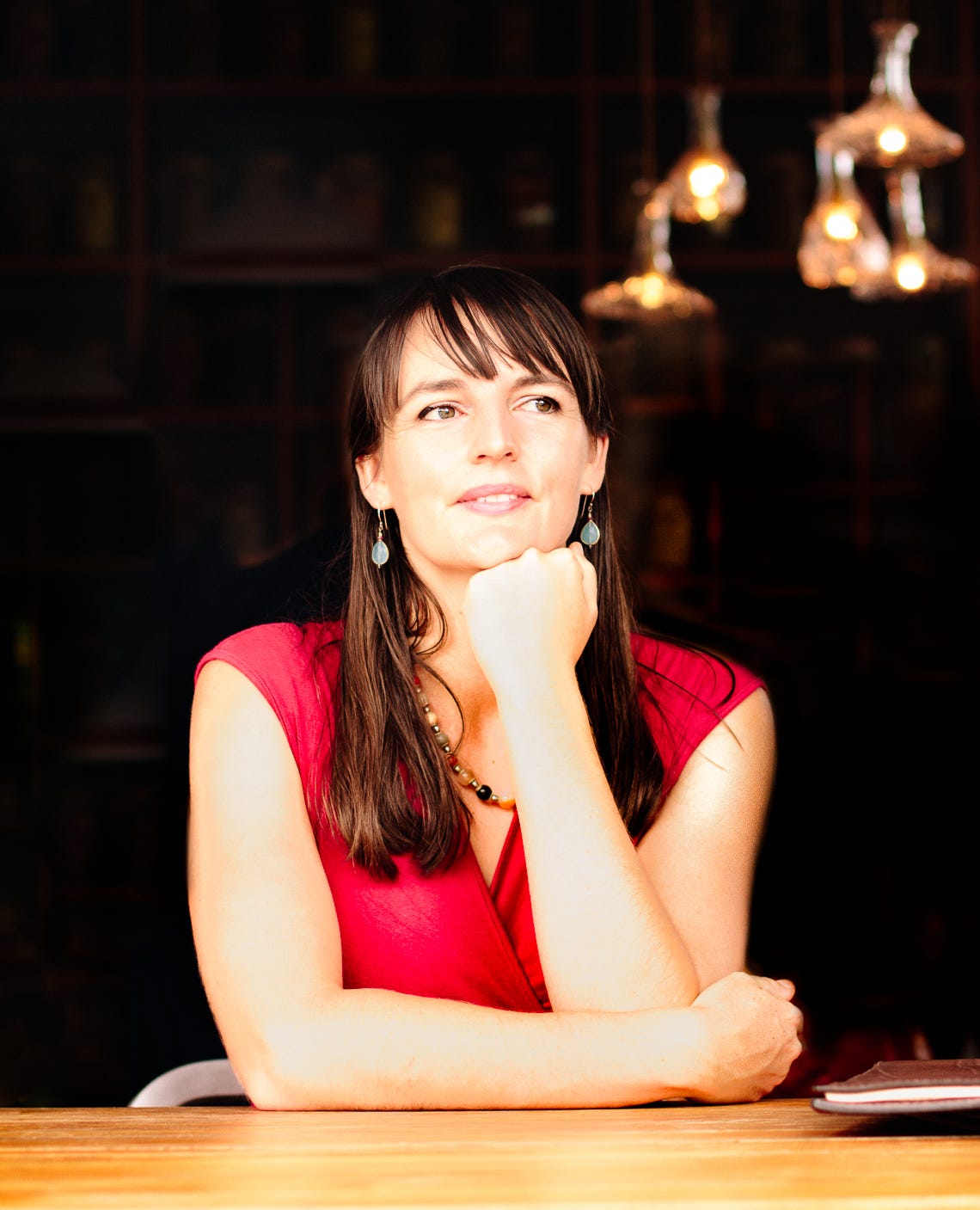
Q&A WITH ZANNI LOUISE Can you remember the kid's book that made you want to be an author?
Yours is bit of a publishing Cinderella story – being discovered by a publisher via your blog, but when did you first decide you wanted to be an author?
It was when I moved back to the Northern Rivers in NSW from Melbourne to have my first child. Walking the pram hour after hour, I found myself returning to stories in my mind to keep myself occupied. I started looking into writing courses, and completed several short workshops through Byron Writers Festival. One of the tutors suggested starting a blog and my publisher, Tash, was one of my readers, who then reached out to me when I publicly expressed interest in writing for kids.
You're well known for your beautiful picture books – how do the ideas for these come to you? Is it inspiration drawn from life, requests from publishers, something you think is missing from the picture book landscape? All (or none) of the above?
Sometimes, publishers approach me with an idea. But most of my stories come about fairly spontaneously and organically. I'll be running in the forest, wandering through a bookstore, reading aloud, when an idea will niggle. I try to constantly have an antenna tuned to the land of ideas, just in case. At the moment, I have 45 different picture book ideas listed in my Notes app, and who knows how many in notebooks scattered about the place. Not all ideas reach fruition, but some keep niggling, and some have more power than others, pleading for attention. I think writing stories is like growing plants; you have to plant the seed, give it some water and nutrients, and see how it grows. If you never plant the seed, it'll never go anywhere.
"I try to constantly have an antenna tuned
to the land of ideas, just in case."
More recently you've begun writing middle grade and YA – what prompted you to start writing in this space?
Ideas come about spontaneously, so when a character knocks on my head, I pay attention. Sometimes, they'll be a bit older, and well, they don't belong in a picture book. I didn't set out to write YA, but when the idea launched at me, I knew it was worth paying attention to. And it could only be YA. There is some parallel with my kids' ages, and the kind of books I am surrounded by. I think I also enjoy the challenge of writing for different age groups and in different genres.
Do you think you'll continue writing across all ages or have you found your niche?
I'd say YA feels like home, partly because I mainly read YA. Then again, I felt like that about middle grade, junior fiction and picture books. So by now, I know I'm just going to follow the ideas where they need to go. I find picture books harder now than I used to. When I heard middle grade and young adult novelists say the picture book was the hardest format, I didn't believe them, but now I kind of get it. Writing a good picture book, one that stands the test of time, feels like a rare and precious gem. I'm still open to picture books, and still constantly playing in this space. But more of my writing hours are spent on MG and YA.
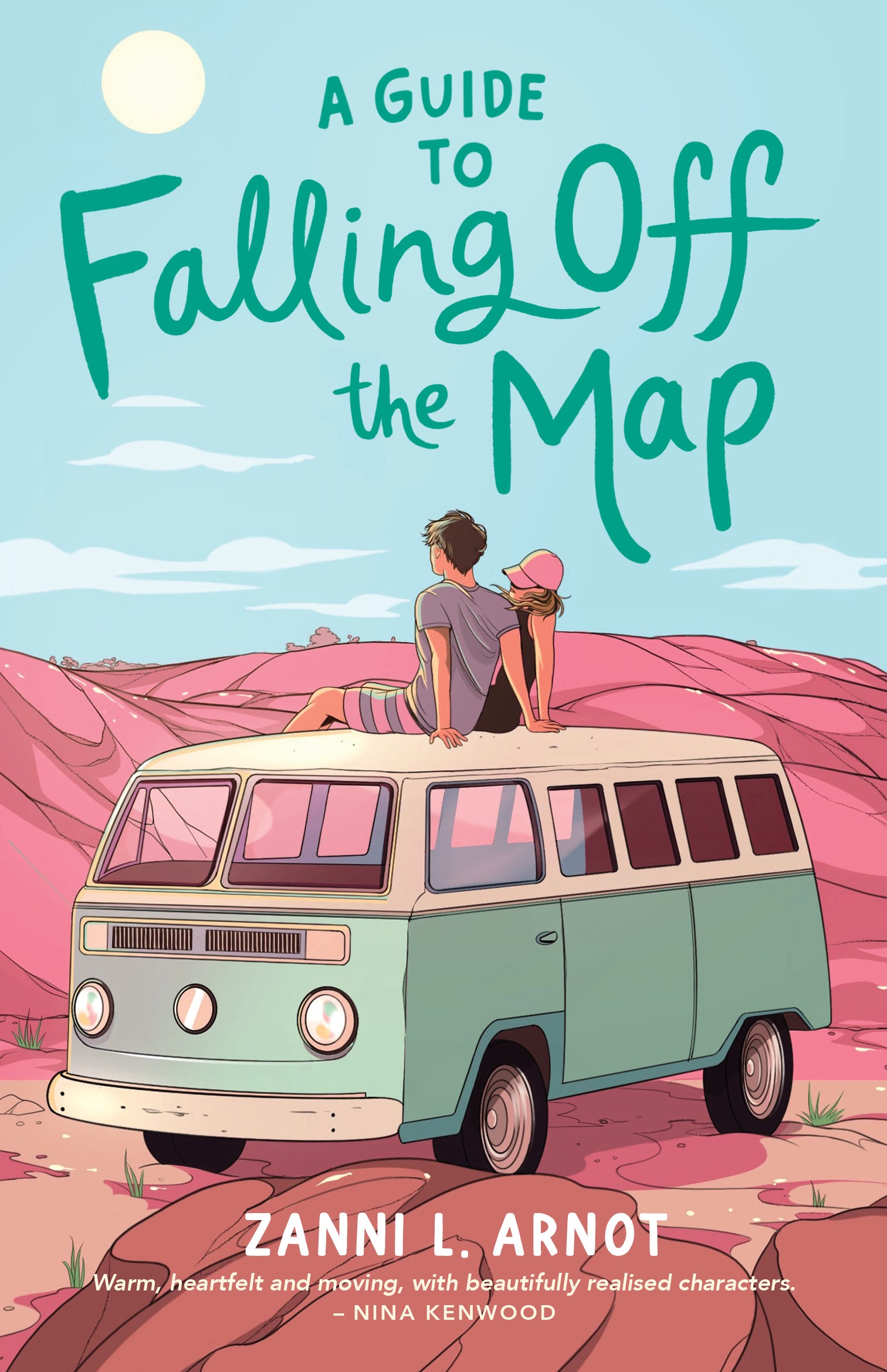
Huge congrats on your debut YA novel A Guide to Falling Off the Map! Can you tell us a bit about this book and how it came to you?
I was running in the hinterland around Bellingen during a family road trip, when childhood friends Vinnie and Roo formed almost instantly in my mind. I could sense their differing personalities from the get-go. Vinnie was outgoing and vibrant, Roo was more withdrawn and hard on himself, yet they completed each other. Vinnie had lost her mum to MS several years back and was dealing with unresolved grief. Roo was pretending to have a job so he didn't have to go back to school. The characters went on a road trip (visiting the national parks my family had just visited) in an attempt to escape life, which forced them to face all kinds of things they weren't expecting. I'd had the title for a long time, but I'd thought it was a middle grade. During that run, I knew with certainty that it belonged to these characters. I came home that evening, sketched down the synopsis, and began writing that night. The idea was so potent, I didn't stop until the manuscript was finished.
I won't ask you to pick a favourite(!) but is there a book that feels extra special or significant to you – either in terms of its subject matter, its publication story, or something it brought into your life or career?
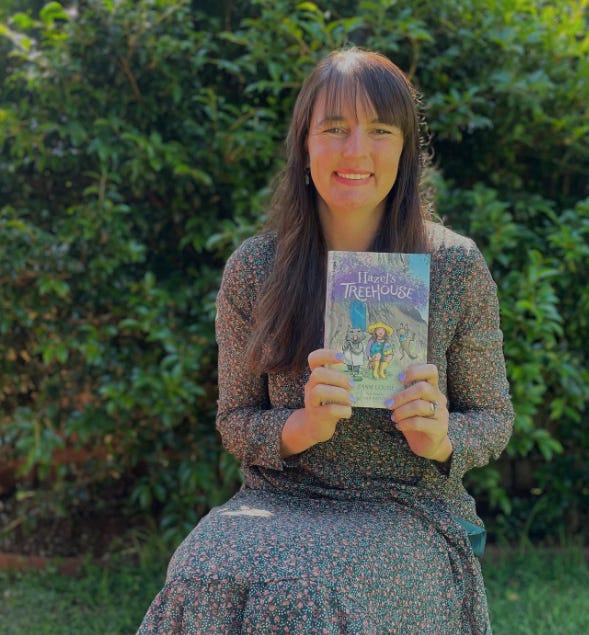
Well, there are several. I'd say Hazel's Treehouse is very special because it is my homage to little storytelling Zanni, and I wrote that in a state of pure joy. They're comforting stories for rocky days, and so beautifully illustrated by Judy Waston. Queenie in Seven Moves is special because it was my first novel; well, the first novel that was publishable. Like with A Guide To Falling Off The Map, I wrote it almost in a trance, so inspired to get the story down. I'm probably most proud, though, of A Guide To Falling Off The Map. I think it's my best work so far. I've spent far longer on it than any other project and I guess it's the one book of mine I don't mind re-reading over and over. I love the characters so much, and their landscape is very special to me.
What are the most significant changes you've noticed in publishing (good or bad) since you began your career?
Many! For one, blogs used to be a big thing, then they weren't, then it was social media, now Substacks are taking the role blogs once had. I've had publishers close down, go into voluntary administration, editors leave ... the sands of publishing are constantly shifting. I'm never too thrown by any of the changes, however. I take most knock-backs in my stride, knowing there might be a better opportunity around the corner if I am patient enough. So many times a story has been knocked back, only to end up in a much better place down the track. It's emblematic of many different aspects in this career. You have to be versatile and resilient, to ebb and flow with the industry, which is in a constant state of flux.
AI worries me; not so much that it'll replace authors, more that so many people use it and doing so diminishes the creative spirit. I don't want future generations to miss out on the wonder of creating something from nothing. The demise of literacy rates also worries me, as does the decline of independent bookstores. But I'm also an optimist, and believe in the power of kids' books and the kidlit community's kindness and strength. So that keeps me buoyant.
You've just been hit by a new idea in the middle of work/life/a shower/the night. What's next? How do you record it and how and when do you tackle it?
Many disappear, but if the idea's strong enough, it'll be there in the morning. I have notebooks floating about everywhere, where I record ideas. I also keep a Notes page specifically for ideas.
You run a huge supportive online community called The Sunshine House on Facebook (one of my fave places on the internet!) How did this start and what does it mean to you?
It started as a place to send my writing students to after the course was over, and it grew naturally from there. Really, I just hold space and the community shapes itself. It means the world to me, Cassy, and I can't believe how little I have to moderate, because of the kindness I mentioned earlier. Kidlit people are good people, it seems. It means even more to me now that I'm living overseas. Having a constant thread with so many wonderful authors and illustrators is very special.
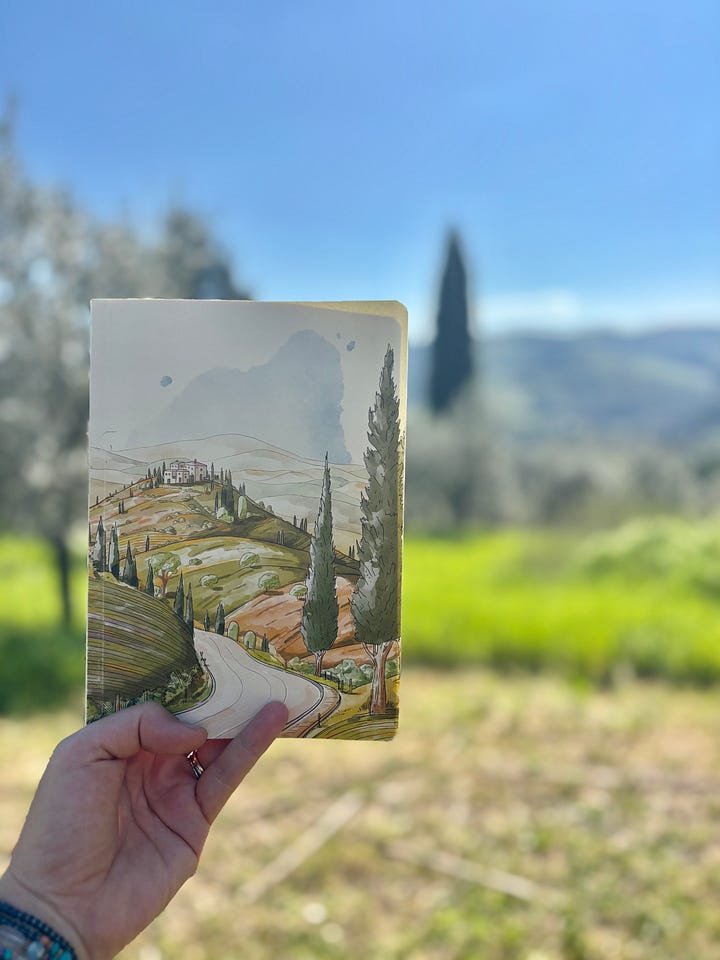
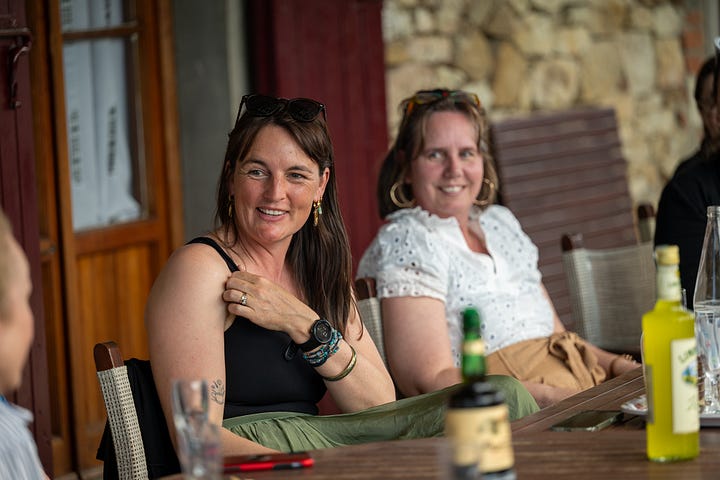
You also run in person writing retreats in Australia and Italy. Was this something you always wanted to do or did you come to it by chance? How does it feed or impact your own writing?
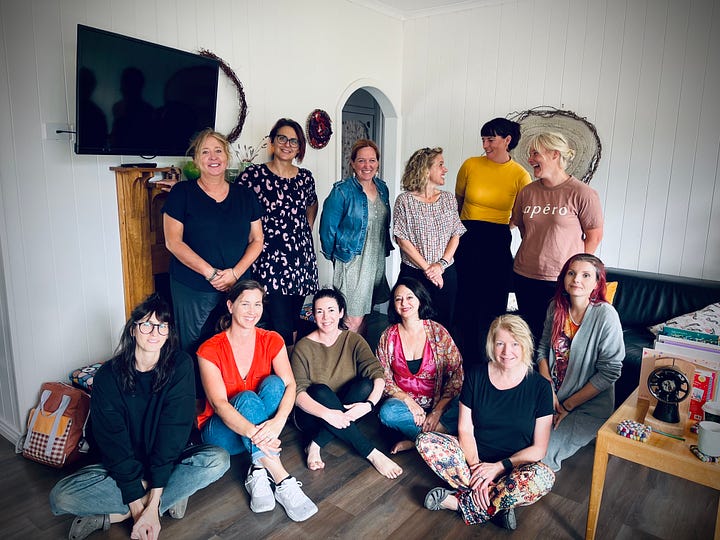
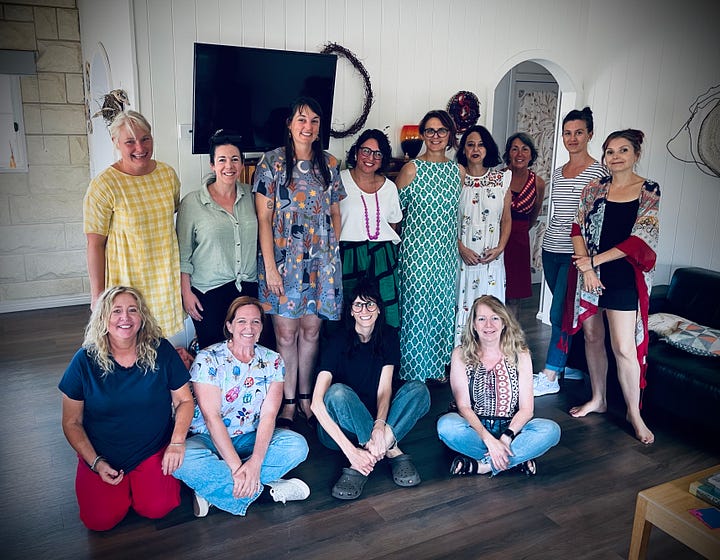
Again, it's all come about very spontaneously! The Church in Byron hinterland was the first one, and came about because the owner suggested I run a workshop there. It went so well, someone else reached out to me from Victoria to run a retreat there. Then I found the glorious Glenella Heritage House in the Blue Mountains, which has become the home of many wonderful retreats. Then, because of social media, Marta from Grapefruit Retreats reached out to me to ask if I'd like to run a retreat in Italy; she'd help me find accommodation. And I thought, Why not?! It was such a phenomenal success, we're doing another one next April. It doesn't necessarily feed my own writing, because holding space for a retreat requires a very specific energy. But in Italy this April, the visiting illustrator and I were so inspired by each other, we found ourselves collaborating on a picture book idea over breakfast, which we can't wait to pitch to our agents.
What I love about retreats is the generosity everyone brings, and the trust guests put in me. Once everything is in motion, I sit back and enjoy the magic being spun on these weekends; friendships being forged and galvanised, stories being created, and a mysterious creative energy that rings through the air. Several book deals and lifelong friendships have come out of these weekends, so that's very special. And most guests are return customers, so something must be working!
How has living overseas and learning another language changed your writing process and the types of stories you want to tell?
The creative process halted, in some ways. Moving countries took a lot more energy than I was expecting. And I realised that I did really need to learn the language if I was going to live there, so between that, raising teenagers, and forging new communities abroad, it's taken a lot of my time and creative energy. I find a lot of what I'm doing right now is meeting deadlines and staying afloat. But I'm still constantly toying with ideas and several have come to fruition. I also feel that the more settled I become, the more space I have to launch into something with commitment.
I live close to a forest, so I am running most days in nature. That's probably still the most potent source for my stories and ideas. I don't know whether the stories themselves have changed, as such, though my longer projects are always very embedded in specific landscapes, and no doubt the places I am living and visiting will make their way into future stories.
What’s still on your writing/creative bucket list?
Writing an adult novel.
Is there something you would love to be asked in an interview but haven't been yet?
No, I think you've covered it all, Cassy! Thanks so much for having me!
Find out more about Zanni Louise at zannilouise.com, follow her on Instagram @zanniouise or join The Sunshine House Writers & Creatives Community
No posts
Comments
Nothing yet. Say the first thing.
Sign in to join the conversation.