
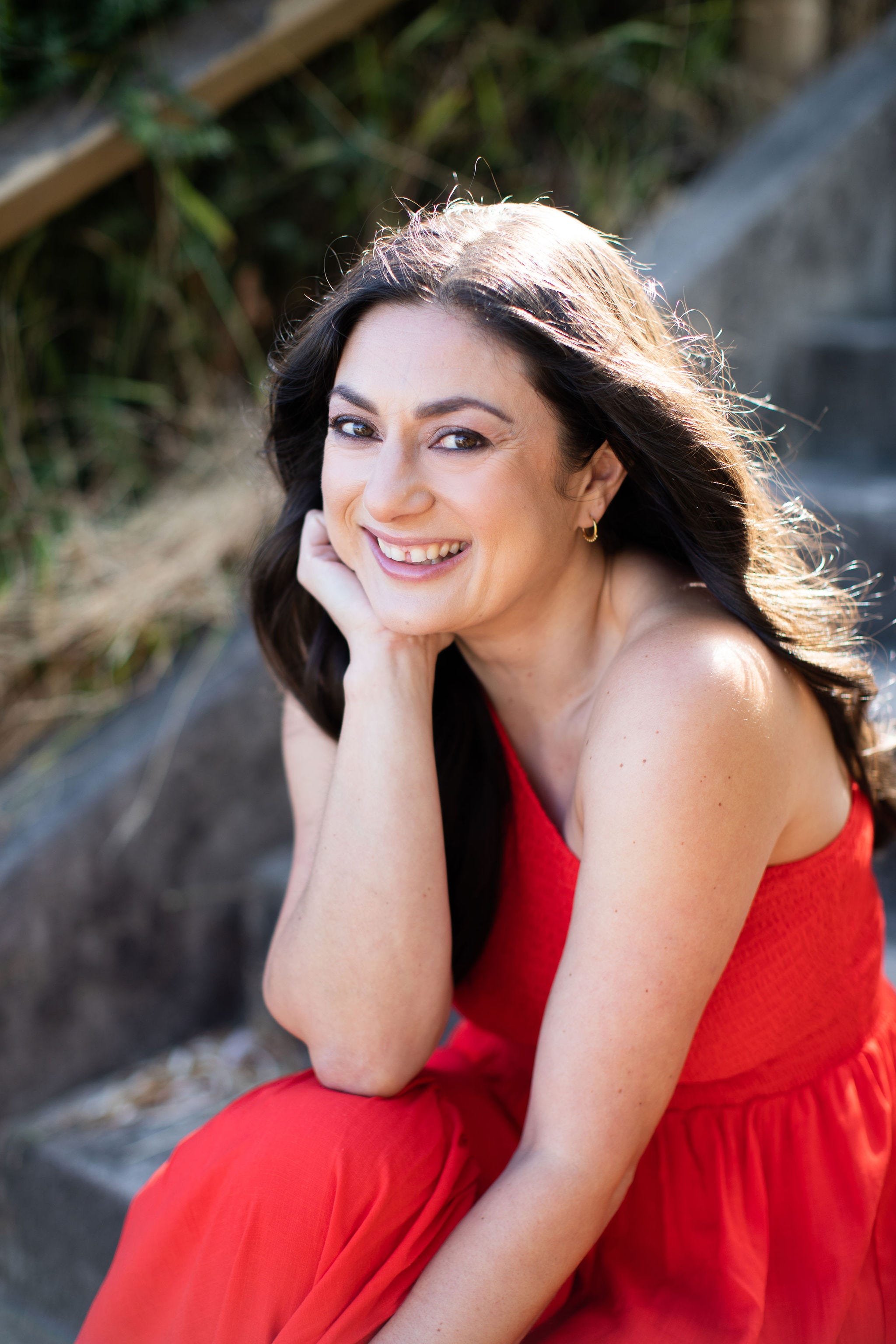
Q&A WITH SAMERA KAMALEDDINE
Can you remember the kid’s book/s that made you want to be an author? Other childhood favourites or early influences?
A resounding yes! Hating Alison Ashley by Robin Klein. I remember reading it and thinking “I want to write something this funny”. I daresay I have not and probably never will, but it was definitely inspiration for my early writing – and when I say “early”, I mean when I was 10 years old, ha! Similarly, Gretel Killeen’s My Life is a Toilet series was so bonkers but so relatable in terms of crazy family antics (and a tween’s excruciating embarrassment of said crazy family antics) that I just wanted to be one of these funny female writers. Sadly, I think today, funny female writers are overshadowed by the fart/bum/burp joke books of the world. Bring back the funny female writer era of the 1990s!
Before becoming an author you had a dream job working on magazines like Dolly, Girlfriend and Smash Hits. Any favourite memories or assignments?
After not getting into uni (a story for another time!) I was desperate to find another way into journalism. I got very, very lucky that a job ad came up for an Editorial Assistant role at The Bulletin magazine and a journalism degree wasn’t required given it was an entry-level admin position. I was 17, with no work experience and incredibly long fake nails; I fumbled my way through my first ever interview to score the job (the hirer later told me she hired me based on personality). I moved onto Dolly when a similar role came up after that and was assigned a mentor in the form of the Features Editor who showed me the ropes. And like any industry, once you’re in, you’re in!
I have sooo many good memories from over 20 years working in mags – I went to awards nights; got flown to amazing press junkets (including to Nike HQ in Oregon, USA) interviewed celebrities who are definitely not impressive to younger people I speak to in schools (Avril Lavigne, Good Charlotte, Jesse McCartney); and got to live out my investigative reporter dream (the OG plan was to work in newspapers) working on stories about racism, puppy farms and bullying.

Did you always want to write fiction or did the urge creep up on you?
I always, always, always wanted to write fiction. I was so consumed by books (the reading and writing of them) that I never learnt to ride a bike – while other kids were outside adventuring on two wheels, my sister and I were on the couch, sharing our stories with each other.
I wrote my first manuscript while working at Dolly and prematurely sent it to publishers – funnily, one of the rejections came from my current publisher, Lisa Berryman at HarperCollins. It was a horrendous piece of writing. I had no understanding of the contemporary market at that time. I was so fixated with the 90s era of Robin Klein and Gretel Killeen, which by this point, kids were no longer reading. It took me 10 years to find my voice from there.
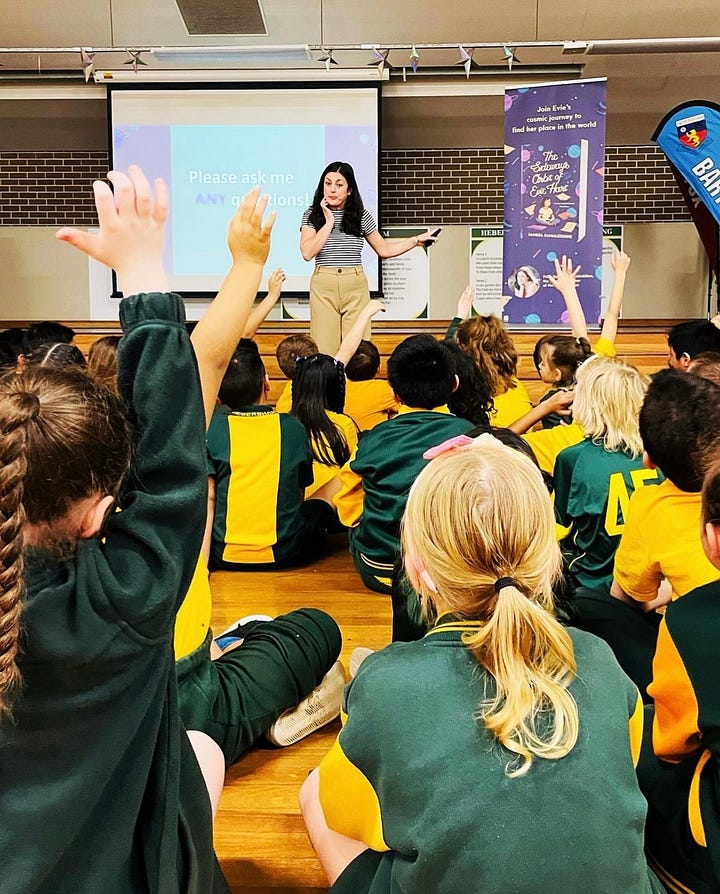
These days you have another dream job – children’s librarian – tell us about that. Does the job (and the kids you meet) inform your writing?
I could never have predicted this trajectory, but the magazine industry was starting to fade and I needed to re-train. After promoting my first book I realised I wanted to do something similar for a day job. Admittedly, I didn’t know what a children’s librarian did but I saw a job ad that made me go “yeah, that’s it”. I promptly started the mandatory TAFE course and got my foot in the door.
I can report that today, I know exactly what a children’s librarian does: I program children’s activities in the library (think storytime, school holiday events and after school workshops) and help maintain the library’s junior collection. I love the conversations I get to have with kids about books and I love seeing how many parents bring their children into the library after school (yay!)
I am in a bit of a privileged position in that I have insight into borrowing and reading trends, however I am so focused on the stories I still have to tell that it doesn’t influence the direction I take when pitching ideas to my publisher.
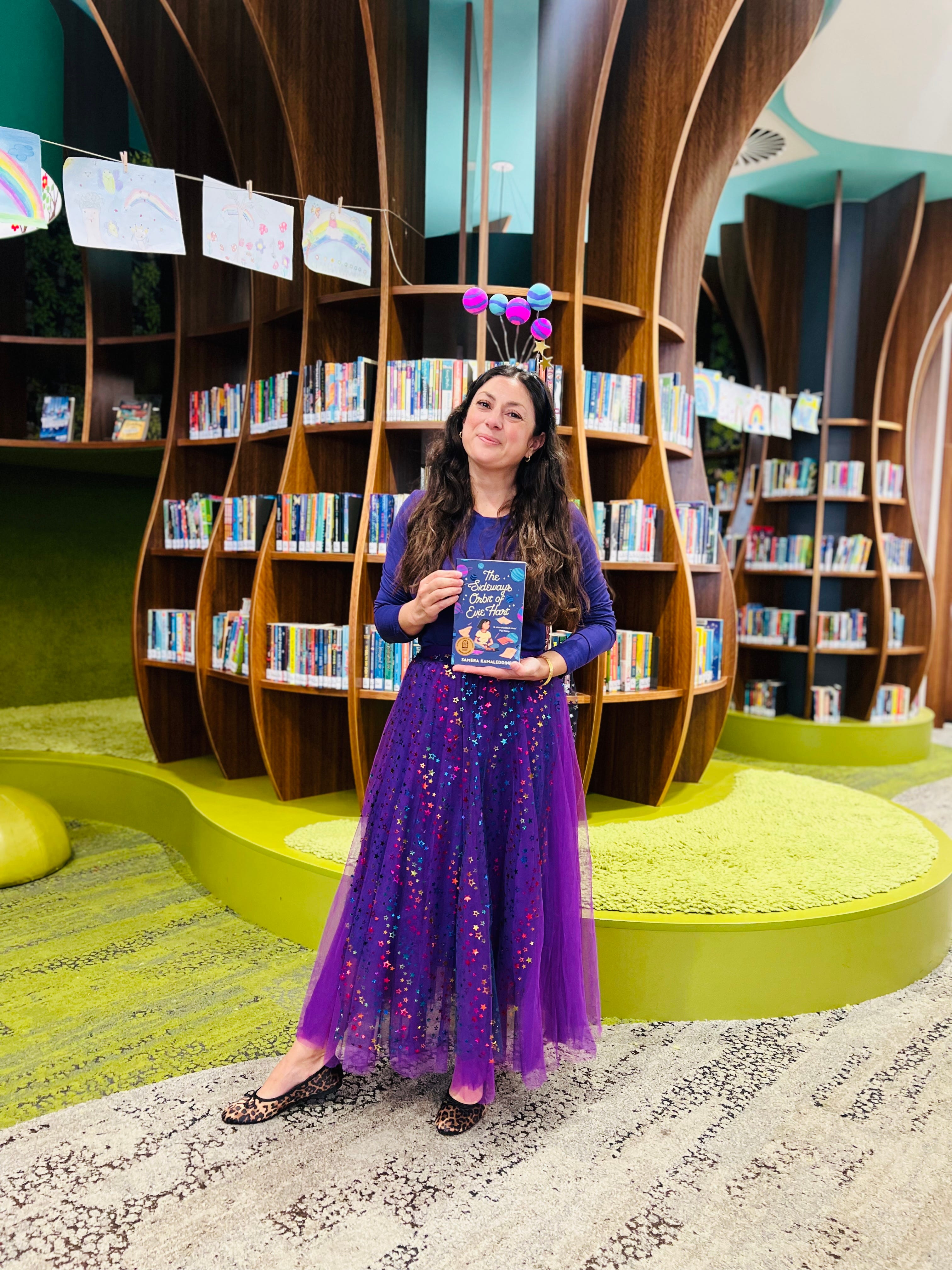
Your first book, YA novel Half My Luck, won the Matilda Prize and your debut MG The Sideways Orbit of Evie Hart was shortlisted for the CBCA Book of the Year for Younger Readers – what effect did winning these awards have on you/your career?
To be honest, I have major imposter syndrome. Sometimes I just don’t clock the recognitions you’ve mentioned (and sometimes I get embarrassed!) But I will say that after the CBCA shortlisting for Evie Hart I had serious follow up fear about the next book, with thoughts of “what if everyone thinks this is crap compared to Evie Hart?” and “what if I’ve already written the best thing I’ll ever write?” My Grandma said “Oh, you can’t get any better than Evie Hart,” so that didn’t help either (thanks Grandma).
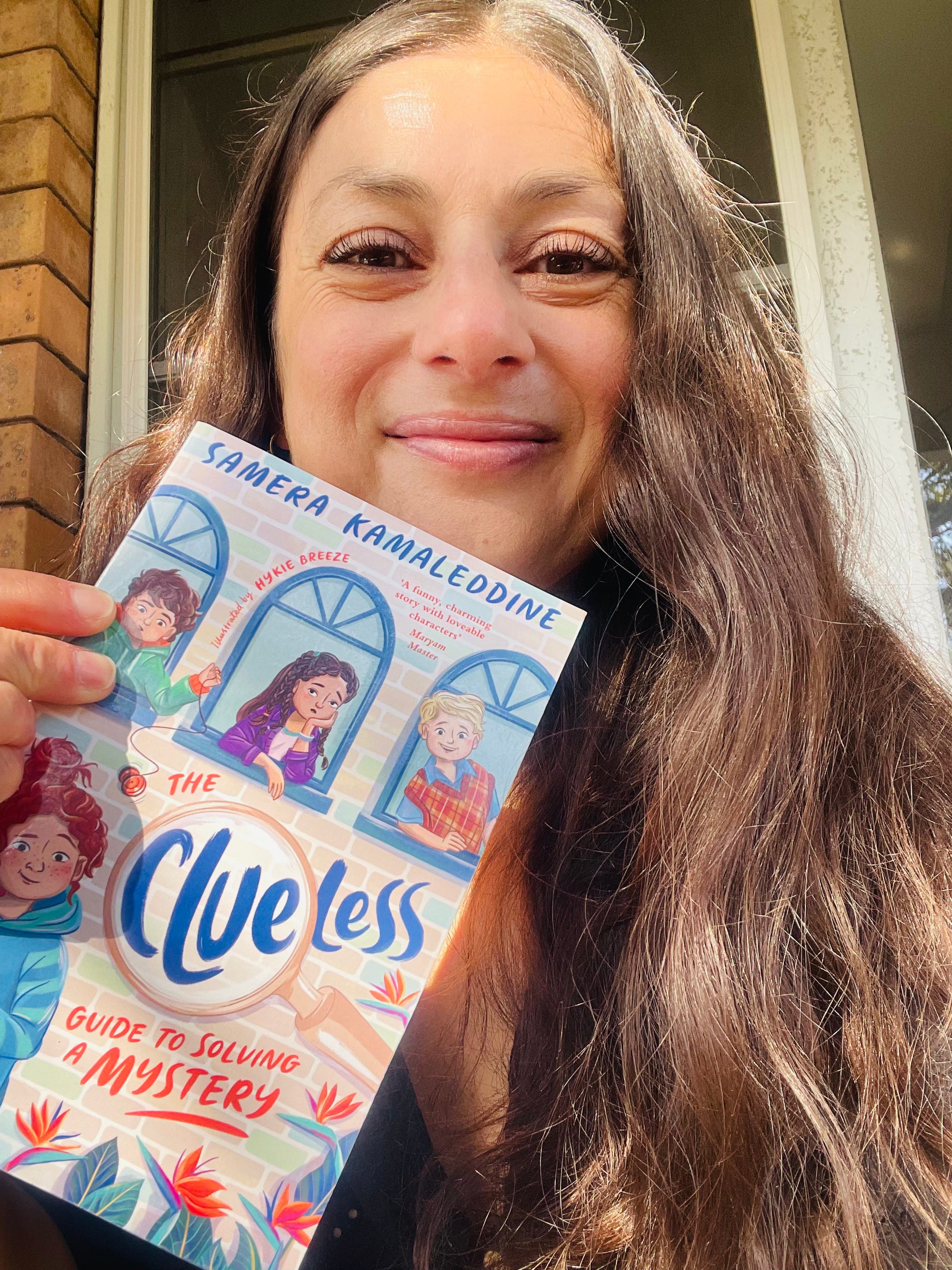
Huge congrats on your new MG novel The Clueless Guide to Solving a Mystery – part of a two-book series! Can you tell us a bit about it and how it came to you?
I was a kid filled with way too much curiosity for one little brain. I spent a lot of time with my Grandma and Pop when I was young – learning to play canasta and tennis, singing around the piano and asking them lots of questions about when they were young (shock horror, old people were young once!) I wondered if this was just a me thing, or if other kids show interest in the older people in their life in the same way. If they don’t, then they should, and this book is going to tell them (subtly, obviously) why!
The story centres on 11-year-old Claudia Smith who has been forced to stay at her grandparents’ retirement village with a bunch of eccentric seniors… and the coolest kids at school who she desperately wants to be best friends with (oh, also the most annoying kid at school who she definitely does not want to be best friends with, despite his best efforts). Enter a mysterious note and Claudia thinks she’s found a way to make friends – with their own committee! During their investigations they inadvertently uncover the back stories of the older residents. So, it explores friendship from different angles, including inter-generational ones.
Did you have to take a different approach to your previous novels, i.e. more planning/index cards/pinboards with red string for writing a mystery?
I am absolutely not a planner, I’m very much a pantser and as it’s the natural method of operation for me, I didn’t try to deviate. I wouldn’t say this book is a typical mystery story that has a complicated red string plot or any clever twists; if anything, it’s kind of the anti-mystery book. The motley crew of kids are reluctant detectives and pretty average at it at best so there’s a bit of poking fun at that. The “mystery” is a device I’ve used to extract and explore these interesting back stories from the oldies.
You’ve just been hit by a new idea in the middle of work/life/a shower/the night. What’s next? How do you record it and how/when do you tackle it?
I went digital a while ago now and set up a Google doc called “Book Ideas” with headings for “Picture Books”, “Junior Fiction”, “Middle Grade” and “YA”. I have the Google docs app on my phone so I can jump into it from anywhere (except maybe the shower) and it’s tidier than using the Notes app. I also have “on-the-go” Google docs each time I’m working on a new book project so I can jot down things that come to me while I’m literally on-the-go. I’m a single-tasker, so I never start writing anything new until I’ve finished the project I’m working on. However, I keep entering notes into the ideas document as they come to me. I do A LOT of thinking before I start putting fingers to keyboard.
What’s still on your creative bucket list?
I’ve got a few picture book ideas up my sleeve. Picture books were never on the creative bucket list, but have been added since I started working in libraries and presenting storytime sessions. Storytime is giving me inspiration and motivation to write something I think would work well in read aloud sessions. I love picture books!
Find out more about Samera Kamaleddine at samerak.com or follow her on Instagram @samerak
No posts
Comments
Nothing yet. Say the first thing.
Sign in to join the conversation.