
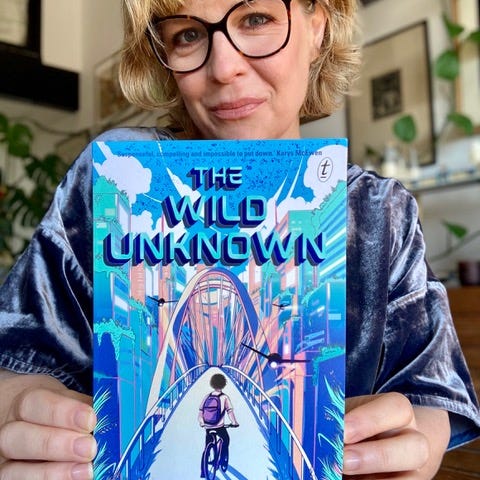
I have one of those somatic memories of being eleven years old, in my bedroom, having just finished Penelope Farmer’s Charlotte Sometimes (a timeslip published in 1969). The emotion I recall is that while I’d been inside the novel, I was safe and happy and that the moment it was over I was out in the cold. I just wanted to get back inside as soon as possible. Not that my life then was an objectively terrible experience, far from it, but I found life difficult for whatever reason. So that moment probably decided it for me in terms of what I was going to devote my life to and writing my own stories evolved from there.
My influences are wide-ranging. I was always drawn to stories of profound friendship, like Frog and Toad or Charlotte’s Web, and transformation stories like shrinking Mrs Pepperpot or Flossie Teacake, who put on her big sister’s coat and instantly looked like an eighteen year old. I loved timeslips like Moondial and Tom’s Midnight Garden, eerie psychological stories like Marianne Dreams, funny books like The Secret Diary of Adrian Mole, and anything about current events. In my 1980s childhood that meant issues like the South African apartheid, famine in Ethiopia, the fall of the Berlin Wall or the fear of a nuclear apocalypse. I preferred having “the news” channelled into fiction, which felt like a safe place to unpack fears and other emotions.
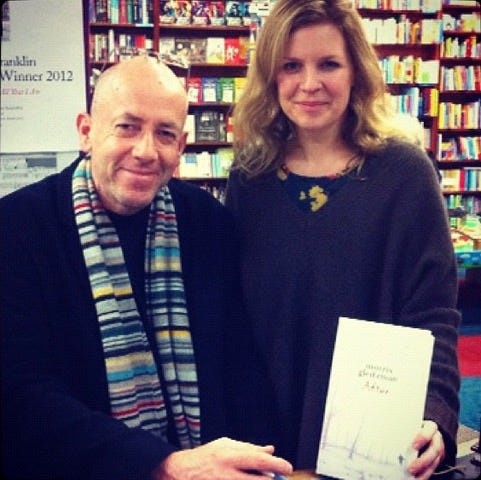
The different roles have left their mark, mostly in a positive way although the greatest challenge is getting the inner editor to shut up for long enough that I can produce a ‘shitty first draft’. She’s a real pain; she knows when the shape of the story isn’t right or I’ve missed an opportunity to drop something into chapter three or this character isn’t as fully formed as the others. On the other hand, being an editor has taught me to be bold in my rewrites and enables me to take things apart and put them back together. It’s also made me hard on myself, but that has an upside, too – the moment I stop being hard on myself about a story, I can be confident that it’s ready for readers, and the euphoria of reaching that stage makes the pain worthwhile.
Being a bookseller was what redirected me to middle-grade fiction. I’d been writing YA until then, but while I was the children’s buyer at Readings I remembered that my years of becoming a reader-for-life were roughly 10–14. It was a slightly underserved market at the time, because fiction aimed at 9 to 12 year olds could sometimes read too young, while YA was having a big moment but skewing older. That’s when I decided to write The Other Side of Summer, about a character just turning 13. Although the market at the time didn’t really know what to do with that novel, it set me on the path I’ve been on ever since (although I had a brief return to YA for a follow-up novel called I Am Out With Lanterns, which is for 14+).
Thank you! I’ve been working on that novel for years, ever since my son was in his final year of primary school – it’s about a kid called Eddie, who is in the same position. I wanted to write the sort of story that my son would be drawn to. He’ll be 20 this year so it had a long gestation. I always knew it was going to be a transformation and a mystery.
My son has always loved nature and animals, including prehistoric and mythical beasts, so that was a strong influence. At the time of conceiving the story I’d noticed how his increasing use of technology was at odds with what had previously captured his imagination. But a few other books I wanted to write got in the way and when I returned to this one I knew I had to do something bold in order to get my heart back in it again, which is when I decided to set it in the near future: 2045. As a writer who has often looked to history for inspiration, for example the timeslip novels Elsewhere Girls and Outlaw Girls, or The Goodbye Year with its World War I ghost, setting myself up as a narrator of a possible future world felt risky, but that decision made me fully commit to the story.
I first heard Nova’s name when the head book buyer at Readings put her debut children’s book, The Haunting of Lily Frost (2014), on my desk and said he knew her and he thought I’d like the book. I started to read it, loved it, but put it down after a few chapters because I had already started writing The Other Side of Summer, which is not quite a ghost story but ghost-adjacent and I have a real thing about consuming anything even vaguely similar when I’m in that delicate stage of drafting.
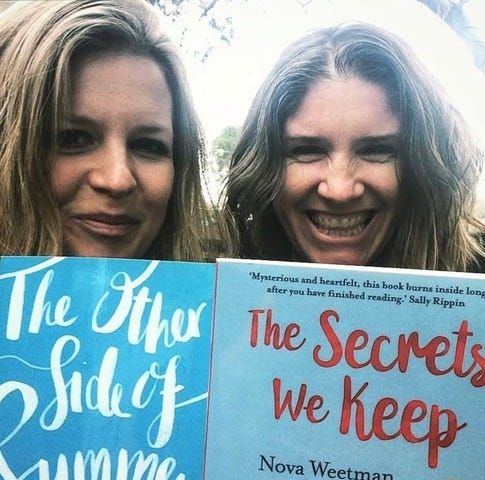
But the next year Nova had her second novel published, Frankie and Joely, which I devoured, reviewed and then attended the launch of so I could tell her in person how much I’d enjoyed it. Then in 2016 Nova asked if I’d launch her third book, The Secrets We Keep, and we decided to meet properly. In my memory, two coffees and a brownie later, and after taking a selfie with our soon-to-be-published books, we were friends.
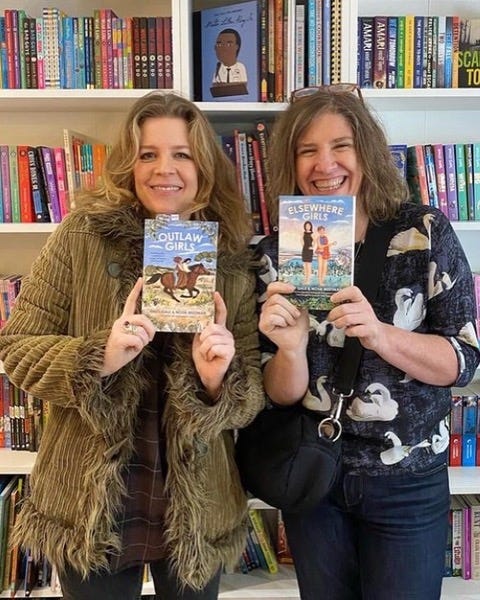
We’d talked about co-writing but it was Nova who had the idea in 2017 of writing about women in Australian history when they were teenagers. Nova had already marked Fanny Durack, the first woman to win Olympic gold medal for swimming, as a possibility. The two-character structure and timeslip/body-swap elements occurred to us as we researched and wrote early chapters. When we’d finished the first draft of Elsewhere Girls, it was tighter and more coherent and ready than first drafts usually are, because of how we’d worked together, so we sent it to Text and editor Jane Pearson snapped it up quickly, which was amazing. We dedicated the second book, Outlaw Girls, to Jane.
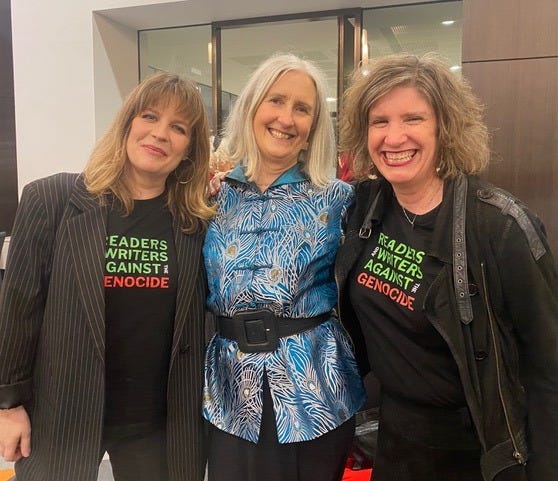
It was also Nova’s idea to use Ned Kelly’s little sister, Kate, for our second book. I’d never heard of Kate Kelly before. I think this has been our pattern with just about everything we’ve done together – not just books but industry projects, too. Nova has a “mad idea”, tells me the spark of it, and I become completely obsessed and run with it. My research file for Outlaw Girls was, in Nova’s words, “terrifying but beautiful”.
I would say I measure the tone of these books from the way Nova writes, in part because her natural writing voice is lighter and we wanted that for this series, and because we want tone to be consistent at the same time as making each character sound distinctive. I love those early experiments. I did a lot of work on getting Kate Kelly’s voice right for Outlaw Girls and I know Nova had some anxieties about the voice of Fanny Durack in Elsewhere Girls, but we landed where we wanted to be. The lovely thing is that we have each other for reassurance as well as editorial notes.
“This has been our pattern with just about everything we’ve done together … Nova has a “mad idea”, tells me the spark of it, and I become completely obsessed and run with it.”
I tend to be the organised one, some would say bossy, which means a Google Doc for research with chapters for each topic and running notes on where we’re going with the story. I’ll dabble in chapter breakdowns once we’re well underway so we can each keep track of what we’ve covered. That’s how I work on my solo projects, although the difference with my solo work is that I do end up going off on different tangents, whereas working on a book with Nova makes me more disciplined. This is not how Nova works but she likes my bossiness and the whole point is that you bring different things to the table. She is a hugely positive force throughout the drafting and brings a lot of natural humour to her chapters, which is another thing that keeps me going! I still laugh thinking about her scene involving a stolen tractor in Outlaw Girls.
We also have a lot of in-person conversations about the plot. Nova started her writing life in television so she’s used to being in a writing room, bouncing ideas around. That’s been an education for me because I’m more introverted and it was initially difficult for me to speak my ideas out loud before I’d thought about them from every angle, but I’m better at that now.
Too much of publishing is guess-work and luck for a writer to give up their sense of control over what they want to write. I think you just have to keep checking in with yourself about what drives you – does the brand a publisher is suggesting seem like something you want to commit a decade or more to, possibly with good financial and other benefits (but who knows?) or is the itch of following your heart from project to project the thing that fuels you?
For me the fact that there are no guarantees in this business is the decider – I want the full unbridled joy of creating my own way, so I’ll take the gamble of whether anyone wants to publish it. As a result, nine times out of 10 I have written the story first and then tried to sell it, rather than selling it from a synopsis. There’s a huge footnote here: I am not the sole bread-winner in my family, so part of what I’m saying is the privilege of financial security.
My strong preference is to work on one at a time. I like to immerse myself in the voice, story and world. I look at some authors’ output and I’m overwhelmed by how they must do it, I’m just not that fast. But the reality is that every so often there will be a crossover in terms of writing a first draft of one story, doing a structural or copy-edit of another story and launching one, too. At the moment I’m launching The Wild Unknown, I’ve got a collection of junior fiction stories that is currently being illustrated, and I’m working on the second draft of something even further out of my comfort zone. I don’t find it easy to switch between them but it’s also a very lucky position to be in, so of course I suck it up and get on with it!
This one is out of my control but I would love for there to be an audiobook of one of my stories. Audiobooks were a significant part of my childhood – I can still hear them in my head! They were my way into many classics and I found them both comforting and immersive, allowing me to consume twice the number of stories I would have otherwise. In terms of my own creativity, I would love to nail a picture book.
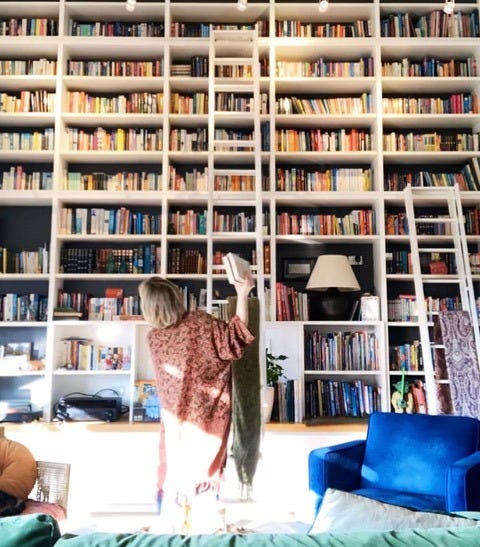
No one has ever asked me about the worst book I ever received as a child. It was a large, hardback Roget’s thesaurus from my grandparents on my dad’s side, who were both quite stiff, formal people, very unlike my other grandparents, who were a bit wild. I can remember unwrapping the present in front of my grandparents and pretending to be delighted, thanking them profusely but feeling the muscles in my face strain with the fakery and secretly wishing it had been a large compendium of Sweet Valley High or something equally fun.
Of course, I still have that thesaurus, and ‘finding the right words’ is what gives my life meaning.
The Wild Unknown is out now. Find out more about Emily Gale at emilygalebooks.com or follow her on Instagram @emilygalebooksetc.
No posts
Comments
Nothing yet. Say the first thing.
Sign in to join the conversation.