
(Note: I read all my pieces out loud for you; I think they’re best that way—but feel free to read instead! And while I do love an em dash, rest assured every post is written by me—a human—not AI.)
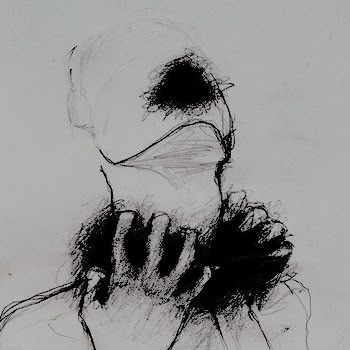
He wasn’t someone you’d look at twice.
He wasn’t powerful or cute.
He wasn’t sweet like Krista or good at dance like Natalia or loud like me.
He was the fuzz at the edge of the picture—in thrift store hand-me-downs and black, off-brand Walmart sneakers. And if it hadn’t been for two instances, I might have only remembered him from his yearbook photo.
The first instance was one day in fifth grade. Our small, private, Christian school didn’t have a cafeteria, so we ate our sack lunches on the floor of our classroom. While we ate, little bits of food escaped our mouths and fingers and scattered into the industrial carpeting. After lunch and recess, we would come in and proceed to grind all the bits into the carpet. Then, they’d dry to the fibers until the janitor, a tired woman with limp, frizzy bangs falling over her eyes like a sheep dog’s, could vacuum them up at the end of the week. (This is the first time I have ever thought about what that woman was paid; probably some disrespectfully low figure. Double that amount, and, most likely, it was still abysmal.)
On that particular day, I remember the smell of plastic. Bethany had heated up her taquitos in the microwave in the hall, and the smell of melty ziplock bag made my stomach turn. I tried not to think of the hot plastic of the bag, membrane-like in its sweaty pliability, draping over the taquitos, leaving a film of microscopic plastic particles. I prayed Bethany’s immune system was robust enough to fight the carcinogens.
I was holding court with a clump of overalled and scrunchied fifth grade girls, jammed between a row of chairs and a small bookshelf in the center of the room. They were all there: Cara, Krissie, Erin, and Bethany, of course. Even then, I was short, so I propped myself up on my heels so as to get a little bit higher than everyone else.
“Did you see the pogs she brought today? Ying-yangs all over them,” someone said.
We pronounced it “ying-yang” instead of “yin-yang,” and we understood that the symbol meant that Satan (the black swirl) had a little bit of good (the white dot) and that God (the white swirl) had a little bit of bad (the black dot).
Blasphemy!
Everyone knew that God couldn’t sin.
That was like Christianity 101.

“A ying-yang?” My mouth hung open as I looked around to make sure everyone else was shocked too.
Gasps. Head shakings.
“Yeah. And her mom isn’t going to make her get rid of them.”
“Her mom probably doesn’t know what it means.”
I sniffed. My mother was aware of those kinds of things, and if she wasn’t, the Holy Spirit lived inside her, so she would be able to discern that ying-yangs were evil even without knowing what they were.
“That’s why I don’t think she should be a part of our pog group,” I said from on high, perched on my heels. “Plus, she wants to play for keepsies, and I won’t do that.” I said this last bit with the pious integrity of George Washington declaring he could not tell a lie.
The others nodded.
We lapsed into silence, aside from the crunching of bell pepper and Cheetos.
“I think she’s really pretty,” someone said.
“Really?” I said. “I don’t. And if she is, she’s only pretty because of her hair.”
In one motion, we all swiveled our heads around to see her eating with another new student. Her honey-colored tresses caught the fluorescent light.
“Actually…yeah,” said the original commenter. “I can see what you mean.”
I tucked my own frizzy hair behind my ear and bit my sandwich. I noticed my dad had written a note in black Sharpie on my folded paper towel napkin.
A stick figure wearing large, round spectacles and a wide smile shouted in my dad’s large, uppercase print: “Love ya, Care!” A big speech bubble surrounded the text, but it seemed barely able to contain it. I rolled my eyes; my dad was always writing these little notes. I had quite a collection of them—all wadded up at the bottom of my backpack.
“Love ya, Care!” someone mimicked above our heads. I looked up to see that one kid, Daniel something or other—he was new too. He had seen my dad’s note as he leaned over the top of the short bookcase.
“What?” I said, caught off guard.
“Your daddy writes you widdle notes?” he said, his tone sticky as if he were talking to a baby.
Who did he think he was? He was the new kid. I had been at that school since forever—like for over a year.
“Yeah. So what? It means he loves me,” I said, overemphasizing every word. I looked around at the group. Their eyes were wide. I had to get this situation under control.
“Does your dad write you notes?” I asked. When he didn’t answer, I said, “I didn’t think so.”
“Carrie…Carrie…Carrie King…Carrie King,” he said, repeating my name over and over like he was using it to cast a hex on me.
My friends and I looked at each other. This was weird—not like sticking stickers on your forehead weird but like demonic weird. Like when pastors came to speak in chapel about how demon-possessed people ranted and raved with words that weren’t their own.
“Carrie King…Carrie King…Carrie Kink—
CARRIE KINK! YOU MAKE MY BUTT STINK!”
It worked better than any spell.
“Carrie Kink! You make my butt stink!” echoed Aaron who was standing next to him.
The other boys around the classroom picked up the rhyme.
“Oh, real mature!” I said, rolling my eyes and pushing my nose into the air. With effort, I shut off my face’s expressions, going blank, offline. This act of blatant immaturity doesn’t even dignify a response, I broadcast like an emergency message breaking through a TV show.
Inside, I churned.
That feeling stayed with me for weeks.
* * *
I knew what it felt like to be at the edges of things, to be someone’s afterthought, to be blown around by others’ whims, their power.
When you don’t have power, anything can happen to you. When powerful people get enough people behind them, they become a mob, And mobs can break down your door, drag you out by the hair, murder your family, kill your animals, burn your house down. So sometime around fourth grade, I made a deal that I would never ever allow myself to be at the bottom of the heap again.
I heard the chant for weeks, each time a reminder of the ground I’d lost.
* * *
The second instance was months later, when the weather turned warm and we, once again, got to wear shorts. They had to be as long or longer than our fingertips when we slapped our arms flat against our sides. If the shorts crept up above our fingertips, the teachers sent us packing to the bathroom with the Shorts of Shame, a dusty pair of wide-leg, 1980s, mom-butt jean shorts that hit at the most universally unflattering length: just above the knee.
This rule didn’t take into consideration individual anatomies including varying leg and arm lengths. Modesty was paramount. We wouldn’t want to cause our ten year-old brothers to stumble, would we?
On this afternoon, I was skipping in my small, lavender shorts out to “break,” which is what our school called “recess.” The crabapple trees were blooming, and my head was filled with the spring-induced giddiness of finally feeling the breeze blow through my prepubescent leg hair.
And then I stopped dead in my tracks.
I couldn’t breathe; something was on my neck.
I twisted around to see Daniel’s teeth close to my face.
It was at that moment, my rational brain went offline, and the hard, cruel, gnashing animal, all elbows, knees, and heels, roared to the controls.
“GET. OFF. ME.” I said through frothy teeth, trying to suck in air.
He hung on, pulling tighter on whatever he had around my neck. I heard the vocal evidence of effort as the glee bubbled up from his throat. Finally, I had thrashed enough to free myself from his hold. The choking implement: a strip of plastic torn away from snack packaging.
“Carrie Kink. You make my butt stink.” He punctuated the scene with his hex before running away laughing with Aaron, his baby mullet wafting in the spring breeze.
* * *
I wiped my hands on my long, denim jumper dress.
“You need to say something,” my mom said last night at dinner. “You should go talk to Mrs. Atencio.” A little surprised my parents hadn’t offered to talk to my principal themselves, I waited in a row of chairs outside her office. I knew I was in the right. My safety had been threatened, and that was not O-K. I didn’t need to be nervous. I would explain everything that had happened, and then they would give him a talking to. It would reset everything, back before all this mess happened. And then I’d wake up without that Satan-on-my-chest feeling—without the same panic I had as a kid that sent me to that special doctor.
The door opened and Mrs. Atencio pointed for me to sit at a chair across the desk from her.
“What brings you here today?” she asked.
I told her everything—well, I left out of the “Carrie Kink, you make my butt stink part,” saying only that Daniel had been “name-calling.” She nodded throughout my story indicating she understood but betrayed no sympathy.
I get it, I thought. Name-calling. So far, this was child’s play. I left the pièce de résistance for last.
“And then he choked me.”
Behind Mrs. Atencio was a large, picture window, and I could barely make out her small eyebrow raise against the glare of the cloudy day outside.
“With a bit of plastic off a snack thingy. I couldn’t breathe. I had to fight him off.”
“Mmm,” Mrs. Atencio said nodding, eyebrows knitted together.
“It scared me,” I said. “It wasn’t okay.”
Cue the justice. Cue feeling safe at school again.
“Thank you for coming and telling me this, Carrie,” she said. She leaned back in her seat.
“And you’re right. It wasn’t okay.”
I nodded.
Cue getting rid of this panic feeling in my body.
“He should not have done that.”
Sometimes the panic pounded so hard I thought I might burst out of my skin and burn to nothing.
“Daniel is a tough one—”
I thought panic was something you grew out of—like baby teeth. Adults didn’t have those kinds of feelings in their bodies.
“—but he’s also your cross to bear.”
Wait. What?
“Daniel has come to us from public school.” She said the phrase “public school” like it was something contagious. “He’s not a believer like you and I are. Do you understand?”
No, I didn’t.
“This place,” she indicated the building around us. “This is a school, yes, but more importantly, it’s a ministry. It’s your job to model Jesus to him so that, hopefully, his heart will change, and he’ll accept Jesus Christ as his Lord and Savior. That’s what’s most important in this life. That’s going to ensure that Daniel goes to Heaven.”
I nodded my head, that same offline feeling creeping back into my face. The sun, having peeked out from behind the clouds, burned Mrs. Atencio’s silhouette, the establishment, into my mind. For the first time, I remembered that the entire wall behind me was one big window open to the inside of the school. Anyone walking by could see me in the principal’s office.
“So I want you to go back to class and do your very best to share Christ’s love with him through your kindness and patience. It’s your God-given duty. And Jesus will help you do this! Remember! God never gives us anything that is too much for us to bear.”
I couldn’t see her face at all anymore.
I picked myself up. I felt like I weighed four hundred pounds.
I walked back to class, and sat at my desk. The room buzzed quietly around me.
Blank. I was blank. And small.
And behind my eyelids, the afterimage still burned.

Hi, Dear Reader, now in my forties, I’ve deconstructed the fundamentalist Christianity I inherited as a child and left most of it behind. I didn’t remember this conversation with Mrs. Atencio until one day when it tumbled out in therapy. My therapist called it “religious abuse.” At first, I brushed it off—“OK, let’s not be too dramatic here.” But I’m not brushing it off anymore. Writing this has helped me see how deeply that system shaped me—and how powerful it is to name the ways it taught me to distrust my body. To shut down and go inward. To scramble for power because I had none, in a place where obedience was weaponized and gaslighting was called spiritual leadership.
If you’ve ever felt powerless inside or outside a religious system, you’re not alone. I hope you’re able to reconnect with your body, to trust it again, and to embrace the wisdom it’s always been offering to keep you safe.
Comments
Nothing yet. Say the first thing.
Sign in to join the conversation.