
Even as someone who has done many readings for many people over many years, I still occasionally have the experience of laying out a spread and feeling like I’m being sucked into a whirling vortex with infinite possibilities. It’s overwhelming and I have no idea where to begin. There’s also those times when I look at a spread and my mind is just like… cricket noises. No clue where to begin, but in a different way!
I love that there are infinite ways to read tarot, but I also love helpful little systems that give you an entryway into the infinite. One of my favorite “systems” for interpreting a tarot spread comes from Gail Fairfield’s book Everyday Tarot. (You may remember I referenced the same book in this post sharing three ways to interpret an individual card.)
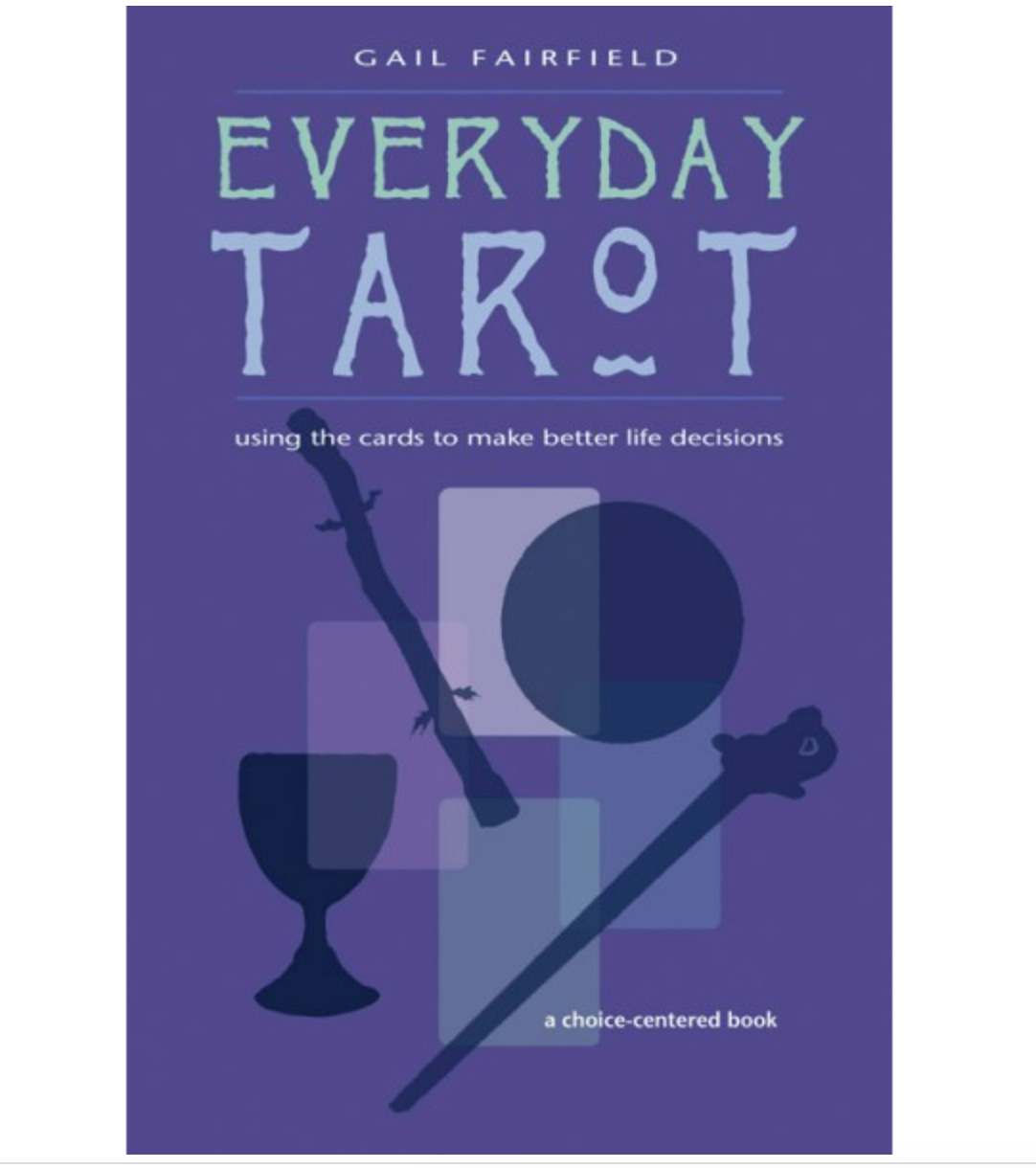
When I first read this book I’d already been into tarot for a while, and found these steps fit perfectly in with the process I’d already been doing. But being able to name these three steps - groundwork, analysis, synthesis - gives me something to come back to when I’m adrift.
I put “system” in quotes because, like with most anything to do with tarot, what can be called a system is really just a loosely defined set of guidelines to support you in what is ultimately your own unique intuitive process. Interpreting a tarot spread is always an uncharted journey through the wilderness, but these three steps give you a process to track a path. These apply to reading for yourself, or reading for others.
I’ve also been considering Gail’s three steps (and the sneaky fourth) it occurred to me that they align with the four aces of the tarot. Take that association or leave it…it may overcomplicate things… but I do find it interesting.
Ace of Cups
This is step zero because it’s the things you do before actually laying out the spread. Fairfield includes a section on this in her book, but she doesn’t call it step zero, that’s a me thing.
Fairfield suggests setting a comfortable environment, both physically and emotionally, before you begin the reading. Physical comfort involves sitting in a way that feels good and having peaceful (as much as is possible) surroundings. Emotional comfort means putting yourself or your client at ease. This could include welcoming them, small chat, establishing rapport.
During this step you also gather anything you may want or need for the reading. Obviously the deck you are going to use. I always like to have a water bottle with me (hydration is important y’all). Some readers may have certain candles, oils or incenses on hand for a reading. Perhaps something to take notes or record with. Whatever you require, this is the time to make sure it is ready.
A simple ritual I like to do here is wash my hands. As the soapy water runs down the drain, I picture any stagnant energy washing away so that I’m as clear a channel as possible when I pull the cards. This is why I’ve linked this step to the Ace of Cups: it is all about making sure you feel as at ease and prepared as possible so the reading can flow.
The final phase of step zero is clarifying the topic for the reading. This could mean phrasing a specific question, or hashing out the situation you’re looking to explore with the cards. When reading for yourself, you might first write a few paragraphs about what it is you’d like to get from the spread. When reading for another, give them time to share their story and what has led them to seek a reading.
Now you decide what spread you are going to use, shuffle and lay out the cards, and you’re ready to move into the upcoming “official” steps.
Ace of Pentacles
As mentioned above, I’d already been loosely following these steps before I came across this book. And for the groundwork step, I always begin by looking at the spread as a whole and asking what stands out, both to myself and to the person I’m reading for.
There are many things that might stand out initially. Perhaps a favored (or disliked) card has appeared. Maybe there’s a card that is remarkably on the nose (such as the Lovers in a relationship reading, 8 of Pentacles in a work reading).
Fairfield suggests other patterns to look for and I agree: are there a significant number of reversed cards (if you use reversals)? What is the balance between major and minor arcana? Are certain suits more prominent? Maybe multiple court cards?
Fairfield also points out that this step might happen very quickly. Groundwork can be as simple as taking a quick glance at the overall spread and letting quick first impressions arise.
I’ve linked this step to the Ace of Pentacles because it is the most practical step. It’s about observation and quantification. Noticing these broader patterns can create gateways that you may venture deeper into as you continue the reading process.
Ace of Wands
Analysis is the heart of the reading. When you picture interpreting a spread, most of what you likely picture is included in this step. The word analysis sounds very formal, but the actual process is quite intuitive.
You might go through each card in the order they are laid out. Or, you may feel intuitively guided to start with one of the cards noted in the first step, even if it isn’t technically the first in the spread.
Fairfield explains this step consists mostly of interpreting individual cards. You do this by focusing on the card’s “basic meaning… upright or reversed orientation… whether the card is neutral, positive or negative for the readee… (and) interpret the card, straightforwardly, in its position.”
The emphasis on interpreting the card within its position is important. Sometimes we can get lost in listing out the meanings we’ve learned for the card and forget to tie those meanings into the position in which the card appears. To use the Celtic Cross as an example, the same card could bring very different messages if it shows up in the position for “conscious awareness” vs “unconscious awareness.”
It is also crucial to connect the card directly to the topic of the reading. How specifically does it speak to your situation or question?
And of course, even though this step includes going through each individual card, you also have to keep coming back to the perspective of the first step, seeing the spread as a whole. How do the cards influence each other? How do they connect to form a narrative? Again, there can be some true analytics at work here, but it is also largely intuitive.
When I’m reading for others, I have a habit of asking “does this make sense?” as I’m going about the analysis step. At times I’ve thought I should stop asking this as it may make me sound insecure as a reader. But deep inside, I believe it is a valuable question. I like when readings are conversational. I like when a reading gives something useful to the person I’m reading for. I want the reading to make sense, and I want to know if it doesn’t so we can course correct.
I’ve linked this step to the Ace of Wands because I find that when analysis is at it’s best, it feels like tiny sparks igniting, igniting, igniting. A small flicker in this card that leads to a profound insight. A little gleam in that card that ties back to this OTHER card and brings this interesting advice. Your role as the reader is to do the best you can to conduct those little sparks and let their illumination shine through.
Ace of Swords
In a way, synthesis makes an ouroboros back to the first step of groundwork. Because once again you are looking at everything as a whole.
What are the key takeaways from this spread?
How would you explain the core message of the spread in 1-2 sentences?
How do you feel now compared to before the reading?
Which messages clicked the most, felt the most poignant?
What revelations do you have now that evaded you before pulling cards?
Is there anything from the spread you’d like to circle back to? Anything that needs clarification or re-examination?
Have any additional questions come up before we wrap up?
How will this reading change things going forward? What will you do differently?
What is still unknown? Has the reading given you more comfort in the unknown?
These are just a few of the questions I find myself asking during the synthesis phase. You might also incorporate your own rituals into this phrase. Perhaps you have a closing prayer to end a reading. Or a method of re-shuffling the cards to finish the session. Maybe you spend some time journaling. Whatever lets you, or the seeker, feel that the reading is complete.
I’ve linked this step to the Ace of Swords because here you use your intellect to identify what you’ve learned from the spread.
Even after the synthesis step is done, find ways to carry the reading forward with you. Allow tarot to transform you and it will.
Carrie
No posts
Comments
Nothing yet. Say the first thing.
Sign in to join the conversation.