
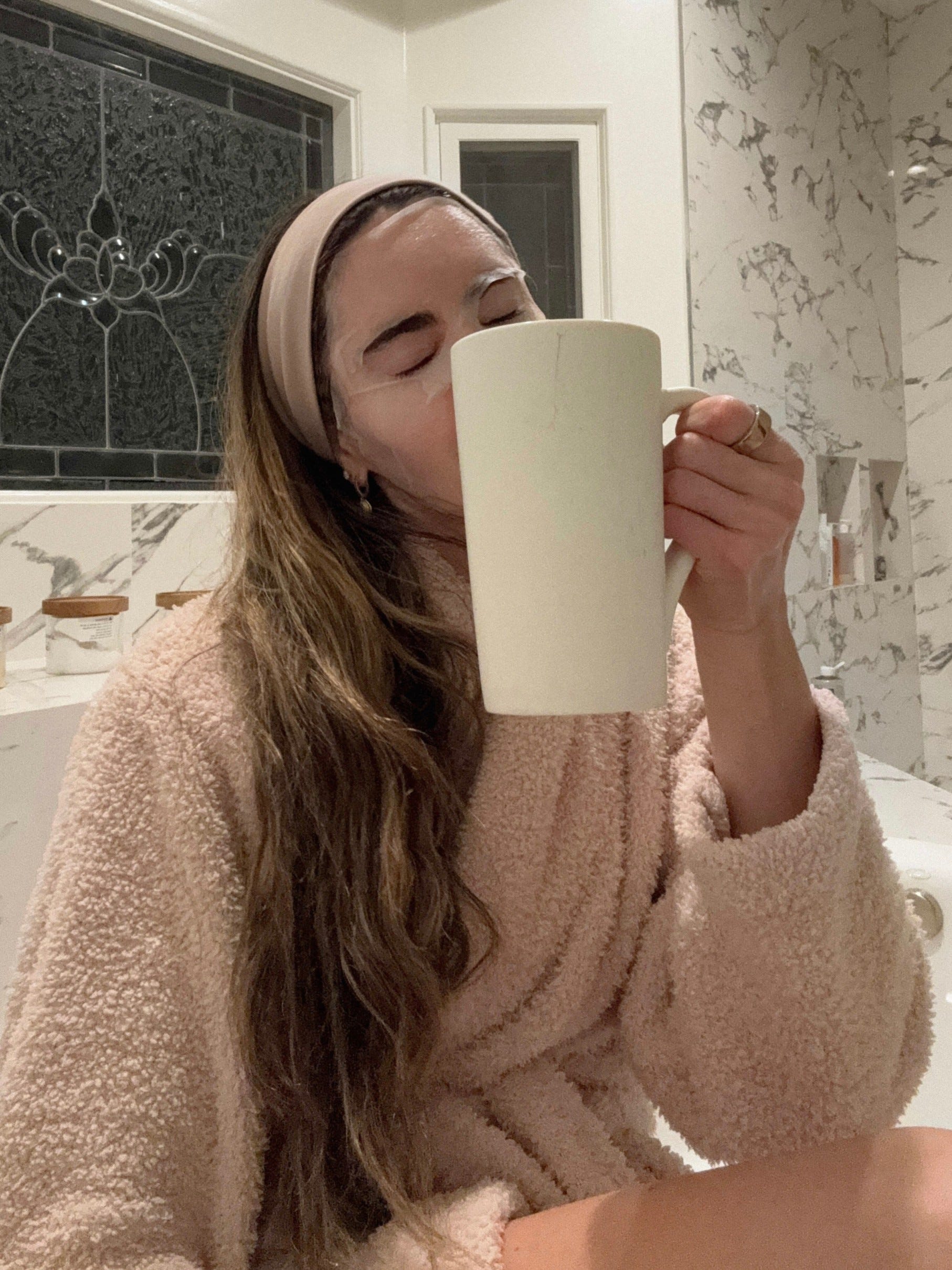
That Steven Bartlett clip everyone is talking about got me thinking about sleep hygiene. All the takes I’m seeing are on the extremes. Either that optimization has gone too far, or that alcohol is terrible and we shouldn’t do things that harm our sleep. I’m finding (as I increasingly do these days) that I fall somewhere in the middle.
I have an Oura ring. I don’t obsess over it, and I don’t use the data as a replacement for my own body signals. I decide how I’m feeling first. Do I feel like I slept well? Then I’ll look at the data to get a more complete picture of how I slept. Thinking about my own sleep hygiene protocol, it’s not one-size fits all. My standard, everyday protocol is pretty basic with a few things worth pointing out. But then there are the days where I know I need to go further than the standard. Either I haven’t been sleeping well and my cortisol is spiked and keeping me from falling asleep, or I’ve had too much caffeine (or other stimulants–more on that later) or, yes, I’ve had a few glasses of wine.
Try out each protocol for each case. This kind of framework has been really useful for me. I don’t feel like I have to optimize like crazy every single day, but sleep is important, and there are times when I do want to have a serious plan to fall back on to get a good night of rest.
My Standard Protocol
On a normal night I keep things simple. The whole point of a standard routine is consistency, so I run the same few things every night and don’t make a production of it.
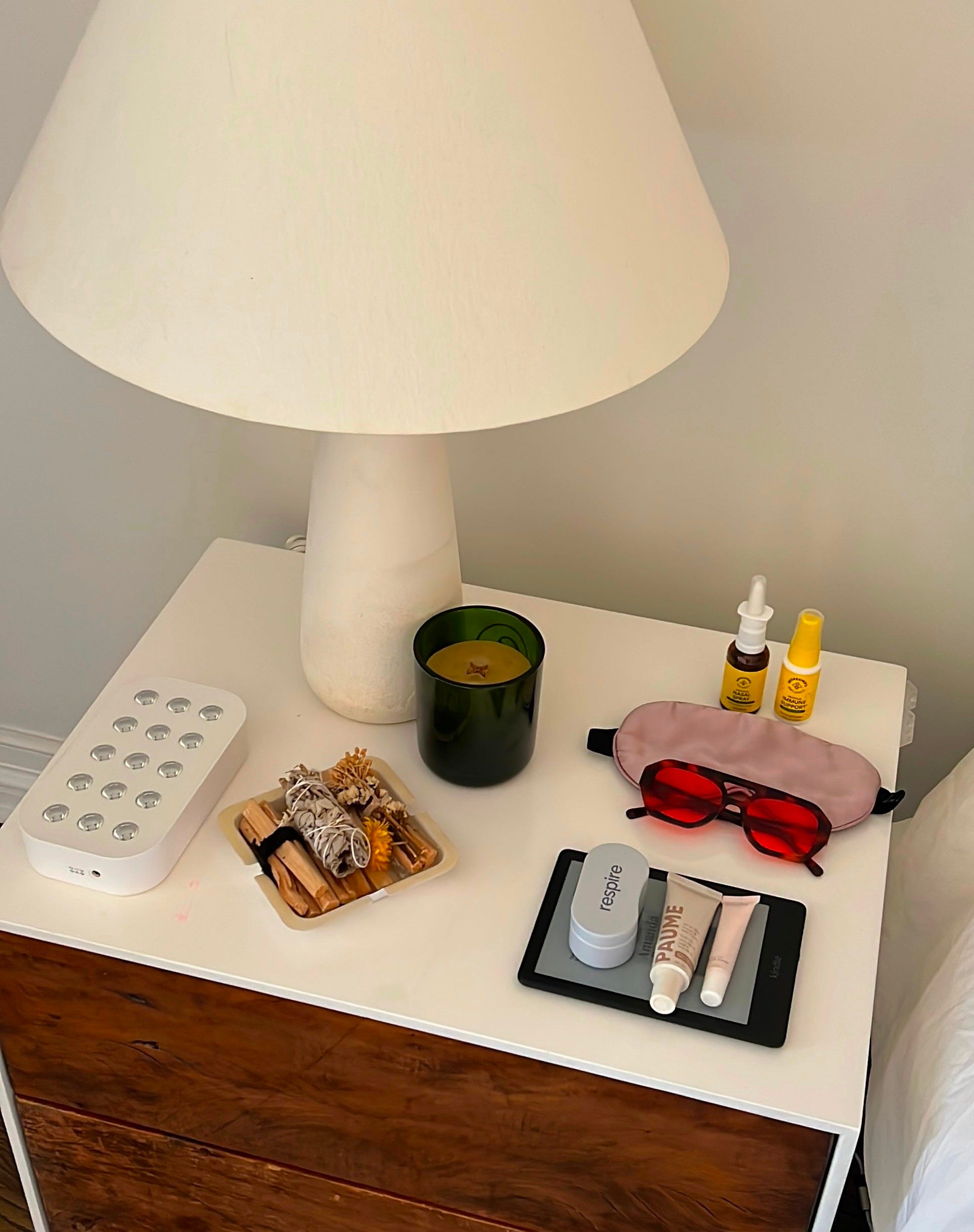
Soft light/Amber Light: Once the sun goes down, the overhead lights go off and I switch to soft, warm lamps, ideally red or amber. Amber light barely registers to your circadian system, so your body keeps making melatonin right on schedule. I also have dimmers on the lights so I can control the level of light and even begin to turn it down the closer I get to sleep time.
Keep the room cool, and crack a window: Everyone knows about the importance of a cool room. My husband likes 66 degrees and I like 68, so we compromise at 67. I also crack a window–just enough to circulate new air in while keeping the cold air from going out. A few studies found that better ventilation measurably improved sleep quality and next-day performance.
Beekeeper’s Naturals Stress Support: This is the only sleep support supplement I take nightly. It has KSM-66 ashwagandha, which has a cortisol-lowering effect that builds up over a few weeks of consistent use, not from a single dose, so taking it nightly is what keeps my baseline stress response steady over time. The L-theanine adds a gentler, same-night calm on top. For those who don’t know, L-theanine is an amino acid found in herbal tea leaves. It’s why drinking a cup of chamomile tea before bed can help relax you.
Keep my phone away from the bed: My phone charges across the room (if in my room at all), not on the nightstand. Mostly this is so I can’t grab it the second my eyes open in the morning.
Mouth tape: I find sleeping with mouth tape leaves me less dry in the morning, and I do find with forced nasal breathing I wake up feeling more refreshed, like I’ve gotten a better flow of oxygen during the night. The one hard rule with mouth tape is that you only do this if your nose is clear. If you’re congested or fighting a cold, skip it. If you’re chronically congested, try clearing with a gentle nasal spray before bed. I use Respire strips. They’re PFAS and BPA free and have great testing for heavy metals as well.
My Reset Protocol
I add some things in when I have had a few bad nights of sleep and need a reset. Particularly those nights where I’m tired but wired, completely wrecked but unable to wind down. The reason this happens is when you lose sleep night after night, your stress system ramps up. Your evening cortisol, which is supposed to be low at night, runs higher than it should, and your nervous system tilts toward fight-or-flight. My standard routine assumes my body just needs permission to sleep. When I’m overtired, it needs to be actively talked down.
Evening Meditation/Light yoga: This goes straight at the arousal. Slow breathing with a long, drawn-out exhale flips on the rest-and-digest side of your nervous system, and the exhale is the part doing the work. I keep the yoga gentle and restorative rather than a workout. I also try to treat it as rest instead of as trying to fall asleep, because the harder you chase sleep the more it runs from you. Taking the pressure off is part of how you bring the arousal down.
A Bath: A warm bath an hour or two before bed works through temperature. The heat opens up your blood vessels, and the drop in core temperature afterward is a genuine sleep cue, the same dip the cool room is helping along. People say Epsom salts for relaxation–but realistically you barely absorb magnesium through your skin, so chemically they aren’t doing much. If the ritual relaxes you, though, that still counts on a reset night.
My Caffeine Protocol
I have to admit something here, which is that I don’t do caffeine anymore. If I need a brain/energy boost, I take royal jelly. But royal jelly is still a stimulant and it can affect my sleep if I have too much. So the protocol I’m about to describe works the exact same for caffeine. Whenever I say royal jelly, just substitute caffeine in your mind.
If I’ve had too much royal jelly or if I’ve had it too late and need to offset it, I find that the only thing that works is supplement intervention. A biochemical problem requires a biochemical solution. Here are some things to try:
Glycine (2g): Glycine acts as a calming signal in your nervous system, helping lower your core body temperature and quiet brain activity to promote faster sleep onset and better sleep quality. Research shows that 2-3 g of glycine before bed improves sleep quality and reduces next-day fatigue, even after nights of restricted sleep.
Magnesium Glycinate (120mg-200mg): Magnesium glycinate is the better-absorbed version of magnesium, which can be very beneficial for sleep. Some people have great results with this, some people have no results, some people have stomach issues. The glycinate form should help avoid the stomach issues of typical magnesium, but still something to look out for.
Melatonin (.5-1mg): Melatonin gets a bad rap these days, but it’s really very innocuous. Our bodies naturally produce melatonin, which makes it ideal for supplementation. You definitely don’t want to be relying on it every night, but the occasional supplementation is just fine. Some people wake up groggy with melatonin. If that’s you, try lowering the dose. Many people are taking too high a dose. I take just 1mg, which is a pretty low dose and it doesn’t make me groggy. But you can try starting at .5 mg and working your way up. I take a melatonin when I remember at least 30 minutes to an hour before going to bed after over-doing it on the royal jelly.
I would recommend trying each of these in isolation to see which are most effective for you. With glycine, you can start with 2g and go up to 3g. With melatonin you can start with .5mg and go up to 3mg–but the lower the better with melatonin. With the magnesium you could go higher than 200mg. This is a fairly low dose. I don’t think you’ll need to stack all three–that could lead to morning grogginess.
For each of these, I’d recommend taking them 30-60 minutes before bed if you can remember.
My Drinking Protocol
If you drink, you know. I still drink on occasion, and when I do, I used to constantly wake up at 3am. I found a protocol so that drinking doesn’t disrupt my sleep anymore. It’s a short protocol with just one supplement. Remember, you don’t want to overload your liver with too many supplements to deal with on top of the alcohol.
Raw Honey (1 tablespoon): After a few drinks, your liver drops everything to clear the alcohol — including its overnight job of holding your blood sugar steady. It dips, adrenaline spikes, you’re up at 3am. A tablespoon of raw honey before bed tops off the liver’s reserves, so it has fuel to spare. We sell a great raw superfood honey at Beekeeper’s Naturals, but I wouldn’t recommend it for this purpose. It has royal jelly in it which is a mild stimulant and so could keep you up instead of putting you to sleep.
Magnesium Threonate (145mg): Magnesium threonate is good for boosting deep sleep and preventing middle-of-the-night awakenings. This makes it ideal for nights of drinking where the issue is less falling asleep and more waking up in the middle of the night. Some people report adverse gastrointestinal side effects with magnesium. Less common but possible is increased anxiety or difficulty falling asleep. Of course, you should always be careful when taking any supplements with alcohol. There aren’t any major interactions between magnesium threonate and alcohol that should be an issue, but consider consulting a doctor on this.
A Hydration Packet: Another reason you can wake up in the middle of the night is dehydration. A good sugar-free hydration packet like LMNT gives you the sodium you need to help you hold onto the water you drink, while potassium steadies your heartbeat and nervous system, the things that otherwise leave you jolting awake around 3am.
Comments
Nothing yet. Say the first thing.
Sign in to join the conversation.