
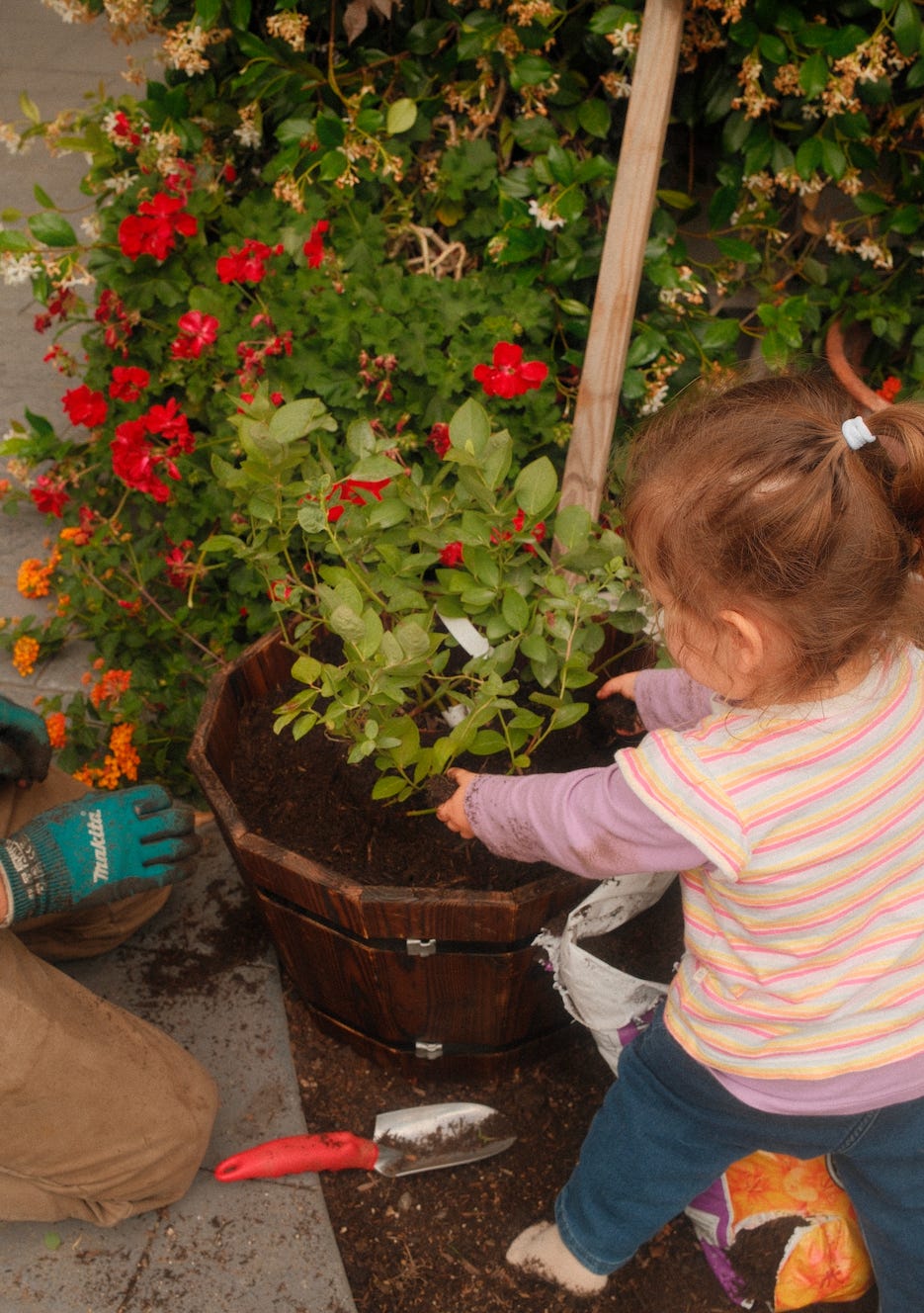
Every morning my daughter walks outside to check on our garden. She crouches down and counts how many bees she can find. The other day we counted four (our record so far.) She helped plant it, so she treats it like it’s hers, and it’s amazing to see how that sense of ownership increases her appreciation of nature. It’s worth dozens of hikes and camping trips.
I moved to a new house a few months ago and I’ve had a running list of projects I’ve been wanting to do. Near the top was building a pollinator garden. I’ve been a beekeeper for over a decade and I’ve written before about what you can do to help save bees including planting a pollinator garden. I even wrote a children’s book about pollination because I think it’s so important for my daughter to learn an appreciation for nature. But until now, I hadn’t had enough of a yard to actually build a dedicated pollinator garden of my own.
Pollinators support roughly 35% of global food production and they’re in steep decline. A single garden with the right plants can become a real habitat for them, especially native bees that forage close to home.
I found an awesome professional gardener named Malcolm who really understands the local flora in Southern California, and together we turned a few patches of grass in my yard into something that’s already attracting life.
It was honestly easier than I expected, and I think anyone can do some version of what we did regardless of their gardening experience or their budget. Malcolm helped me memorialize everything we did so you can replicate it.
As I write this, I’m looking out onto the yard we built. There’s something really beautiful about taking the time to make the small plot of earth that you own a safe haven for other creatures—a small part of your local ecosystem.
Building a pollinator garden really comes down to four things: assess your space, prep your soil, pick the right plants, and put them in the ground.
Before you buy a single plant, spend time in your yard at different times of day. Watch where the sun hits, where water pools, where you actually spend time. You’re looking for zones that get good light and that you’ll see regularly, because a pollinator garden you can watch from your kitchen window is one you’ll actually maintain.
When Malcolm came to my house, the first thing he did was walk the entire yard. He ran his hands through the soil in every zone we’d be planting in. He noted the light, the existing plants, and the overall layout. From that visit, we put together a plan:
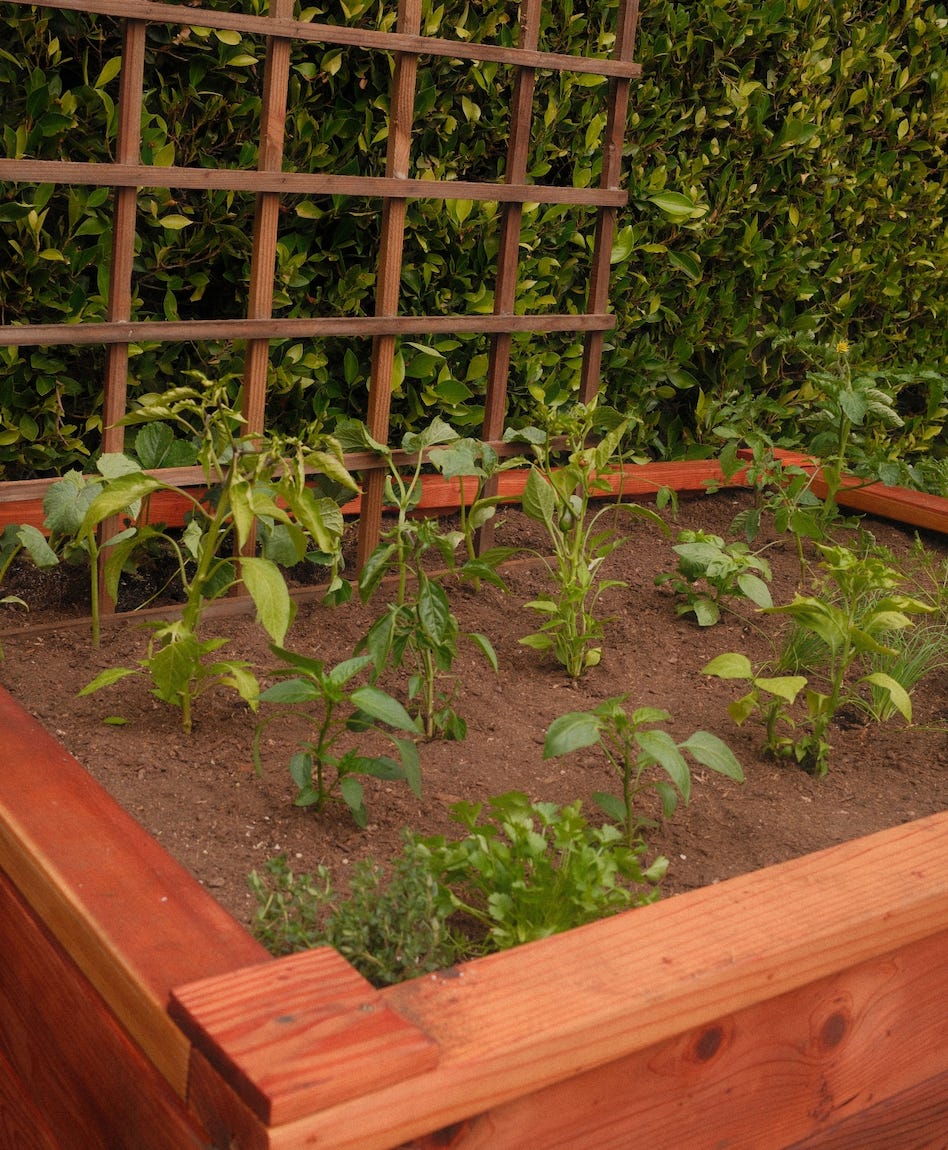
One 4 x 6 raised bed for vegetables and herbs
Three separate native and pollinator zones
Fruit tree care for an existing orange tree
A soil activation plan
We placed the native zones adjacent to the veggie bed and fruit trees so pollinators working the natives would also service the food crops. The two sides of the garden need each other.
If you’re in Southern California (or anywhere with heavy clay), your soil is probably compacted and relatively lifeless. You need to wake it up before you plant anything. The goal is to introduce microbial life that makes nutrients actually available to plant roots and breaks up the clay so it can absorb water.
Work compost and biochar into your soil and water it in. You can buy both at most nurseries. Biochar acts as long-term housing for beneficial microbes. If you can get premade vermicompost tea (available online), even better. We also used Dr. Bronner’s peppermint hemp soap as a surfactant to help everything penetrate the clay. Malcolm said the peppermint and hemp would also double as pest deterrents. Then give the soil at least a few days to activate before you plant. A week is better. Three weeks is ideal.
As a beekeeper, this is the part I had the strongest opinions about. You want to balance two things: 1. native plants that local pollinators already have relationships with, and 2. enough variety that something is blooming in every season so pollinators always have a reason to be in your garden.
A lot of people don’t realize that about 70% of native bee species actually nest underground in bare soil, not in hives. And they forage close to home, which means a small patch of the right plants in your yard can become an underground nesting bee’s entire habitat. You’re also supporting butterflies, hummingbirds, and dozens of other species that move pollen. When my daughter and I count bees in our garden, we’re usually seeing native species I couldn’t have identified a year ago. They showed up because we gave them a reason to.
If you’re not in Southern California, your plant list will look completely different from ours, but the principle is the same. In my guide to saving pollinators I linked to the Pollinator Partnership’s planting guides, which let you plug in your zip code and get a region-specific list. It’s the best free resource I’ve found for this.
Here’s what we chose in our garden:
In the raised bed:
Cucumbers, tomatoes, peppers, strawberries, green onion, garlic, and herbs including basil, chive, oregano, thyme, and parsley. The pepper selection was intentionally broad — shishito and jimmy nardello on the mild end, up through jalapeño, serrano, habanero, and thai chili.
Blueberries went in a half-wine barrel near the kitchen window pollinator zone.
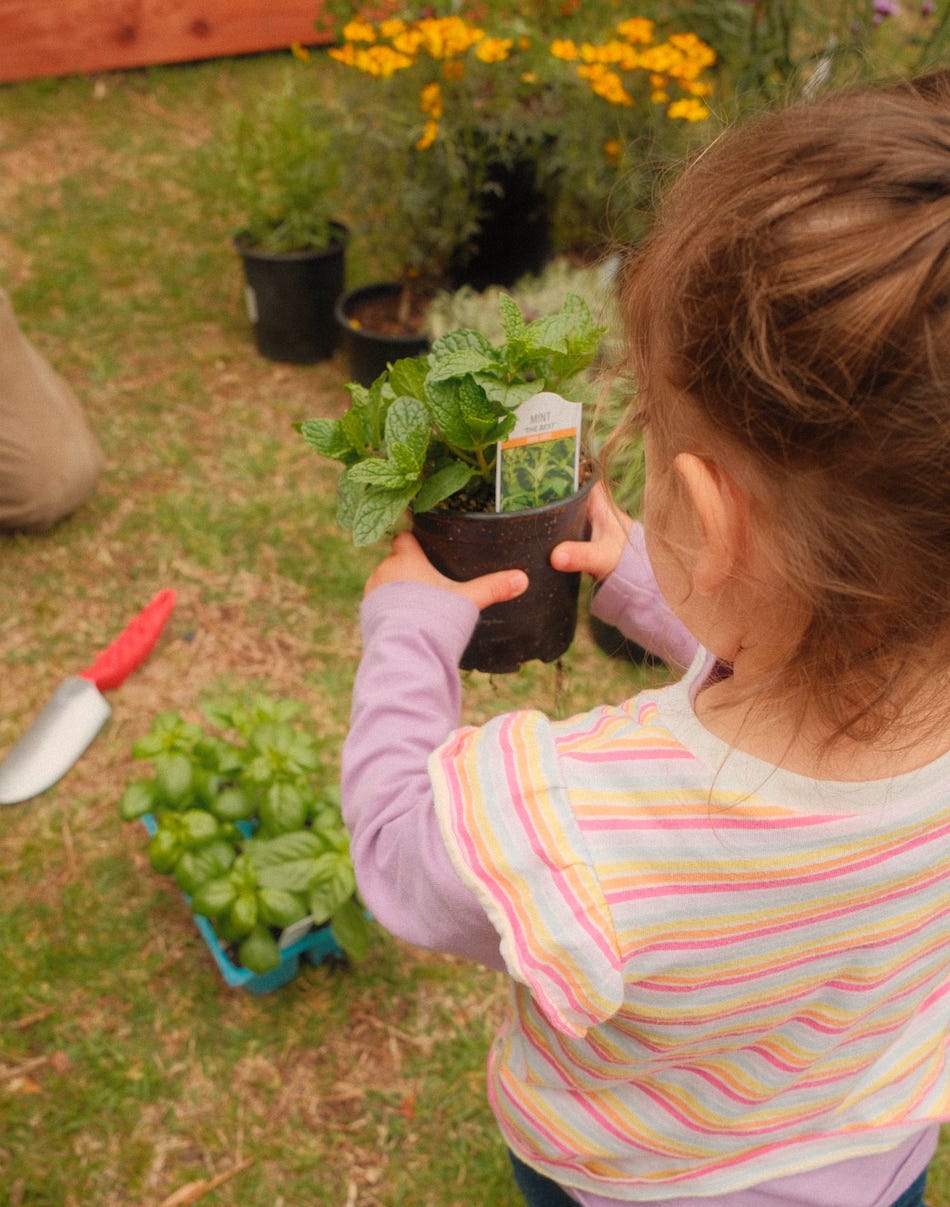
Spearmint got its own container because it will take over everything if you let it (it also deters coyotes, which is a real consideration in LA).
Borage is a total pollinator magnet and I knew I wanted it as a bridge between the food crops and the pollinator zones.
In the three native and pollinator zones: We drew from a palette of California natives and Mediterranean plants that are both drought-tolerant and functional for pollinators. We selected plants that hand off blooms season to season. Remember, besides native plants, the goal is that at any point in the year, something is flowering.
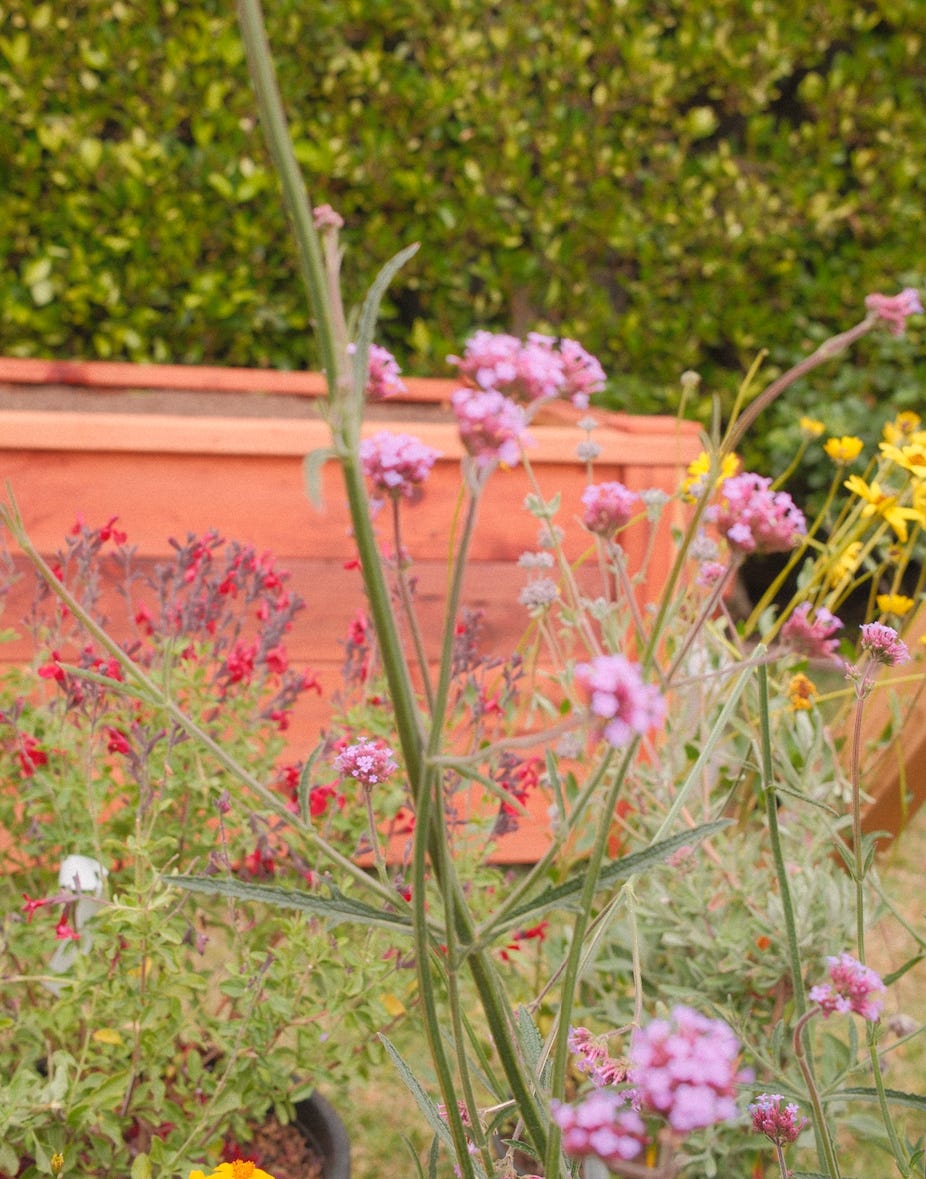
Multiple sages (Cleveland, Hummingbird, and Bee’s Bliss) because they’re workhorses for pollinators and extremely low-maintenance once established.
California fuchsia, buckwheat, and milkweed. I insisted on milkweed because it’s the only plant monarch caterpillars can eat. No milkweed, no monarchs.
California lilac, monkeyflower, and manzanita add structure and depth.
Lavender in a few varieties, California poppy, goldenrod, and Mexican marigold round out the color and seasonal coverage.
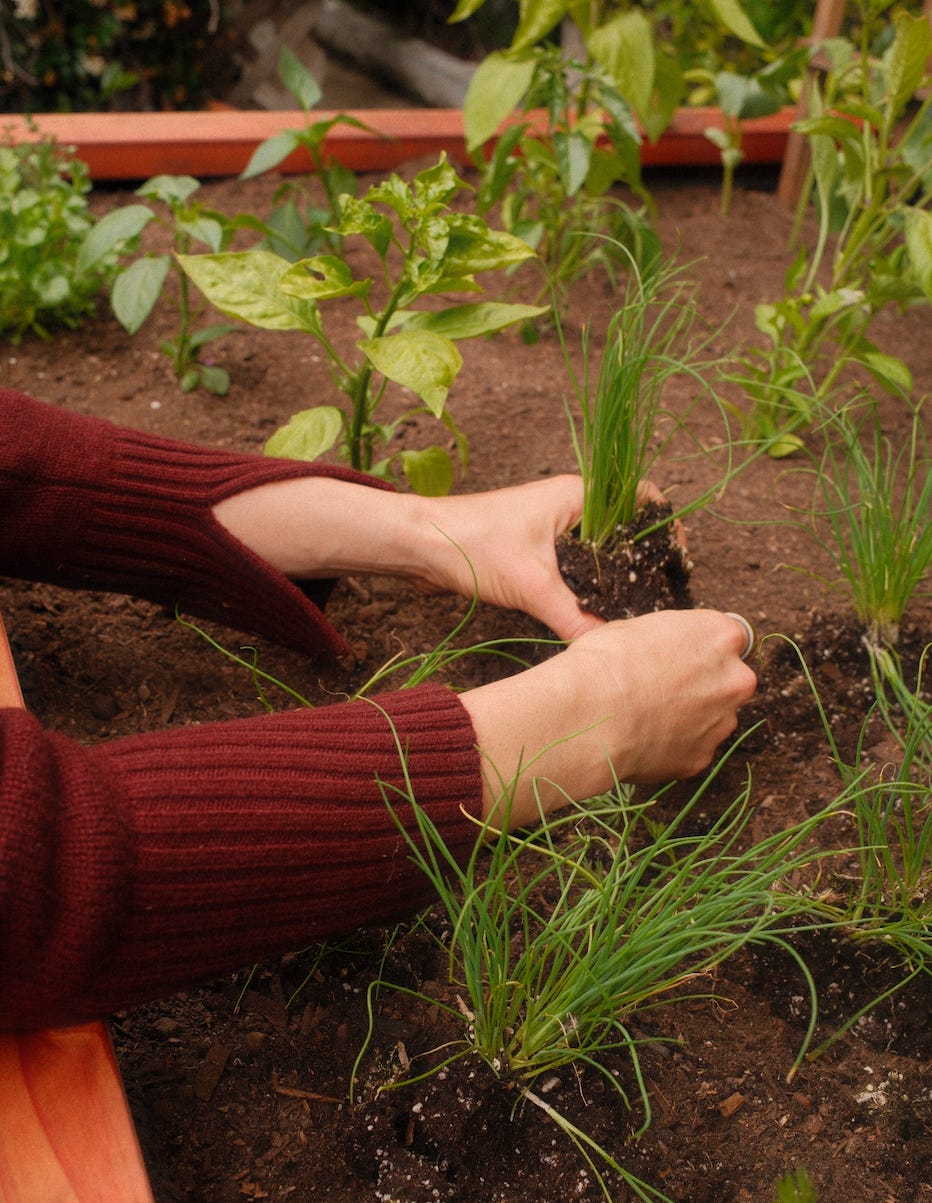
If you have the budget, a raised bed with drip irrigation on a timer makes the veggie side of this almost self-sustaining. We built our bed on-site from California redwood with a food-grade sealant, set on pavers to prevent sinking. But pots, half-wine barrels, or even a simple mound of amended soil will work.
For the native zones, you’re just planting directly into the ground you’ve already prepped.
The whole thing took about two weeks, but the active work was concentrated into four days with a half-day for site prep and soil activation, one day for bed construction, one day for planting everything, and a focused session for fruit tree care. Planting day was all hands on deck. My daughter and I were out there all day. Well, I was out there all day and my daughter was out there in like ten minute spurts.
The full project came in around $4,000. That included Malcolm’s fee, the custom redwood raised bed with irrigation, three native and pollinator zones, a curated mix of vegetable and herb starts, light fruit tree pruning, and the soil activation throughout.
If you want to scale down, you can swap the custom bed for a few nice pots or half-wine barrels, water by hand instead of installing irrigation, and start with one pollinator zone instead of three. The one thing Malcolm told me not to cut is soil prep. It’s a relatively small line item that pays off across every other investment you make.
One of the best parts of planting natives is that they evolved for the climate you plant them in. Once established, they really don’t ask for much.
Malcolm tells me that the first year is the most work. Your plants need consistent watering while their roots establish, even the drought-tolerant ones. After that first year, all that established native plantings need is a deep watering roughly once every three to four weeks during dry months. The raised veggie bed needs more attention (you’ll replant seasonally and keep an eye on pests) but the irrigation timer handles watering.
Leave spent flower stems standing through winter rather than cutting them in fall—overwintering insects use them as shelter, which is the whole point of a pollinator garden. Native plants don’t need fertilizer. They evolved in lean soil. Mulch annually to retain moisture and keep weeds down, but make sure not to mulch every square inch. About 70% of native bee species nest underground, so leaving a few patches of bare, undisturbed soil in or near your pollinator zones gives them a place to actually live, not just eat.
A pollinator garden treated with synthetic pesticides is worse than no garden at all. You’re attracting bees and butterflies to a place that poisons them.
Roundup is still the most common herbicide in American yards, and neonicotinoids (the class of insecticides most toxic to bees) are in more products than people realize. Many plants sold at big-box nurseries are pre-treated with neonicotinoids before they even reach the shelf. When you’re buying plants, ask whether they’ve been treated, and buy from local nurseries that can tell you their sourcing.
For weeds, the best defense is a thick layer of mulch and hand pulling. If you want something stronger, horticultural vinegar (20% acetic acid, much stronger than what’s in your kitchen) works as a contact herbicide on young weeds. You can find it at most garden centers. We used a homemade vinegar-chili spray in certain areas of our yard for pest and animal deterrence, and Dr. Bronner’s soap as a surfactant, both of which did the job without putting anything toxic into the soil.
For pests, neem oil and insecticidal soap handle most of what you’ll encounter in a home garden. Companion planting helps too. The reason we planted so many sages and spearmint is that their scent naturally repels certain insects. A healthy, biologically active soil (which is why we prepped ours) also produces plants that are more resistant to disease and pests on their own.
This is one area where I don’t think there’s a middle ground. If you’re building a garden for pollinators, commit to keeping it clean.
This is the full list of materials for a project like ours. Scale up or down depending on your space and budget.
Soil prep
Compost (available at any nursery)
Biochar
Vermicompost tea (premade is fine — available online)
Dr. Bronner’s peppermint hemp soap (surfactant for clay soil; also deters pests)
Raised bed (or alternatives)
Lumber (California redwood or quality cedar) or large pots or half-wine barrels
Pavers for the base (prevents sinking)
Food-grade sealant
Drip irrigation system with timer (optional but worth it)
Plants
Native and pollinator plants. See the full palette in “Pick Your Plants” above, or use Pollinator Partnership’s guides for your region
Vegetables, herbs, and fruit. See “Pick Your Plants” above. Most warm-season crops (tomatoes, peppers, cucumbers, herbs) grow in every region, so this list doesn’t change the way your native plants will.
Chemical-free pest and weed control
Horticultural vinegar (20% acetic acid — not household vinegar)
Neem oil
Insecticidal soap
Dr. Bronner’s peppermint hemp soap (surfactant and pest deterrent)
Vinegar-chili spray (animal and pest deterrence)
Mulch (annual application for moisture retention and weed suppression)
P.S. If you want to get in touch with Malcolm, you can reach him at malcolm.qsvm@gmail.com. He’s currently taking bookings for the fall-winter season in Southern California!
Comments
Nothing yet. Say the first thing.
Sign in to join the conversation.