
Dispatch: Science, New Discoveries, Biology, Evolution, Paleontology, Fossils, Mammals
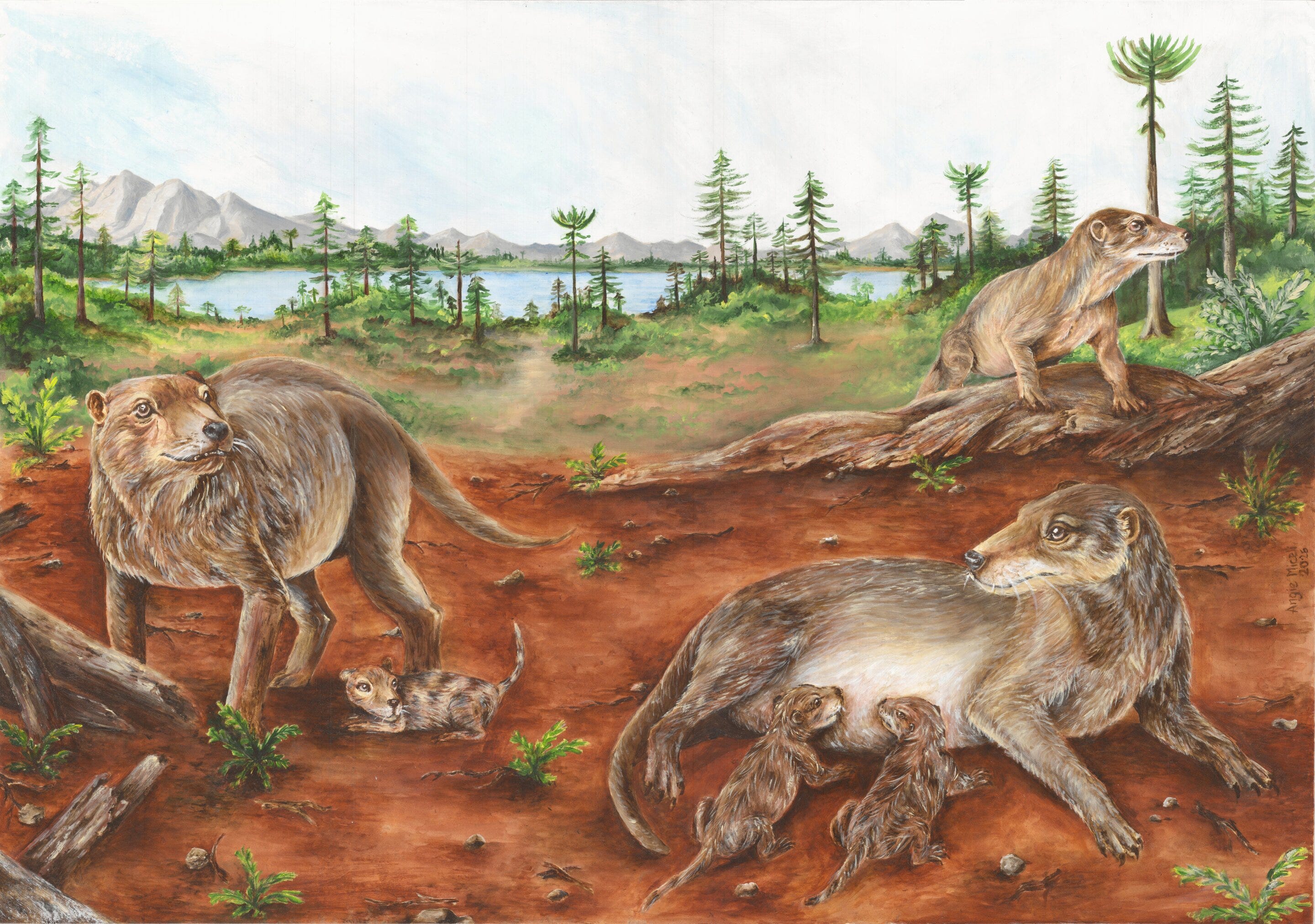
“Triassic Mothers,” a life reconstruction of a group of Chiniquodon theotonicus individuals: a pregnant female (left) as well as a female (right) breastfeeding a few relatively large neonates. Credit: María de los Ángeles Miceli Baro.
Long before the first true mammals were thought to have walked the Earth, some ancient cynodonts may already have been nurturing their young in ways strikingly similar to those of modern mammals. Now, a new study in Frontiers in Mammal Science offers the first compelling evidence that these distant relatives were giving birth to live young, not laying eggs as previously believed.
“We show for the first time that live birth was present in at least one mammalian ancestor, Chiniquodon theotonicus, which lived approximately 236 million years ago,” said lead author Dr. Leandro Gaetano, a paleontologist at the National Scientific and Technical Research Council (CONICET) in Argentina.
“This implies that viviparity among early cynodonts originated in the mammalian lineage at least 95 to 90 million years earlier than previously thought.”
Unraveling an ancient mystery
“Cynodonts prospered in the Triassic, a period of recovery and restructuring of ecosystems after one of the most devastating mass extinctions in life history,” explained senior author Adriana Mancuso, a researcher at CONICET who focuses on the development of terrestrial ecosystems.
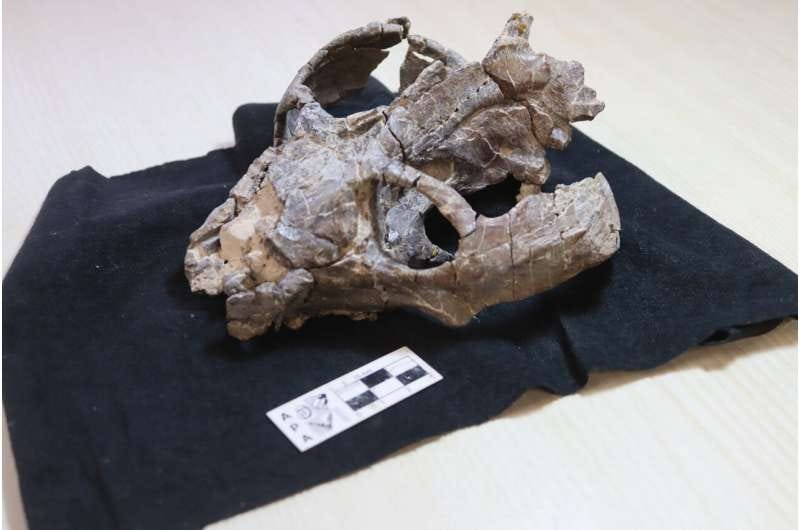
Skull of the Chiniquodon theotonicus individual that was used for this study. Credit: Leandro Gaetano
The story began in a postgraduate classroom, where a sharp-eyed researcher noticed an unusual growth mark in the bone of a Chiniquodon theotonicus fossil unearthed in the wilds of northwestern Argentina. Closer examination revealed a neonatal line, a subtle ring etched into the bone, mirroring the rapid burst of growth that follows birth in living animals. This tiny marker hinted at a much larger evolutionary story.
To test their hypothesis, the team compared the size of newborn and adult C. theotonicus with thousands of living mammals, reptiles, and birds to identify patterns that may reveal how these ancient creatures brought new life into the world.
“If mammalian ancestors were egg-laying or viviparous has been considered an inscrutable mystery,” said Gaetano. “We came up with a somewhat ingenious set of methods to get at something very difficult to analyze in the fossil record.”
A surprising weight at birth
By carefully measuring the fossil’s bones, the researchers estimated that this ancient animal weighed about 1.7 kilograms at birth, remarkably hefty for its kind, and grew to around 12 kilograms before its death. That means the newborn Chiniquodon was already 14 percent of its adult size, a proportion that stands out among its Triassic contemporaries.
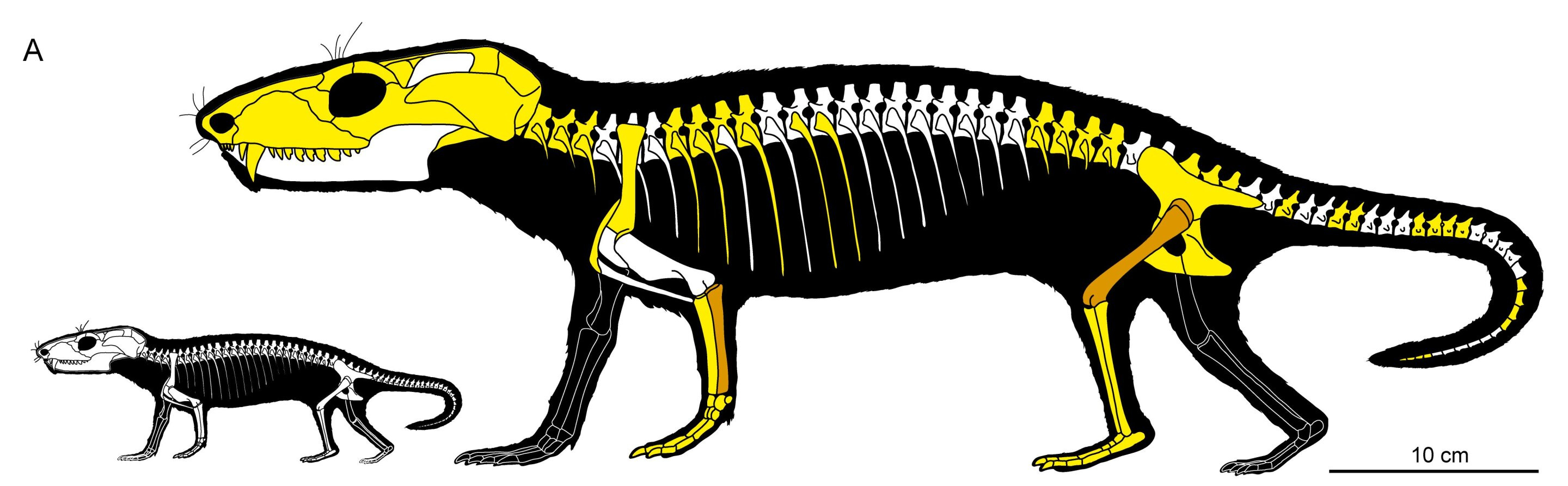
Representation of neonate and adult Chiniquodon theotonicus. Recovered (yellow) and histologically analyzed (orange) bones of specimen CRILAR PV109, the individual used in this study. Credit: Gaetano et al., 2026. View in Science Journal
Representation of neonate and adult Chiniquodon theotonicus. Recovered (yellow) and histologically analyzed (orange) bones of specimen CRILAR PV109, the individual used in this study. Credit: Gaetano et al., 2026
In today’s world, reptiles of similar size, such as turtles, snakes, and crocodilians, produce hatchlings that are tiny by comparison, weighing less than 1% of their adult mass.
Birds such as cranes, pelicans, and vultures, though larger at hatching than reptiles, still produce young that weigh only a small fraction of their adult weight.
But among mammals, the story changes. Newborns can be much heavier, sometimes nearly a fifth of their adult weight. The bay duiker antelope, for instance, gives birth to young that rival the newborn Chiniquodon in weight.
These comparisons exclude the egg-laying monotremes and marsupials, whose tiny, underdeveloped young follow an alternative evolutionary path.
“We were amazed to find that C. theotonicus grouped with extant placental mammals, being clearly distinct from other amniotes like reptiles or birds,” said Gaetano.
Rewriting A New Evolutionary Story for Mammals
“In cynodonts, embryonic tissues were never observed before, let alone a neonatal line,” said co-author María Miceli Baro, a graduate student at the University of Buenos Aires. “Through our analysis, we found that a trait that is generally linked to evolutionary success was present in animals long before true mammals originated.”
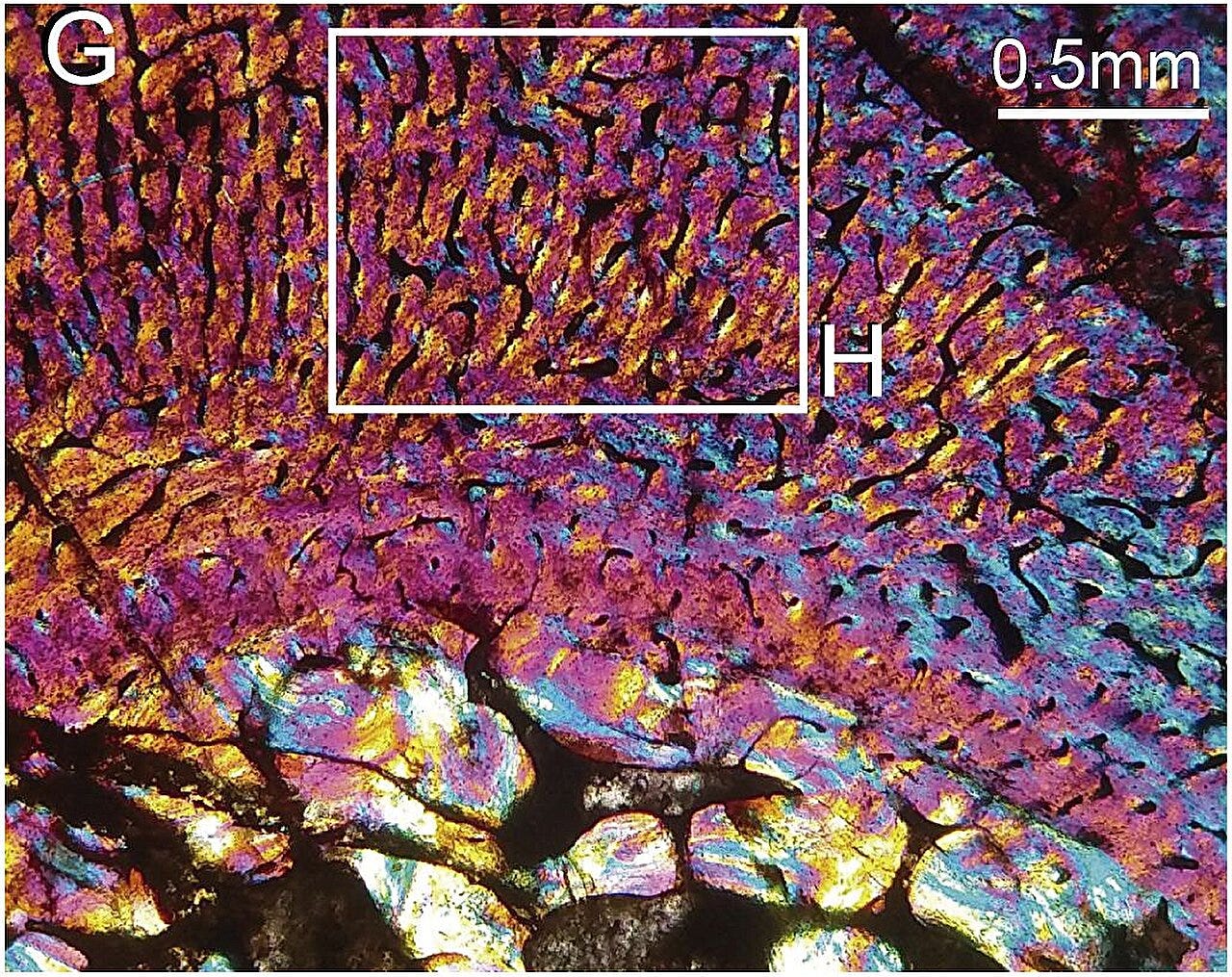
The neonatal line in Chiniquodon. Credit: Gaetano et al., 2026. View in Science Journal
The researchers said it is very well possible that C. theotonicus does not represent an isolated case of viviparity among cynodonts. It could be evidence of the general switch from laying eggs to giving birth to live young early on in the mammalian lineage. But further studies are needed to provide more evidence to test this hypothesis. “Still, it looks like some cynodonts were in fact very similar to present-day mammals.” —concluded Gaetano.
Until now, scientists believed that live birth was a relatively recent evolutionary change in the mammalian family tree. This revelation opens the door to further questions: What other traits, long thought to be modern, might have deeper roots in our ancient ancestors?
by
Carlita Shaw
Reference
Early Origin of Viviparity in the Mammalian Lineage, Frontiers in Mammal Science (2026). DOI: 10.3389/fmamm.2026.1845319

Coming out soon in 2026: Multidimensional Nature
📘 (2015)The Silent Ecocide: The Environmental Crisis is a Crisis of Human Consciousness
📘 (2020) Surviving Depression in a Depressing World: An Ecological Perspective
📘 The Silent Ecocide Redux (2024 updated edition) → Paperback | Kindle
This Newsletter is entirely reader-supported, allowing me to investigate stories that mainstream media rarely covers, ranging from wildlife conservation and environmental science to consciousness, ancient knowledge, and the implications of the current state of the planet for the future of humanity and the creatures we share this beautiful blue-green planet with. Your support helps fund independent research, field investigations, and the time needed to produce in-depth, evidence-based articles free from corporate influence.
Supporters receive: in-depth subscriber-exclusive investigations, early access to podcast guest question requests, and the hidden archives not seen on the public newsletter website. A vast library of evergreen articles and new books, exclusive healing online consciousness exploration workshops, and live Q&A sessions. Your support shapes future research into some of Earth’s and humanity’s greatest mysteries.
Comments
Nothing yet. Say the first thing.
Sign in to join the conversation.