
In culinary school, I learned about the “mother sauces.” They were all Euro-derived, like hollandaise and beurre blanc, and they were all intended to accompany a finished dish.
Aglio e olio (garlic and oil) is an inversion of that approach. While it is definitely a sauce for pasta, it is also a cooking medium, a foundational flavor, and something you can build upon and use to create entirely new dishes.
In the most bare-bones application of aglio e olio, the (very) al dente pasta finishes cooking in the garlic-oil mixture, where the pasta absorbs the sauce and is enveloped in sauce. As you add other ingredients to this formula, they become flavored, and they add flavor, which, frankly, changes everything.
For example, you can use your pasta water to par-cook broccoli pieces, then add them straight into the garlic mixture. Now you’ve opened up an estuary of flavor—the sweet vegetal qualities of the broccoli change the flavor of the foundation, and the luscious garlicky oil gets sucked into the florets. When you toss and mix the pasta into that situation, the broccoli may break into smaller bits, which thicken the sauce, and everything can then Become One.
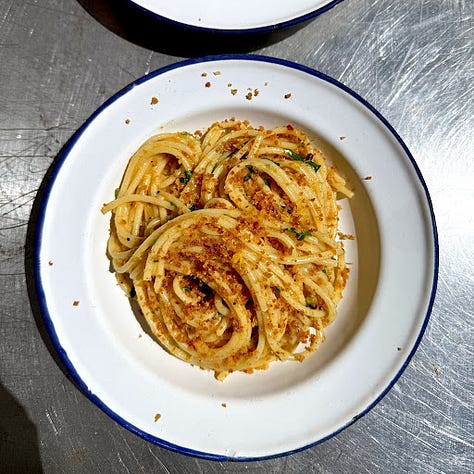
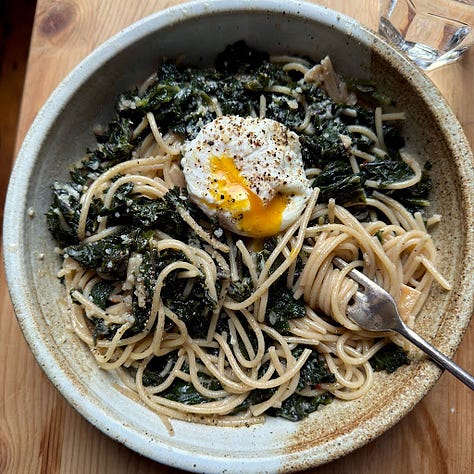
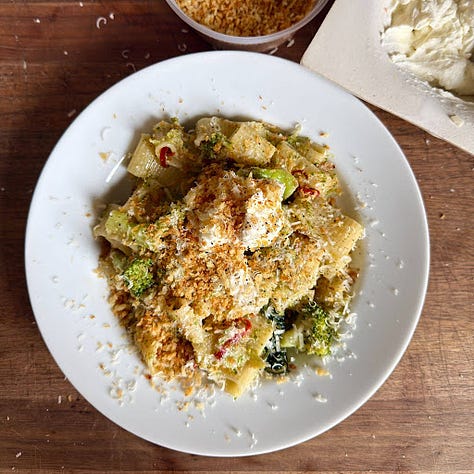
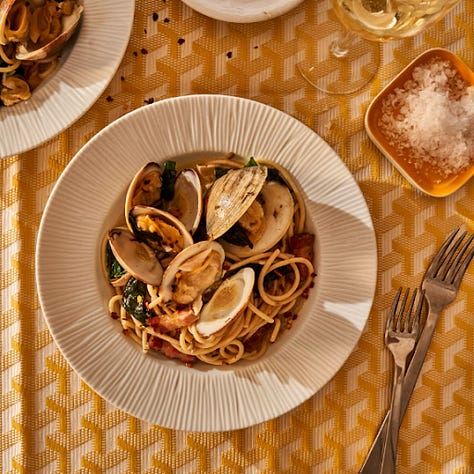
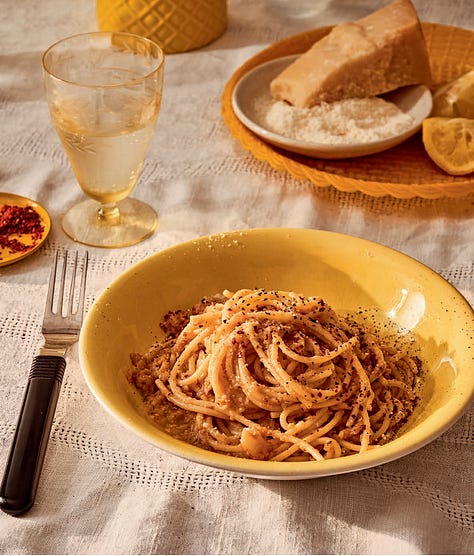
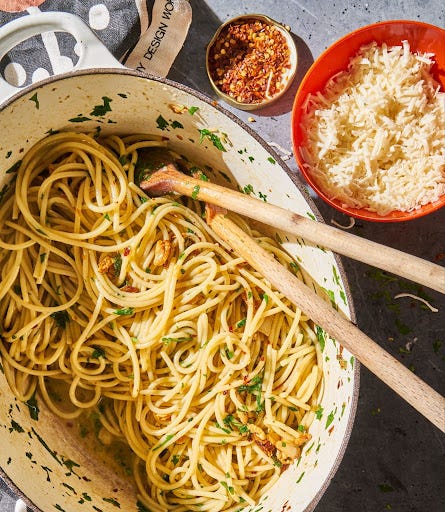
PDFs for all of these recipes are at the bottom of this post
If you’ve spent any time with my recipes, videos, or newly-launched Spin It tool, you can guess where I’m going next. If broccoli works, then the whole dang cruciferous family can get involved. Cauliflower, cabbage, broccolini, broccoli rabe, and romanesco share broccoli’s physical attributes; those conversions are very 1:1. Expand the circle wider and net leafy greens from the same family: all types of kale; escarole; mustard greens; collards; and turnip greens can be blanched in the same water you’ll use for the pasta and added right to the sauce.
Tender greens that are delicious raw, such as arugula, Swiss chard, spinach, and watercress, can go straight into the sauce when you add the pasta; they need hardly any time to warm through and wilt. Tender green beans, fresh favas, English peas, even shelled edamame can replace a leafy green. Spring is a perfect time to make artichoke pasta—yep, it starts exactly the same way. And on and on. (Start playing around by clicking the button below.)
Consider the base, as well. Sometimes I feel like adding some sliced shallot or leek along with the garlic. You could make it as spicy as you want with crushed red pepper flakes, or bring a more lemony heat with a bunch of freshly ground black pepper. Swap the oil for butter and you have the perfect pairing for a crispy mushroom pasta. This is a great time to deploy the Swiss chard stems you’ve been hoarding. (Oh I know you’ve been hoarding them.) Add anchovy fillets, or don’t! Stir in some grated bottarga to go straight to the Riviera! Throw a handful of cherry tomatoes in there, then littleneck clams, and now you’re making spaghetti with clams! Add shrimp and cut the oil 50/50 with butter and you’re sitting down to spaghetti shrimp scampi.
The point is: these are all variations on aglio e olio, and each is a new dish. If you were a recipe developer, you could publish a new recipe every time you came up with a variation that worked and tasted good to you. I should know!
The ability to riff and cook without a recipe is one of the biggest and funnest flexes in a cook’s life. I hope this base technique and all the inspiration for spinning it gives you the confidence you need to do your own thing.
Comments
Nothing yet. Say the first thing.
Sign in to join the conversation.