
The words spilt on Christopher Nolan’s version of “The Odyssey” could no doubt fill a wine-dark sea. For weeks now, we’ve been bobbing in waves of reviews, raves, rants and counter-rants, scoops on Zendaya’s premiere earrings, news stories on Matt Damon’s biceps double, and sober essays on the movie as commentary on Trump-era power dynamics.
Forgive me, reader, as I dump my own cup into this rising sea. Much has been made of Nolan’s trademark sound and fury dominating the story, of the clamor and the clanking of swords, the blood-and-sweat drama of the battle scenes. But amid all the hot takes on why a 2700 year old story still speaks to us—we who live around a hundred generations down from Homer’s day—what struck me most deeply, on leaving the cinema, was the movie’s evocation of a theme for our times: limbo. Under all the action film’s noise, a far more chilling theme lurks: stasis, and its attendant horror, uncertainty.
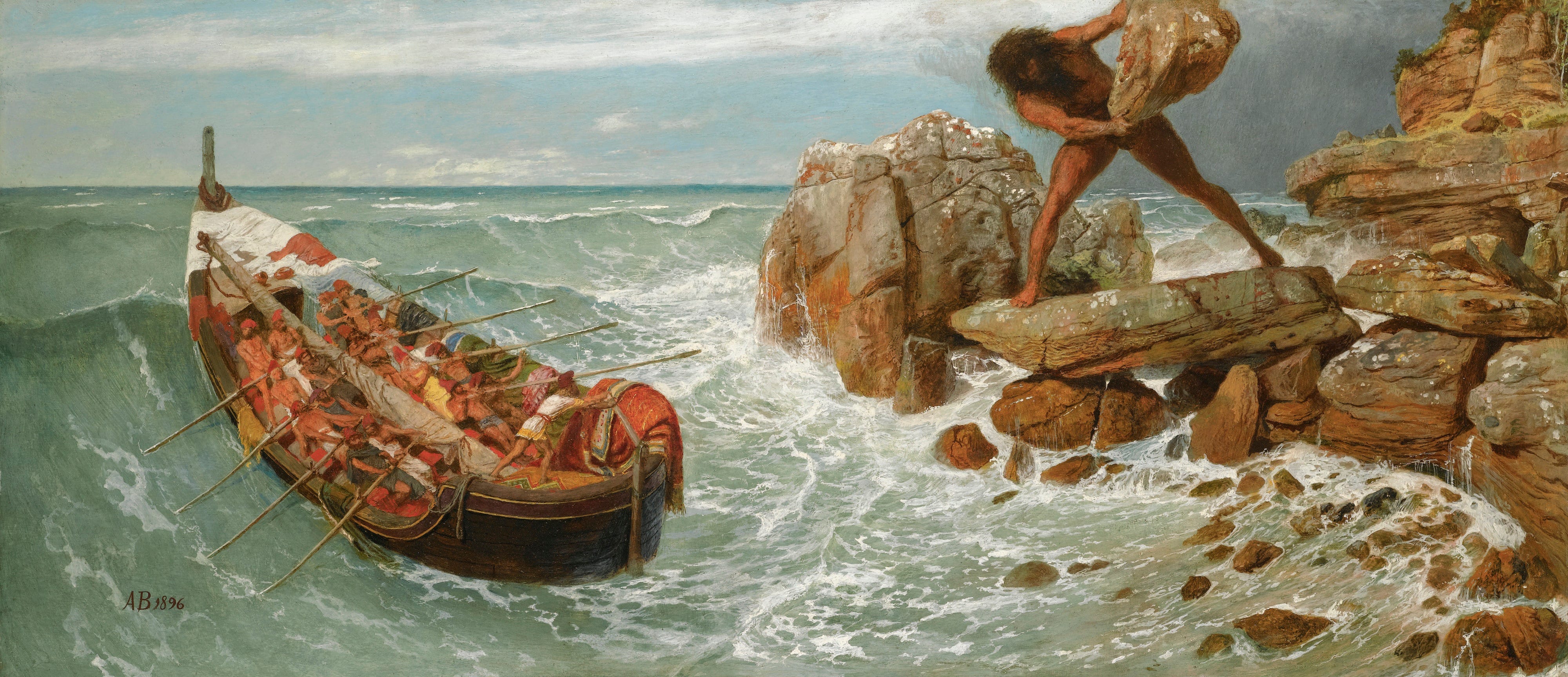
What better story for 2026 than a tale of a man longing to return home after a Forever War, but unable to do so? Odysseus’s acquatic zig-zag speaks to us living under the shadow of this American administration. We live under a government so mercurial that it makes capricious Zeus look like the head of a particularly prudent Swiss canton.
Limbo defines our age, much as it shapes “The Odyssey.” For a world watching a war in Iran that’s on, then off, then on, Penelope’s daily weaving, nightly unweaving routine hits hard. For a year of a cease-fire in Gaza that’s anything but, with hundreds of Palestinians killed since its declaration, what better protagonist than Odysseus, a man keen for resolution, who spends a decade alternately beached and storm-toss’d, trying to get home safe? The story of a man who visits Hades, where the living dead greet him, resonates on reading headlines of ICE’s 67, 750 detainees (as of July 11th), over 70 percent of whom have no criminal record. The tale of a man who spends seven years—count em—on Calypso’s island, where the goddess promises him immortality if he stays, chimes when you read of sailors on the 1500 ships stranded in the Strait of Hormuz since its February closure. On the hulls of their stalled boats, microbes, algae and other creatures grow, according to an international study by marine biologists. This build-up of marine life, brought on by an unprecedented disruption to shipping, has the potential for a “bio-invasion super-spreader event,” when ships can move again, reported The Guardian. “If you had to design the worst-case scenario, I don’t know if you could have done it differently,” the study’s lead author told the paper. “It is a perfect storm.”
A fearful stasis—over climate change, conflicts, and the future for the planet’s youth—triggers the most dramatic moments of our times. Just this month, we’ve seen the desperation that limbo creates, in the sight of 60,000 Moroccan youth scrambling onto the beaches of the Spanish island of Ceuta? This excellent but devastating report from the Financial Times details the no-mans land not just for Moroccans, unable to find work at home, and unable to get to the purported paradise of Europe, but the families worried that they were among the 72 people killed as they tried to reach Spanish territory in early August:
Saadoun has been searching for her brother Mohammed — shy, scared of lots of things, not interested in studying — since he left home in Tetouan on Thursday morning for the Moroccan border with Ceuta, joining about 60,000 others who surged into the enclave. “I don’t know if he’s dead or alive,” she said, breaking down in tears.
Funerals for people who perished in the swim, including a young girl from Tetouan who loved football, were held in their hometowns around the country over the weekend.
As the stragglers among those who crossed were pushed back into Morocco by Spanish authorities, many were still missing. Their mothers and sisters were wandering the streets near the frontier with photos in hand, moving between police stations and deportation centres along the coast.
Even those of us lucky enough not to live in this kind of extreme pain feel in limbo. I type this as wildfires rage through continental Europe, and Britain prays for rain. (Two sentences I never thought I’d type.) This summer, much of America holds its breath waiting for the November mid-terms, as millions battle against a slide to full autocracy.
It’s not just Odysseus whose story chimes with contemporary audiences. Tom Holland’s Menelaus, waiting for his dad to come home so he can become a man, is limbo’s prisoner, too, his plight echoing that of youths bearing up under the gig economy and a housing crisis. In the United Kingdom, rising unemployment and costs have created a whole new generation-in-limbo; 40 percent of 25-year-olds are living with their parents, and home ownership for young people is down 2/3rds compared to thirty years ago.
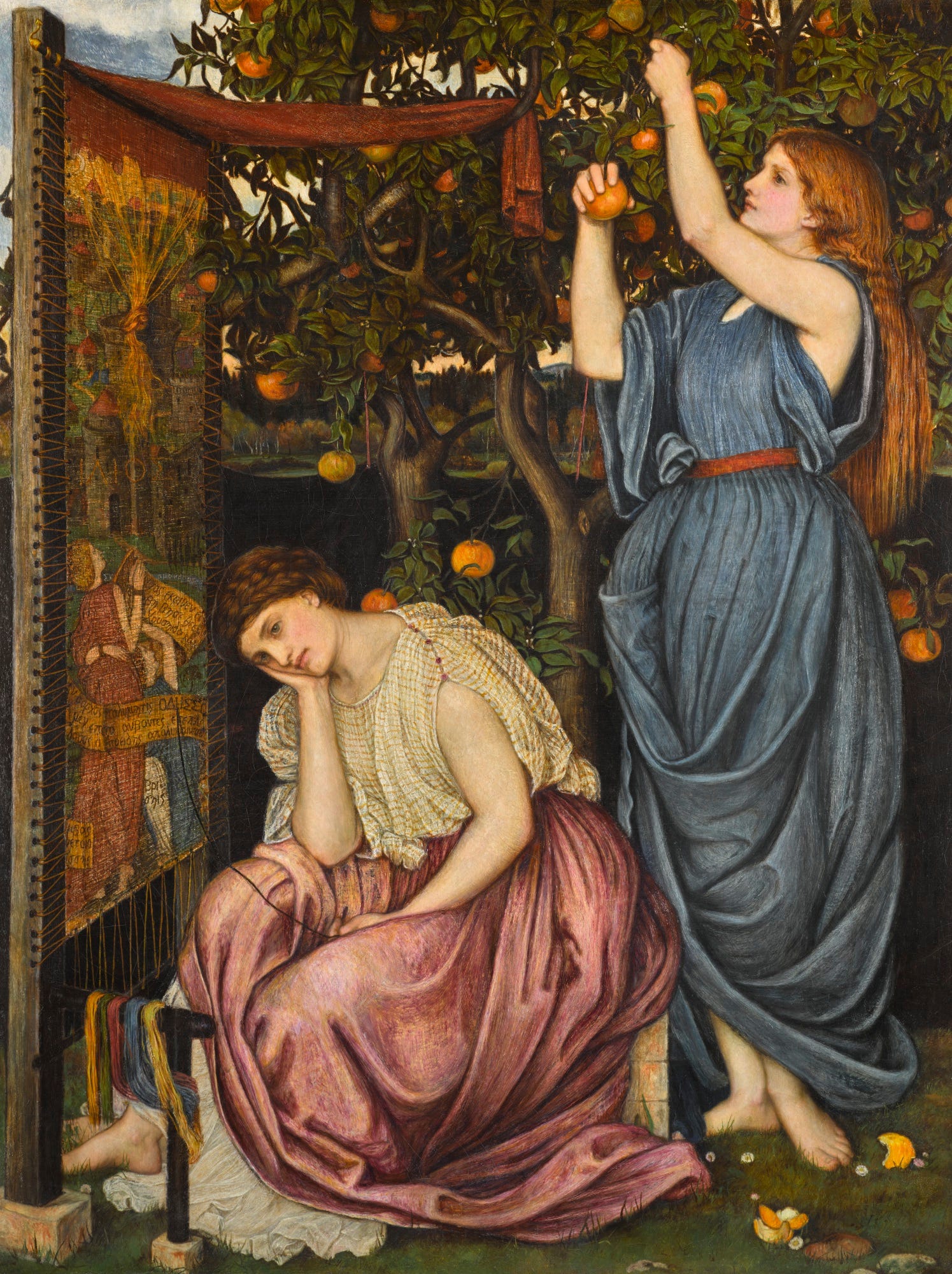
Penelope, who weaves her father’s death-shroud by day, then tears it out by night, survives a decade of hopes continually dashed. The movement of her loom’s shuttle—first creating, then destroying--is doubly poignant these days, as the world watches the post-war world order crumbling. Americans old enough to recall the 1960s and 1970s watch the shredding of a fabric of a society they helped build, watching the destruction of decades of what’s been built for human and civil rights, for fairness and equality for women and minorities. It’s always painful to watch Penelope’s suitors, squatting in the palace, feed her rights and dignity to the wood-chipper. But in an era when minorities are losing jobs and financial security, and women are losing corporate leadership roles, Penelope’s frustration chimes with our own. The story Nolan revives speaks to anyone who has watched their home change under their feet—or who returns home to find that the home they left is no more.
Small wonder that underneath the din of roaring monsters and clashing swords, many audiences could hear a strange echo, the reverberation of uncertain times.

Barnes & Noble | Bookshop.org | Amazon | See more options at PRH.com
No posts
Comments
Nothing yet. Say the first thing.
Sign in to join the conversation.