
To the many risks of being alive in 2025—pandemics, floods, wildfires, and wars, both nuclear and “conventional,” in that creepily sanitized word—we need to add another: we all risk becoming terrorists. Or rather, we stand in danger of being declared terrorists by somebody, somewhere.
A generation ago, “terrorist” conjured the image of a man with a gun. Now, politicians are busily democratizing the term. Over the past two years, we’ve seen Israel’s deputy head of the Knesset deem babies terrorists from “the moment of…birth,” and its UN ambassador denounce the United Nations as a “terror organization.” I type from the UK, where we’ve watched over 2100 overwhelmingly peaceful protestors hauled away under the Terrorism Act since this summer for peaceful protests. Many of these alleged terrorists, who included an 81-year-old grandmother and an 83-year-old Anglican priest, were arrested for simply holding signs reading “I oppose Genocide. I support Palestine Action.” This summer, the British government banned Palestine Action, after members of the campaign group sprayed two Royal Air Force planes with red paint. Membership in or support of the group can now get you a sentence of up to fourteen years.
To listen to the Trump Administration, a huge new demographic of terrorists is also developing in the United States. After the death of Charlie Kirk, we had a counterterrorism directive from Donald Trump on the “violent and terroristic” activities of the “anti-fascist” movement, a group he characterizes as motivated by “anti-Americanism, anti-capitalism, and anti-Christianity; support for the overthrow of the United States Government; extremism on migration, race, and gender; and hostility towards those who hold traditional American views on family, religion, and morality.”
As terror cells go, that’s quite a big one. American Muslims who weathered the post-9/11 climate in the United States endured a similarly broad dragnet during the War on Terror, when wearing a hijab, praying at the mosque, or even going on a rafting trip could make one an object of surveillance.
As a word, “terrorist” has always been about as useful as a condom with the tip snipped off. Attempting to nail down its meaning, the US Army once tallied over a hundred definitions of the term. Like love or beauty, terrorist is entirely dependent on who says it and when. It tends to reveal more about the fears of the speaker than the actions of the subject.
Yet just because a word is flaccid doesn’t make it powerless. For politicians, it’s often this very elasticity that can make it so potent. As the anthropologist Janet McIntosh has observed, “language in the era of Donald Trump seems less about describing reality than about thick-fingered manipulation: We have said it, and thus have made it so.” Affixing the term “terrorist” to nineteen Latin American drug and human trafficking cartels, and calling them “narco-terrorists,” the Trump Administration has begun bombing boats in the Caribbean, thereby justifying the deaths of scores of people it claims are “unlawful combatants,” a designation that denies them due judicial process. As the American Friends Service Committee notes, this new “narco-terrorist” category could put whole towns and even regions at risk of being designated terrorists. Since anti-terror laws render contact or relationships with terrorists illegal, places where the cartels hold power or run businesses, whole towns or regions could potentially become guilty by association.
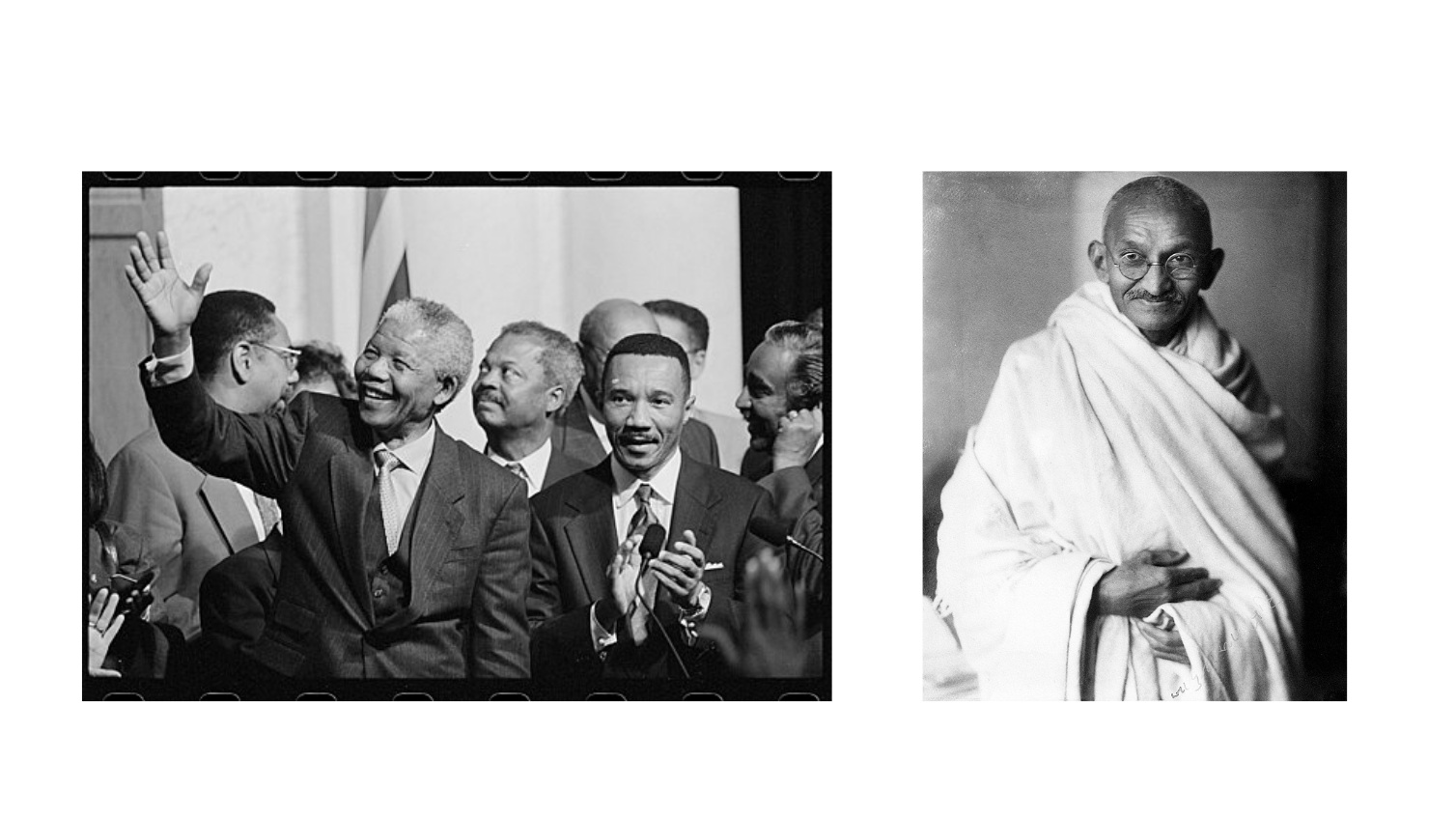
I take a small comfort in history, which shows that one country’s “terrorist” can be another people’s freedom fighter. In 1932, Britain’s parliament called Mahatma Gandhi a terrorist; Nelson Mandela was declared a terrorist not just by South Africa’s apartheid governments, but by the United States, where his name remained on the Terrorism Watch List until 2008.
Yesterday’s terrorists can become today’s politicians. Menachem Begin started as the leader of the Zionist militant group Irgun, and ended as Israel’s prime minister. The IRA leader Martin McGuinness eventually became Northern Ireland’s deputy first minister. As the mid-20th century British politician Hugh Gaitskell once quipped: “All terrorists, at the invitation of the government, end up with drinks in the Dorchester [Hotel].”
Given the tenor of the times, perhaps the government should keep an open tab.
This week I’m reading: Omar El-Akkad’s brilliant, stark and blistering One Day, Everyone Will Have Always Been Against This which just won the 2025 National Book Awards for Non-Fiction. Congratulations Omar.
I’m listening to: Saied Silbak and Ana Silvera’s Songs We Carry, courtesy of the London Jazz Festival. In a cavernous church on a cold London night, my husband and I were warmed by the sounds of Silbak’s oud and Silvera’s voice blending Arab and Ladino (Judeo-Spanish) musical traditions. Listening to Palestinian Silbak and Silvera, whose ancestors were Jewish refugees from the Spanish Inquisition to the Ottoman Empire migrated, one marvels at the richness musical border-crossings produce.
I’m looking at: Two extraordinary young women, whose attitudes and flares would not be out of place at a club in 2025, but who were painted around 1815 by an unnamed Indian artist. Part of a collection of exquisite Indian miniatures collected by Prince & Princess Sadruddin Aga Khan, they were recently auctioned at Christie’s in London.
No posts
Comments
Nothing yet. Say the first thing.
Sign in to join the conversation.