
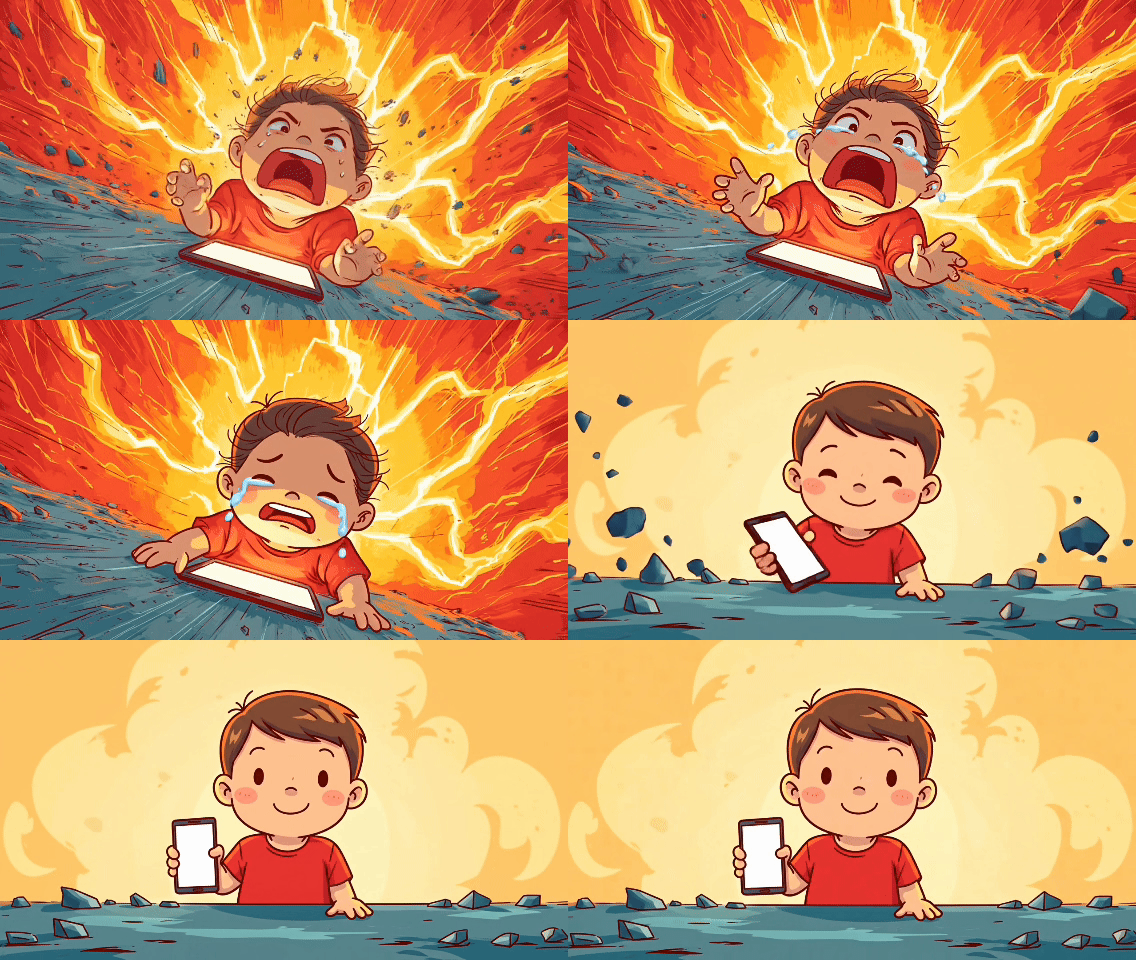
You know the scene. The timer goes off signaling the end of screen time, and suddenly your sweet, engaged child transforms into a tiny rage monster.
Tears. Screaming. “JUST FIVE MORE MINUTES.”
It feels personal. It feels like defiance. It feels like maybe you’re doing something wrong.
You’re not. It’s chemistry.
Conventional wisdom tells parents to set a timer for screen time. But a timer isn’t enough.
Hi! I’m Dr. Carla Engelbrecht. I spent 25 years creating more than 200 children’s education and entertainment experiences at Sesame Street, Netflix, and PBS Kids. Now I’m exploring what’s possible when AI meets early childhood education.
When your child watches a screen, their brain gets a steady stream of dopamine, the neurotransmitter that makes us feel good, focused, and engaged. It’s the same chemical that makes us reach for another cookie or scroll past our bedtime.
For kids, the effect is even more intense because the prefrontal cortex, the part of the brain responsible for self-regulation, is still under construction.
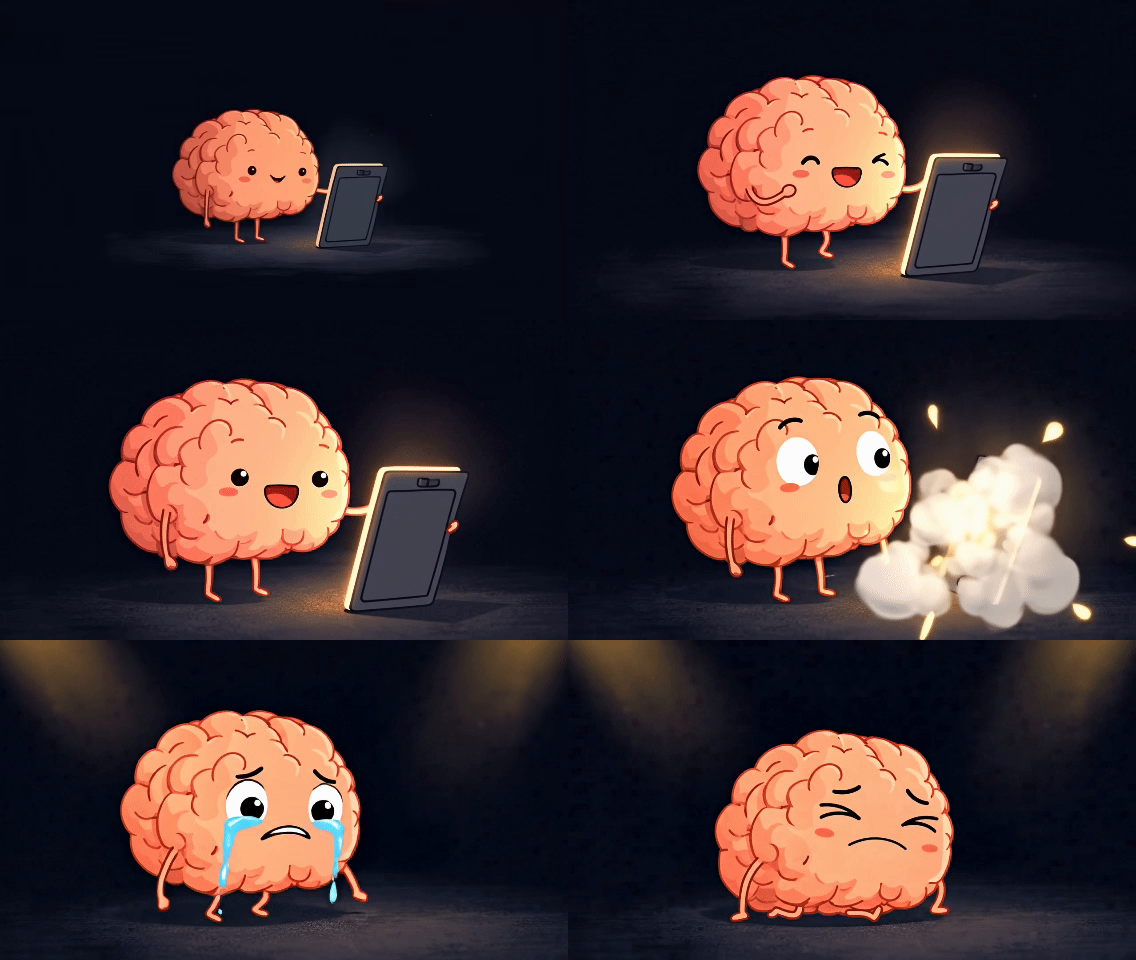
When the screen shuts off, dopamine doesn’t gently taper. It drops. And to a small child, that drop doesn’t register as “oh well, show’s over.” It registers as loss.
Their brain is literally saying: I liked that feeling. Bring it back. Now.
That’s the tantrum. Not bad behavior. A dopamine crash.
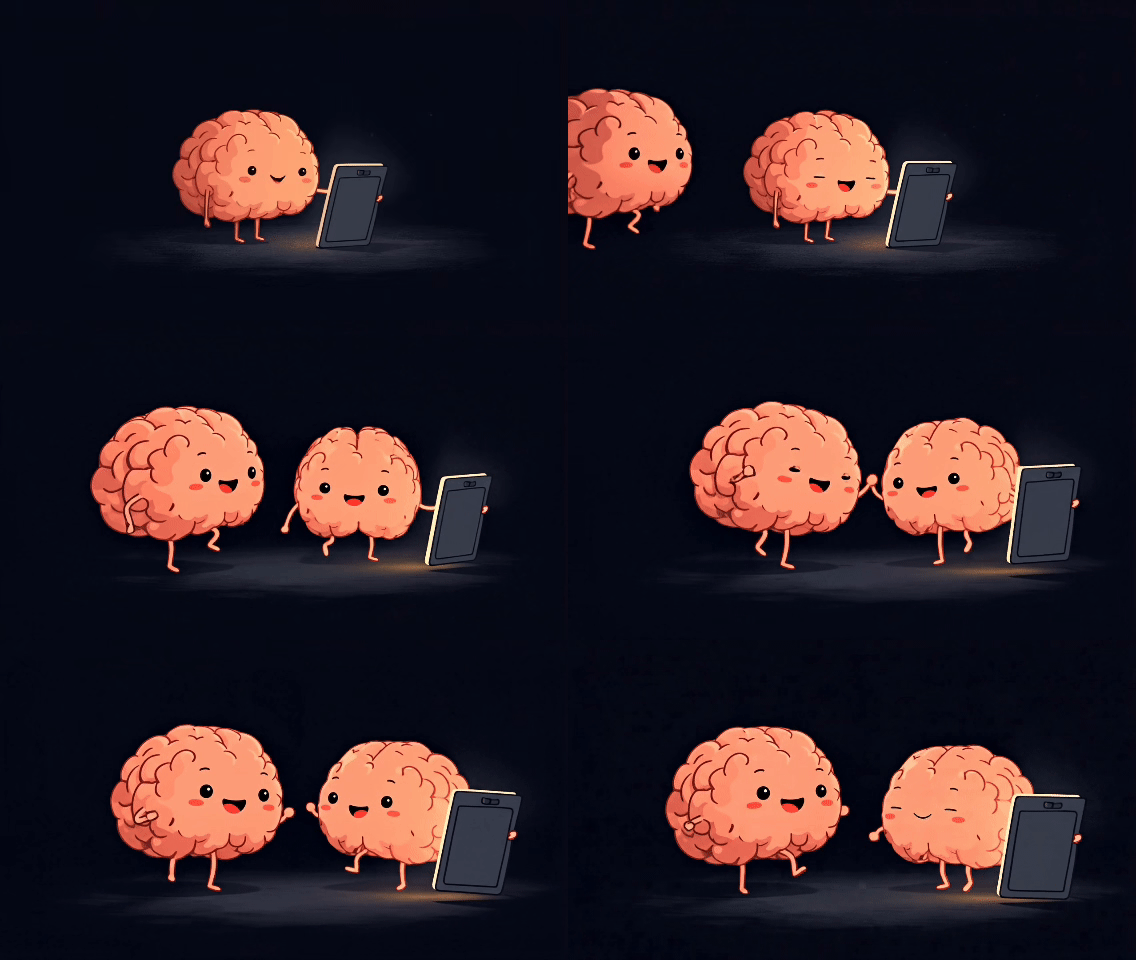
Clean-up song. Bedtime rituals. Toothbrushing song. Line-up song. A sequence for how to tie your shoes.
These routines aren’t just convenient. They give children predictability, and predictability is safety. When a kid knows what comes next, their brain can relax. They don’t have to fight or negotiate because the sequence is already established.
But screen time? Most families have no closing ritual at all.
The tablet just... stops. One second your child is immersed in a world of color and sound and story, and the next second it’s gone. No transition. No bridge. Just a hard cut from dopamine rush to nothing.
No wonder it feels like free-fall.
If the brain is craving dopamine when the screen turns off, give it a new source. And the most powerful dopamine source available to a child isn’t another screen.
It’s you.
Human connection, physical touch, eye contact, laughter, movement, silliness... all of these trigger dopamine.
When you pair the end of screen time with something physical and connected and fun, you’re rewriting the association in your child’s brain.
The screen turning off no longer equals loss. It means something new is starting.
And a song becomes the consistent cue that tells the brain: we’re shifting gears now, and where we’re going is good, too.
Before the screen goes off, join your child. Sit next to them. Make eye contact. Touch their arm. Let them know you’re present before the transition even starts.
When time is up, play the transition song and then give them a new rush.
Roar like dinosaurs and stomp around the room together.
Do a 30-second dance party.
Pretend you’re pirates eating snacks or monster trucks brushing teeth.
Act out their favorite scene from whatever they just watched.
Play a quick round of Simon Says or Red Light, Green Light.
Movement, connection, and silliness together are an incredibly powerful combination. You’re not distracting your child from the loss. You’re replacing it with something their brain values just as much.
How many times have you seen kids snap into action when they hear the clean-up song? Same principle. The song becomes the cue. The cue becomes the habit. The habit replaces the battle.
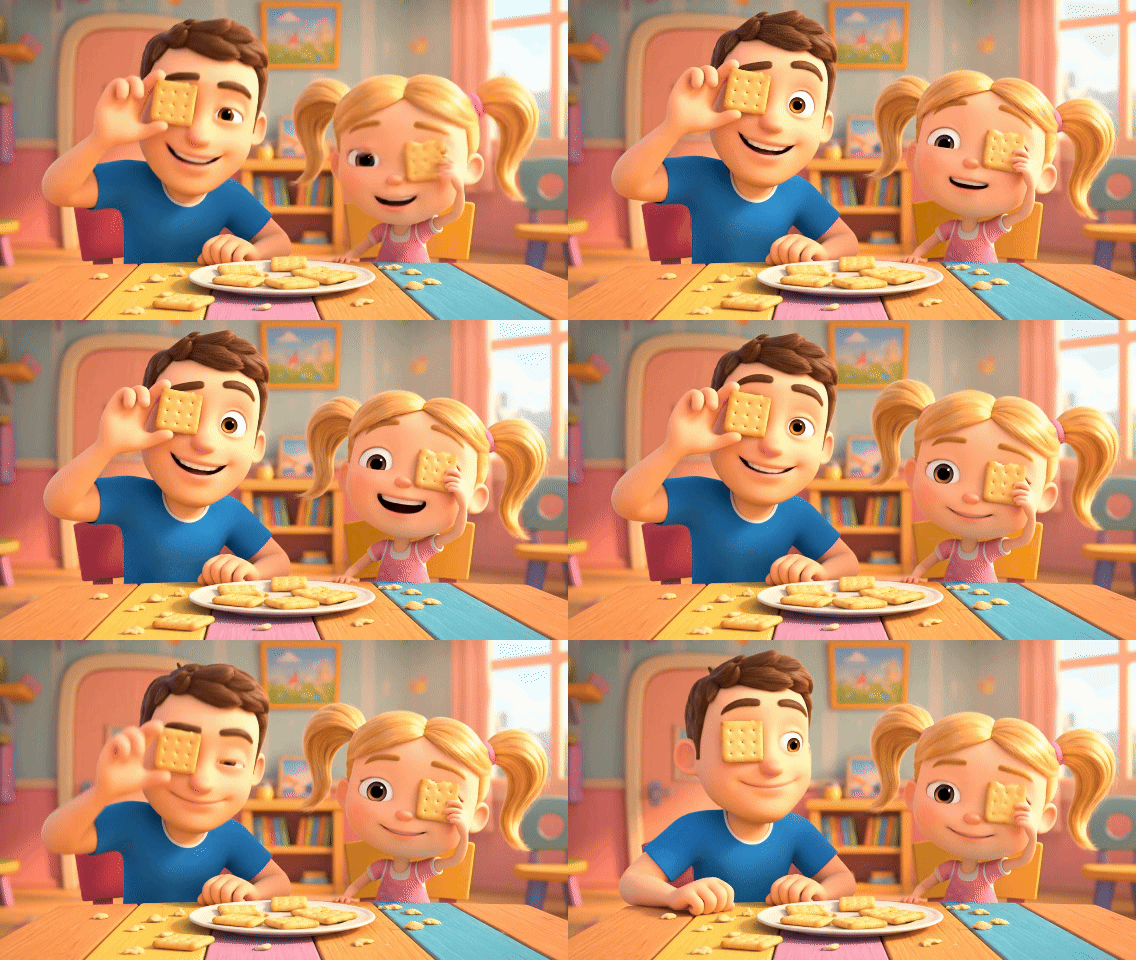
My career is making content for screens. But I’ve come to believe that one of the most important design problems in children’s media isn’t what happens during screen time. It’s what happens at the edges.
The transition in. The transition out. The conversation after. The connection around it.
We can’t design our way out of the dopamine crash with better content alone. We need rituals. We need bridges. We need to give families tools that work with their children’s brains instead of against them.
That’s why I built the transition song. And that’s why I want to help you build your own.
The song I created is available on Hippo Polka and on our YouTube channel. You’re welcome to use it as-is.
But the best version might be one you make yourself. A song that uses your child’s name, references their favorite things, fits your family’s specific rhythm. I wrote a guide on how to create your own kids’ songs using AI tools that walks through exactly how to do this, even if you have zero musical training.
Because the magic isn’t in my particular melody. The magic is in the consistency, the connection, and the cue.
Screen time is here to stay. But the battles don’t have to be.
💡 Want more from Dr. Carla?
Subscribe on YouTube to get all our latest Hippo Polka videos for kids. New in 2026, I’m also posting how-to videos on YouTube.
Follow me here on Substack and on LinkedIn for more articles like this.
Share your thoughts or questions directly with me at carla@hippopolka.com. I’d love to hear what’s working for your family (or what’s not!).
Together, we can make screen time joyful, educational, and so much less stressful.
When screens turn off, the flow of dopamine in the brain drops suddenly. That crash can feel uncomfortable, sparking a craving for more. For kids—especially toddlers and preschoolers—that craving often shows up as tantrums or “just five more minutes.”
The key is to replace the dopamine crash with something new and engaging. Use a consistent end-of-screen-time routine—like a song, dance, or silly game—that shifts your child’s attention and gives their brain a softer landing.
There’s no single “best” routine, but it should be predictable, playful, and connected. Singing a song, roaring like dinosaurs, or acting out a favorite scene together are all powerful cues. The goal is to shift from turning screen off is bad to turning screen off means something new is happening.
Comments
Nothing yet. Say the first thing.
Sign in to join the conversation.