
A few months back, I heard Darol Olu Kae speak at a launch for an issue of BlackStar’s Seen1 at Reparations Club2. On the panel, the topic of care came up frequently, in both material and philosophical ways. This was before I had started this newsletter, but I kept returning to the talk and the questions it was circling. What does care look like in the film industry? How does it manifest tangibly in practice? Is that learned and how is it cultivated?
I also wanted to talk with Darol because, like me, he is a Los Angeles-based film worker. But unlike me, he was born and raised here. That distinction shapes how he films the city and thinks about home, which is evident in Keeping Time (2025). Set in the world of The Pan Afrikan Peoples Arkestra (The Ark) and filmed largely in South LA, Keeping Time is an intergenerational documentation that elevates and enshrines an important history–avant garde jazz in Los Angeles. It also renders something ephemeral, like musical performance, concrete.
Darol’s body of work exists at this intersection of care for and conservation of Black life in the United States. It embodies the personal as political, be it collaborating with Kahlil Joseph on BLKNWS: Terms & Conditions (a masterwork mixtape that is best experienced multiple times in a theatre) or drawing from his personal archive of homemovies with his kids.
Below we talk about two of his films, Blur (2025) and i ran from it and was still in it (winner of Best International Short Film at the Locarno Film Festival, 2020).
You talk about Blur as “a brief record of caregiving in the world.” Can you expand on that?
It’s a thread [throughout the film and my work]. It came from taking care of my father, but I didn’t have a name for it. We didn’t have a great relationship. I mean, it was good, but it was complicated. But it was a given that when I got back [from living abroad in Germany], I needed to move my father into my home. I remember everyone being like, “Oh, that’s so unexpected” and gave me so much praise. I felt so weird. That’s what made me think about caretaking, really. It came from recognizing this reaction from other people. How they invested so much in my choice that I began to map it subconsciously.
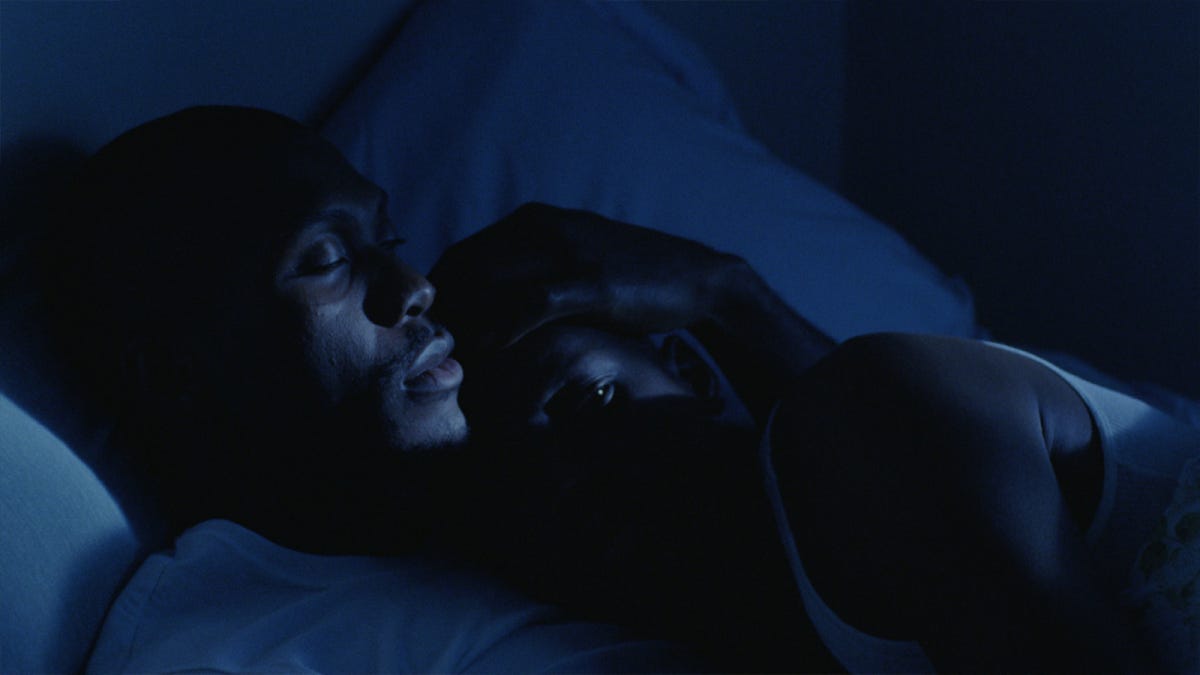
Ever since I made i ran from it and was still in it in 2020, my mother would jokingly ask me when I was going to make a film for her. We laughed about it, but I took the question seriously. I kept wondering what that film might look like.
For as long as I can remember, I heard stories about my uncle Ty Ty, who passed away from AIDS-related complications in the late 1980s. My mother would tell the same three or four stories every time his name came up. I was always told that I looked like him, that I carried some resemblance to him, so even though he passed when I was three, I felt connected to him through those stories.
One thing that always stayed with me was how present my mother was for him when he was sick. She would travel from West Covina to South Central, taking three or four buses just to spend time with him, sit with him, wash his hair, and be there. At a time when AIDS was heavily stigmatized and politicized, that kind of presence felt profound. Maybe because I was reading a lot of Buddhist philosophy at the time, I kept returning to the idea that the first expression of love is simply to be present. That became the emotional foundation of the film. I also wanted to highlight different forms of caregiving and take it out of the professional contexts. I’d seen “caretaking” and I wanted to show “caregiving.” I wanted to make something for caregivers.
The film isn’t a direct retelling of their lives, but it draws inspiration from their relationship. I wanted to show how care exists in ordinary gestures—in touch, companionship, and the decision to remain with someone. That’s why touch became such an important part of the film.
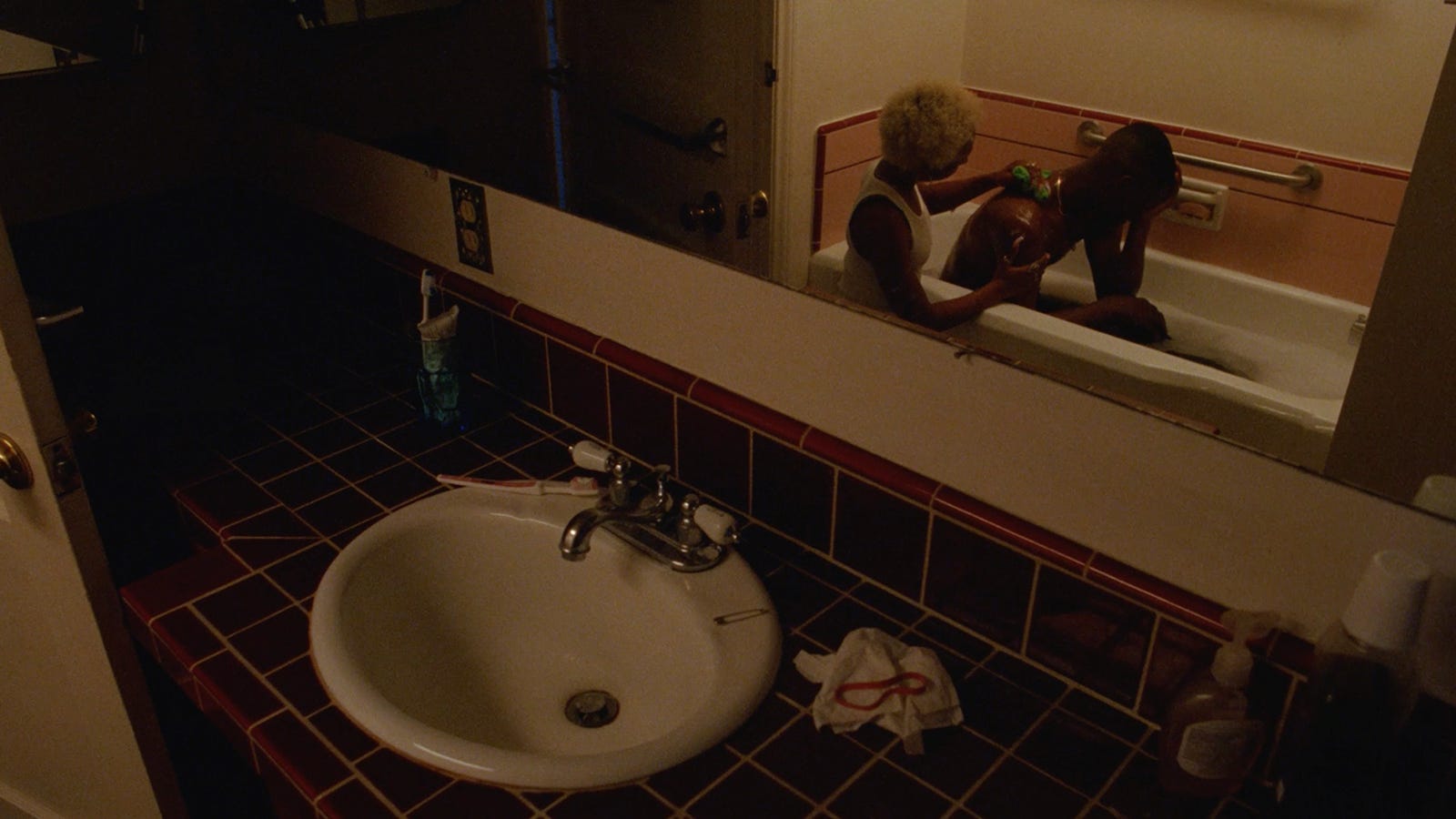
I also wanted to move beyond a story defined by illness. My uncle enters the film through my mother’s memories, but I was interested in imagining the fullness of his life beyond suffering. To offer glimpses of him as a brother, a friend, a lover—a person with desires, humor, and interiority. In many ways, the film became a way of honoring both of them: his life, and her decision to stay close to him through one of the most difficult moments of his.
For me, caregiving is ultimately about the choice to remain. It’s the decision to show up in a loving posture and figure it out together. My mother’s relationship with my uncle taught me that, but I also began to see it elsewhere. I see it when I think about the lives of jazz musicians. They’re caregivers too. They’re stewards of traditions, memories, and forms of knowledge that have been entrusted to them.
What connects all of these gestures is the act of assigning value to something regardless of whether the world recognizes its value. It’s a commitment to preserve, support, and carry something forward. Whether it’s caring for a loved one, a community, or a musical tradition, the gesture is ultimately the same: choosing to remain in relationship with someone or something and helping carry it into the future.
i ran from it and was still in it, your first film, deals with questions of family, loss, parenting, combining internet footage—public confessions of love and fears—with home videos. When they collide, it feels like finding a way of saying out loud what might be really hard to. Where did that impulse come from?
I felt like I needed to say it or I would die. When I made i ran from it and was still in it, I understood it primarily as an attempt to work through grief, familial separation, and the emotional aftermath of my father’s death and my children’s sudden relocation. But looking back, I think the film was also asking a larger question: what continues to move when a life has been broken apart?
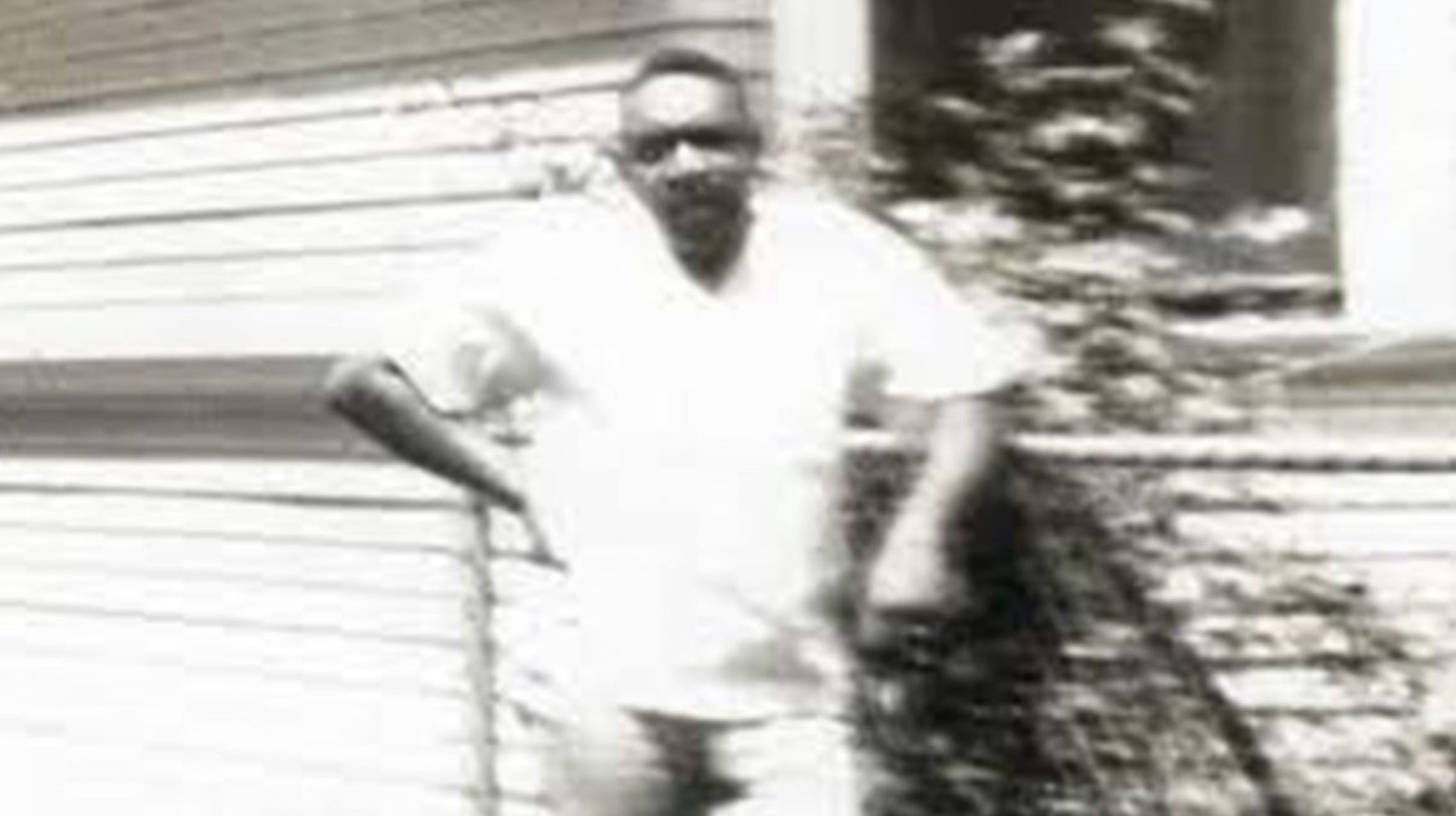
The film is composed of fragments, found images, personal archives, internet materials, memories, absences. None of these elements resolve loss. Instead, they circulate around it. Feelings return. Questions return. The film doesn’t move toward mastery or a rigid sense of closure so much as it revisits the same terrain from different angles, discovering new meanings within repetition.
I’ve been thinking about Black culture as an ongoing process of critique, invention, transmission, repetition, and revision through which people make life in the wake of rupture. Looking back, I can see that the film was already wrestling with these ideas before I had language for them. What interested me was not simply what had been lost, but how people continue to carry memory, feeling, and relation across separation.
In that sense, care in the film is not only care for individuals. It is care for relation itself. A commitment to remaining in conversation with people, histories, and experiences that are no longer fully present. The work asks how love survives distance, how memory survives absence, and how connection persists when continuity has been broken.
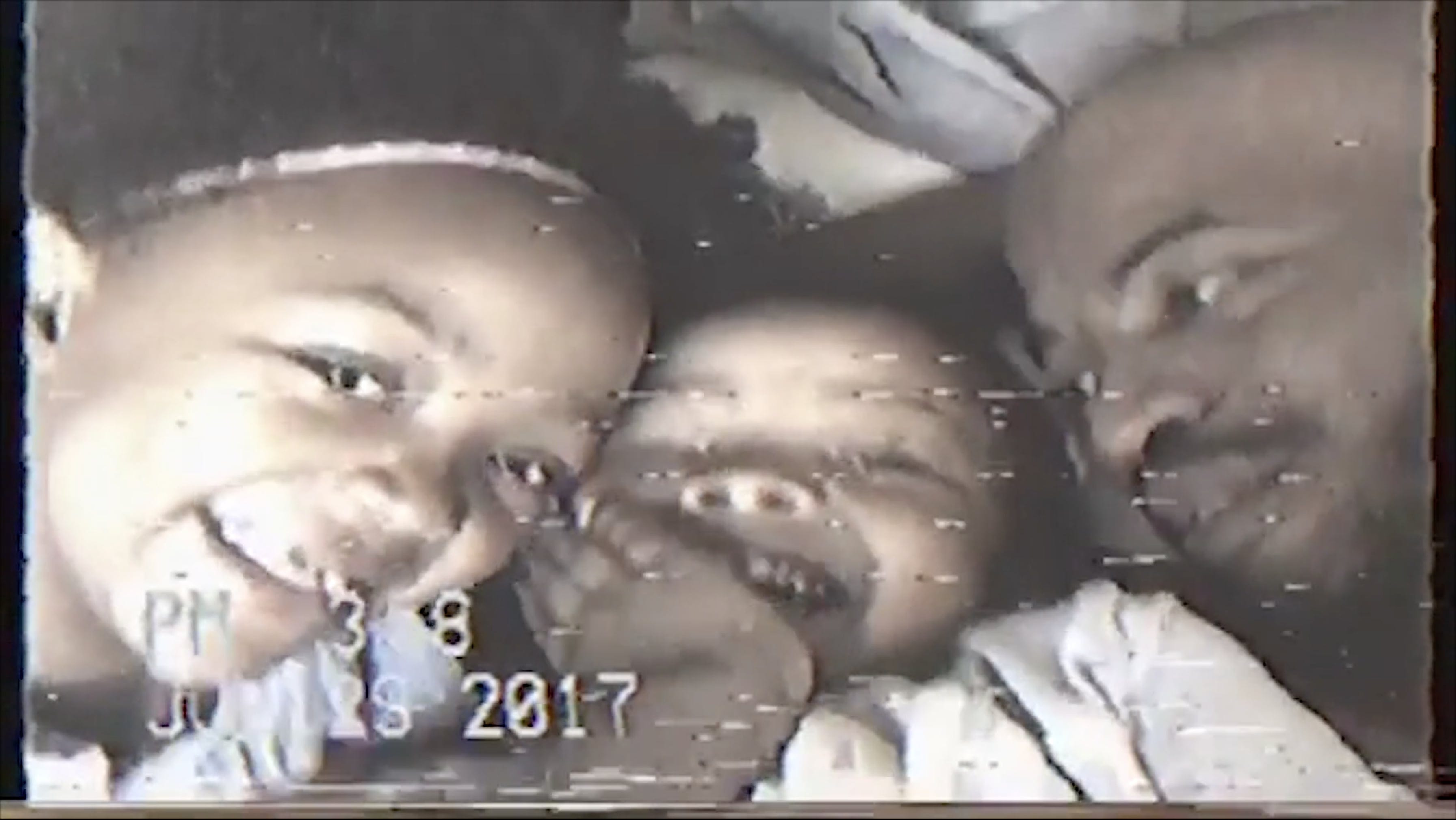
What moves me now is realizing that the film is less a memoir than an inquiry into transmission. The personal archive becomes a way of thinking about larger questions of how people carry life forward. How images carry memory. How stories carry feeling. How culture carries ways of knowing and relating from one generation to another.
Perhaps that is why the film continually collapses time. The past is not presented as something completed and left behind. It remains active in the present. It continues to make demands on us. It continues to shape how we understand ourselves and one another. The more I reflect on the film, the more I think it is fundamentally about the persistence of relation. Not what disappears, but what remains. Not what is lost, but what continues to move.
How did it come together?
I knew I wanted to do something archival. I was working on Kahlil Joseph's BLKNWS, the two-channel video installation version. We were going full steam ahead, preparing for the Venice Biennale. I would spend all day working on BLKNWS and then stay late at the post house to work on i ran from it and was still in it. It wasn't until the Nothing But A Man scene with Ivan Dixon and Abbey Lincoln that I realized I was making something about fatherhood...the Styles P “Breakfast Club” interview moment. I had the footage of the father in the car. I sat down and I made most of it that night.
Once I put myself in the film, it was a double action. It was DuBosian where I was talking about myself because myself revealed something about a wider social situation. I wanted to use the autobiographical model to then expand beyond. That collision with the other material is to break up that pillar of “being about me,” the autobiographical. That’s why Malcom X comes in. But he is in Los Angeles!
That viral clip of the dad in the car is so beautiful. Someone being vulnerable and giving permission to everyone to do the same.
The footage is one of my favorite things. That dad was there for maybe an hour, just having a moment. When I think about artistic practice, it’s those mundane moments that I like. The ones that might end up on someone else’s cutting room floor: you drop your child off at the school and reflect on having breakfast together. What’s the next beat? No, that’s the beat! He gives us access to the bigger spiritual world that’s alive in all of us but that we don’t speak about.
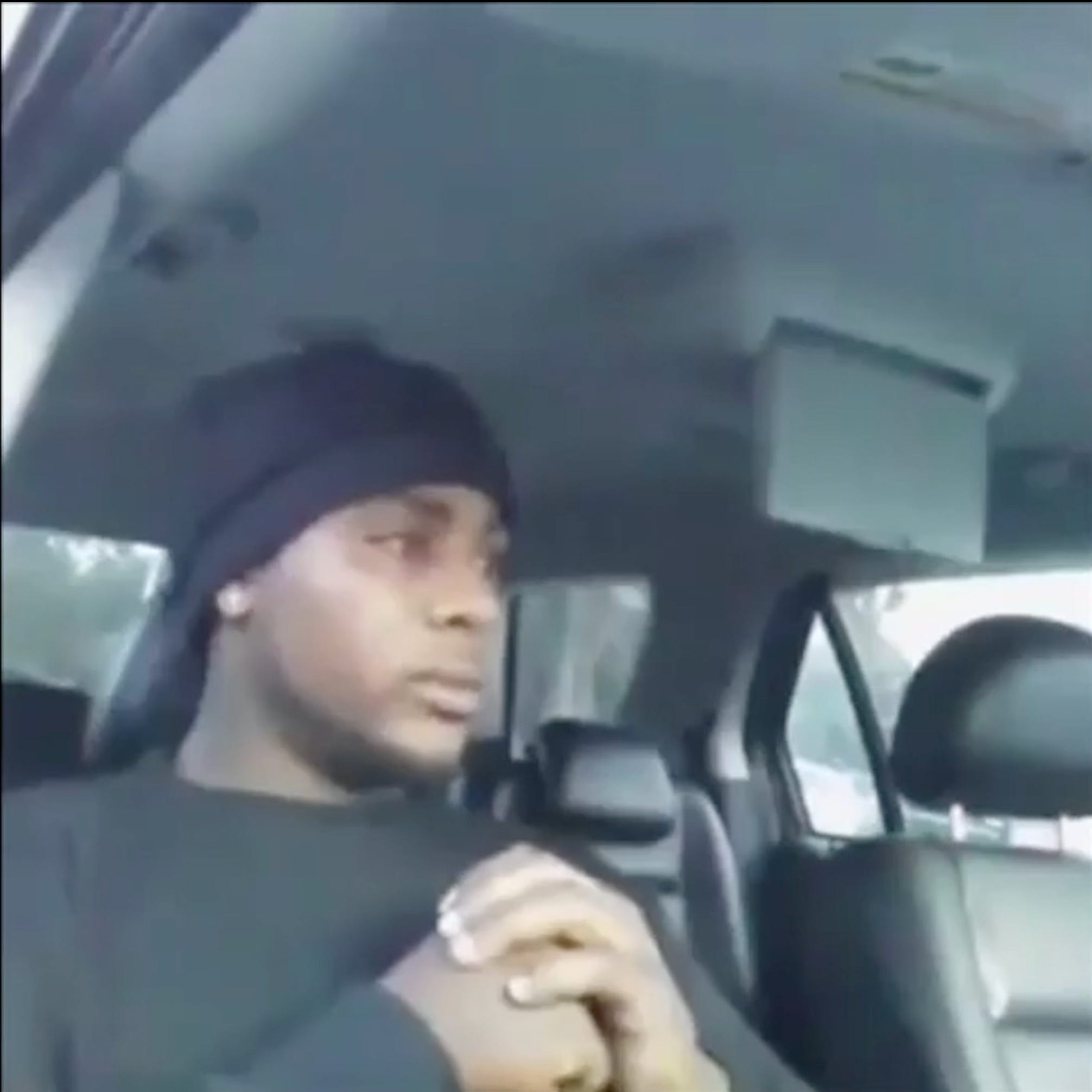
That moment also captures what I think about as the illogical math of parenting. It’s really hard 99% of the time, but that 1% of when it’s good somehow carries the most weight.
Yes, because that 1% doesn’t just fill you up it heals you. That’s what that dad was talking about. This is generational. He unlocked something in that moment. I don’t want to project, but maybe he didn’t have that himself or took it for granted. “Pancakes and sausage. I’ve waited my whole life for this!”
I relate so much to that. I was doing my daughter’s hair the other day and thought, “I’ve waited my whole life for this.” There’s something really interesting that happens with time in those moments, too. In that present moment I also think about the past when I had first imagined this simple, mundane thing.
What’s amazing—and this is my fimmaker brain going here—is that this contrast is a whole movie for you, and, yes, your daughter is there experiencing it as well. But I just imagine there’s like a look in your eye that captures the magnitude of this…and she doesn’t know! [Laughs]
Exactly! She’s like, “Give me that dino clip!”
Everything now is fighting for our attention. We need to be better attuned so we can be receptive to those moments. To be better human beings. To be open to the potential of what life could be. I want to be someone who has the capacity to feel. And seeing that dad, I was like, “I want to be like that.” That’s my Michael Jordan moment. I’m sure that man is imperfect and flawed, but at that moment he was executing a brilliant play on the court of lived experience.
Do you make a distinction between “home video” and “archival” in your own life?
No, no, no. I think I do really well at being present. I’m not making film, I’m making a moment. I experience it with my kids. Maybe I’ll use it as raw material later. But I don’t take a lot of videos. I commit to memory. When we’re making these home videos, I’m not thinking about shots or composition. It has more velocity. I’m making a moment with my family. The home movies stay home movies.
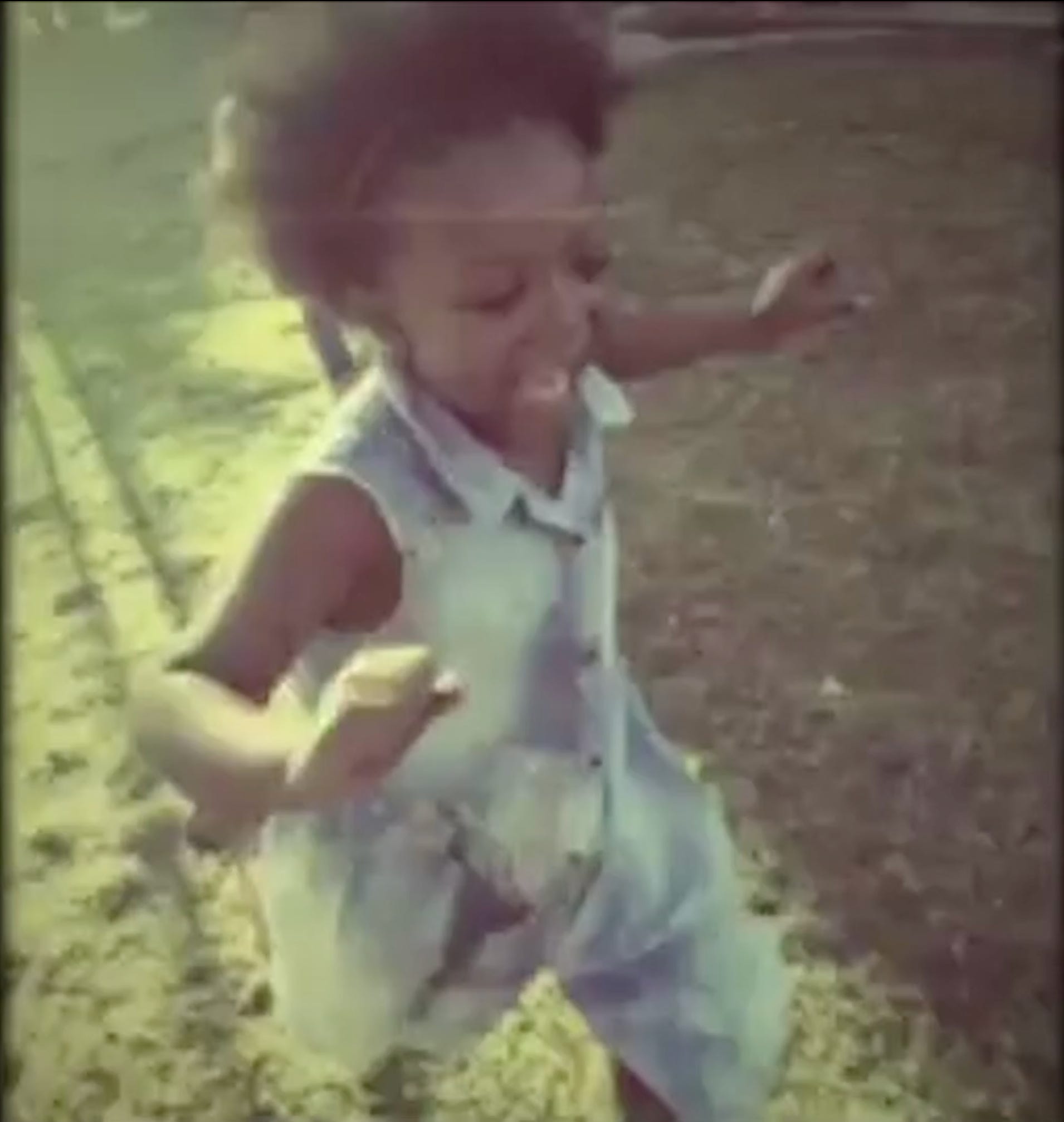
How do you share your work with your daughter?
I should call her in. She does not fuck with my work! [Laughs] Not in a bad way. It’s just not Timothée Chalamet. That’s her boo. Beautiful boy. And not just him, there’s Twilight DVDs on the couch. I cannot compete! But she appreciates it, and I like to think it has had some impact, as she does act now. She’s been behind the camera growing up, she’s done theater. My kids engage with my work when they want to. I try to be chill. But I did force them to go to my California African American Museum (CAAM) exhibition. Plus, at 15, anything Dad does is uncool. Hopefully there’s a return when she’s older; an appreciation. Maybe she’ll think, “I learned something about my father.” I try to practise ego death, so having a daughter that humbles me is cool.
Darol Olu Kae is a filmmaker from and based in Los Angeles. Kae’s artistic practice disrupts conventional narrative structures of storytelling through its dynamic treatment of sound and image. His highly collaborative, research-based approach to filmmaking grounds itself in the nuance of black expressive modalities in America and challenges the medium to render the full complexity of black being visible in cinematic terms.
Kae’s film work has screened at festivals and institutions worldwide including BlackStar Film Festival, Camden International Film Festival, International Film Festival Rotterdam (IFFR), Locarno Film Festival, MoCA Los Angeles, MoMA, SXSW and Sundance Film Festival. He was awarded the Pardino d’oro for Best International Short Film in 2020 at the Locarno Film Festival for his film i ran from it and was still in it. And in 2021, i ran from it… earned Special Jury Recognition for Poetry at the 2021 SXSW Film Festival. Most recently, Kae was named one of “25 New Faces of Independent Film” by Filmmaker Magazine. Kae is currently writing his feature film debut Without a Song.
You can watch Keeping Time on the Criterion Channel and i ran from it and was still in it on Vimeo (for free!!).
No posts
Comments
Nothing yet. Say the first thing.
Sign in to join the conversation.