
Pregnancy is a medical condition that is disproportionally informed by popular culture, societal pressures, and political [ill] will. I had conceptually understood this as someone who had always hoped to grow a fetus, but when I got pregnant, I began to feel these interlocking pressures in tangible ways. One of which is that when you’re pregnant people love telling you what to do—1and especially what to read. And those texts are never neutral.
How we’re told to parent, how to mother, cannot be detached from broader societal norms.2 And as parenting touches all facets of life, private and public, and disproportionally impacts women, it also makes sense that this Baby Information Industry™ is loaded with political agendas. Take, for instance, breastfeeding, which is suggested as the primary means of feeding a newborn for the first six months in the United States—a country that also has zero federally mandated maternity leave.3 How is that supposed to work? Who does it really benefit? And who gets forced out of the labour market and/or judged for not being able to meet logistically impossible standards?4
Many of the books that were suggested to me weren’t terrible. One (yes, it was Expecting Better) did provided me with the data I needed to feel informed before electing to do an invasive procedure. But I still felt something was missing. A few months postpartum, I consumed an info-graph on my tiny phone screen showing me that I had the highest access to information in human history with the lowest access to community. That may not be true for everyone, but I let this digital image bore into eyes while sitting on the floor in my apartment alone after my husband went back to work and my mum went back to Canada. It felt very true to me. In response, I began to research and read everything I could about how mothering connects to the wider world. Then, a few weeks ago, I read Tao Lin’s note and finally understood where this impulse came from:
I had been tunnelling up. And I continue to, pretty much daily, either reading essays on this platform, working my way through a list of books, and watching films through a new lens.
So, this series is an attempt to document how we’re thinking and talking about pregnancy and motherhood in this collective moment. But also share whatever insights and joys I’ve found during this journey up and out of a rabbit hole.
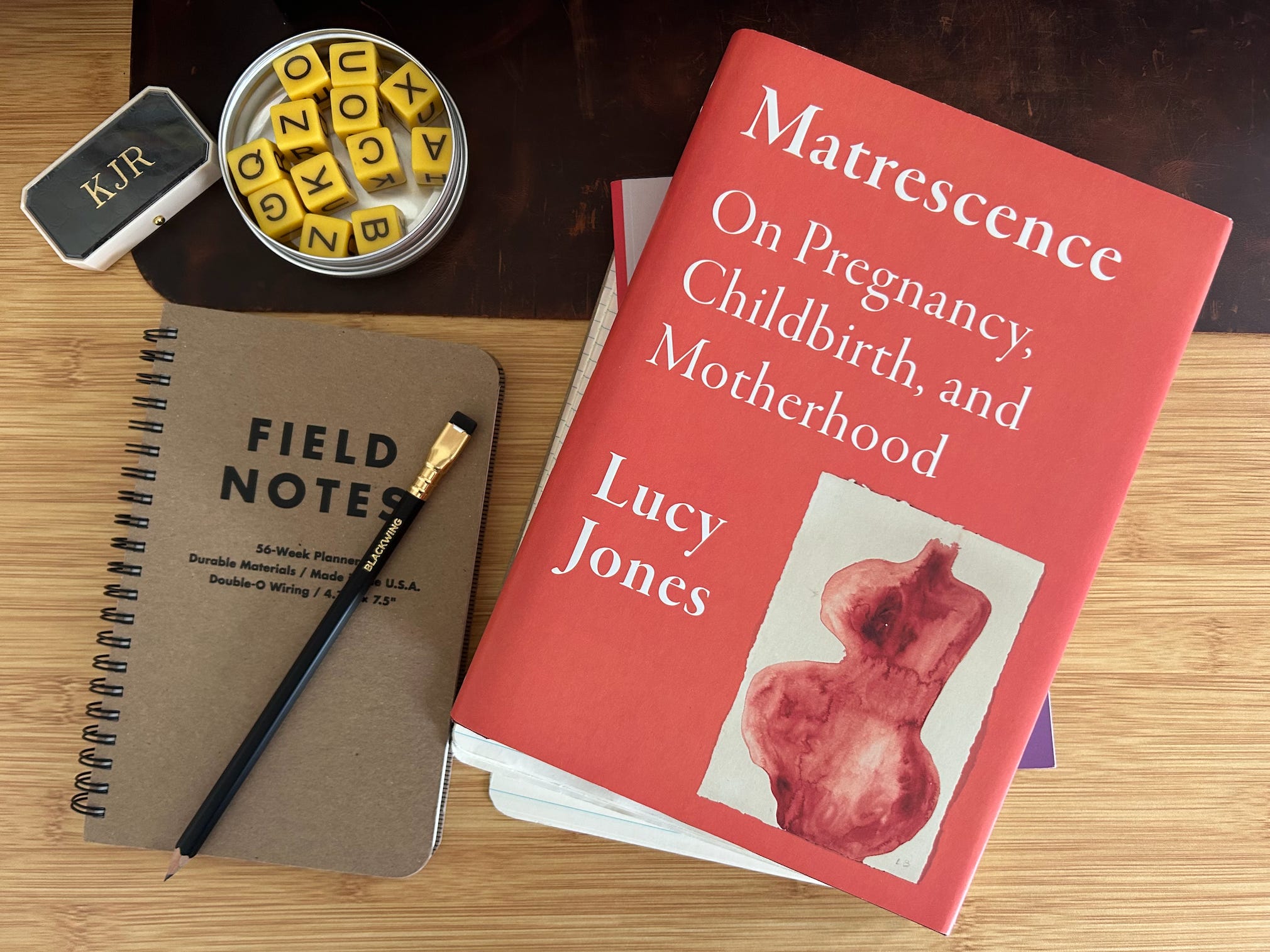
Matrescence: On Pregnancy, Childbirth, and Motherhood by Lucy Jones
After I got pregnant, I had a visceral reaction to people describing my condition as “magical.” (I spent nine months throwing up, which made the magic nearly impossible to conjure.) My response was then to talk about placentas at length, as I took it on myself to single-handedly prove that “magic” was patriarchal flattening language that exposed the disinterest in women’s health in favour of framing it as something that can’t be understood or explained, a.k.a. magic.
I didn’t find many enthusiastic ears while opening up (maybe monologuing, but you kind of have to let pregnant people do their thing) about increased blood volume (50%!). So picking up Lucy Jones’s book felt like the affirming friend I had been searching for. Lucy writes with the rigour of a scientific paper but with a prose-like tone about how pregnancy physically and emotionally transforms the body, self, and mind. I’m eagerly awaiting the documentary adaptation of the book by Kathryn Ferguson.
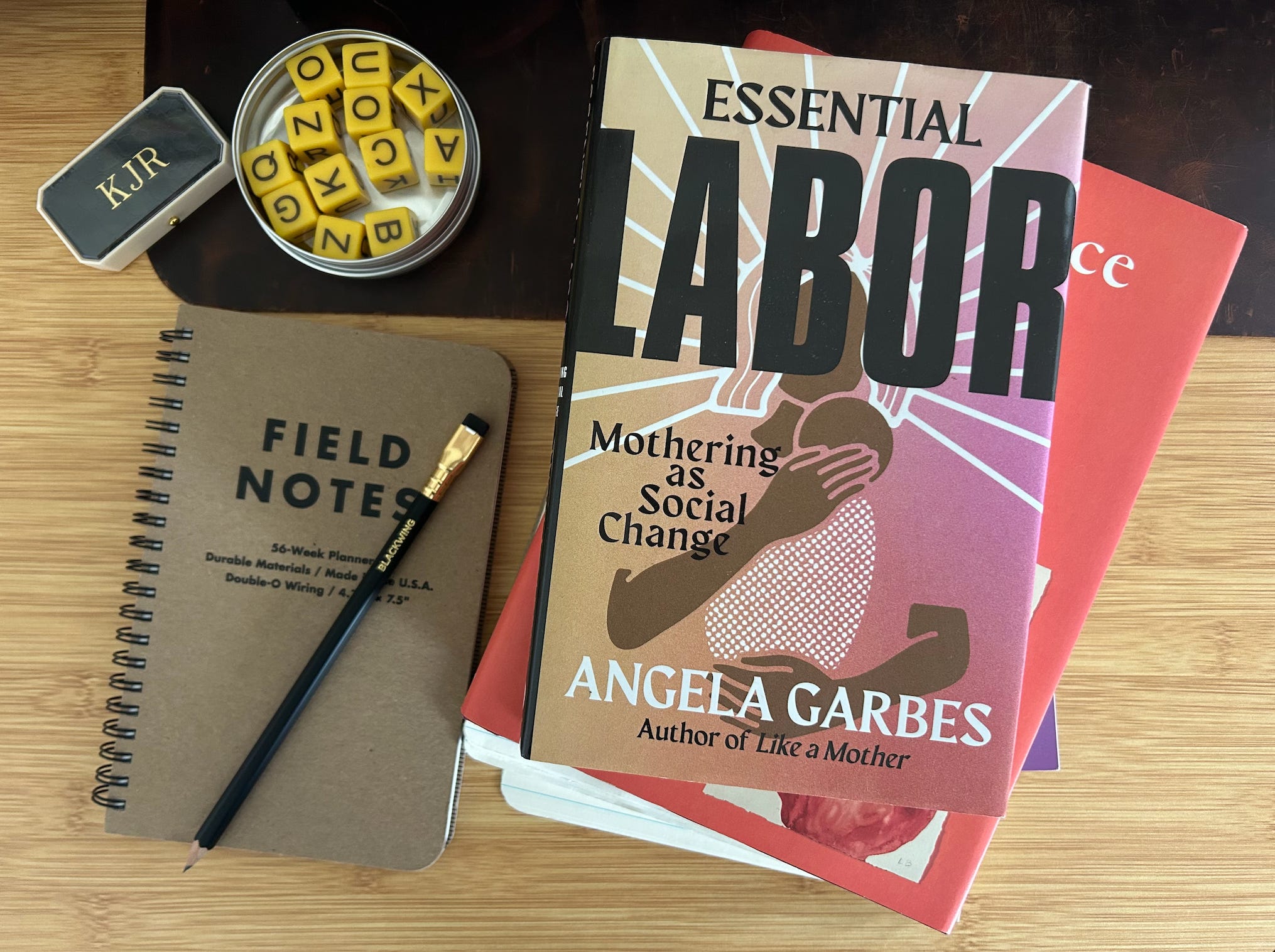
Essential Labor: Mothering as Social Change by Angela Garbes
Like many people who had a small human cut out of their body or pushed one from their insides out and in to the world, I had a difficult postpartum period. “Difficult” is the polite way of saying: I was depressed. “Difficult” is tidy and contained, suggesting that while momentarily challenging, like a hard math problem it eventually can be resolved through sheer effort and will. Postpartum, by contrast, felt sprawling, as my insides healed, and my body expressed an alarming amount of milk and hormones, and my very small perfect daughter needed me every two hours around the clock to be fed to get her weight up enough to register on the charts that our kind paediatrician told us not to worry about but of course I saw imprinted on the inside of my eyelids when I could find a stretch of minutes to close them…
Essential Labor: Mothering as Social Change by Angela Garbes gave me the radical framework to pull me out of thinking about my little life, as Toni Morrison advised, and see the work of mothering as a broader political and community-shifting practice.
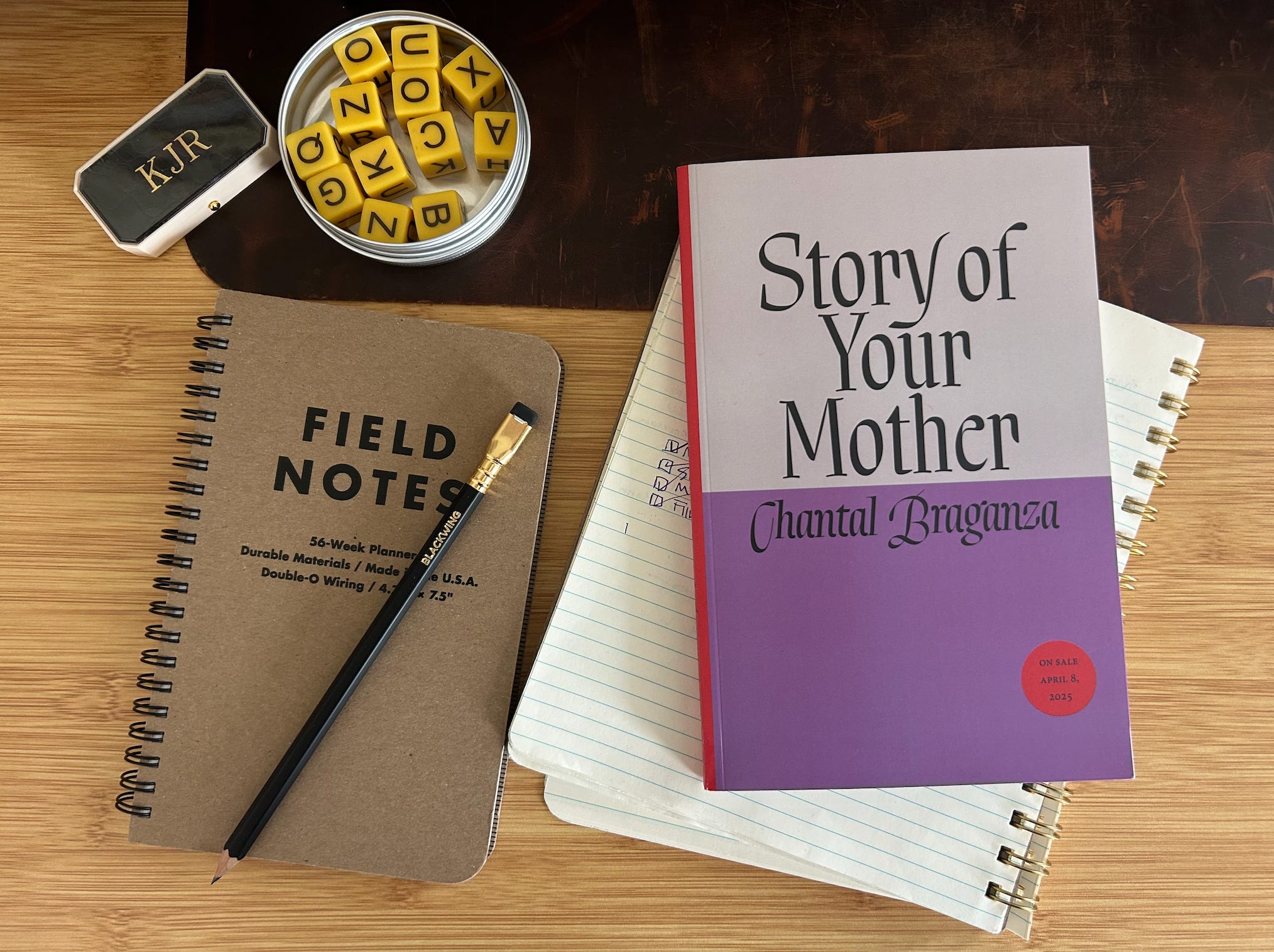
Story of Your Mother Chantal Braganza
One of the most profound things I have found about mothering is that I have discovered a new facet of understanding for my own mother. (A wise woman who once told me, “I love you because you’re my child. I’m lucky because I also like you.”) Watching my mother with my daughter feels like I’m being transported to our shared past. One she already knew, but that I couldn’t recall until this moment: what her care of me looked like before I could ever possibly remember, let alone understand, it.
Chantal Braganza, a writer, editor and once a cléo journal contributor, writes with a fusion of dream-like poetry and razor sharp clarity about these intergenerational connections that are woven into our memories and DNA.
This newsletter is 100% AI free—I won’t let AI claim the em dash from me!!!! Enjoy the typos :)
No posts
Comments
Nothing yet. Say the first thing.
Sign in to join the conversation.