

‘Once...I became an early childhood teacher, the...message I heard was, “Don’t talk about care”. At conferences and leadership institutes I was told, “You will never be understood or respected if you use care to describe your work...you should use the language of education.”’
Carol Garboden Murray, Illuminating Care: The Pedagogy and Practice of Care in Early Childhood Communities (2021).
‘If Nell Noddings and Virginia Held argue that the main purpose of education should be to form, develop, cultivate and strengthen human capacity to care for human relations, and through them for ourselves and others, we can ask our schools, our institutions and our politicians if we are preparing our children for such caring practices.’
Adriana Jesenková, Careful Thinking podcast (forthcoming episode)
‘Education…is not solely concerned with the intellect; it is not limited to instructing the individual and enabling them to experiment, to develop their linguistic abilities, rhetoric, and logical reasoning; it addresses the person as a whole, their sensitivity, their emotions, and their moral sense.’
Corine Pelluchon, Éthique de la consideration (2018; my translation)
I’ve been thinking a lot recently about the relationship between education and care. In part this has been prompted by my recent interview, for the Careful Thinking podcast, with the Slovak philosopher and care theorist Adriana Jesenková (that episode will be available soon). Much of Adriana’s work has involved applying a feminist care ethical perspective to the education system of her home country.
Also, last year I interviewed Mia Sosa-Provencio, whose research explores the ways in which teachers working in schools along the U.S./Mexico border are developing a critical feminist ethic of care in their practice as educators. Talking with Mia brought back memories of my own experience of working in adult and community education, before I became a university teacher. As I wrote in a post at the time:
I...found Mia’s application of a care-ethical framework to her educational practice, and her description of the ways in which educational spaces often exclude care, intriguing. It made me realise that I tend to keep my own experience as an educator, and my research interests in care, separate in my mind. Listening to Mia made me re-think those connections and imagine ways of reconceiving my educational practice as a practice of care.
Not long after that, my podcast conversation with Dutch researchers Andries Baart and Guus Timmerman, about their book on Relational Caring and Presence Theory, made me realise that the way they talked about ‘practising presence’ in care work, working in a relational way but with ‘no fixed goals...no fixed method’, could have described my own practice as a community educator, all those years ago. As I wrote at the time: ‘I’m not sure I was exactly “practising presence”, as described by Andries and Guus, though much of my work involved forming relationships with groups of local people and doing my best to respond to their needs, whatever they were.’
All of this has made me reflect again on the ways in which my work as an educator, and particularly my earlier work in adult and community education, might have been a practice of care, in ways that I haven’t fully understood until now. It has also made me speculate about my reasons for wanting to keep my educational practice, and my interest in care, in separate mental boxes.
Although I’ve never been a paid worker in the care field, it was actually a brief stint in a voluntary care role that would lead, in a roundabout way, to my subsequent career in education. Between finishing my bachelor’s degree and starting postgraduate study, I spent a year as a full-time volunteer in a hostel for what were described as ‘mentally disturbed’ ex-prisoners, many of them former residents of secure hospitals like Broadmoor and Rampton. I learnt a lot in the process, not least about myself and my own limitations, but I was relieved to escape back to academic study at the end of the year.
Then, during my time as a doctoral student in Manchester, and looking to do some voluntary work in my spare time, I found my way to an education project in the city run by NACRO, the National Association for the Care and Resettlement of Offenders, where I signed on as a literacy tutor. (Interestingly, when I interviewed James Thompson, now a professor at the university, for the podcast, he revealed that he’d also been a volunteer at the same project, though some years after me.)
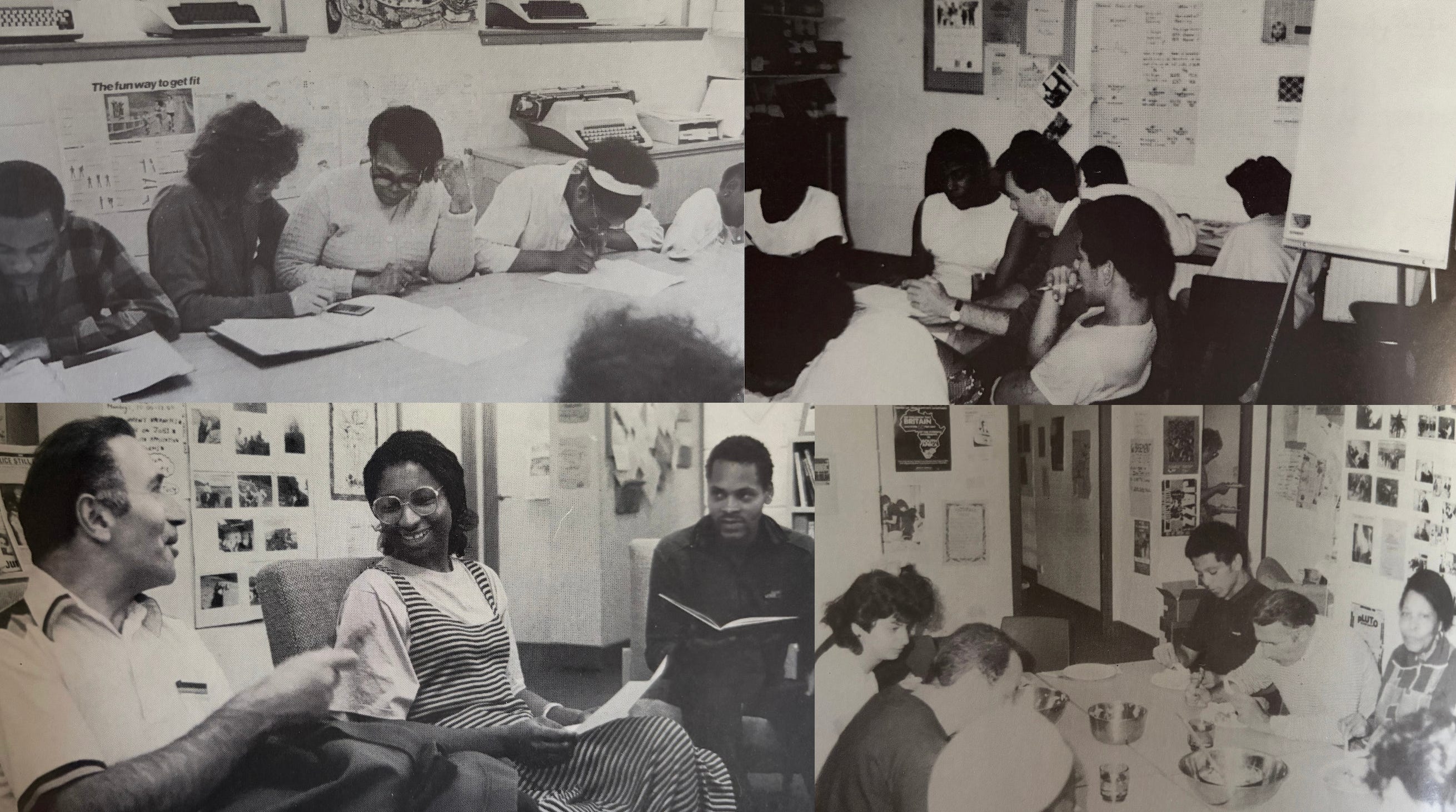
Back home in Essex, and needing to support myself while I finished my thesis, I initially took on part-time work teaching in further education colleges and for the Workers’ Educational Association (WEA). Eventually, I found a full-time job, setting up and managing a new NACRO education project in Basildon, an economically disadvantaged post-war new town. From there I moved on to another NACRO project in a multiethnic area of north London, this time a residential scheme supporting former prisoners to take up educational opportunities on their release. I was responsible for setting up and managing ‘The Basement’, a new education day centre, which was also open to the local community, with classes in everything from literacy and politics to cookery and computing. My next move was to a stigmatised housing estate on the outskirts of Oxford, where I was employed as the community education organiser for the area, responsible for responding to the educational needs of local residents, as well as providing alternative opportunities for truanting teenagers (and where I found myself working alongside Larry Sanders, brother of the more famous Bernie). My final post in community education was as director of ‘Baselines,’ a city-wide project providing adult basic education to the residents of Milton Keynes.
Text within this block will maintain its original spacing when published
                  Classes at The Basement, North London Education Project, c. 1985
                     (that's me teaching a literacy class in the top right-hand photo)
I joined The Open University, which also has its base in Milton Keynes, in 1991, initially as a lecturer in community education, building on these years of community-based experience to develop learning materials for use by community groups, and also helping to set up the university’s first ‘access’ or pre-degree courses. However, just a few years after I joined the OU, the university decided to close its community education programme and our team found itself absorbed into our sister department of health and social care.
My colleague and mentor Andy Northedge and I were drafted in to use our experience at ‘access’ level to help create the University’s first entry-level course for care practitioners. We were there because of our pedagogic expertise, rather than for any knowledge of the care field, which was supplied by our more experienced health and social care colleagues. I recall walking back from one of our course team meetings with Andy, when he told me that he was beginning to find the subject of care surprisingly interesting. I was less enthusiastic. Looking back, I think it was because, at the time, I viewed care as a somewhat ‘fluffy’ and ill-defined subject, compared to education, which in my mind was about radical social change and grounded in rigorous pedagogic theory. I’m happy to acknowledge now that this may have been a defensive strategy on my part, and that my identity as a theoretically-informed radical educator was a kind of armour that protected me against getting too involved in the messy, emotional business of care.
What’s more, and despite my avowed pro-feminist beliefs, I suspect there was also an unconscious gendered element to all of this. Thinking back to the quotation from Carol Garboden Murray with which I began this post: one of the reasons often given for the difficulty of recruiting men to work with children in the early years is that care is still viewed as ‘women’s work’ and therefore held in low esteem (and, as a result, often poorly paid). One of the implicit aims, at least here in the UK, of the recent shift to talking about ‘early childhood education and care’ (ECEC) has been to attract more men to the field, since ‘education’ is still coded as masculine/high status and ‘care’ as feminine/low status.
So how did I go from this resistance to care, to spending the next two decades teaching, researching and writing about the subject? Partly, it was the practical need to accommodate myself to my new academic position in a department of health and social care. But much more significantly, it was the personal experience around this time of becoming a father. Attempting to put my pro-feminism into practice by being a ‘hands on’ dad and taking an equal share in caring for our two young children certainly changed me as a person, helping me to develop my personal capacity for care. But it also led to a research interest in gender and care, which began with studies of engaged fatherhood and men working in childcare and expanded into a broader exploration of men’s practices and experiences of care, leading eventually to an interest in care ethics and care theory.
So, have I got over my mental separation of ‘education’ and ‘care’, and am I now more open to viewing education as a practice of care? Well, it depends what that means. If it signifies that we should educate with care, that as educators we should adopt a caring approach towards those we teach, that educators should treat each other care-fully, and indeed that educational institutions should care for those they employ, then of course I agree. These are some of the issues that Adriana Jesenková addresses in her book chapter on the ‘deficit of democratic care’ in the Slovak education system. On the other hand, if it’s argued that the business of education is to prepare people for care, or indeed that education should be all about care, then I do have some reservations.
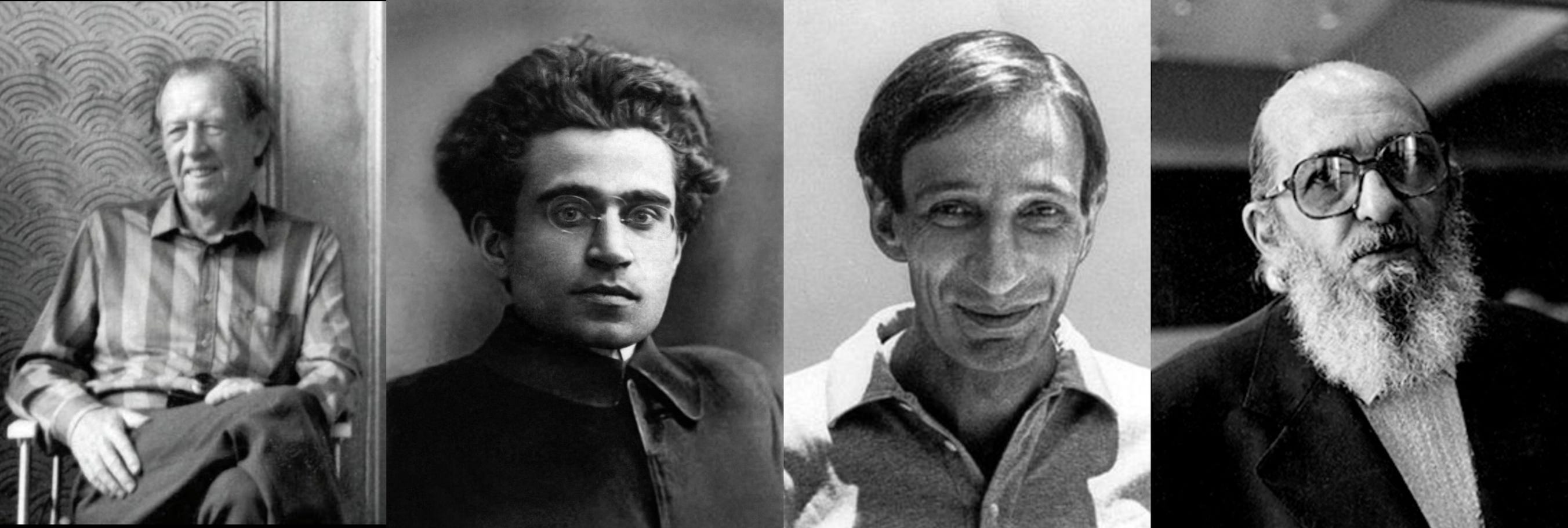
I don’t think these reservations are just a personal, defensive response on my part. I believe there are also serious intellectual reasons for resisting a conflation of education with care. I acknowledge that those reasons have been partly informed by my personal experience, as someone from a modest social background who benefited from a fairly traditional education – grammar school, followed by becoming the first member of my family to go to university – which I found personally empowering and transformative. My beliefs about education were also formed by writers like the socialist critic and historian Raymond Williams (whose lectures I was fortunate to attend as an undergraduate), who believed that the accumulated knowledge and culture of the past was a common inheritance that should be open to all, and who fought against the postmodern tendency to denigrate traditional knowledge. Later, I would be influenced by the writings of the Italian Marxist theorist Antonio Gramsci, who argued that the task of radical educators was to introduce students to the breadth of human culture and to empower them to become critical contributors to it (see Harold Entwistle’s 1979 book, Antonio Gramsci: Conservative Schooling for Radical Politics). Gramsci was opposed to what he saw as a creeping tendency in his time (interestingly, supported by Mussolini) for education to focus on personal development rather than the transmission of knowledge, a tendency that he saw as fundamentally reactionary and disempowering.
In my time as a community educator, I was initially sympathetic to the ideas of Ivan Illich on ‘deschooling’ society, and Paolo Freire’s radical pedagogy, but eventually I became concerned about what I saw as a ‘therapeutic turn’ in adult education, in which the acquisition of knowledge was downplayed and the role of the teacher reduced to a mere facilitator of learning. When I joined The Open University, I was fortunate to find a kindred spirit in Andy Northedge, who was in the process of developing a ‘discourse’ model of adult education, which involved building on students’ ‘everyday’ discourse or understanding of the world, but using this to gradually introduce them to more powerful (and empowering) academic discourses. We attempted to implement this pedagogic model in our access courses, and Andy’s partner Ellie Chambers and I tried to encapsulate it in a book chapter at the time.
Text within this block will maintain its original spacing when published
L to R: Raymond Williams, Antonio Gramsci, Ivan Illich, Paulo Freire
When I hear people suggesting that education should be all about care, it brings back memories of the debates we engaged in back then. My political views may have changed over the years, but I still worry that describing education as care risks reducing it to something more like therapy (not that there’s anything wrong with therapy). And yet, as a researcher and writer on care, I obviously believe passionately that an ethic of care should inform all social practices, including education [1].
So, how to square this circle? Towards the end of my recent conversation with Adriana for the podcast, we discussed an article in which she describes her experience of using a work of fiction by the philosopher and novelist Etela Farkašová as a teaching tool for addressing the question of intergenerational relations and social fragmentation in Slovak society. Adriana argued that philosophy can be a form of care, and she described her sense of gratitude to Farkašová for the way she ‘cares...for our community, our society’ through her writing and teaching. This made me think of an argument made by the contemporary French philosopher Corine Pelluchon (also quoted at the top of this post) in her 2018 book Éthique de la consideration (my translation):
Literary works remind us that ethics cannot be reduced to moral judgments or reasoning that persuades us whether a course of action is good or bad…Reading these texts…can facilitate the development of dialogical skills without which public deliberation and democracy—which require active, reflective, empathetic individuals inclined to participate in collective effort and promote a community of equals—are impossible. By illustrating the non-interchangeable nature of people and relationships…literature participates in the process of subjectivation which is essential to the practice of consideration and to the preservation of a healthy democracy [2].
The suggestion here is that reading – and studying and teaching – literature, and by implication the humanities in general, can contribute to developing a capacity to care, and thereby the development of what Joan Tronto would call a ‘caring democracy’, by enabling us to imaginatively inhabit the experiences and perspectives of others. This echoes Maurice Hamington’s argument, in his 2004 book on Embodied Care, that ‘imagination plays a crucial role in animating morality’ and that ‘one function of imagination is creating the possibility for empathy’. And in their 2019 book on Care Ethics and Poetry Maurice and his co-author Ce Rosenow describe how reading and studying poetry can help to activate the imagination, arguing that ‘imagination plays a crucial role in understanding the one cared-for and the context they are in’.
Perhaps this can help to resolve my concern that an emphasis on ‘care’ risks dumbing down education. Rather than reducing education to a knowledge-lite training in ‘how to care’, a liberal, humanistic education can nurture an ethic of care by opening the mind, the imagination and the emotions to seeing the other and the world in more ‘care-ful’ ways.
These are complex issues and there’s a lot more that could be said about the subject, so perhaps I’ll return to it at a future date. In the meantime, I’d be interested to hear what others think. For now, I’ll end, as I began, with a quotation from Carol Garboden Murray’s Illuminating Care:
Education grows us. It has the potential to expand mind, heart, and body. We value education because it requires thinking. Education helps us individualise and allows us to be independent. Education liberates us, strengthens us, and offers a new opportunity. Care does all these things. Care is not subordinate to education, care is education. When we unite care and education, we care in a way that nurtures another’s independence, actualisation, and self-sufficiency.
I’d probably want to tweak that a little. From the perspective of care ethics, I’d suggest that education helps us to be interdependent as much as independent, and that rather than self-sufficiency, it nurtures a capacity for relationship. But, with those caveats, Carol’s words are a neat summary of the truth that, in the final analysis, care is, or should be, a process of education – and education is, or should be, a practice of care.
Notes
I’m aware that my argument here applies mainly to adult and higher education. I’m more open to viewing the education of young children as being fundamentally about care. Readers who are interested in exploring further the connections between education and care in work with children in the early years should certainly read Carol Garboden Murray’s book. I’d also warmly recommend this new post by Bethany Hansel, over at Mélina Magdelénat’s Fifth Wave Institute.
Pelluchon’s use, here and throughout her book, of the word consideration, which doesn’t quite have the same meaning as its English equivalent, in preference to soin – care – would take a whole other post to explain.
…
The header image for this post is the painting ‘All About Education’ by Paris-born Canadian artist Sylvain Martin, who explains that this abstract work ‘explores the fundamental importance of education in a world plagued by fake news and the threat of manipulation of citizens.’ I’m grateful to Sylvain for permission to use the image.
No posts
Comments
Nothing yet. Say the first thing.
Sign in to join the conversation.